Layla Zulfa
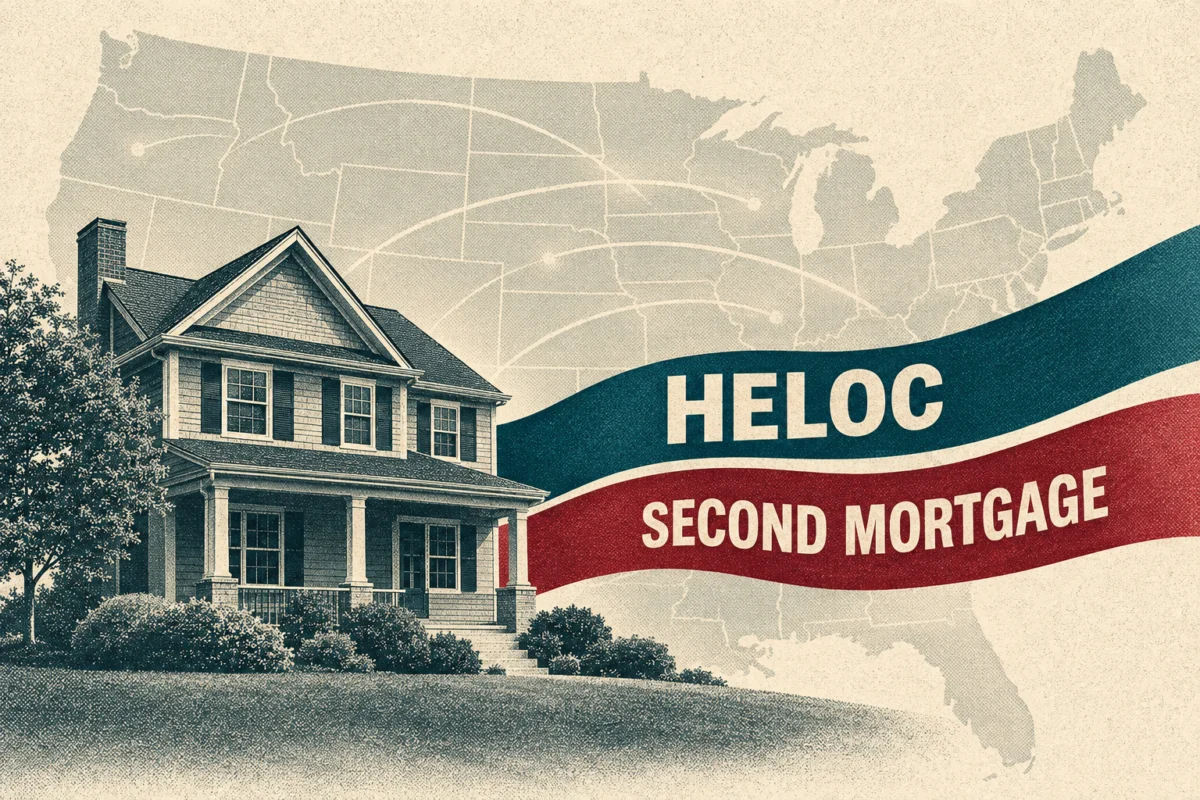
Homeowners, entrenched in historically low mortgage rates secured during the pandemic, are increasingly turning to their accumulated home equity to fund a variety of financial needs. This trend, fueled by a persistent "lock-in effect" that discourages refinancing at current elevated rates, has propelled demand for home equity lines of credit (HELOCs) and second mortgages, a phenomenon expected to continue through at least 2027. Analysis of county-level mortgage recording data reveals a significant uptick in these borrowing instruments, underscoring a strategic pivot by homeowners to leverage their most substantial asset in a challenging economic climate.
The Benutech analysis, examining mortgage recording data from January 1, 2022, through October 10, 2026, indicates that over six million second mortgages, encompassing both HELOCs and closed-end second liens, were recorded during this period. This surge represents a substantial increase in the utilization of home equity beyond primary mortgage obligations. The data highlights a peak in annual second-mortgage volume in 2025, with 1.54 million loans documented. This figure marks a 21.3% increase compared to 2024 and a notable 32.4% rise from 2022 levels. As of October 10, 2026, the market was on track to record approximately 1.23 million loans for the year, demonstrating sustained momentum in this segment of the lending market.
This robust activity in accessing home equity aligns with broader economic indicators. A report released in October by First American Data & Analytics found that U.S. homeowners collectively held $13.2 trillion in accessible home equity as of the second quarter of 2026. Crucially, approximately 88% of this substantial equity is tied to mortgages with rates significantly below the prevailing market averages. This stark contrast between existing low-rate first mortgages and current higher borrowing costs is a primary driver for homeowners seeking alternative ways to tap into their property wealth.
Further substantiating this trend, the Federal Reserve Bank of New York’s Center for Microeconomic Data reported in early November that HELOC balances experienced a substantial increase of $23 billion, reaching a total of $481 billion. This quarterly growth represents the largest such increase observed since 2005, signaling a renewed and significant reliance on home equity lines of credit. Moreover, HELOC limits also saw an expansion, rising by $31 billion, continuing a trend of increasing credit availability that commenced in 2022.
The increasing prevalence of homeowners utilizing home equity products has captured industry attention. Anthony Stratis, vice president of lending partnerships at Figure, noted that this demand has been building for several years. Homeowners are increasingly turning to second liens to finance essential home renovations, undertake major property improvements, and consolidate higher-interest debt. Stratis expressed confidence that this demand may persist even beyond the current interest-rate environment, attributing this outlook to continuous improvements in lending products and a growing borrower familiarity with accessing cash through home equity.
"Home equity has really evolved to the point where it’s a pretty quick way to access cash when you need it for a project or whatever it might be," Stratis commented. "I think that part is going to stay in place, and home equity is likely to have a place in the mortgage ecosystem for a while, independent of rates." This perspective suggests a fundamental shift in how homeowners perceive and utilize their home equity, moving beyond a mere emergency fund to a more integrated financial tool.
Matt Kroon, a home loan specialist at Churchill Mortgage, elaborated on the psychological aspect driving this trend, referring to the "emotional connection" homeowners feel towards their low, COVID-era mortgage rates. The reluctance to relinquish these favorable rates, coupled with persistently high interest rates for new financing and an aging housing stock requiring significant maintenance, has compelled borrowers to explore alternative solutions.
"Since affordability is a major concern right now, people are accessing their equity to make those improvements, or to pay off any higher-interest debt," Kroon explained. "Renovations and debt consolidation HELOCs are the main uses right now. However, some other uses include major expenses like a new roof, siding, furnace, etc." This highlights the practical, everyday needs that are being met through home equity financing, ranging from aesthetic upgrades to essential repairs.
Tom Hutchens, president of Angel Oak Mortgage Solutions, echoed Stratis’s observations regarding consistent HELOC demand over the past several years. As a non-QM (non-qualified mortgage) lender, Angel Oak has observed significant demand from self-employed borrowers and those who rely on bank statement documentation to qualify for both primary mortgages and HELOCs. Hutchens further noted that borrowers are actively employing home equity to reduce or eliminate high-interest credit card balances. Angel Oak’s average combined loan-to-value ratio on its HELOCs typically hovers around the 60% mark, indicating a conservative approach to leveraging equity.
"Private capital is getting into the HELOC business. You’re going to start to see more and more HELOC securitizations," Hutchens added, pointing to a growing institutional interest in this segment of the market, which could further enhance liquidity and product development.
The Strategic Nuances of Leveraging Home Equity
While the demand for HELOCs is evident, industry professionals emphasize that not all inquiries translate directly into second mortgage originations. Kevin Leibowitz, founder of Grayton Mortgage, highlighted that many initial conversations about HELOCs often lead to discussions about other lending solutions that might be more suitable for a borrower’s specific financial situation.
"Lots of interest in HELOCs, a lot of production in HELOCs," Leibowitz stated. "But a lot of my conversations start with HELOCs, and we kind of pivot into other types of lending because the other types of lending might make sense." The decision-making process frequently involves a detailed comparison of the costs associated with a borrower’s existing debt against the rates offered for new financing. Although homeowners are understandably hesitant to refinance their low-rate first mortgages, the presence of high-interest credit card balances and other significant obligations can render a new first mortgage a more financially advantageous option.
Benjamin Cohen, managing director and SVP of mortgage lending at Rate, observed that borrowers who might have previously opted for a cash-out refinance are now increasingly considering HELOCs or fixed-rate second mortgages, such as their proprietary HELoan product. Cohen elaborated on the mathematical rationale behind this shift: "The math is pretty straightforward. If you owe $500,000 at 3% and need another $75,000, a cash-out refinance puts the entire $575,000 at today’s rate. With a second mortgage, you keep the $500,000 at 3% and pay the new rate only on the $75,000. Even if the second mortgage carries a higher rate than the cash-out refinance, your blended rate across both loans can still be meaningfully lower. That can be a good compromise if the payments, fees and repayment terms make sense for you." This strategy allows homeowners to access needed funds while preserving the low rate on the majority of their mortgage balance.
Leibowitz shared an illustrative example of a borrower who had accumulated substantial credit card debt following a layoff. By consolidating the borrower’s first and second mortgages, along with the credit card debt, Leibowitz was able to improve the borrower’s monthly cash flow by approximately $3,500. This outcome underscores the significant financial relief that can be achieved through strategic debt consolidation utilizing home equity.
However, for borrowers with exceptionally low first-mortgage rates, retaining that loan and adding a HELOC might still represent the most favorable path. Leibowitz cautioned that HELOCs typically feature variable interest rates, often tied to benchmarks like the Wall Street Journal prime rate. This exposes borrowers to the risk of increased payments should market interest rates rise.
Adam Hopson, chief operating officer of Flyhomes, pointed out another application of home equity: enabling homeowners to purchase a new property before selling their current residence. However, he cautioned that the additional borrowing can complicate the process of qualifying for a new mortgage. "A HELOC can unlock a down payment without unlocking a move," Hopson remarked. "Having access to equity and qualifying for the next mortgage are two different things, though." This highlights the importance of a comprehensive financial assessment, as the increased debt-to-income ratio from a second mortgage can impact borrowing capacity for subsequent real estate transactions.
Broader Implications and Future Outlook
The sustained demand for home equity products reflects a broader recalibration of household financial strategies in response to prolonged periods of elevated interest rates. The "lock-in effect" has created a unique scenario where homeowners are incentivized to hold onto their existing low-rate mortgages, even if they require additional funds for renovations, debt consolidation, or other significant expenses. This has, in turn, stimulated the market for second mortgages and HELOCs, transforming them from niche products into mainstream financial tools for a substantial segment of the homeowner population.
The increasing institutional interest in HELOC securitizations, as noted by Tom Hutchens, suggests that the market is maturing and becoming more integrated into the broader financial system. This could lead to greater product innovation, increased competition among lenders, and potentially more favorable terms for borrowers in the future.
The Federal Reserve’s recent data, indicating a significant uptick in HELOC balances and limits, serves as a clear signal of this evolving financial landscape. The trend underscores a willingness among homeowners to leverage their accumulated equity, driven by a combination of necessity and strategic financial planning. As long as interest rates for primary mortgages remain elevated, and the "lock-in effect" persists, the demand for home equity solutions is poised to remain robust.
Looking ahead, the interplay between interest rate movements, housing market dynamics, and evolving borrower behavior will continue to shape the trajectory of home equity lending. While the current environment favors second mortgages and HELOCs, lenders and borrowers alike will need to remain attuned to market shifts and carefully assess the long-term implications of accessing home equity. The strategic use of home equity, when approached with careful consideration of individual financial circumstances and market conditions, is likely to remain a critical component of household financial management for the foreseeable future.