Dwi Wanna
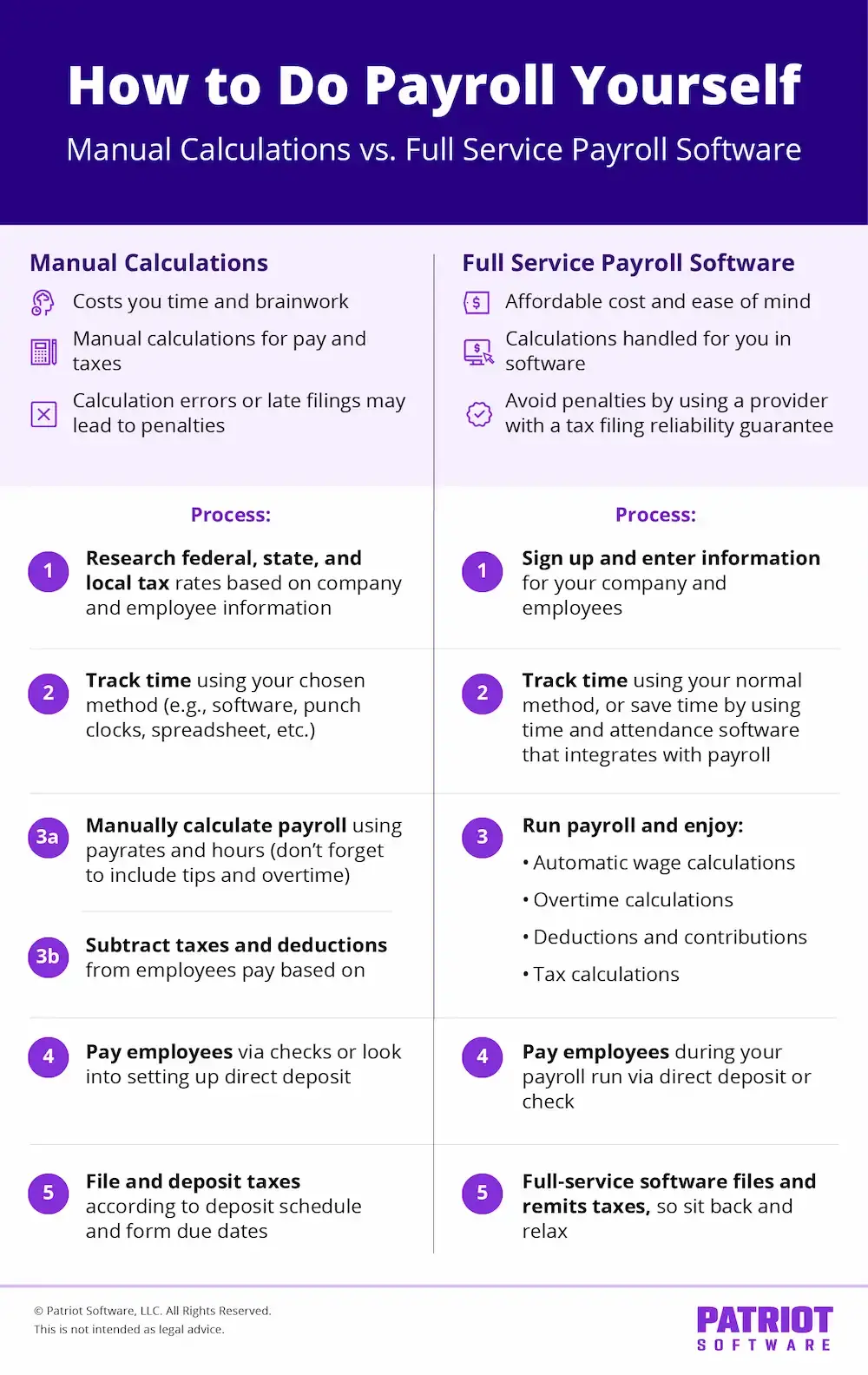
Small business owners increasingly face a complex financial landscape where the cost of labor is often the single largest expense, prompting many to seek internal solutions for payroll management to preserve capital. As the gig economy expands and remote work complicates tax jurisdictions, the decision to manage payroll in-house—either manually or through software—has become a strategic pivot for entrepreneurs looking to scale without the high overhead of professional employer organizations (PEOs) or external accounting firms. This transition requires a meticulous understanding of federal, state, and local regulations, as the margin for error in employment tax compliance is narrow and the penalties for non-compliance are substantial.
The Economic Context of Internal Payroll Management
In the current fiscal environment, small businesses are navigating a dual challenge: rising wage expectations and a stringent regulatory framework. According to Internal Revenue Service (IRS) data, employment tax non-compliance accounts for a significant portion of the "tax gap," leading to billions of dollars in assessed penalties annually. For a business with fewer than ten employees, the cost of outsourcing payroll can range from $1,000 to $5,000 per year, depending on the complexity of benefits and filing requirements. By bringing these operations in-house, owners can reallocate those funds toward growth initiatives, provided they can manage the administrative burden effectively.
Industry analysts observe that the rise of cloud-based Software as a Service (SaaS) platforms has democratized payroll processing. Historically, "doing payroll yourself" meant tedious manual ledger entries and a high risk of mathematical error. Today, the landscape is divided between manual DIY—best suited for micro-businesses with static staffing—and automated software solutions that provide a middle ground between total autonomy and expensive outsourcing.
Chronology of the Payroll Implementation Process
Establishing a self-managed payroll system is not an overnight task; it requires a structured timeline to ensure all legal prerequisites are met before the first check is issued.
Phase 1: Legal Foundation and Identification
Before a single hour of work is logged, an employer must establish a legal identity with tax authorities. This begins with obtaining a Federal Employer Identification Number (EIN) from the IRS. Simultaneously, the business must register with state and local tax agencies to handle income tax withholding and unemployment insurance taxes. This phase typically takes two to four weeks, depending on state processing times.
Phase 2: Employee Onboarding and Documentation
Once the business is registered, the focus shifts to the workforce. Every employee must complete Form W-4 (Employee’s Withholding Certificate) to determine federal income tax withholding and Form I-9 to verify employment eligibility. Employers are also required to report new hires to state directories within a specific timeframe—usually 20 days—to facilitate child support enforcement and prevent UI fraud.
Phase 3: System Selection and Setup
In this stage, the owner decides between manual calculation and software. If choosing software, the employer must input year-to-date (YTD) data if the business has already been operating, or set up fresh profiles including pay rates, bank details for direct deposit, and benefit deduction schedules.
Data-Driven Analysis: Manual vs. Software vs. Outsourcing
The choice of method significantly impacts both the bottom line and the risk profile of the company.
| Feature | Manual DIY | Payroll Software | Outsourced (PEO/CPA) |
|---|---|---|---|
| Direct Cost | Low (Time only) | Moderate ($30-$150/mo) | High ($100+/mo per employee) |
| Time Commitment | High (Hours per week) | Low (Minutes per week) | Minimal |
| Accuracy Risk | High (Human error) | Low (Automated math) | Very Low (Expert managed) |
| Tax Filing | Manual | Often Automated | Managed by Provider |
Financial experts suggest that while manual payroll is the least expensive in terms of cash outlay, the "opportunity cost" of the owner’s time often makes software the more efficient choice. For instance, an owner valued at $50/hour spending four hours a week on manual payroll effectively "spends" $800 a month in labor, whereas a $50/month software subscription could reduce that time to 30 minutes.

Technical Steps for Manual Payroll Calculation
For those who opt for the manual route, the process involves a rigorous five-step cycle for every pay period:
- Calculate Gross Wages: This includes hourly pay (including overtime at 1.5x the regular rate for non-exempt employees under the Fair Labor Standards Act), salaries, bonuses, and commissions.
- Determine Pre-Tax Deductions: Contributions to 401(k) plans, health insurance premiums, or Flexible Spending Accounts (FSAs) must be subtracted from gross wages before taxes are calculated to lower the taxable base.
- Calculate Statutory Tax Withholdings: The employer must calculate Federal Income Tax (based on W-4 info), Social Security (6.2%), and Medicare (1.45%). State and local taxes must also be calculated based on specific regional brackets.
- Subtract Post-Tax Deductions: These include items like Roth 401(k) contributions or court-ordered wage garnishments.
- Net Pay Distribution: The final amount is issued via check or direct deposit, and the employer must then calculate their own matching portion of FICA taxes and FUTA (Federal Unemployment Tax).
Regulatory Compliance: The Payroll Tax Calendar
Managing payroll in-house requires strict adherence to a federal and state filing schedule. Missing these deadlines is the most common cause of IRS penalties.
- Quarterly Requirements: Most employers must file Form 941 (Employer’s Quarterly Federal Tax Return) to report wages, tips, and taxes withheld. These are due by the last day of the month following the end of the quarter (April 30, July 31, Oct 31, Jan 31).
- Annual Requirements: Form 940 is used to report annual Federal Unemployment Tax (FUTA). Employers must also generate W-2 forms for every employee and 1099-NEC forms for independent contractors by January 31 of the following year.
- Deposit Schedules: Depending on the size of the payroll, tax deposits must be made either monthly or semi-weekly via the Electronic Federal Tax Payment System (EFTPS).
Risk Assessment: Common Pitfalls in DIY Payroll
Legal experts and tax professionals point to several areas where self-managed payroll frequently fails.
1. Worker Misclassification:
One of the most scrutinized areas by the Department of Labor (DOL) is the distinction between W-2 employees and 1099 independent contractors. Misclassifying an employee as a contractor to avoid payroll taxes can lead to back-tax assessments, interest, and heavy fines. The IRS uses the "Common Law Rules" focusing on behavioral control, financial control, and the type of relationship to determine status.
2. Failure to Track Overtime:
Under the FLSA, non-exempt employees must receive overtime pay for hours worked over 40 in a workweek. Inadequate record-keeping is a primary trigger for labor audits.
3. State Reciprocity Issues:
For businesses with remote employees, payroll becomes exponentially more difficult. Employers must often withhold taxes based on where the employee is physically working, not where the company is headquartered, requiring registrations in multiple states.
Industry Statements and Implications
Professional accountants often express a cautious view of DIY payroll. "While the software has made the math easier, it hasn’t necessarily made the law easier," notes a representative from a leading national CPA association. "The software is only as good as the data entered. If an employer doesn’t understand the difference between a taxable fringe benefit and a non-taxable reimbursement, they will still end up with a compliance gap."
Conversely, advocates for small business autonomy argue that the transparency gained from running one’s own payroll is invaluable. By seeing the direct impact of every tax and benefit deduction, owners gain a more granular understanding of their "burdened labor cost"—the true cost of an employee beyond their hourly wage.
Future Outlook: Automation and AI
The future of self-managed payroll lies in hyper-automation. Emerging features in payroll software now include "Auto-Run" for salaried teams and AI-driven "anomaly detection" that flags unusual pay spikes before they are processed. As these tools become more sophisticated, the barrier to entry for doing payroll yourself will continue to lower, potentially making manual ledger-based payroll a relic of the past.
In conclusion, while the prospect of managing payroll internally can be daunting, it is a viable and often fiscally responsible choice for the modern entrepreneur. By leveraging contemporary software tools, maintaining a rigorous compliance calendar, and staying informed on legislative changes such as the FLSA overtime thresholds, business owners can maintain full control over their financial operations while significantly reducing administrative costs. However, the transition from outsourcing to DIY must be handled with the precision of a professional to avoid the regulatory traps that can derail a growing enterprise.