Nila Kartika Wati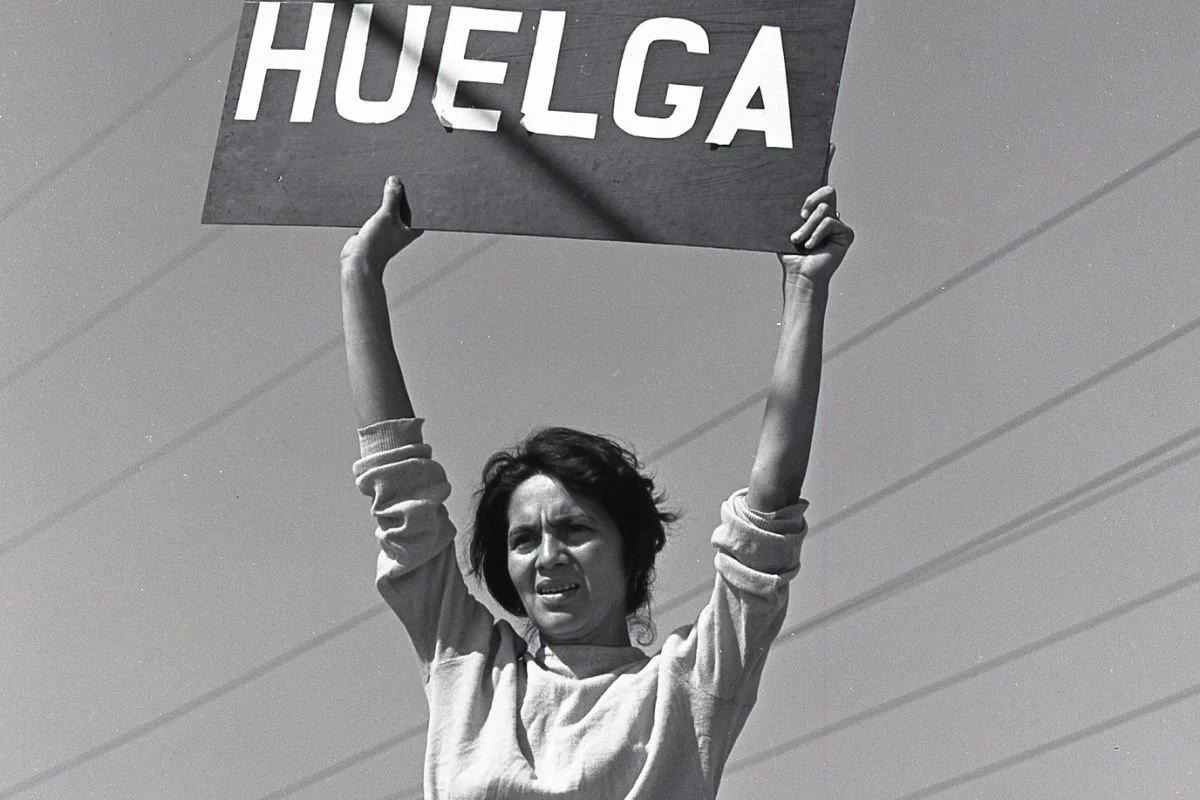
The legacy of César Chávez, the co-founder of the United Farm Workers (UFW) and a towering figure in the American civil rights movement, is undergoing a profound and painful reassessment. Recent investigative reports, most notably a series of detailed accounts in the New York Times and broadcast segments on PBS NewsHour, have brought to light a pattern of verbal and psychological abuse directed at women within the movement he helped build. These revelations have sent shockwaves through the activist community, prompting a broader examination of how charismatic leadership can lead to the insulation of power and the systemic marginalization of those who provide the movement’s backbone. While the specific details of the violence and control tactics are surfacing now, labor historians and organizational analysts suggest that the underlying patterns—exploitation, enforced silence, and the instinct to protect powerful figureheads—are recurring issues within social justice frameworks.
Historical Context and the Rise of the UFW
To understand the weight of these allegations, one must look at the historical significance of the United Farm Workers. Founded in the early 1960s by Chávez and Dolores Huerta, the UFW emerged as a beacon of hope for thousands of disenfranchised laborers, primarily of Mexican and Filipino descent, who faced grueling conditions and sub-poverty wages in California’s fields. The 1965 Delano grape strike and the subsequent international boycott of table grapes became global symbols of nonviolent resistance.
Chávez was canonized as a saint-like figure, receiving the Presidential Medal of Freedom posthumously in 1994. His image adorns murals, schools bear his name, and César Chávez Day is observed as a federal commemorative holiday. However, the recent investigations suggest that behind the public-facing narrative of liberation, an internal culture of fear was being cultivated. This culture was reportedly characterized by "The Game," a psychological tactic borrowed from the Synanon cult in the 1970s, which involved intense, often abusive, verbal confrontations designed to break down individual egos and enforce absolute loyalty to Chávez.
The Mechanism of Power Insulation
A central theme emerging from the analysis of the UFW’s decline is the concept that power does not merely corrupt; it insulates. As leaders gain authority and proximity to resources, their access to unfiltered information regarding the impact of their actions tends to narrow. In movement spaces, this insulation is often built through layers of organizational design and social conditioning that prioritize stability and the "greater good" over internal disruption.
Organizational psychologists note that this insulation distorts perception. For a leader like Chávez, critique was increasingly interpreted as a threat to the movement itself. Those closest to the center of power often felt a secondary responsibility to protect the leader’s image, viewing internal dissent as a liability that could be exploited by external enemies, such as large-scale agribusiness or hostile political entities. This created a vacuum where accountability was sacrificed for the appearance of unity.
A Chronology of Internal Conflict and Revelation
The timeline of the UFW’s internal struggles provides a clearer picture of how the movement shifted from a grassroots labor union to a highly controlled organization:
- 1962–1970: The UFW achieves massive success through the Delano grape strike and the first contracts with growers. Chávez and Huerta become national icons.
- Early 1970s: The UFW reaches its peak membership of approximately 80,000 workers. However, internal friction begins as Chávez shifts focus from traditional union organizing to a more communal, spiritual lifestyle for staff.
- 1977: Chávez introduces "The Game" from the Synanon organization. Staff members are forced to participate in "sessions" where they are verbally attacked by peers and leadership to "purge" disloyalty.
- 1978–1981: A massive internal purge occurs. Many of the union’s most effective organizers and legal experts are fired or forced to resign. Membership begins a steep decline.
- 1993–2020: Following Chávez’s death, his legacy is consolidated through the César Chávez Foundation and various commemorations. The narrative remains largely focused on his early successes.
- 2024–Present: Investigative reports and memoirs from former UFW insiders detail the specific abuse of women and the psychological toll of the union’s internal culture, prompting a national dialogue on movement accountability.
Supporting Data: The Cost of Movement Decline
The impact of the internal culture of the UFW is reflected in the union’s demographic and membership data. At its height in the 1970s, the UFW represented nearly 10 percent of California’s farmworkers. Today, that number has dwindled significantly. According to data from the Bureau of Labor Statistics and union filings, the UFW’s active membership currently represents less than 1 percent of the agricultural workforce in the United States.
Furthermore, gender dynamics within labor leadership have historically skewed toward male figureheads, despite women often performing the bulk of the community organizing. In the UFW, while Dolores Huerta was a co-founder, she was frequently overshadowed in media representations by Chávez. The recent reports highlight that women in the movement were often the primary targets of Chávez’s verbal outbursts, used as examples to maintain control over the broader staff.
Official Responses and Community Reactions
The reaction to these findings has been divided between those who wish to preserve Chávez’s legacy as a symbol of Latino empowerment and those who argue that true justice requires a full accounting of the harm caused. The César Chávez Foundation has generally emphasized the positive impact of his life’s work, while some former UFW members have come forward to validate the reports.
In a statement following the New York Times investigation, various labor advocacy groups noted that "the strength of a movement should not be measured by the charisma of a single leader, but by the safety and agency of its most vulnerable members." Some city councils in California have faced petitions to reconsider the naming of public spaces after Chávez, though most have opted for "educational addendums" that acknowledge the complexity of his history rather than removing his name entirely.
Broader Impact and the "Common Enemy" Trap
Sociologists point to the UFW case as a textbook example of "common enemy intimacy." This occurs when a group’s connection is built primarily through shared outrage against an external oppressor. While effective for mobilization, it often fails to provide a foundation for internal governance. When the external fight becomes the sole priority, internal harm—such as the abuse of women or the silencing of Black and disabled members—is often dismissed as a distraction.
The broader implication for modern social movements, from the labor revival to racial justice organizations, is the necessity of multi-directional accountability. Analysts suggest that movements must move beyond "identity-based solidarity," which assumes that shared background or political goals will naturally prevent abuse. Instead, they argue for the implementation of structural safeguards:
- Distributed Power: Ensuring that decision-making authority is not concentrated in a single individual or a small, insulated circle.
- External Oversight: Utilizing independent bodies to investigate claims of internal harm, removing the conflict of interest inherent in "self-policing."
- Healthy Dissent: Creating formal channels where critique of leadership is not only permitted but encouraged as a means of organizational growth.
Conclusion: Reimagining Liberation
The reckoning surrounding César Chávez serves as a stark reminder that movements for liberation can inadvertently replicate the very systems of oppression they seek to dismantle. The abuse detailed in recent reports was not merely a result of individual "bad behavior," but a structural failure facilitated by the insulation of a legendary figure.
If the goal of social movements is to create a more just society, analysts argue that the internal culture must reflect the external vision. This means refusing to allow the "sacredness" of a legacy to shield harmful actions from the light of truth. As modern activists navigate the complexities of power and identity, the UFW’s history provides a sobering lesson: the path to progress cannot be paved with the sacrifice of the people within the movement. True liberation requires a commitment to accountability that flows in all directions, ensuring that no leader is untouchable and no worker is disposable.