Lana Rhoades
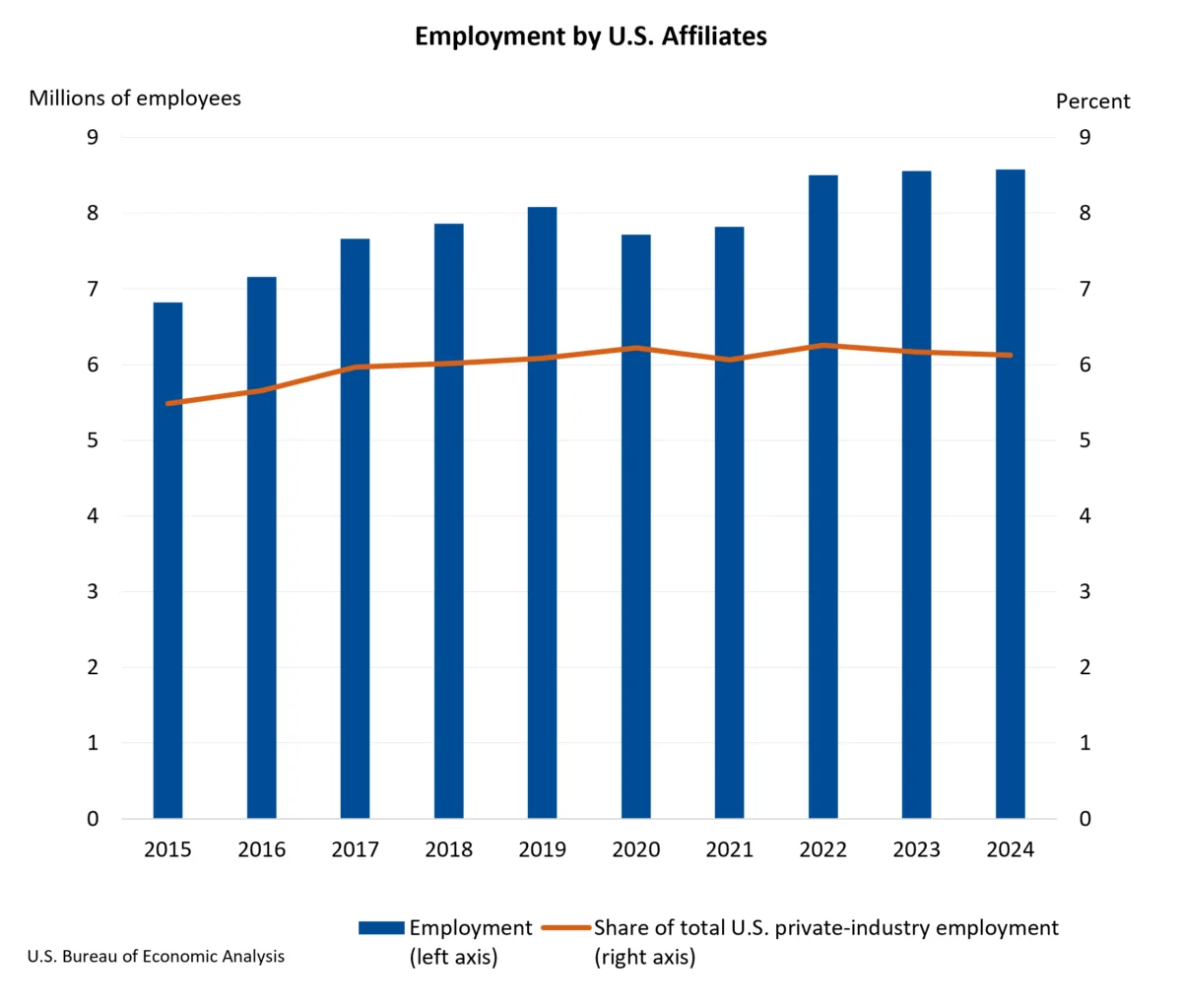
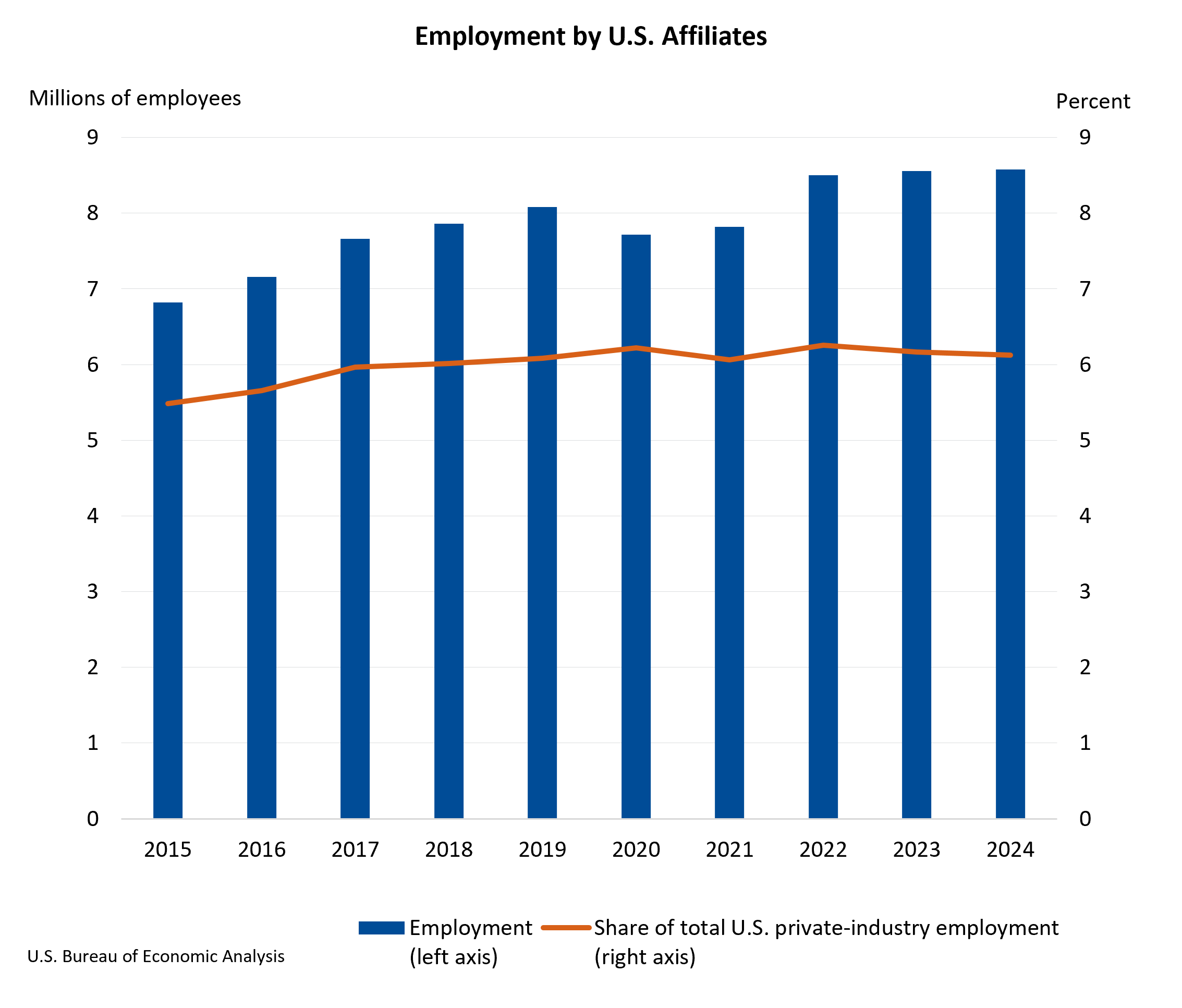
The landscape of American employment and economic output continues to be significantly shaped by the operations of foreign multinational enterprises (MNEs) within the United States. In 2024, majority-owned U.S. affiliates of these global giants provided jobs for an estimated 8.57 million workers. This figure, released by the U.S. Bureau of Economic Analysis (BEA), represents a modest increase of 0.2 percent from the 8.56 million workers employed in 2023, underscoring the persistent and substantial role of foreign direct investment (FDI) in the U.S. labor market.
These U.S. affiliates, operating as distinct entities within the American economy but ultimately controlled by foreign parent companies, accounted for 6.1 percent of the nation’s total private-industry employment in 2024. While this represents a slight decrease from 6.2 percent in 2023, the sheer scale of employment highlights the critical importance of these foreign-backed businesses to the overall health of the U.S. workforce. The sectors that most heavily relied on employment from these affiliates were manufacturing and retail trade, industries that are foundational to consumer goods production and distribution, respectively. Geographically, the United Kingdom, Japan, and Germany emerged as the largest contributors to this employment base, reflecting long-standing trade and investment relationships between these nations and the United States.
Beyond employment figures, the economic footprint of these U.S. affiliates is substantial. Their direct contribution to the U.S. gross domestic product (GDP), measured as current-dollar value added, saw a robust increase of 4.3 percent in 2024, reaching an impressive $1.52 trillion. This metric signifies the value created by these companies through their operations within the U.S. economy. Collectively, these affiliates represented 6.7 percent of total U.S. business-sector value added, a marginal decline from 6.8 percent in the preceding year, but still a significant portion of the nation’s economic output.
Investment in the future of American industry is also evident in the capital expenditures of these foreign-backed enterprises. Expenditures for property, plant, and equipment by U.S. affiliates rose by 3.3 percent, totaling $328.0 billion. This investment signals a commitment to expanding operational capacity, modernizing facilities, and potentially creating future employment opportunities. Furthermore, a crucial indicator of innovation and future competitiveness, research and development (R&D) performed by these affiliates, experienced a notable surge of 5.3 percent, reaching $95.5 billion. This substantial investment underscores their role as key drivers of technological advancement and innovation within the U.S., accounting for an impressive 12.4 percent of total U.S. business R&D expenditure in 2024.
The geographic distribution of this employment is not uniform, with certain states acting as major hubs for foreign-backed enterprises. California led the nation with 885,200 jobs provided by these affiliates, followed by Texas with 717,400, and New York with 556,700. In all three of these leading states, the manufacturing sector was the largest employer among the U.S. affiliates of foreign multinationals, underscoring its continued importance as a source of jobs and economic activity.
A Deeper Dive into Employment Trends
The BEA’s comprehensive data provides granular insights into the employment dynamics fostered by foreign direct investment. The consistent growth, albeit at a modest pace, in the number of workers employed by U.S. affiliates of foreign MNEs over recent years suggests a stable and perhaps growing reliance on this segment of the economy for job creation. This trend can be viewed against the backdrop of evolving global trade patterns and the strategic decisions of multinational corporations to either expand their existing U.S. operations or establish new ones to tap into the vast American market and its skilled workforce.
The slight decrease in the percentage of total private-industry employment can be attributed to a variety of factors, including potentially faster growth in other sectors of the U.S. economy or shifts in the composition of employment across the broader business landscape. However, the absolute number of jobs maintained or slightly increased indicates that foreign investment remains a vital component of the U.S. employment ecosystem.
Economic Contributions Beyond Jobs
The value added metric is a critical indicator of an economy’s productive capacity. The $1.52 trillion generated by U.S. affiliates in 2024 represents a tangible contribution to the nation’s wealth. This value is created through a multitude of activities, including the production of goods and services, sales, and other operational outputs. The consistent increase in value added, even when its share of the total business-sector value added experiences minor fluctuations, demonstrates the ongoing economic vitality of these foreign-controlled entities.
The significant investment in property, plant, and equipment ($328.0 billion) is a forward-looking indicator. It suggests that these companies are not merely maintaining their current operations but are actively investing in their future presence in the U.S. This can include building new factories, upgrading existing infrastructure, and acquiring new technologies, all of which can have ripple effects throughout the domestic supply chain and create demand for American-made capital goods and services.
The substantial investment in research and development ($95.5 billion) is particularly noteworthy. In an era where innovation is a key driver of economic competitiveness, foreign MNEs are making significant contributions to the U.S. R&D landscape. This investment can lead to the development of new products, processes, and technologies that benefit not only the investing companies but also the broader U.S. economy through knowledge spillovers and the development of a highly skilled R&D workforce. The fact that these affiliates account for over 12 percent of all U.S. business R&D spending highlights their critical role in fostering a culture of innovation and technological advancement.
Geographic Concentration and Sectoral Dominance
The concentration of employment in states like California, Texas, and New York reflects their status as major economic centers with robust infrastructure, skilled labor pools, and attractive business environments. These states often benefit from a combination of factors that make them appealing destinations for foreign investment, including access to large consumer markets, established logistical networks, and supportive government policies.
The dominance of the manufacturing sector in these key states for U.S. affiliate employment is a testament to the enduring strength of American manufacturing, even as the economy has diversified. Foreign companies continue to see value in establishing manufacturing operations in the U.S., whether for proximity to consumers, access to specialized skills, or as part of a global production strategy. Similarly, the significant presence in retail trade underscores the importance of the U.S. as a major consumer market for goods produced and distributed by foreign-affiliated companies.
Context and Chronology of the Data
The statistics released by the BEA are part of a regular reporting cycle designed to provide policymakers, businesses, and the public with timely and accurate information on international economic activity. The data for 2024 reflects the economic conditions and investment decisions made by foreign-controlled companies operating within the United States during that year. The BEA’s methodology involves collecting data from a variety of sources, including surveys of U.S. affiliates of foreign MNEs.
It is important to note that these figures are subject to revision as more comprehensive data becomes available. The BEA also highlighted updates to the 2023 statistics, incorporating newly available and revised source data. For instance, the preliminary estimate for employee numbers in 2023 was 8,661.8 thousand, which was revised to 8,556.9 thousand. Similarly, value added for 2023 was revised from a preliminary estimate of $1,469.1 billion to $1,456.3 billion. These revisions underscore the dynamic nature of economic data collection and the BEA’s commitment to accuracy.
The BEA’s continuous efforts to refine its data collection and statistical methods are crucial for maintaining the integrity and relevance of its reports. Recent updates to the BEA’s disclosure avoidance method, including the use of rounding and aggregation, aim to enhance the publication of data while safeguarding the confidentiality of survey respondents. This commitment to both transparency and privacy is fundamental to the trust placed in the BEA’s economic reporting.
Analysis and Implications
The continued growth in employment and value added by U.S. affiliates of foreign MNEs signifies a positive endorsement of the U.S. business environment. These companies are not only contributing to job creation but are also investing in capital and innovation, which are essential for long-term economic growth and competitiveness. The significant R&D investment, in particular, suggests that foreign firms view the U.S. as a critical hub for technological advancement and are actively participating in its innovation ecosystem.
However, the slight dip in the percentage of total private-industry employment warrants continued monitoring. While not necessarily indicative of a negative trend, it suggests that the U.S. economy is evolving, and it will be important to understand the factors driving these shifts. The BEA’s comprehensive data tables, available on its website, will be crucial for further analysis of these trends across various industries and regions.
The data also provides valuable insights for economic development strategies at both the federal and state levels. Understanding which countries are investing the most, in which sectors, and in which states can inform targeted outreach and policy development aimed at attracting and retaining foreign direct investment. The focus on manufacturing and retail trade suggests that these sectors remain attractive for foreign investors, and policies supporting these industries could yield significant economic benefits.
Future Outlook
The BEA’s announcement also provides a glimpse into the future of its reporting. The next release, scheduled for Spring 2027, will cover the activities of U.S. affiliates of foreign multinational enterprises for 2025. This forward-looking information is vital for businesses and policymakers to anticipate future economic trends and make informed strategic decisions. The ongoing collection and analysis of data related to foreign direct investment will continue to be a cornerstone of understanding the complex and interconnected nature of the global economy and its impact on the United States.
The comprehensive nature of the BEA’s reporting, including detailed breakdowns by industry, country of ultimate beneficial owner, and state, allows for a nuanced understanding of the multifaceted contributions of foreign-owned enterprises. These statistics serve as a critical resource for policymakers seeking to foster economic growth, create jobs, and maintain America’s competitive edge in the global marketplace. The persistent presence and expanding economic activities of U.S. affiliates of foreign multinationals underscore their integral role in the fabric of the American economy.