Nila Kartika Wati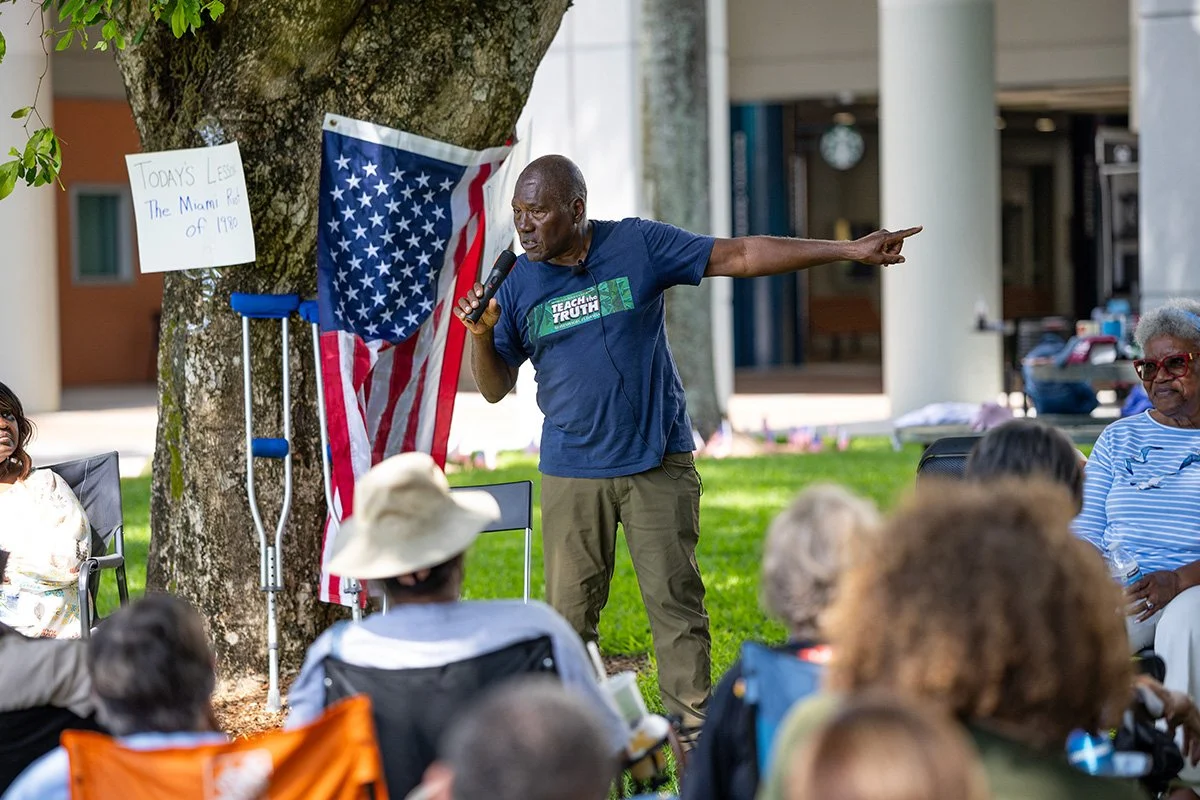
The struggle over the narrative of the American South has found a formidable protagonist in Dr. Marvin Dunn, an 86-year-old historian, author, and former naval officer who has dedicated his twilight years to ensuring that Florida’s Black history is neither forgotten nor erased. At an age when many have long since retreated from public life, Dunn remains a fixture on the front lines of a cultural and legal battleground, challenging state-mandated curriculum restrictions and advocating for a transparent accounting of the state’s racial past. His work, which spans from the classroom to the courtroom, represents a grassroots response to the legislative shift in Florida that critics argue seeks to sanitize the history of systemic racism.
Dunn’s activism is rooted in a lifetime of lived experience under the shadow of Jim Crow. Born in the 1940s, he witnessed the transition from legal segregation to the civil rights era, a background that informs his current urgency. In 2020, catalyzed by the global outcry following the murder of George Floyd, Dunn founded the Miami Center for Racial Justice. The nonprofit’s primary objective is to document and disseminate the stories of Florida’s Black community—narratives that Dunn contends are increasingly under threat of being obscured by contemporary political agendas.
The Legislative Landscape and the Stop WOKE Act
The primary catalyst for Dunn’s recent efforts is the Individual Freedom Act, more commonly known as the "Stop WOKE Act," signed into law by Florida Governor Ron DeSantis in 2022. The legislation was designed to prohibit educational institutions and businesses from teaching concepts that might lead individuals to feel "guilt, anguish, or other forms of psychological distress" based on their race or sex. While proponents of the law argue it prevents the indoctrination of students with "Critical Race Theory," opponents, including Dunn, view it as a direct assault on the accurate teaching of Black history.
The legal battle over the Stop WOKE Act has been significant. In March 2024, a federal appeals court upheld a preliminary injunction against the law’s application in higher education, with the U.S. Court of Appeals for the 11th Circuit describing the act as "positively dystopian." The court’s ruling underscored the First Amendment concerns inherent in state-sponsored censorship of classroom discussion. Despite these legal setbacks for the state, the chilling effect on K-12 education remains a point of contention, as many educators fear professional repercussions for discussing "divisive" historical events.
Dunn’s response to this legislative environment was the publication of his new textbook, The History of African Americans in Florida. Targeted at middle and high school students, the book serves as a pedagogical counter-weight to state-approved materials. Dunn argues that the state’s current educational standards often highlight only "nonthreatening" figures like George Washington Carver or Mary McLeod Bethune, while omitting the more violent and systemic aspects of the Black experience in Florida.
Unearthing the Massacres of Rosewood and Ocoee
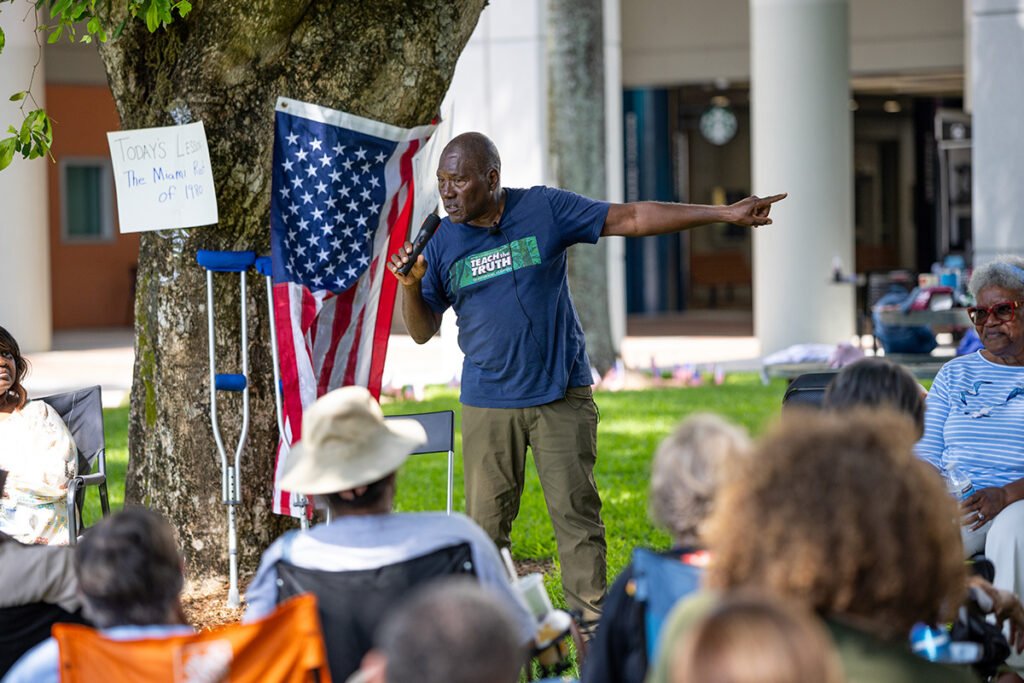
A central component of Dunn’s educational mission is the "Teach the Truth" Tours. Supported by a grant from the Mellon Foundation—a philanthropic organization that has committed $250 million to its "Monuments Project" to diversify the American commemorative landscape—these tours bring students, educators, and citizens to the physical sites of Florida’s most harrowing historical events.
Chief among these sites is Rosewood, a once-thriving Black town in Levy County. In January 1923, Rosewood was completely destroyed by a white mob following an unverified allegation of assault by a white woman against a Black man. Over several days, every Black-owned home and building was burned to the ground. Official records at the time cited a death toll of six Black residents and two white residents, though historians believe the actual number of Black victims was significantly higher. The survivors fled into the nearby swamps and eventually boarded trains to relocate, never to return. No one was ever prosecuted for the destruction of the town.
Similarly, Dunn leads groups to Ocoee, the site of the 1920 Ocoee Massacre. This event remains the bloodiest day in American political history, occurring on Election Day when a white mob attacked Black residents who were attempting to exercise their right to vote. The massacre resulted in the death of an estimated 30 to 35 Black citizens and the total displacement of the town’s Black population.
Dunn emphasizes that these are not merely "sad stories" but essential components of the American story. "Young students are the ones for whom our history is being denied," Dunn stated during a recent tour. "They need to learn these stories the most. It’s not too early to know these stories. The state is aiming to keep them in the dark."
Legal Challenges and Civic Accountability
Dunn’s advocacy extends beyond the historical to the contemporary management of public resources. He is currently a lead plaintiff in a lawsuit against Miami-Dade College regarding the proposed development of a presidential library for Donald Trump on public land. The lawsuit alleges that the college’s decision to grant land use was conducted without sufficient transparency and represents an improper use of public assets for a partisan political figure.
Dunn’s objection is framed as a matter of civic duty and the protection of future generations. He contends that public land, particularly that associated with educational institutions, should be preserved for the benefit of the student body rather than being utilized as a monument to a controversial political legacy. This legal challenge highlights Dunn’s broader philosophy: that history and the use of public space are deeply intertwined with the health of a democracy.
The Role of Urban Space and the Teach the Truth Garden
In the heart of Miami’s Overtown neighborhood—a district historically known as the "Harlem of the South" before it was decimated by the construction of Interstate 95 in the 1960s—Dunn has created a literal and figurative "green space" for the community. The Teach the Truth Garden was transformed from an abandoned lot into a thriving community hub where volunteers grow collards, tomatoes, and callaloo.
The garden serves a dual purpose. It provides a peaceful environment for mental health and reflection in an underserved urban area, and it acts as a neutral ground where different segments of society can interact. Dunn notes that local police officers often use the garden for breaks, creating opportunities for informal community policing and dialogue. For Dunn, the garden is a metaphor for the work of a historian: cultivating something productive and beautiful from ground that has been neglected or forgotten.
Digital Advocacy and Global Reach
While the physical tours and the garden are vital, Dunn has increasingly turned to social media and digital platforms to bypass traditional educational gatekeepers. He views the internet as the ultimate tool for circumventing censorship. By encouraging tour participants to share photos and videos on platforms like TikTok and Instagram, Dunn ensures that the stories of Rosewood and Ocoee reach a global audience.
"I’m reaching people in Africa, Thailand, and England," Dunn remarked, noting that his digital reach far exceeds the number of people he can physically escort to historical sites. This strategy reflects a shift in modern activism, where the democratization of information allows marginalized voices to challenge state-sanctioned narratives in real-time.
Analysis of Broader Implications
The work of Marvin Dunn occurs within a broader national trend of "educational gag orders." According to data from PEN America, there has been a 250 percent increase in book bans and curriculum restrictions across the United States since 2021. Florida has been at the forefront of this movement, often serving as a legislative laboratory for policies that are subsequently adopted by other conservative-leaning states.
The tension in Florida represents a fundamental disagreement over the purpose of history. The state administration argues that history should be used to build national pride and social cohesion by focusing on progress and shared values. In contrast, historians like Dunn argue that true social cohesion can only be achieved through a rigorous and honest accounting of past failures and injustices. They contend that ignoring the darker chapters of history does not make them disappear but rather ensures that the underlying tensions remain unresolved.
Dunn’s latest project, the "Rosewood Peace House," aims to bridge this divide. Built to resemble the homes destroyed in the 1923 massacre, the house is intended to be a "sacred space" where individuals of differing political and racial backgrounds can meet to discuss conflict resolution. It is an ambitious attempt to turn a site of historic trauma into a site of future reconciliation.
Conclusion: The Elder’s Mandate
As Marvin Dunn continues his work, he remains optimistic about the long-term prospects of American democracy, despite what he describes as a period of significant regression. He characterizes his current role as that of an "elder," a position that carries the responsibility of passing down knowledge that the formal system may no longer provide.
"My motivation is based upon what I see happening in the state—trying to suppress Black history, to keep our stories hidden," Dunn said. "I believe American democracy will be saved. It’s just taking so damn long."
Dunn’s career serves as a case study in the power of persistent, multifaceted activism. By combining scholarly research, legal challenges, community gardening, and digital storytelling, he has created a robust framework for historical preservation that is resistant to political shifts. His message to the next generation is clear: the responsibility for history lies not just with the state, but with the individuals and families who live it. In the face of legislative attempts to narrow the scope of education, Dunn’s "Teach the Truth" movement advocates for a broader, more inclusive, and ultimately more honest American narrative.