Nila Kartika Wati
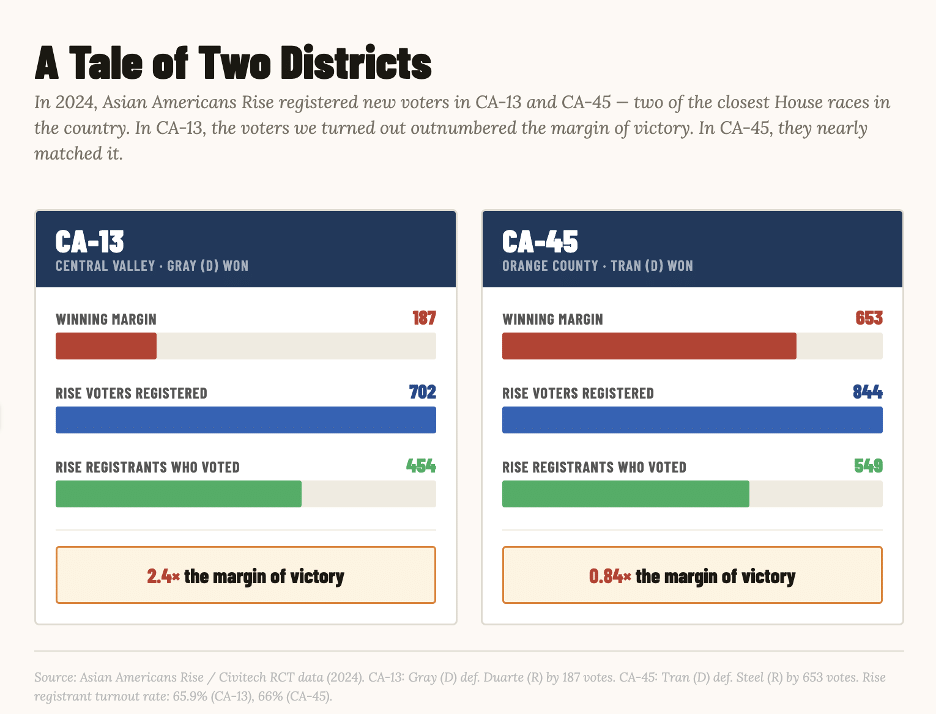
In the final accounting of the 2024 United States House of Representatives elections, the narrowest margin of victory occurred in California’s 13th Congressional District, where a race involving more than 210,000 ballots was decided by a mere 187 votes. This margin, representing less than one-tenth of one percent of the total electorate, serves as a stark illustration of a broader national trend: the increasing frequency of "micro-margin" elections where the outcome is determined not by overarching ideological shifts, but by the granular efficiency of local civic infrastructure. In this specific contest, a single community-based organization, Asian Americans Rise, successfully registered 702 new voters in the months leading up to the election. Of those newly registered individuals, 454 cast ballots—a number more than double the final margin that separated the winner from the loser.
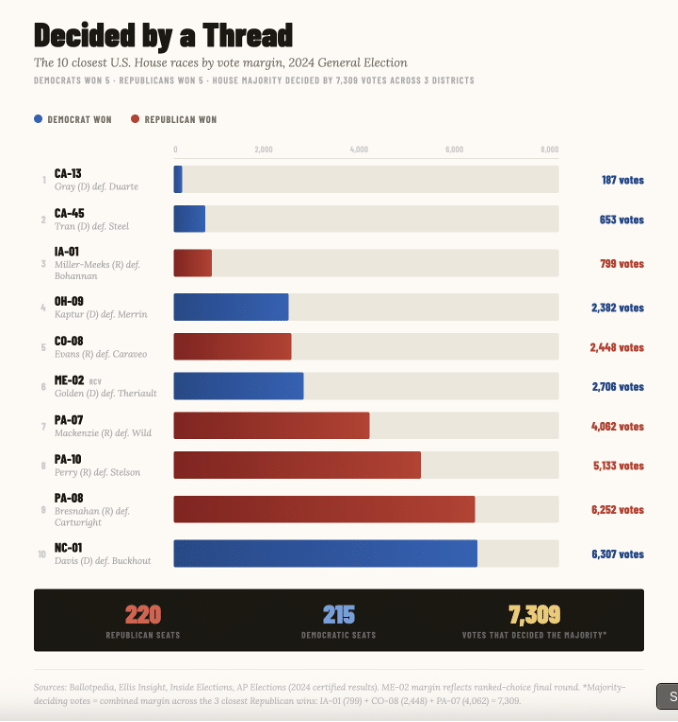
This phenomenon was not isolated to the Central Valley of California. Across the United States, the 2024 election cycle saw 13 House races decided by fewer than 8,000 votes each. On a national scale, the balance of power in the House of Representatives was effectively determined by a combined total of 7,309 votes across three pivotal seats that flipped party control. These statistics suggest that the prevailing narrative of American elections—one focused on multi-million dollar television advertising campaigns and high-level political rhetoric—may be overlooking the more decisive factor: the mechanical process of identifying, registering, and mobilizing eligible citizens who have historically been excluded from the democratic process.
The Strategic Shift: From Persuasion to Registration
For decades, political campaigns have operated on a cycle of "persuasion and turnout," focusing heavily on undecided voters in the final weeks of an election. However, organizations like Asian Americans Rise and the Rise Forward Foundation are advocating for a shift toward a "registration-first" model. This approach views voter registration not as a secondary task, but as the foundational infrastructure of a functional democracy.

The 2024 strategy employed by Asian Americans Rise targeted 12 toss-up congressional districts characterized by significant, yet under-registered, Asian American and Pacific Islander (AAPI) populations. Rather than relying on late-stage mobilization, the group initiated its efforts months in advance, utilizing sophisticated voter-file analysis and demographic modeling to locate eligible residents who were not yet on the rolls. This data-driven approach allowed the organization to bypass the inefficiencies of traditional door-knocking in favor of targeted direct mail and digital follow-ups tailored to the specific deadlines and regulations of each district.
In California’s 45th Congressional District, located in Orange County, the results further validated this model. In a contest eventually decided by 653 votes, Asian Americans Rise registered 844 voters, 549 of whom turned out to vote. The proximity of these registration numbers to the final margins of victory highlights a critical reality in modern American politics: in highly polarized districts, the "unregistered" population often exceeds the margin of victory, making registration efforts the most statistically significant variable in the election outcome.
Chronology of a High-Stakes Outreach Campaign
The timeline of the 2024 registration drive began nearly a year before Election Day. In early 2024, organizers identified the "toss-up" districts where AAPI voters could serve as the "tipping point" demographic. Unlike general outreach programs, this initiative was built on the premise that AAPI communities are often overlooked by major party apparatuses due to language barriers and a lack of historical engagement data.
By the spring of 2024, the organization had deployed its demographic modeling tools to identify "registration deserts"—geographic pockets where eligible citizenship was high but registration rates remained low. Throughout the summer, the focus remained exclusively on the administrative hurdle of registration. This involved navigating the fragmented landscape of state-level voting laws, which vary significantly in terms of deadlines, identification requirements, and online accessibility.

As the fall deadlines approached, the campaign transitioned from registration to "ballot navigation." This phase addressed the logistical challenges of voting, providing information in multiple languages and ensuring that first-time voters understood how to return mail-in ballots or locate their polling places. The final phase, occurring in the 72 hours before the election, was a "high-intensity turnout" push directed specifically at the cohort of voters the organization had registered earlier in the year.
Challenging the Narrative of Voter Apathy
A central tenet of the work performed by civic organizations in 2024 was the rejection of the "apathy" narrative. Conventional political wisdom often attributes low voter turnout to a lack of interest or civic responsibility among the public. However, analysts and organizers argue that this explanation ignores the systemic barriers that prevent participation.
"The uncomfortable truth is that this country never built voter registration to work at national scale," noted Wendy Nguyen, co-founder of Asian Americans Rise and a former strategy consultant. Nguyen and her colleagues argue that registration in the United States was historically designed as a gate rather than a bridge. Current systems are often fragmented, underfunded, and reliant on temporary surges of partisan energy rather than permanent institutional support.
Data from the 2024 cycle suggests that when the system proactively reaches out to voters—providing information in their native languages and simplifying the registration process—participation rates rise significantly. The failure to vote is often less a reflection of a voter’s character and more a reflection of a system that failed to contact them at the DMV, failed to provide materials in a language they speak, or failed to provide timely confirmation that their registration was successful.
The Economic and Infrastructure Gap in Civic Engagement
One of the primary obstacles to scaling successful registration models is the current funding structure of civic engagement. In the private sector, infrastructure is treated as a long-term investment that requires year-round maintenance. In contrast, democratic infrastructure in the U.S. is often treated like "disaster response," with resources flooding into districts only when an election is imminent, then disappearing immediately after the polls close.
State political parties, which are often tasked with registration, frequently suffer from high staff turnover and inconsistent funding. This leads to a loss of institutional knowledge and technical expertise. The 2024 cycle demonstrated that a professionalized, year-round approach—treating voter engagement as a logistical challenge rather than a messaging problem—can yield results that far outstrip traditional advertising.
The "infrastructure solution" proposed by civic leaders involves several key pillars:
- Year-Round Funding: Moving away from the "boom and bust" cycle of election-year grants toward sustained support for registration organizations.
- Centralized Data Systems: Developing more accurate, real-time tools for identifying unregistered eligible citizens.
- Specialized Outreach: Investing in "culturally competent" outreach that accounts for the linguistic and historical nuances of different ethnic and age demographics.
Broader Implications for the Future of U.S. Elections
The results of the 2024 House races have profound implications for the future of American governance. With the majority in Congress resting on fewer than 8,000 votes, the strategic value of every individual registration has reached an all-time high. This reality is likely to spark a "registration arms race" in future cycles, as both major parties and non-partisan organizations realize that the most cost-effective way to influence an election is to expand the electorate itself.
Furthermore, the success of AAPI-focused registration drives underscores the changing face of the American voter. As the fastest-growing racial or ethnic group in the U.S. electorate, Asian Americans are no longer a "niche" constituency but a decisive force in swing districts across the Sun Belt and the West Coast.
The analytical takeaway from the 2024 cycle is clear: in an era of hyper-polarization and razor-thin margins, the "best argument" is often secondary to the "best system." The winners of future elections will likely be those who invest most heavily in the unglamorous, technical, and persistent work of building civic infrastructure. As the dust settles on the 2024 contests, the data confirms that when democracy is treated as a service to be delivered rather than a sentiment to be felt, the resulting participation can change the course of national history.
Conclusion: A Call for Permanent Civic Systems
The 187-vote margin in CA-13 serves as a permanent reminder of the power of localized, targeted engagement. It highlights the fact that the machinery of democracy requires more than just high-profile candidates and televised debates; it requires a robust, permanent network of organizations capable of navigating the complexities of the modern electoral system.
By treating voter engagement as a matter of infrastructure rather than charity, organizations like Asian Americans Rise have provided a blueprint for how to stabilize and expand the democratic process. The challenge moving forward will be whether the philanthropic and political sectors can move toward a model of "always-on" civic engagement, ensuring that every eligible citizen is not only asked to vote but is given the systemic support necessary to do so. In the high-stakes environment of American politics, where 7,309 votes can determine the legislative agenda for 330 million people, the infrastructure of the ballot box has become the most critical asset in the nation’s democratic portfolio.