admin
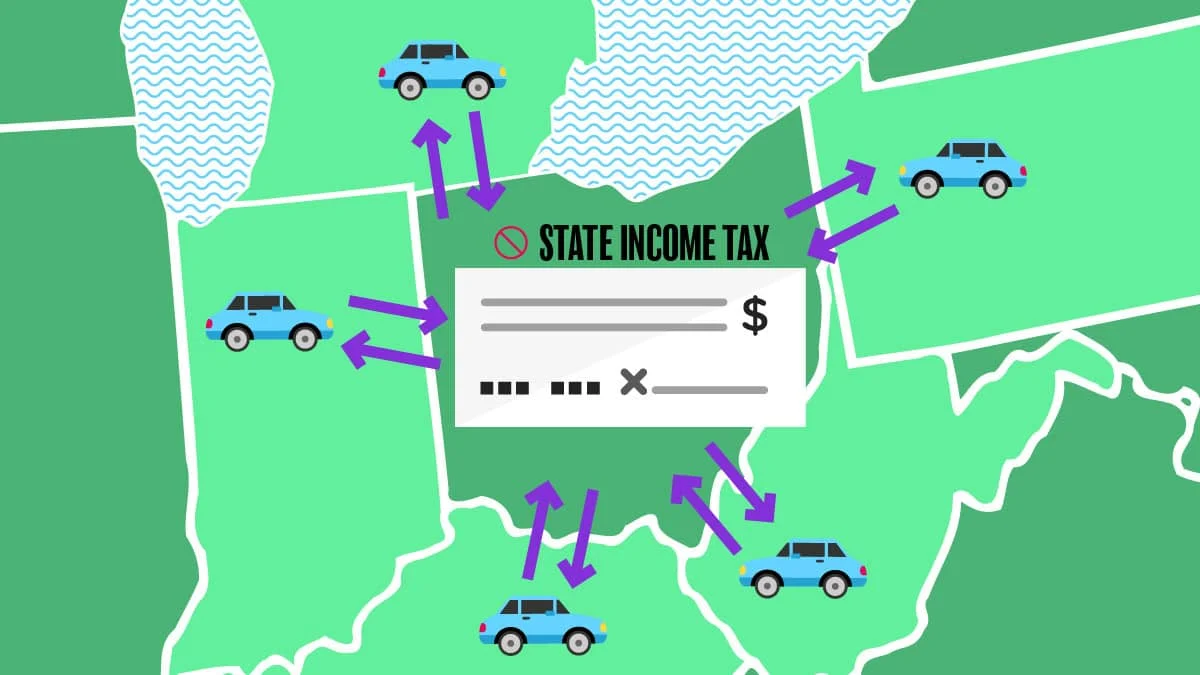
The intricate landscape of state income taxation presents a significant challenge for employees who commute across state lines for work and for the employers who manage their payroll. While the initial assumption might be that income tax must be withheld and remitted to both the state of residence and the state of employment, a critical mechanism known as state tax reciprocity often simplifies this process, allowing cross-border employees to pay income tax solely to their home state. This arrangement significantly reduces administrative burdens for both parties, streamlining tax season complexities and fostering smoother interstate economic activity.
Understanding the Core Mechanism of Tax Reciprocity
At its heart, tax reciprocity is a formal agreement between two or more states designed to prevent double taxation on wages earned by individuals who live in one state but work in another. Without such agreements, an employee could theoretically be subject to income tax in both their state of employment (as a non-resident earning income there) and their state of residence (on their total income). Reciprocity agreements eliminate this dual obligation for state income tax purposes. Under these agreements, an employee working in State A but residing in State B would be required to pay state income tax only to State B, their state of residence. This means that for eligible wages, the employer in State A would withhold income tax for State B, not State A.
The practical implementation of reciprocity hinges on the employee taking a proactive step. It is not an automatic process. To claim the exemption, the employee must complete and submit a specific exemption form or non-residence certificate issued by their state of employment to their employer. Once this correctly completed form is on file, the employer ceases withholding state income tax for the work state and instead begins withholding for the employee’s home state. For instance, if an employee resides in Kentucky but works in Ohio, and both states have a reciprocal agreement, the employee would submit Ohio’s exemption form (Form IT 4NR). Consequently, the employer would then withhold Kentucky state income tax from the employee’s wages, rather than Ohio state income tax. This crucial step prevents mis-withholding and ensures compliance with the agreement.
Historical Context and Rationale for Reciprocity Agreements
The concept of state income tax reciprocity emerged as states increasingly adopted income taxation throughout the 20th century. As urban centers grew and transportation improved, cross-border commuting became a common feature of regional economies. The absence of coordinated tax policies led to situations where individuals faced the administrative and financial burden of filing multiple state tax returns and potentially paying taxes to two different jurisdictions on the same income. While mechanisms like tax credits for taxes paid to other states existed to mitigate double taxation (i.e., not paying the same amount twice), they did not eliminate the double filing requirement.
Reciprocity agreements were thus developed as a more elegant solution, prioritizing administrative simplicity and fairness for commuters. They reflect an understanding among neighboring states that the economic benefits of a mobile workforce often outweigh the direct tax revenue from non-residents, especially when balanced by similar agreements for their own residents working out-of-state. These agreements are essentially bilateral or multilateral treaties focused on tax administration, aimed at reducing friction in interstate commerce and labor mobility. They underscore a broader principle of interstate cooperation to facilitate economic activity and minimize undue burdens on citizens and businesses.
The Landscape Without Reciprocity: The "Credit for Taxes Paid" System
In states that do not have reciprocity agreements, employees are still protected from genuine double taxation, but the administrative process is considerably more involved. In such scenarios, the state where the income was earned (the work state) typically taxes the wages earned within its borders, requiring the employee to file a non-resident tax return in that state. Subsequently, the employee’s home state usually provides a tax credit for the income tax paid to the work state. This credit prevents the employee from effectively paying tax twice on the same wages.
However, this "credit for taxes paid" system comes with its own set of complexities. The credit is generally capped at the lesser of what was actually paid to the work state or what the home state would have charged on that income. This often necessitates careful calculations and comparison of tax rates. More importantly, it requires the employee to file two state tax returns: a non-resident return for the work state and a resident return for the home state. This dual filing obligation can be confusing, time-consuming, and increases the likelihood of errors, especially for individuals unfamiliar with multi-state tax intricacies. From an employer’s perspective, while they typically withhold for the work state in these situations, employees may require more guidance on their subsequent filing obligations. The absence of reciprocity, therefore, highlights the substantial simplification and burden reduction that reciprocal agreements provide.
Economic and Demographic Implications of Interstate Commuting
The prevalence of cross-border commuting underscores the economic significance of tax reciprocity. According to various census data analyses, millions of Americans regularly cross state lines for work. For instance, in metropolitan areas bordering multiple states, such as the Washington D.C. region (Maryland, Virginia, D.C.), the New York City metropolitan area (New York, New Jersey, Connecticut, Pennsylvania), or the greater Cincinnati area (Ohio, Kentucky, Indiana), the daily flow of commuters is immense. In 2019, prior to the significant shifts brought by the pandemic, the U.S. Census Bureau reported that nearly 9 million people worked outside their county of residence, with a substantial portion crossing state lines. These individuals contribute significantly to the economies of both their home and work states, often filling critical labor gaps and fueling regional economic growth.
Reciprocity agreements facilitate this labor mobility by removing a potential financial and administrative deterrent. For businesses located near state borders, the ability to draw talent from a wider geographic pool without imposing complex tax burdens on their employees can be a significant competitive advantage. It simplifies payroll for employers, as they only need to account for one state’s income tax withholding for eligible employees, rather than managing different withholding rules for each state. This efficiency can translate into reduced administrative costs and improved employee satisfaction, as workers appreciate the straightforward tax process.
Stakeholder Perspectives and Responsibilities
For Employees: The primary benefit for employees is the simplification of their annual tax filing. Instead of preparing and filing multiple state returns, they only need to file with their home state. This saves time, reduces potential errors, and eliminates the need to navigate potentially disparate tax laws and forms across different jurisdictions. However, employees bear the responsibility of initiating the reciprocity claim by submitting the correct exemption form to their employer promptly. Failure to do so can lead to work-state taxes being withheld mistakenly, necessitating a refund claim later.
For Employers: Employers play a crucial role in the reciprocity process. Their main responsibility is to accurately implement the withholding changes once an employee submits the required exemption certificate. This involves stopping withholding for the work state and commencing withholding for the employee’s home state. At year-end, employers must accurately report the withheld amounts on Form W-2, clearly indicating which state’s taxes were withheld. While reciprocity simplifies ongoing payroll, employers must remain vigilant about compliance, ensuring all necessary documentation is obtained and processed correctly. This includes being aware of the specific forms required by each reciprocal state pair. Organizations like the American Payroll Association frequently provide guidance to employers on these complex issues, emphasizing the importance of accurate record-keeping and timely processing.
For State Tax Authorities: From the perspective of state revenue departments, reciprocity agreements represent a carefully considered trade-off. While a state might forgo direct income tax revenue from non-resident commuters working within its borders, it benefits from its own residents who work out-of-state also being exempt from taxes in their employment state. More broadly, these agreements reduce the administrative burden on state tax agencies by minimizing the number of non-resident tax returns they need to process and audit. A spokesperson for a Midwestern state’s Department of Revenue, speaking on background, once noted, "While we closely monitor the fiscal impact, the administrative efficiencies gained and the goodwill fostered by facilitating interstate commerce often justify these agreements." This administrative efficiency allows states to focus resources on resident taxpayers and other revenue streams, fostering a more streamlined tax system overall.
Important Nuances and Limitations of Reciprocity
It is critical to understand that tax reciprocity applies only to state income tax. It does not extend to federal payroll taxes, such as Social Security, Medicare, and federal income tax withholding, which remain universally applicable regardless of state lines. Furthermore, reciprocity agreements generally do not automatically cover local taxes, including city, county, school district, or occupational taxes. An employee might still be subject to local taxes in their work municipality, even if their state income tax is remitted to their home state. This distinction is crucial and often overlooked, leading to potential confusion. For example, some cities in Ohio levy a municipal income tax that would still apply to a Kentucky resident working in that Ohio city, even with the Ohio-Kentucky state reciprocity agreement in place.
Another practical consideration arises if an employer mistakenly withholds taxes for the work state, perhaps because the employee did not submit the exemption certificate in a timely manner. In such a scenario, the employee will still need to file a non-resident tax return in the work state, not to claim a credit, but specifically to request a refund of the improperly withheld taxes. This is because, under a reciprocity agreement, no tax was legally owed to the work state in the first place. The "credit for taxes paid to another state" mechanism, used in non-reciprocal situations, does not apply here; the correct fix is to obtain a full refund from the work state. This underscores the importance of employees submitting the correct forms at the earliest opportunity.
A Comprehensive Overview of Reciprocal Agreements by State
The network of reciprocal agreements is not universal; it exists between specific pairs of states. For an employee to benefit, they must reside in one state and work in another state that together have an active reciprocity agreement. The agreements, and the forms required to claim the exemption, vary by state. Below is a detailed chart outlining these agreements, specifying where the employee works, where they live to qualify, and the necessary form to file for exemption. This information is crucial for accurate payroll withholding and individual tax planning.
States with Reciprocal Tax Agreements
Use this chart to identify which states have reciprocal agreements and the corresponding form employees must complete to request withholding for their home state.
| Where the Employee Works | Where the Employee Lives | Form Employee Fills Out |
|---|---|---|
| Arizona | California, Indiana, Oregon, Virginia | Arizona Form WEC |
| D.C. | All nonresidents | Form D-4A |
| Illinois | Iowa, Kentucky, Michigan, Wisconsin | Form IL-W-5-NR |
| Indiana | Kentucky, Michigan, Ohio, Pennsylvania, and Wisconsin | Form WH-47 |
| Iowa | Illinois | Form 44-016 |
| Kentucky | Illinois, Indiana, Michigan, West Virginia, Wisconsin, Virginia (with conditions), Ohio (with conditions) | Form 42A809 |
| Maryland | D.C., Pennsylvania, Virginia, West Virginia | Form MW507 |
| Michigan | Illinois, Indiana, Kentucky, Minnesota, Ohio, Wisconsin | Form MI-W4 |
| Minnesota | Michigan, North Dakota | Form MWR |
| Montana | North Dakota | Form MW-4 |
| New Jersey | Pennsylvania | Form NJ-165 |
| North Dakota | Minnesota, Montana | Form NDW-R |
| Ohio | Indiana, Kentucky, West Virginia, Michigan, Pennsylvania | Form IT 4NR |
| Pennsylvania | Indiana, Maryland, New Jersey, Ohio, Virginia, West Virginia | Form REV-419 |
| Virginia | D.C., Kentucky, Maryland, Pennsylvania, West Virginia | Form VA-4 |
| West Virginia | Kentucky, Maryland, Ohio, Pennsylvania, Virginia | Form WV/IT-104NR (page 2 of Form WV/IT-104) |
| Wisconsin | Illinois, Indiana, Kentucky, Michigan | Form W-220 |
States not listed above generally do not have reciprocity agreements. Instead, most states with an income tax give residents a credit for income tax paid to another state, ensuring the same wages are not taxed twice, though requiring dual filing. It is imperative for both employees and employers to consult the most current forms and guidelines directly from the respective state revenue websites, as forms and regulations can be updated annually.
Future Outlook and Policy Considerations
The increasing prevalence of remote and hybrid work models, significantly accelerated by global events such as the COVID-19 pandemic, may further amplify the complexities of interstate taxation. While reciprocity agreements primarily address traditional cross-border commuting, the lines are blurring for employees who might reside in one state, be employed by a company in another, and occasionally work from a third location. This evolving work landscape could prompt states to re-evaluate existing reciprocity agreements or consider new forms of interstate tax cooperation to adapt to modern work realities. Discussions around broader federal frameworks for interstate taxation or expanded multilateral agreements could become more prominent in policy debates, aiming to provide more uniform solutions for a national workforce that is increasingly untethered from a single physical workspace.
Maintaining awareness of these agreements is not merely a compliance issue; it is a critical component of effective human resources management and personal financial planning in a mobile society. For businesses, understanding and correctly implementing reciprocity ensures a competitive edge in attracting and retaining talent, particularly in economically integrated border regions. For individuals, it represents significant savings in time and effort during tax season, reducing potential stress and confusion.
Conclusion
State tax reciprocity agreements serve as a vital mechanism for simplifying income tax obligations for millions of cross-border commuters across the United States. By allowing employees to pay state income tax only to their state of residence, these agreements alleviate the burden of dual state filings and prevent administrative complexities for both employees and their employers. While offering substantial benefits, it is crucial to remember that these agreements are not universal, apply only to state income tax (excluding federal and often local taxes), and require proactive action from the employee through the submission of specific exemption forms. Staying informed about the specific agreements in place and adhering to the necessary procedures is paramount for ensuring compliance, minimizing tax-related hassle, and fostering a smoother, more efficient interstate economy. For any business managing payroll for a geographically diverse workforce, leveraging tools that accurately calculate and manage these tax specifics is indispensable, ensuring compliance and operational efficiency in a dynamic regulatory environment.