Julia Chirkova
The Public Company Accounting Oversight Board (PCAOB) is initiating a significant update to its auditing standards concerning comfort letters, aiming to remove an outdated provision that may hinder auditors from providing crucial assurances to underwriters and other parties involved in capital-raising activities. The proposed amendments to Auditing Standard (AS) 6101, Letters for Underwriters and Certain Other Requesting Parties, seek to eliminate the "135-day convention," a rule that has historically prevented auditors from offering negative assurance on subsequent changes to selected financial statement items if those changes occurred more than 135 days after the end of a reporting period. This change, announced on November 3, is intended to ensure that the standard remains relevant and functional within the dynamic landscape of today’s capital markets.
Addressing an Outdated Provision in Auditor Assurance
At the heart of the PCAOB’s proposal lies the removal of the 135-day convention, a temporal limitation that has become increasingly misaligned with the operational realities of capital markets. Historically, AS 6101, first adopted as an interim standard in 2003, has contained a provision that restricts auditors from providing negative assurance—a statement confirming that no evidence has come to the auditor’s attention to dispute certain facts—on financial information that is more than 135 days old relative to the end of a reporting period.
PCAOB Chairman Demetrios Logothetis articulated the rationale behind this proposed amendment during a board meeting, emphasizing that the targeted changes aim to prevent an "outdated timing convention" from impeding auditors’ ability to offer negative assurance when they deem it appropriate. He characterized the proposed revision as "narrow, but it matters," underscoring its importance in ensuring the standard "continues to work as intended in today’s capital markets."
The Crucial Role of Comfort Letters in Capital Formation
Comfort letters are a cornerstone of the due diligence process when companies seek to raise capital through public offerings or private placements. These letters are issued by a company’s independent auditors to underwriters, initial purchasers, or other specified parties. They provide a degree of assurance regarding various aspects of the financial information included in offering documents, such as registration statements or prospectuses.
According to insights from accounting firm Mayer Brown, a comfort letter serves as a vital mechanism to deliver "certain assurances with respect to financial information included in a registration statement, prospectus, or offering memorandum used for the securities offering." Underwriters, often investment banks, rely on these assurances as part of their comprehensive due diligence to assess the reliability of the financial data presented to potential investors. This diligence is critical for protecting investors and ensuring the integrity of the capital markets.
The 135-Day Convention’s Impact on Market Access
The existing 135-day convention creates a significant hurdle for companies seeking to raise capital. Public companies may strategically plan to access capital markets at times that fall beyond this 135-day window, particularly if their next required financial reports are not yet due. During such periods, underwriters may seek negative assurance from auditors concerning any subsequent changes to key financial statement items.
However, under the current AS 6101, even if an auditor has performed procedures and found no discrepancies, they are prohibited from providing this negative assurance if the requested period extends beyond 135 days from the end of the most recent audited or reviewed period. In these scenarios, the auditor might be limited to reporting only the procedures performed and the findings obtained, rather than offering the broader comfort that an underwriter might seek, even when the company is otherwise current in its mandated filings.
The PCAOB highlights that this restriction can effectively prevent auditors from providing the necessary assurance, thereby creating an unnecessary impediment to capital formation. For instance, a calendar-year reporting company might find itself in a situation where, between a date 135 days after its third-quarter reporting period (September 30) and the filing of its annual report (typically due between March 1 and March 31), it is unable to obtain negative assurance on subsequent financial changes. This temporal gap can lead to situations where underwriters are hesitant to proceed with offerings if they cannot obtain the desired auditor assurances, potentially leaving companies facing delays or even the cancellation of crucial capital-raising initiatives.
Chairman Logothetis’s Perspective on Modernization
PCAOB Chairman Demetrios Logothetis has been a vocal advocate for modernizing the board’s standards to reflect current market practices. He reiterated the practical consequences of the 135-day rule, stating that it can present "a real consequence." He elaborated that an underwriter’s unwillingness to proceed without negative assurance could force a company, despite meeting all its filing obligations, to "face an unnecessary obstacle in accessing the capital markets solely because of the passage of time."
The proposed amendment seeks to replace the rigid 135-day convention with a more flexible framework tied directly to the issuer’s reporting obligations. This approach aims to ensure that an auditor’s ability to provide negative assurance is aligned with the company’s ongoing financial reporting cycle, rather than an arbitrary time limit.
"Updating this outdated provision better aligns an auditor’s ability to keep investors informed about company performance with current reporting and filing deadlines," Logothetis stated. He further emphasized that this proposal represents a continuation of the PCAOB’s commitment to enhancing its auditing standards, with the overarching goals of preserving investor protection, supporting efficient capital formation, and clarifying that the decision to provide negative assurance ultimately rests with the auditor’s professional judgment.
Board Member Hauptman: A Call for a More Durable Standard
Board member Kyle Hauptman provided further context and support for the proposed change, emphasizing the arbitrary nature of the 135-day figure. He explained that while the number may have reflected the reporting framework at the time of the standard’s adoption, it was never the substantive issue. Instead, the core objective was to ensure the auditing standard functioned effectively in conjunction with the prevailing reporting framework.
Hauptman articulated a key point of contention with the existing rule: "Companies do not plan their capital needs around a 135-day clock in a PCAOB auditing standard. Opportunities arise. Markets change. A company may determine that it is the right time to raise capital. Our standard should not unnecessarily get in the way simply because a certain number of days has passed."
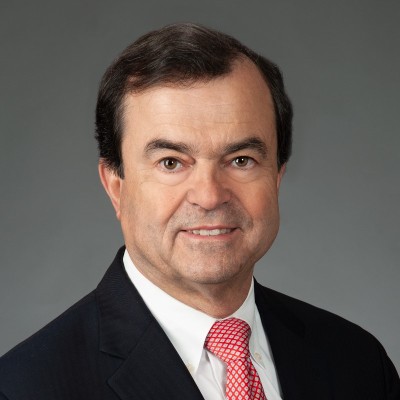
He posed a critical question regarding the proposed revisions: "Why replace 135 with some other number? If what matters is the reporting deadline, why not tie our standard to the reporting deadline? That is what this proposal does." Hauptman believes this approach will result in a "more durable standard." He elaborated that if reporting requirements evolve in the future, the PCAOB should not be compelled to revisit the standard solely to amend a numerical limit. By linking the standard to the reporting obligations themselves, the board creates a more adaptable and enduring framework.
Broader Implications for Capital Markets and Investor Confidence
The PCAOB’s proposed amendments have significant implications for the efficiency and accessibility of capital markets. By removing the 135-day restriction, the board aims to:
- Enhance Capital Formation: Companies will face fewer artificial constraints when seeking to raise capital, potentially leading to more timely and efficient access to funding. This can be particularly beneficial for growth-oriented companies or those responding to market opportunities.
- Support Underwriter Due Diligence: Underwriters will have a clearer path to obtaining necessary assurances from auditors, facilitating their due diligence processes and potentially reducing transaction complexities.
- Preserve Investor Protection: The PCAOB maintains that the proposed changes will not compromise investor protection. The decision to provide negative assurance will continue to be guided by the auditor’s professional judgment, ensuring that any assurances offered are based on rigorous audit procedures and evidence.
- Promote Market Adaptability: The shift to a reporting-obligation-based framework makes the auditing standard more resilient to changes in regulatory reporting requirements, reducing the need for frequent amendments.
The move signals a commitment from the PCAOB to continuously evaluate and update its standards to ensure they remain relevant and effective in the evolving financial landscape. This proactive approach is crucial for maintaining the integrity and efficiency of the U.S. capital markets.
Public Comment Period and Next Steps
The PCAOB has opened a public comment period for the proposed amendments to AS 6101. Interested parties are invited to submit their feedback by January 4, 2027. Comments can be submitted via email to [email protected] or by postal mail to the Office of the Secretary, PCAOB, 1666 K Street, NW, Washington, DC 20006-2803. All submissions should clearly reference the board release number, PCAOB No. 2026-008, in the subject or reference line to ensure proper processing.
Following the public comment period, the PCAOB will review all submitted feedback before making any final decisions on the proposed amendments. This deliberative process underscores the board’s commitment to a thorough and inclusive standard-setting approach. The proposed changes represent a pragmatic step towards modernizing auditing standards and ensuring they effectively support the vital function of capital formation in the U.S. economy.