Lana Rhoades
The landscape of American commerce has undergone a fundamental transformation over the last decade, transitioning from a brick-and-mortar centric model to a global digital marketplace. As online retail sales are projected to exceed $8.1 trillion by 2026, the regulatory frameworks governing these transactions have become a primary focus for state legislatures and corporate financial officers alike. For modern e-commerce retailers, the concept of "sales tax nexus" has evolved from a niche accounting concern into a pillar of institutional risk management and strategic planning. The ability to navigate these shifting legal requirements is no longer optional; it is a prerequisite for operational longevity in a market where non-compliance can lead to devastating audits and retroactive tax liabilities.
The Historical Context: From Quill to Wayfair
To understand the current state of sales tax nexus, one must examine the legal chronology that dismantled the traditional "physical presence" standard. For decades, the precedent set by the 1992 Supreme Court case Quill Corp. v. North Dakota protected remote sellers from collection obligations unless they maintained a physical footprint—such as an office or warehouse—within a state. This standard, while clear, became increasingly antiquated as the internet revolutionized consumer behavior.
The turning point occurred in June 2018 with the landmark decision in South Dakota v. Wayfair, Inc. The Supreme Court ruled that states could require remote sellers to collect and remit sales tax based on economic activity alone, even in the absence of physical property or personnel. This decision effectively birthed the "economic nexus" era. In the seven years since that ruling, nearly every state with a general sales tax has implemented its own version of economic nexus laws, creating a patchwork of thresholds and definitions that vary significantly by jurisdiction.
Defining the Modern Nexus: Physical and Economic
In the contemporary regulatory environment, nexus is established through two primary avenues: physical presence and economic connection. While economic nexus garners the majority of headlines, physical nexus remains a potent trap for the unwary.
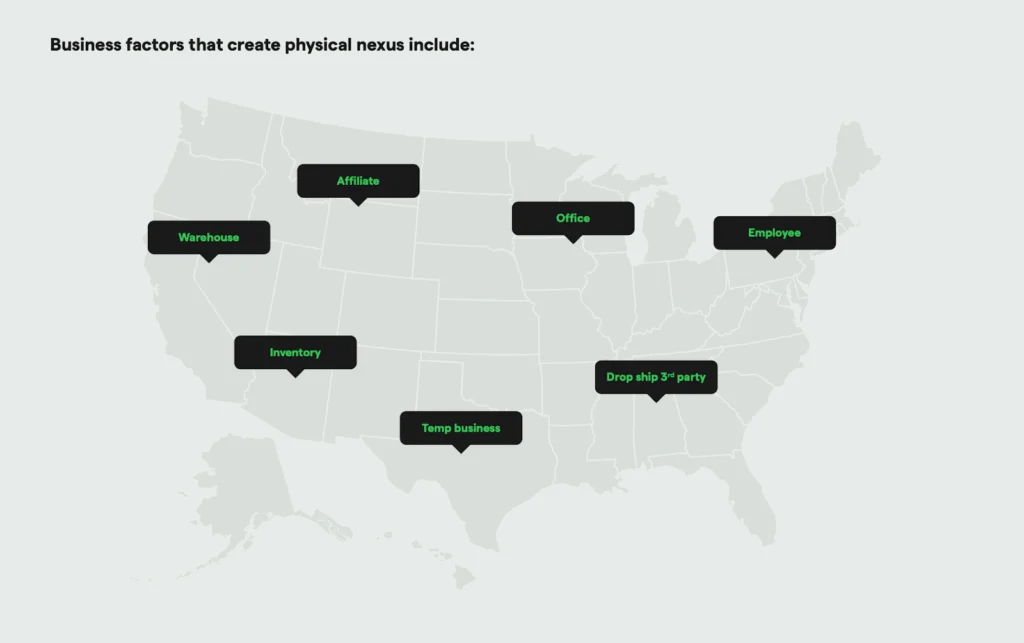
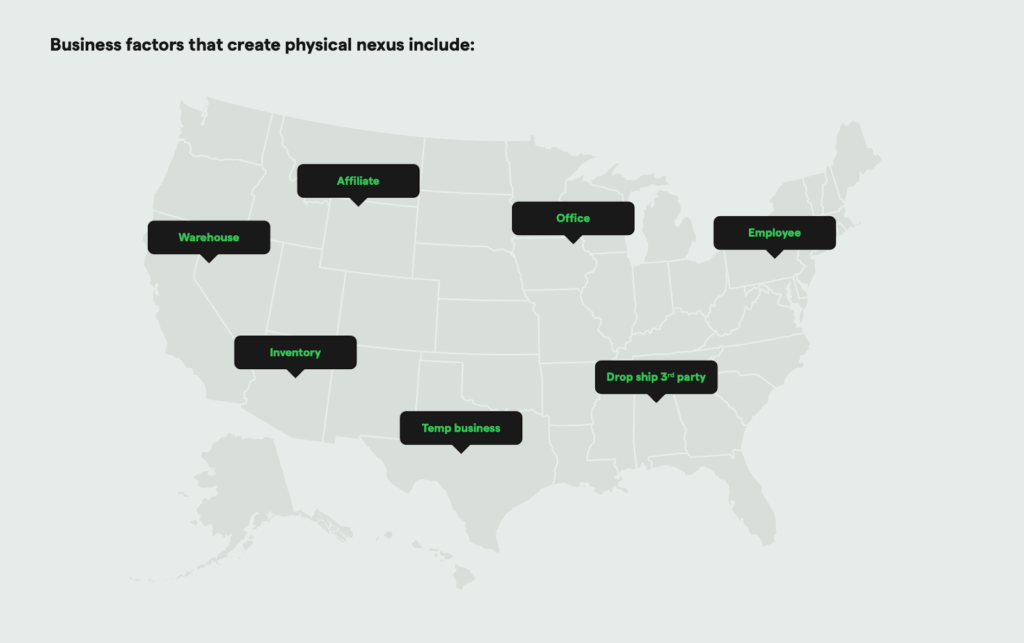
Physical nexus is triggered by tangible business activities within a state’s borders. This includes owning or leasing property, maintaining an office, or employing staff—including remote workers. However, the definition has expanded to include "click-through nexus," where in-state affiliates drive traffic to a site, and "affiliate nexus," where related entities create a presence. One of the most common triggers for physical nexus in the modern era is the use of Third-Party Logistics (3PL) providers. When a retailer utilizes services like Fulfillment by Amazon (FBA), their inventory is often distributed across dozens of warehouses nationwide. In the eyes of many state revenue departments, the mere presence of a single unit of inventory in a local warehouse is sufficient to establish a physical nexus, regardless of whether the seller has any other connection to that state.
Economic nexus, conversely, is governed by transaction volume or revenue totals. When a business exceeds a state-mandated threshold—frequently $100,000 in gross sales or 200 separate transactions—it is legally obligated to register for a sales tax permit and begin collections.

The Statistical Reality of E-commerce Growth
The urgency surrounding nexus compliance is driven by the sheer scale of the digital economy. According to market forecasts, global e-commerce sales are expected to surpass $8.1 trillion by 2026, with the U.S. market alone exceeding $220 billion in annual growth. This rapid expansion represents a significant "tax gap" that state governments are eager to close.
Supporting data suggests that state tax departments are becoming more aggressive in their enforcement. As revenue from traditional retail fluctuates, the stability of e-commerce tax revenue has become a vital component of state budgets. Consequently, states are investing more in data-sharing agreements and automated discovery tools to identify non-compliant remote sellers. For a business operating across all 50 states, the risk of an audit is no longer a statistical anomaly but a mathematical probability if thresholds are ignored.
Divergent State Thresholds and the Trend Toward Simplification
While the Wayfair decision empowered states to set their own rules, it also created a compliance nightmare for small and medium-sized enterprises (SMEs). Each state maintains its own "safe harbor" thresholds, leading to a lack of uniformity.
For example, California maintains a high threshold, requiring registration only after a business grosses more than $500,000 in sales within a calendar year. Conversely, Illinois enforces a $100,000 revenue threshold or a 200-transaction count within a rolling twelve-month period. This disparity requires retailers to monitor their sales data in real-time to identify the exact moment they "cross the line" into a new jurisdiction.
Interestingly, a new trend toward simplification has emerged between 2021 and 2026. Recognizing the administrative burden placed on small businesses, several states have begun removing the "transaction count" threshold (e.g., the 200-sale rule), opting instead to rely solely on a gross revenue figure. This shift aims to prevent situations where a business with high-volume, low-value sales—such as a sticker or stationery shop—is forced to register in dozens of states despite generating minimal revenue.
The Nuances of Product Taxability
Establishing nexus is only the first step in the compliance journey; the second is determining what is actually taxable. The United States does not have a federal value-added tax (VAT); instead, taxability is determined at the state and local levels. Most "tangible personal property"—items that can be seen, weighed, or touched—are subject to tax.
However, many states offer exemptions for "necessities," which often include:
- Unprepared grocery items and food staples.
- Prescription and sometimes over-the-counter medications.
- Certain types of clothing (e.g., in Pennsylvania and Minnesota).
- Medical devices and prosthetics.
The digital frontier adds further complexity. The taxability of Software as a Service (SaaS), digital downloads, and streaming services varies wildly. Some states tax SaaS as a tangible good, some as a service, and others exempt it entirely if it is used for business purposes. Retailers must map their product catalogs against these state-specific rules to ensure they are not over-collecting from customers or under-remitting to the state.
Industry Reactions and the Rise of "TaxTech"
The complexity of these laws has drawn reactions from various stakeholders. Small business advocates have long argued that the cost of compliance—estimated by some studies to exceed $20,000 annually for a mid-sized retailer—acts as a barrier to entry. In response, the "TaxTech" industry has flourished. Companies like TaxJar, Avalara, and Vertex have developed automated solutions that integrate directly with e-commerce platforms like Shopify, Amazon, and Magento.
These tools use geolocation and real-time API calls to calculate the exact tax rate for every transaction, accounting for state, county, city, and special district taxes. Financial analysts suggest that automation is no longer a luxury but a strategic necessity. "Manual tracking of nexus is a recipe for disaster," notes one industry consultant. "By the time a business realizes they have hit a threshold, they may already owe months of back taxes, plus interest and penalties."
Broader Implications: M&A and Financial Audits
The implications of nexus compliance extend beyond day-to-day operations into the realm of corporate finance and mergers and acquisitions (M&A). During the due diligence process of an acquisition, a target company’s sales tax liability is often a primary area of scrutiny. If a company has been selling nationwide without registering for nexus, the potential "unrecorded liability" can be large enough to derail a deal or significantly lower the purchase price.
Furthermore, state revenue departments are increasingly collaborating. If a business is audited in one state, that state may share its findings with others, leading to a "domino effect" of audits. Voluntary Disclosure Agreements (VDAs) have become a common tool for businesses to come forward and settle unpaid taxes in exchange for a waiver of penalties, but these must be initiated before a state issues an audit notice.
Strategic Roadmap for Compliance
To mitigate risk in 2026 and beyond, retailers are advised to follow a rigorous compliance framework:
- Nexus Mapping: Conduct a quarterly review of physical presence (employees, inventory, 3PL) and economic activity (revenue by state).
- Threshold Monitoring: Utilize automated dashboards to track sales against state-specific thresholds, with alerts set at 80% of the limit.
- Registration: Once a threshold is met, businesses must obtain a sales tax permit before they begin collecting tax. Collecting tax without a permit is considered tax fraud in many jurisdictions.
- Taxability Verification: Regularly audit the product catalog to ensure tax codes are correctly applied to exempt and digital goods.
- Exemption Certificate Management: For B2B sellers, maintaining valid resale certificates for tax-exempt customers is critical to surviving an audit.
As the global e-commerce market continues its upward trajectory toward the $8 trillion mark, the "tangled web" of sales tax nexus will likely remain a defining challenge for the industry. While states may move toward more uniform standards through initiatives like the Streamlined Sales and Use Tax Agreement (SSUTA), the burden of compliance remains firmly on the shoulders of the retailer. In this environment, the most successful businesses will be those that treat tax compliance not as an administrative hurdle, but as a core component of their financial strategy.