Lana Rhoades
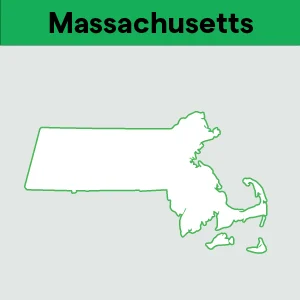
The Commonwealth of Massachusetts maintains a distinctive approach to sales and use tax, particularly concerning the food and beverage sector. While the state provides broad exemptions for essential grocery items, it enforces a specific "meals tax" on prepared foods that creates a complex compliance landscape for retailers, restaurateurs, and mobile food vendors. Understanding these nuances is critical for businesses operating within the state, as the distinction between a non-taxable grocery item and a taxable meal often hinges on the method of preparation, the quantity sold, or the primary nature of the business.
The Dual Framework of Massachusetts Food Taxation
Massachusetts tax law separates food items into two primary categories: exempt grocery items and taxable meals. Under the Massachusetts General Laws (M.G.L. c. 64H, § 6), most food products for human consumption are exempt from the standard 6.25% sales tax. This exemption is designed to reduce the financial burden on residents for basic necessities. However, the state also imposes a 6.25% tax on "meals," which is defined as any food or beverage provided by a "restaurant."
A "restaurant" is defined broadly under state law to include any eating establishment where food, drink, or meals are prepared and sold for consumption on or off the premises. This includes traditional sit-down restaurants, cafes, cafeterias, food trucks, snack bars, and even deli counters within larger grocery stores.
The Local Option Sales Tax on Meals
In addition to the 6.25% statewide tax, Massachusetts allows individual cities and towns to adopt a "local option" meals tax. Since the legislation was enacted in 2009, over 200 of the state’s 351 municipalities have opted to implement this additional 0.75% tax. In these jurisdictions, the total tax on prepared meals rises to 7%. This revenue is collected by the state’s Department of Revenue (DOR) and subsequently redistributed to the participating municipalities to fund local projects and infrastructure.
Defining Taxable vs. Non-Taxable Groceries
One of the most notable aspects of the Massachusetts tax code is its treatment of items that other states often tax as luxuries. In many jurisdictions, "junk food" such as candy and soft drinks are subject to sales tax even if other groceries are exempt. Massachusetts, however, includes these items under its general grocery exemption.
The Grocery Exemption Scope
In Massachusetts, the following are generally non-taxable:
- General Groceries: Meat, poultry, fish, fruits, vegetables, and dairy products.
- Candy and Confections: Unlike many neighboring states, Massachusetts does not tax candy sold in grocery settings.
- Soft Drinks: Bottled or canned sodas, carbonated water, and fruit juices sold in their original containers are exempt.
- Alcoholic Beverages: While subject to separate excise taxes at the wholesale and retail levels, alcoholic beverages sold for off-premises consumption (such as at a liquor store) have been exempt from state sales tax since a 2010 ballot initiative repealed the tax.
The Prepared Food Threshold
The exemption for groceries ends when food is prepared for immediate consumption. For instance, a raw chicken breast purchased at a grocery store is tax-exempt. However, a rotisserie chicken sold hot and ready-to-eat in the same store is classified as a meal and is subject to the 6.25% tax (plus any local option).
The "Primarily Engaged" Rule for Businesses
The Massachusetts Department of Revenue utilizes a "primarily engaged" test to determine if a business must tax all its food sales. If a business derives more than 75% of its gross sales from the sale of meals, it is generally required to collect tax on all food items sold, including those that might otherwise be considered groceries.
For example, a bakery that primarily serves sandwiches and coffee (where "meals" exceed 75% of revenue) may be required to tax a single loaf of bread that would be exempt if sold in a supermarket. This rule aims to prevent unfair competition between restaurants and grocery stores while simplifying the collection process for high-volume prepared food vendors.
The "Rule of Six" for Baked Goods
Massachusetts law provides a specific exemption for bulk purchases of baked goods. While a single muffin or donut sold at a coffee shop is taxable as a meal, the sale of six or more units of the same or varied baked goods (such as a half-dozen bagels or a box of twelve donuts) is considered a grocery purchase and is exempt from tax, provided the items are sold as a single unit for off-premises consumption.
Beverage Taxation: Poured vs. Packaged
The taxability of beverages in Massachusetts is determined by the delivery method and the container. This distinction is a frequent source of confusion for small business owners.
Fountain and Poured Drinks
Any beverage poured from a fountain, tap, or carafe is considered a "meal" component. This includes:
- Coffee or tea poured into a cup.
- Soda from a fountain dispenser.
- Milkshakes or smoothies prepared to order.
These items are consistently taxable at the 6.25% rate (plus local options).
Unopened Containers
Beverages sold in their original, unopened containers—such as a 20-ounce bottle of soda, a gallon of milk, or a can of sparkling water—are typically treated as exempt groceries. This remains true even if sold in a restaurant, provided the restaurant does not meet the "primarily engaged" threshold or the item is clearly sold for off-premises consumption as a packaged good.
Specialized Categories and Exceptions
The Massachusetts tax code includes several specific provisions for unique dining and food service scenarios.
Vending Machines
Food and beverages sold through vending machines are subject to a specific price threshold. As of the current regulatory environment, items sold through vending machines are generally exempt if they are sold for less than $3.50. If the price of an item (such as a premium sandwich or a large salad) exceeds $3.50, it is considered a taxable meal.
Catering and Delivery Services
Catering services are subject to the meals tax on the total price of the food provided. Furthermore, the tax applies to delivery charges if they are part of the sale of the meal. With the rise of third-party delivery apps like DoorDash and UberEats, the responsibility for tax collection has shifted; in many cases, the platform acts as a "marketplace facilitator" and is responsible for collecting and remitting the 6.25% (plus local option) tax to the state.
Delis and Salad Bars
In a grocery store setting, the "deli rule" applies. If a customer purchases sliced deli meat by the pound, it is an exempt grocery. If that same meat is placed between two slices of bread to create a sandwich, it becomes a taxable meal. Similarly, food sold at self-service salad bars is taxable because it is prepared for immediate consumption.
Historical Context and Legislative Evolution
The current structure of Massachusetts food tax is the result of several decades of legislative shifts. For much of the late 20th century, the sales tax rate remained at 5%. In 2009, amidst the budgetary pressures of the Great Recession, the Massachusetts Legislature voted to increase the statewide sales and use tax to 6.25%.
This 2009 "Tax Act" also introduced the local option meals tax, giving municipalities a tool to generate local revenue from visitors and diners. Shortly after, in 2010, a significant political shift occurred when Massachusetts voters passed "Question 1," a ballot initiative that repealed the sales tax on alcoholic beverages. Proponents argued that taxing alcohol at both the excise and sales levels constituted "double taxation" and hurt local package stores near the New Hampshire border (where there is no sales tax).
Compliance and Technological Integration
For businesses, maintaining compliance in Massachusetts requires meticulous record-keeping. The Department of Revenue requires businesses to register for a "Sales Tax on Meals" permit, which is distinct from a general sales tax permit.
The Role of Automation
The complexity of Massachusetts tax—where a bottle of water is exempt but a cup of water is taxable, or five donuts are taxable while six are not—has led many businesses to adopt automated tax software. Systems like TaxJar or integrated Point of Sale (POS) solutions utilize the TaxJar API to apply real-time tax logic to transactions. These tools are programmed with Massachusetts-specific product tax codes, ensuring that "poured" items are flagged for tax while "packaged" items remain exempt.
Audit Risks
The Massachusetts DOR is known for active enforcement of meals tax compliance. Common audit triggers include discrepancies between reported gross sales and meal tax remittances, or the failure of a business to adopt the 0.75% local option in a jurisdiction that has enacted it. Businesses found in non-compliance may face interest and penalties that significantly exceed the original tax owed.
Broader Economic Implications
The Massachusetts meals tax serves as a vital revenue stream for the Commonwealth. According to state financial reports, the meals tax generates hundreds of millions of dollars annually, contributing to the General Fund and supporting public health and safety initiatives.
However, the disparity between Massachusetts and its neighbors creates a competitive challenge. New Hampshire, which borders Massachusetts to the north, has no general sales tax and no meals tax, though it does have a "Rentals and Meals" tax of 8.5% that applies only to prepared meals and room rentals. To the south, Rhode Island imposes a 7% sales tax plus a 1% local meal tax, making its total meal tax (8%) higher than the maximum Massachusetts rate (7%).
Industry advocates, such as the Massachusetts Restaurant Association, frequently monitor these rates, arguing that while the tax is a necessary revenue source, excessive local options or administrative complexities can place a heavy burden on small "mom-and-pop" establishments that lack the sophisticated accounting departments of larger chains.
Summary of Taxability for Common Items
To assist businesses and consumers in navigating these regulations, the following categorization summarizes the standard tax treatment in the Commonwealth:
- Hot Food (Pizza, Rotisserie Chicken): Taxable at 6.25% (+ local option).
- Deli Sandwiches: Taxable.
- Sliced Deli Meats (by weight): Exempt.
- Bakery Items (1-5 units): Taxable.
- Bakery Items (6+ units): Exempt.
- Bottled Water/Soda: Exempt.
- Fountain Soda/Coffee: Taxable.
- Candy and Snacks: Exempt.
- Alcohol (Package Store): Exempt from Sales Tax (Excise Tax applies).
- Alcohol (Restaurant/Bar): Taxable as part of a meal.
As the economy continues to evolve with more "hybrid" retail models—such as breweries that sell packaged snacks or grocery stores with extensive "grab-and-go" sections—the Massachusetts Department of Revenue continues to issue Technical Information Releases (TIRs) to clarify these boundaries. For businesses, staying informed through official state guidance and utilizing automated compliance tools remains the most effective strategy for managing these intricate tax obligations.