Candice Horbacz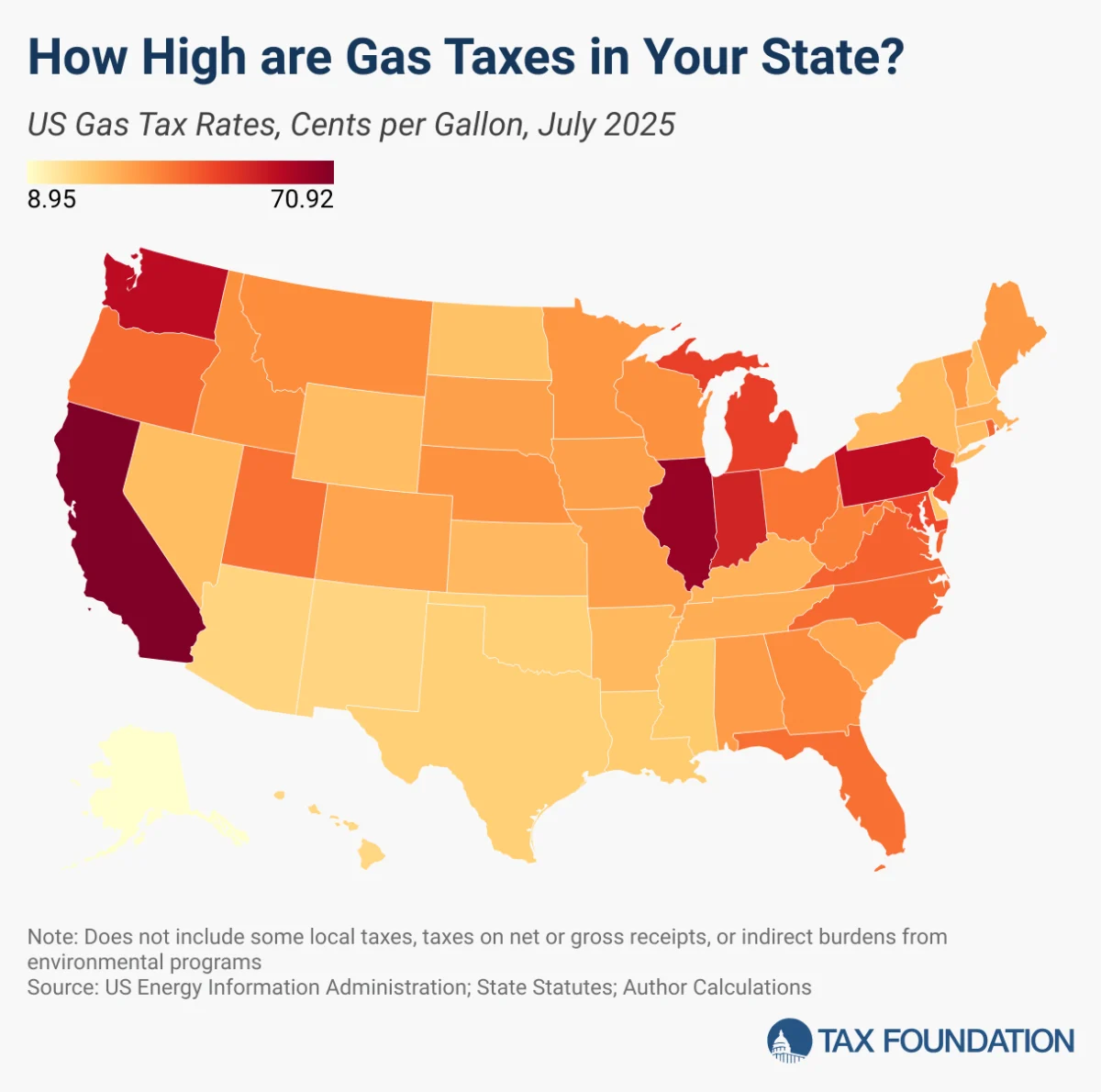
Gas taxes represent a fundamental aspect of American life, influencing the daily commutes and financial well-being of millions of drivers while serving as a critical revenue stream for public infrastructure. These levies, predominantly structured as user fees, are designed to finance the construction, maintenance, and repair of the nation’s extensive network of roads and highways. The principle is straightforward: those who utilize the roads contribute directly to their upkeep, ensuring that the costs of these essential public services are borne by their beneficiaries rather than through broader, less targeted tax mechanisms. This user-fee model is particularly well-suited for transportation services, creating a direct link between usage and funding.
The Evolution and Mechanism of Fuel Taxation
The concept of a fuel tax in the United States dates back to 1919 when Oregon first introduced a one-cent-per-gallon tax to fund road improvements. The federal government followed suit in 1932 with a one-cent-per-gallon tax, primarily to address budget deficits during the Great Depression. However, the modern federal gas tax as a dedicated user fee for highways was solidified with the Federal-Aid Highway Act of 1956, which established the Highway Trust Fund. This landmark legislation, instrumental in building the Interstate Highway System, enshrined the gas tax as the primary mechanism for funding national road infrastructure. States, in parallel, developed their own fuel tax structures, contributing to a complex, multi-layered system.
States employ a variety of methods to levy taxes on fuel, contributing to significant variations in prices at the pump. The most prevalent mechanism is the per-gallon excise tax, collected at the point of sale from consumers. Beyond this direct excise, some states incorporate general sales taxes that apply to gasoline purchases, while others impose taxes on wholesalers or retailers, which are then passed down to the consumer. Furthermore, numerous states include additional fees, such as those for underground storage tanks or environmental clean-up initiatives, further elevating the final price. These diverse approaches mean that the total tax burden on gasoline can differ substantially for drivers across the United States.
Geographic Disparities in Gas Tax Rates
The disparity in state-level gas taxes is considerable. California currently imposes the highest tax on gasoline, standing at 73.6 cents per gallon (cpg). This high rate is closely followed by Illinois at 70.4 cpg and Indiana at 63.1 cpg, placing these states at the top of the spectrum for fuel taxation. Conversely, states with the lowest gas tax rates offer a stark contrast. Alaska levies a mere 8.95 cpg, making it the least expensive state for fuel taxes. Hawaii follows at 18.5 cpg, and New Mexico at 18.9 cpg. It is important to note that these figures typically exclude certain local taxes, the complex financial impacts of environmental programs like cap-and-trade carbon policies or low carbon fuel standards, and specific taxes levied on gross receipts, all of which can add substantial hidden costs to fuel.
Local governments in some states possess the authority to impose their own gasoline taxes, adding another layer of cost for drivers. While many states centralize fuel tax collection at the state level, others grant localities significant fiscal autonomy. In Hawaii, for instance, local taxes can be remarkably high, exceeding the state’s excise tax. Maui County, as an example, adds up to an additional 24 cpg, significantly impacting local fuel prices. Nevada also exemplifies this trend with substantial local-level taxes, compounded by automatically increasing levies from its Regional Transportation Commission’s Fuel Revenue Indexing. This results in an additional 39.8 cpg in Clark County and an even higher 67.8 cpg in Washoe County, where the local tax component alone surpasses the third-highest state tax rate in the country. This localized taxation underscores the challenge of understanding the true total tax burden on fuel without examining specific county or city rates.
Beyond per-gallon excise and local taxes, a few states also levy taxes as a percentage of gross receipts on the sale of fuels. This method presents a challenge for direct conversion into a per-gallon rate, obscuring the precise impact on consumers. Connecticut’s Petroleum Products Gross Earnings Tax, at 8.1 percent on wholesalers, is a prominent example. The Connecticut Department of Revenue estimates this rate to translate to approximately 20.9 cpg for diesel fuel, though a precise per-gallon equivalent for gasoline is not typically provided, making direct comparisons with other states’ excise taxes more difficult. These gross receipts taxes are designed to capture a share of the value of petroleum products throughout the supply chain, ultimately contributing to the final price consumers pay.
The Rising Influence of Environmental Policies on Fuel Prices
In recent years, state environmental programs and regulations have emerged as significant contributors to the overall price of gasoline, often surpassing the direct tax component. These policies, unlike traditional gas taxes, are generally not designed as user fees to fund road infrastructure. Instead, their primary objective is to modify behavior by discouraging the consumption of products and services that generate greenhouse gas emissions, such as motor fuel. This distinction is crucial: while gas taxes aim to fund the roads, environmental levies aim to protect the climate, albeit through mechanisms that directly affect fuel costs.
Quantifying the precise marginal impact of these carbon taxes, cap-and-trade systems, and low carbon fuel standards on the per-gallon price of gas is notoriously difficult. Estimates frequently vary substantially, often depending on the methodology and underlying assumptions. State environmental agencies, for example, tend to project lower impacts for their programs compared to many independent economic analyses. Furthermore, the market-based nature of some environmental programs, such as cap-and-trade systems, means that carbon credit prices can fluctuate significantly, leading to a volatile and unpredictable impact on gas prices.
California stands as a prime example where environmental programs exert a profound influence on total gas prices. The state’s Legislative Analyst’s Office estimates that its pioneering cap-and-trade program alone increases gas prices by approximately 23 cpg. Adding to this, California’s Low Carbon Fuel Standard (LCFS), which became more stringent on July 1, 2025, has been a subject of varying impact assessments. While the California Air Resources Board previously anticipated the LCFS to increase gas prices by as much as 52 cpg in 2026, more recent estimates from the California Energy Commission place the LCFS’s impact at around 19 cpg. When combined with the state’s direct taxes, the total burden from these programs and direct taxes in California can reach approximately $1.156 per gallon, making it one of the highest overall fuel cost burdens in the nation.
Other states are also experiencing significant impacts from similar environmental initiatives. Washington’s Climate Commitment Act, for instance, was initially projected to raise gas prices by 44 cpg, based on carbon prices lower than those observed in recent auctions. However, the state’s Department of Ecology now claims a more modest impact of 7.2 cpg from the Clean Fuel Standard and between 5.16 cpg and 15.5 cpg from the cap-and-invest program. These discrepancies highlight the complexity and evolving nature of estimating these costs.
Oregon’s Department of Environmental Quality estimates its Clean Fuels Program increased gas prices by about 9.35 cpg in 2025. The state’s Climate Protection Program, a more recent initiative, is still in its early stages of implementation, and its potential effect on gas prices has not yet been fully quantified. However, given that the program’s cost of carbon is notably higher than those in other states, the eventual burden on consumers is anticipated to be substantial, assuming it withstands ongoing legal challenges.
New Mexico initiated its own Clean Transportation Fuel Program in April 2026. While the program is still under development, and its total burden on gas prices will depend on the fluctuating cost of associated carbon credits, the New Mexico Environment Department acknowledges that increased fuel costs are an inevitable outcome, even though the program does not levy a direct tax or fee at the pump. Regardless of whether these environmental policies are structured as carbon taxes, fuel standard mandates, cap-and-trade systems, or other programs, their overarching effect is an increase in the price of gasoline. This rise in cost is a direct consequence of the policy’s design to internalize the external costs of carbon emissions.
Beyond direct taxes and environmental surcharges, other factors contribute to elevated fuel prices, particularly in regions like the West Coast. Reduced refining capacity and higher transportation costs compared to the rest of the country play a significant role. While precisely disentangling the impact of each factor is challenging, it is unequivocally clear that state environmental programs impose a substantial and growing burden on the prices drivers ultimately pay at the pump.
The Inefficacy of Gas Tax Holidays
In periods of significantly elevated fuel prices, often exacerbated by geopolitical events or supply chain disruptions—such as the ongoing war with Iran referenced in recent analyses—the public and policymakers frequently turn to calls for temporary suspensions of gas taxes, commonly known as "gas tax holidays." While seemingly an attractive solution to provide immediate relief to consumers, these holidays are widely considered inefficient and counterproductive by economists and fiscal policy experts.
Gas tax holidays, akin to state sales tax holidays for other goods, fundamentally fail to address the underlying causes of high prices, which are typically driven by global supply-demand dynamics rather than the tax itself. Moreover, by artificially lowering the price, these holidays can inadvertently stimulate demand precisely when supply is tightest, potentially exacerbating price increases in the long run. From a fiscal perspective, these "gimmicks" severely undermine the financial stability of state and federal transportation budgets. Road user fees already struggle to fully cover the costs of infrastructure maintenance and development; reducing or eliminating the gas tax only deepens these funding deficits. The cost of maintaining and improving roads does not disappear simply because the tax is suspended. Instead, the burden is merely shifted to less appropriate, more general sources of revenue, such as income or general sales taxes, thereby losing the direct user-fee principle that underpins efficient infrastructure funding.
The Deteriorating Efficacy of the Traditional Gas Tax
The traditional per-gallon excise tax on fuels, while historically effective as a user fee for roads, is facing an accelerating decline in its efficacy. Several interconnected trends are eroding its ability to adequately fund transportation infrastructure.
Firstly, the rapid proliferation of electric vehicles (EVs) presents a significant challenge. EVs, by their nature, do not consume gasoline and therefore do not contribute to the gas tax revenue, even though they utilize the same road infrastructure. This creates an equity issue and a growing revenue shortfall. Secondly, conventional gasoline-powered vehicles are steadily becoming more fuel-efficient, meaning drivers travel more miles per gallon. This improvement, while environmentally beneficial, translates to less fuel purchased per mile driven, further diminishing gas tax revenues over time without a corresponding reduction in road usage. Finally, persistent inflation continues to erode the real value of revenues derived from unindexed gas tax rates. Many state and federal gas taxes are fixed per-gallon rates that are not automatically adjusted for inflation, meaning their purchasing power for infrastructure projects diminishes with each passing year, making construction and maintenance more expensive relative to the revenue collected. These combined factors render the gas tax an increasingly inaccurate proxy for the actual cost of road usage.
Charting a New Course: EV Fees and Vehicle Miles Traveled (VMT) Taxes
Recognizing the existential threat to traditional road funding posed by these trends, most states have begun to implement alternative mechanisms. A common approach is to levy additional annual registration fees specifically on drivers of electric vehicles. These EV fees are designed to compensate for the lost gas tax revenue that EV owners would otherwise pay. While these fees vary widely by state, they represent an initial step towards ensuring all road users contribute to infrastructure upkeep.
Looking further ahead, a growing number of states and policy experts are exploring a more fundamental shift: replacing the per-gallon gas tax entirely with Vehicle Miles Traveled (VMT) taxes. A VMT tax charges drivers based on the actual number of miles they drive, rather than on the amount of fuel consumed. This approach holds significant promise for restoring the user-fee principle to road funding. If properly calibrated, a VMT tax would eliminate the non-neutral treatment of vehicles with varying fuel efficiencies—from the least efficient gas guzzlers to zero-emission EVs—as all would contribute based on their road usage. It would also more closely align roadway revenues with expenditures, providing a more stable and predictable funding stream for infrastructure. Crucially, a VMT system would ensure that those who use the roads are indeed the ones paying for their construction and maintenance, creating a more equitable and sustainable funding model for the future of transportation. Challenges remain in implementing VMT taxes, including privacy concerns related to mileage tracking and the logistical complexities of collection, but pilot programs in states like Oregon (OReGO) are paving the way for potential broader adoption. The shift towards VMT taxation represents a pivotal moment in the evolution of infrastructure funding, aiming to secure the longevity and quality of America’s vital road networks in an era of rapidly changing automotive technology and environmental priorities.