Lana Rhoades

The landscape of American interstate commerce underwent a seismic shift on June 21, 2018, when the United States Supreme Court issued its landmark ruling in South Dakota v. Wayfair, Inc. This decision effectively dismantled decades of tax precedent, fundamentally altering how state governments collect revenue from online retailers. Eight years later, as of October 2026, the implications of this ruling continue to evolve, presenting a sophisticated web of compliance requirements that many multi-state sellers still struggle to navigate. While the headline remains the transition from physical to economic nexus, the operational reality for modern businesses involves managing a patchwork of shifting thresholds, marketplace facilitator mandates, and granular product taxability rules that vary significantly across 45 states and the District of Columbia.
The Historical Evolution of Nexus: From Physical to Economic Presence
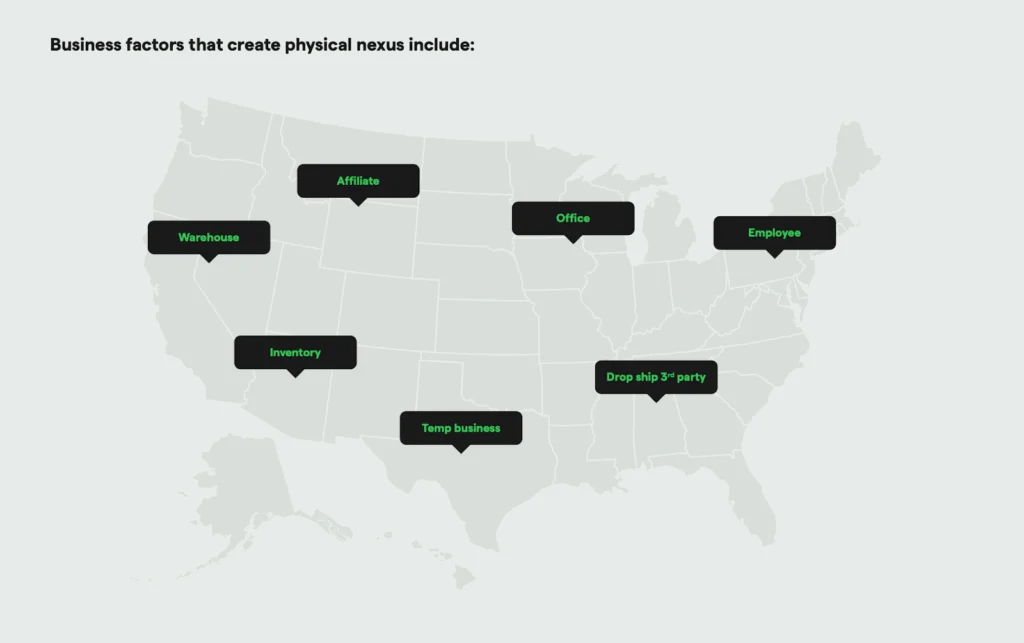
To understand the current regulatory environment, one must examine the legal framework that preceded the 2018 decision. For over a quarter-century, the guiding principle for state sales tax collection was established by the 1992 case Quill Corp. v. North Dakota. Under the Quill standard, a state could only require a business to collect and remit sales tax if that business maintained a physical presence—such as a brick-and-mortar storefront, a warehouse, or resident employees—within the state’s borders.
The rise of the digital economy rendered the physical presence standard increasingly obsolete. By the mid-2010s, states argued that the "Quill rule" created an unfair competitive advantage for out-of-state online retailers over local businesses and resulted in billions of dollars in lost tax revenue. In response, South Dakota enacted Senate Bill 106 in 2016, which challenged the Quill precedent by asserting that a seller’s economic activity alone could justify a tax collection obligation.
In a 5-4 decision, the Supreme Court vacated the Quill standard. Justice Anthony Kennedy, writing for the majority, characterized the physical presence rule as "a simplified antiquity" that caused "market distortions." The Court ruled that South Dakota’s threshold—$100,000 in annual sales or 200 separate transactions—was a reasonable measure of "substantial nexus." This decision opened the floodgates, and within three years, every state with a statewide sales tax had implemented its own version of an economic nexus law.
The Chronology of Compliance: A Timeline of Post-Wayfair Adoption
The years following the Wayfair decision saw a rapid and often confusing rollout of new state regulations. In late 2018 and throughout 2019, the majority of states, including heavyweights like California, Texas, and New York, passed legislation or issued administrative rules to capture remote sales. By 2021, Florida and Missouri became the final holdouts to adopt economic nexus, creating a near-uniform national requirement for remote sellers.
However, the "uniformity" was largely superficial. Between 2022 and 2026, states began refining their thresholds. A significant trend emerged where jurisdictions started eliminating the "transaction count" trigger. Originally, many states adopted South Dakota’s "200 transaction" rule, which inadvertently penalized small businesses selling low-value items. By January 1, 2026, at least 16 states, including South Dakota itself, Alaska, Utah, and Illinois, had removed the transaction threshold in favor of a purely revenue-based model. Kentucky followed suit on August 1, 2026, reflecting a broader movement toward simplifying compliance for high-volume, low-margin sellers.
Mistake #1: The Fallacy of a Universal Threshold
One of the most persistent errors made by multi-state sellers is the assumption that the $100,000/200 transaction rule is universal. In reality, the threshold is a moving target. While many states maintain the $100,000 benchmark, others have set the bar significantly higher to focus on larger enterprises. California and Texas, for instance, utilize a $500,000 gross sales threshold. New York requires both $500,000 in sales and 100 transactions, while Alabama and Mississippi have settled on $250,000.
Furthermore, the methodology for calculating these thresholds varies. Some states look at "gross sales," which includes exempt and wholesale transactions, while others consider only "taxable sales." The look-back periods also differ; some jurisdictions require a review of the previous calendar year, while others mandate a rolling 12-month evaluation. Failure to monitor these nuances on a state-by-state basis often leads to "trailing nexus" liabilities, where a business remains obligated to collect tax for a period even after its sales volume has dropped below the threshold.
Mistake #2: Misinterpreting Marketplace Facilitator Responsibilities
The rise of "Marketplace Facilitator" laws has introduced a secondary layer of complexity. These laws require platforms like Amazon, eBay, Walmart, and Etsy to collect and remit sales tax on behalf of their third-party sellers. While this provides a degree of relief, it does not absolve the seller of all responsibility.
A common oversight occurs when a seller utilizes both a marketplace and their own direct-to-consumer (DTC) website. In most jurisdictions, sales made through a marketplace still count toward the seller’s overall economic nexus threshold. Consequently, a seller might exceed the $100,000 threshold through Amazon sales alone, thereby triggering a requirement to register with the state and collect tax on the smaller volume of sales moving through their independent Shopify store. Additionally, many states require registered sellers to file "zero returns" even if 100% of their sales were handled by a marketplace facilitator.
Mistake #3: Neglecting Product-Specific Taxability Rules
The Wayfair ruling did not harmonize what is actually taxable; it only changed who must collect the tax. This has left sellers to navigate a labyrinth of product taxability. For example, clothing is exempt in Pennsylvania but taxable in most other states, though New York offers an exemption for items under $110. Digital products, SaaS (Software as a Service), and dietary supplements are subject to a wide range of interpretations.
Recent developments in California highlight this volatility. On January 1, 2027, California is slated to expand its sales and use tax to include SaaS products, a shift that will require software providers to overhaul their billing systems. Nuanced distinctions, such as whether a food item is considered "prepared" (often determined by the inclusion of utensils), can result in different tax rates for seemingly identical products.
Mistake #4: The Administrative Burden of Exemption Certificates
For B2B sellers and wholesalers, the Wayfair era has intensified the need for rigorous document management. When a sale is made to a reseller or a nonprofit organization, the seller is exempt from collecting tax only if they possess a valid, up-to-date exemption certificate. During state audits, missing or incorrectly completed certificates are among the most frequent sources of assessments. Auditors look for specific errors: missing signatures, expired dates, or the use of a certificate from the wrong state. If a certificate is deemed invalid, the seller is held personally liable for the uncollected tax, plus interest and penalties.
Mistake #5: The California Complexity and District Taxes
California’s Assembly Bill 147 created a unique environment that continues to trap unwary sellers. Unlike the South Dakota model, California’s $500,000 threshold applies to the total sales of tangible personal property delivered into the state, regardless of transaction count. Once this threshold is breached, the seller is not only responsible for the base state tax but also for "district taxes," which are local levies that vary by city and county. This creates a situation where a single state registration can involve hundreds of different tax rate calculations based on the specific zip code of the delivery address.
Broader Implications and the Necessity of Automation
The financial impact of the Wayfair decision on state coffers has been substantial. According to various state revenue reports, the ability to tax remote sales has generated tens of billions of dollars in new revenue annually, helping to stabilize budgets during periods of economic volatility. However, the compliance cost for businesses—particularly small and medium-sized enterprises (SMEs)—has been significant.
The complexity of managing 45 sets of rules, thousands of local jurisdictions, and constant legislative updates has made manual compliance nearly impossible. The broader implication of the post-Wayfair era is the forced professionalization of tax departments and the near-universal adoption of automated tax software. These tools provide real-time nexus monitoring, automated classification of products, and streamlined filing processes.
For the consumer, the "tax-free" era of the internet has effectively ended. Except for purchases delivered to the "NOMAD" states (New Hampshire, Oregon, Montana, Alaska, and Delaware), sales tax is now a standard component of the checkout process. Even in Alaska, which lacks a statewide tax, many local boroughs have formed the Alaska Remote Seller Sales Tax Commission to collect local taxes from online orders.
Eight years after the Supreme Court’s ruling, the dust has settled on the legality of economic nexus, but the operational challenges remain in a state of flux. For multi-state sellers, the path to growth now requires a sophisticated understanding of jurisdictional boundaries and a proactive approach to tax technology. The "Wayfair era" is no longer a new frontier; it is the established, albeit complex, reality of the American marketplace.