Candice Horbacz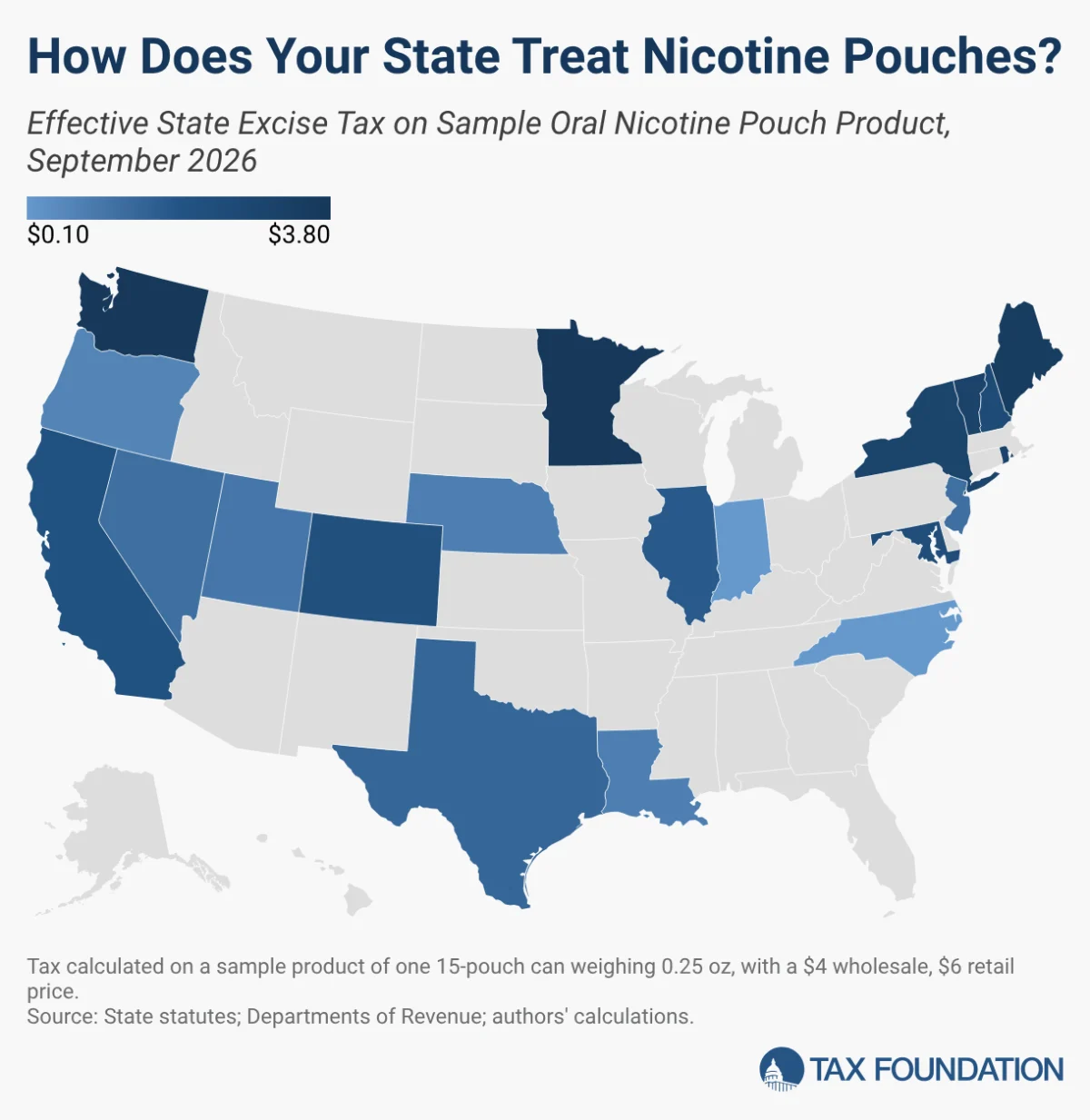
Oral nicotine pouches have rapidly emerged as a significant disruptor in the nicotine consumption landscape, offering consumers a non-combustible alternative devoid of the harmful byproducts associated with traditional cigarettes. As these innovative alternative nicotine products (ANPs) increasingly draw smokers away from combustible tobacco, state governments across the United States are confronting the complex challenge of integrating them into their existing tax frameworks. This intricate process involves a delicate balancing act between public health objectives, which advocate for harm reduction, and the pressing need to sustain state revenues that have historically relied heavily on declining cigarette sales.
The advent and rapid popularization of oral nicotine pouches represent a pivotal shift in consumer preferences and public health strategy. Unlike traditional tobacco products, which derive their nicotine from tobacco leaves and deliver it through combustion, most modern oral pouches utilize synthetic or extracted nicotine, often entirely devoid of tobacco leaf. This fundamental difference places them in a distinct category, posing a challenge to established tax classifications. Public health advocates largely view these products as a crucial component of a harm reduction strategy, offering a less hazardous pathway for nicotine users who are unable or unwilling to quit nicotine entirely. Data from various health organizations indicate that the overwhelming majority of tobacco-related illnesses stem from the combustion and thousands of chemicals found in cigarette smoke, not from nicotine itself. Therefore, shifting consumers to non-combustible alternatives is widely considered a net positive for public health.
The Fiscal Conundrum: A Shrinking Tax Base
For decades, state budgets have enjoyed a substantial, albeit controversial, revenue stream from taxes levied on combustible cigarettes. These "sin taxes" served a dual purpose: discouraging smoking while simultaneously funding public services. However, a consistent and welcome decline in cigarette consumption across the nation, driven by aggressive public health campaigns, increased awareness of health risks, and the rise of alternative products, has led to a significant contraction of this once-lucrative tax base. States now face the inevitable reality that the revenue crater left by shrinking cigarette sales is growing, necessitating new strategies to fill the void.
This presents a profound dilemma for state policymakers. On one hand, continuing the trend of declining combustible cigarette use is an enormous triumph for public health, potentially saving countless lives and reducing healthcare burdens. On the other hand, the financial implications of this success are stark. Taxing ANPs, including oral nicotine pouches, offers a tempting solution to recoup some of this lost revenue. Yet, imposing excessively high taxes on these less harmful alternatives risks undermining the very public health gains they promise. Higher taxes on ANPs could make them less attractive financially compared to combustible cigarettes, inadvertently slowing the transition away from more dangerous products and preserving a revenue stream derived from products that cause significant harm. This trade-off underscores the complexity of crafting responsible and effective nicotine tax policy in the 21st century.
A Patchwork of Policies: States Respond to the ANP Revolution
As of September 2026, a growing number of jurisdictions – 20 states and the District of Columbia – have moved to incorporate nicotine pouches into their tax systems. The prevailing approach, adopted by many, has been to categorize nicotine pouches under existing "Other Tobacco Products" (OTP) statutes. This broad classification typically encompasses products such as cigars, loose-leaf tobacco, chewing tobacco, and snuff. However, experts and industry observers argue that this strategy is fundamentally flawed.
The primary contention is that oral nicotine pouches are distinctly different from the products traditionally grouped under OTP. Crucially, as highlighted by various analyses, most modern oral nicotine pouches do not contain tobacco leaf at all, relying instead on synthetic or extracted nicotine. Treating these products identically to conventional tobacco products, which carry demonstrably higher health risks due to the presence of tobacco and its associated chemicals, undermines the public health principle of harm reduction. By applying the same tax rates to products with vastly different risk profiles, states fail to incentivize consumers to switch to less harmful alternatives, thereby negating a significant potential health benefit.
Toward a Principled Approach: Aligning Tax with Harm Reduction
A more judicious tax policy, according to public health and economic experts, would involve establishing a specific tax rate for oral nicotine pouches, distinct from other tobacco or nicotine products. Furthermore, an ad quantum tax, levied per can or per ounce, is generally considered a superior tax base compared to an ad valorem tax, which is based on the product’s price. Ad quantum taxes offer greater predictability for both consumers and manufacturers, are less susceptible to market price fluctuations, and avoid penalizing manufacturers for producing higher-quality or more innovative (and potentially more expensive) products. States that embrace a harm reduction philosophy can leverage such specific, quantity-based taxes to generate necessary revenues while simultaneously fostering the growth and health benefits associated with these innovative products.
The current landscape of nicotine pouch taxation is characterized by a wide spectrum of approaches, leading to significant disparities in consumer costs. To illustrate these differences, consider a hypothetical sample product: one can containing 15 pouches, wholesaling for $4 and retailing for $6.
At the higher end of the tax spectrum, states like Minnesota and Washington impose substantial levies, with an estimated tax of $3.80 on the sample product, stemming from their 95 percent wholesale tax. They are closely followed by Maine, where a weight-based tax with a one-ounce minimum results in a $3.54 tax. Rhode Island’s 80 percent wholesale tax yields a $3.20 charge, and Vermont’s weight-based tax with a 1.2-ounce minimum adds $3.08 to the cost of the sample product. These high tax rates push the retail price significantly upward, potentially diminishing the cost advantage these products might otherwise hold over combustible cigarettes.
Conversely, some states have adopted a much more lenient approach. North Carolina stands out with the lowest tax, imposing a mere $0.005 per pouch, which translates to approximately $0.10 for a standard can of 20 pouches. Indiana follows with an estimated $0.13 tax on the sample product, based on a $0.50 per ounce tax with no minimum weight. Oregon levies $0.65 per standard can, while Louisiana and Nebraska both tax the sample product at $0.80, derived from a 20 percent wholesale tax. These lower rates are more aligned with a harm reduction strategy, making less harmful alternatives more accessible and affordable for consumers.
Stakeholder Perspectives and Economic Implications
The diverse tax treatment of oral nicotine pouches has drawn reactions from various stakeholders. Public health organizations, while applauding efforts to reduce smoking rates, caution against tax policies that inadvertently make safer alternatives less appealing. Dr. Alistair Finch, a public health policy analyst, noted in a recent symposium, "Our goal is to save lives. If we tax less harmful products at rates comparable to or higher than combustible cigarettes, we are sending a mixed message and potentially hindering the very progress we seek to achieve."
Conversely, state fiscal officers often prioritize revenue stability. "The decline in cigarette tax revenue creates real budget shortfalls that must be addressed," stated Brenda Williams, Director of State Fiscal Policy. "While public health is paramount, we also have a responsibility to fund essential services. Finding that balance is exceptionally challenging."
Industry representatives from the alternative nicotine product sector consistently advocate for tax structures that reflect the reduced risk profile of their products. "Innovation in harm reduction is stifled when governments treat all nicotine products identically for tax purposes," commented John Davies, CEO of an ANP manufacturer. "Fair and proportionate taxation encourages consumers to choose better options and supports continued research and development in this critical area." Consumer advocacy groups echo these sentiments, emphasizing that affordability is a key factor in encouraging smokers to switch, especially for low-income populations.
Cross-Border Trade and Illicit Markets: Unintended Consequences
The wide disparity in excise taxes on oral nicotine pouches mirrors, and in some cases even exceeds, the jurisdictional differences seen in combustible cigarette taxes. This fragmentation of tax policy has predictable and often undesirable consequences, primarily incentivizing cross-border trade and, in extreme cases, fueling lucrative illicit enterprises.
Consider the stark example of Washington State, where a 95 percent wholesale tax results in a $3.80 tax on a sample can. Consumers residing near state borders could realize substantial savings by simply driving a short distance. A trip to Oregon, with its $0.65 per can tax, would save Washington residents approximately $3.15 per can. Even more drastically, consumers could avoid excise taxes entirely by shopping in neighboring Idaho, which currently does not tax nicotine pouches. These significant price differentials are not merely theoretical; they actively spur behavioral patterns, leading to "smuggling" (even if informal, personal cross-border purchasing) and the potential for organized illicit trade that undermines state revenues and consumer safety.
The dynamics observed with cigarette smuggling, where high-tax states lose billions in revenue to black markets, serve as a cautionary tale. There is no reason to believe that oral nicotine pouches would be immune to similar economic forces. Untaxed or under-taxed illicit markets not only deprive states of revenue but also introduce products that may not adhere to safety or quality standards, posing additional risks to consumers.
Looking Ahead: A Principled Framework for Future Taxation
As oral nicotine pouches continue to gain market share, more states are expected to incorporate them into their tax frameworks. Iowa, for instance, has already established a $0.05 per can tax on alternative nicotine pouches, set to go into effect in January 2027. This move, along with others, signifies a growing recognition of these products in state fiscal planning. However, policymakers must proceed with caution and a principled approach that actively supports, rather than inadvertently undermines, the inherent harm reduction benefits of ANPs.
The core principle of harm reduction is pragmatic: it prioritizes reducing overall harm rather than pursuing the often-unrealistic goal of complete elimination through prohibition or punitive taxation. In the context of nicotine products, this means incentivizing smokers to transition to significantly less harmful options by establishing a clear and substantial price differential through taxation. Since the primary justification for levying excise taxes on nicotine products is the associated public health harms, the tax rates should logically align with the degree of those harms.
Oral nicotine pouches are unequivocally and drastically less harmful than combustible cigarettes. Scientific consensus confirms that nicotine itself, while addictive, is not the primary carcinogen or cause of most smoking-related diseases. It is the complex cocktail of chemicals and the combustion process inherent in traditional cigarettes that inflict the vast majority of damage. Alternative nicotine products play a vital role in facilitating smoking cessation by offering a less harmful method of nicotine delivery, thereby serving as a crucial public health tool.
The Tax Foundation, among other research bodies, has developed a comprehensive framework for taxing less harmful alternative products according to their relative potential harms. This framework suggests that excise taxes on products like oral nicotine pouches should be limited to a fraction of the taxes imposed on combustible cigarettes. By maintaining a significant tax differential, states can create a powerful economic incentive for smokers to switch to the less harmful option. Moderate and proportionate taxes also serve to prevent market distortions, mitigate the risks of cross-border trade, and enable the legal, regulated market to effectively compete against untaxed illicit alternatives.
Currently, many states, particularly those lumping oral pouches into broad OTP categories with high ad valorem taxes, inadvertently undermine the potential of these less dangerous alternative nicotine products by taxing them in excess of their relative harms. States that have not yet incorporated nicotine pouches into their tax schemes theoretically have the option to refrain from taxing these products at all. Not taxing the least harmful products would maximize the tax differential, providing the strongest possible incentive for smokers to switch and thus maximizing the harms reduced.
However, given the continued decline in smoking rates and the corresponding erosion of cigarette tax revenues, it is increasingly likely that states will seek to recover lost revenue by taxing new alternative nicotine products. Should they choose to do so, the imperative is clear: these taxes must be principled, designed to encourage smokers to transition to less harmful alternatives, and structured to reflect the vastly different risk profiles of these products compared to combustible cigarettes. This approach is not merely sound fiscal policy; it is a critical investment in public health.