admin
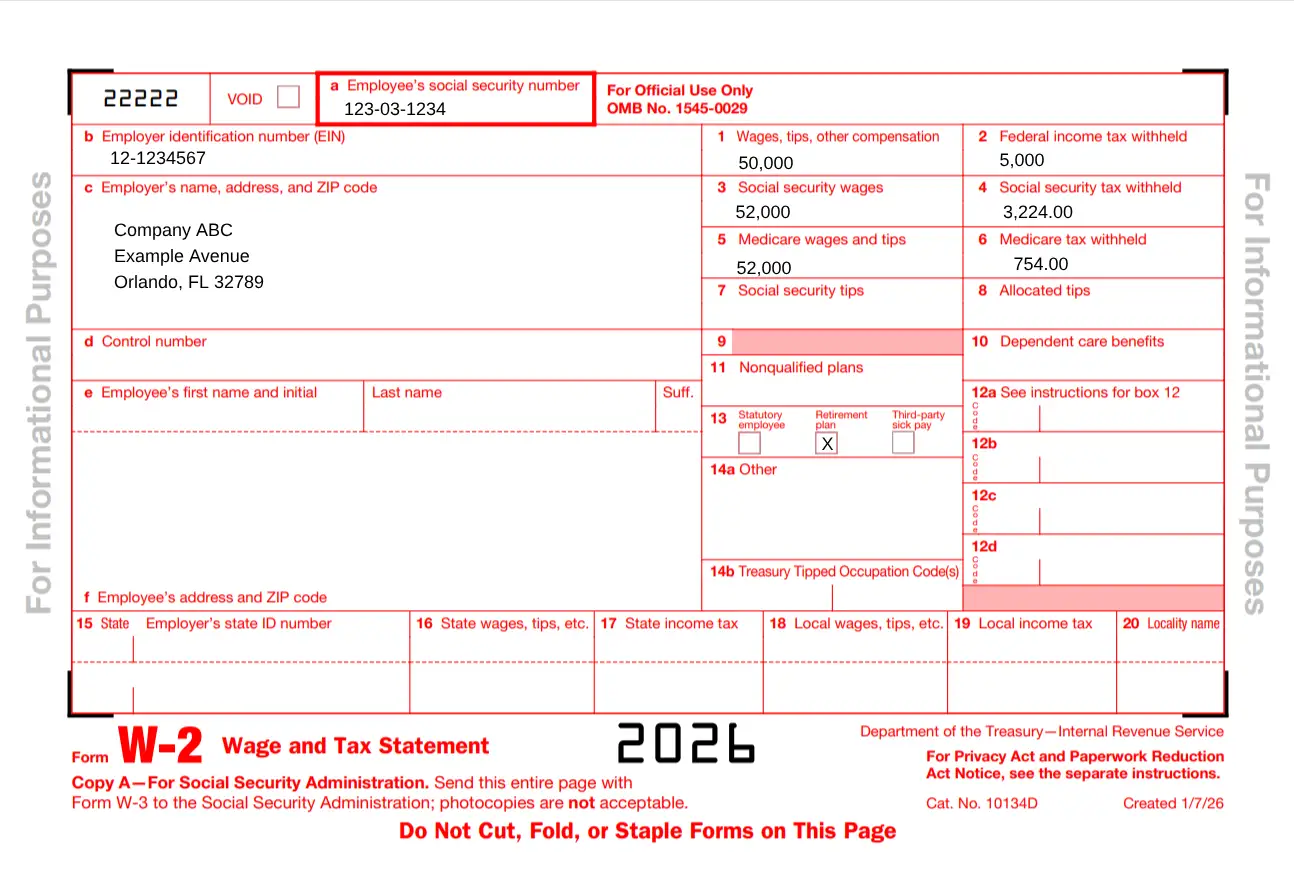
The annual distribution of Forms W-2 often triggers a wave of questions for payroll departments, with one of the most common inquiries centering on the perceived discrepancies between an employee’s reported federal taxable wages in Box 1 and their Social Security and Medicare wages in Boxes 3 and 5, respectively. This phenomenon, which frequently leads to initial confusion and concern among employees, is typically not an error but rather a reflection of the intricate and distinct rules governing various types of income for federal, state, and local taxation purposes. Understanding these nuances is crucial for both employers to ensure compliance and for employees to accurately file their tax returns and comprehend their financial standing.
The Form W-2, Wage and Tax Statement, is a cornerstone of the U.S. tax system, detailing an employee’s annual wages and the amount of taxes withheld by their employer. Issued by January 31st each year for the preceding calendar year, its arrival marks the official start of tax season for millions of Americans. Upon receipt, employees typically scrutinize the document, comparing the figures against their pay stubs and personal records. It is during this review that the common question arises: "Why are my Box 1 earnings less than my Box 3 and Box 5 earnings?" This immediate reaction, often driven by a lack of familiarity with specific tax codes, can cause undue panic for both the employee and the employer, who might hastily assume an error requiring a corrected W-2 (Form W-2c). However, in the vast majority of cases, these differences are entirely legitimate, stemming from the specific tax treatment of certain pre-tax benefits and statutory wage limits.
The Foundational Role of Form W-2 in Tax Reporting
Form W-2 serves as the official record of an employee’s annual compensation and the taxes withheld from it. It is essential for employees to accurately complete their federal, state, and local income tax returns. For employers, the accurate preparation and timely submission of W-2s to both employees and the Social Security Administration (SSA) are critical compliance requirements, ensuring that proper tax liabilities are assessed and collected. The form is segmented into various boxes, each dedicated to reporting specific financial information.
- Box 1: Wages, Tips, Other Compensation: This box reports the total amount of taxable wages, tips, and other compensation subject to federal income tax. It represents the figure used to calculate an individual’s federal income tax liability. Crucially, certain pre-tax deductions, such as contributions to a traditional 401(k) or 403(b) plan, reduce the amount reported in Box 1.
- Box 2: Federal Income Tax Withheld: This box shows the total federal income tax an employer withheld from an employee’s pay throughout the year, directly correlated with the Box 1 wages.
- Box 3: Social Security Wages: This box reports the total wages subject to Social Security tax. Unlike federal income tax, Social Security wages are subject to an annual wage base limit. This means earnings above a certain threshold are not subject to Social Security tax.
- Box 4: Social Security Tax Withheld: This box indicates the amount of Social Security tax withheld, calculated as a percentage of Box 3 wages, up to the annual limit.
- Box 5: Medicare Wages and Tips: This box reports the total wages subject to Medicare tax. Significantly, there is no wage base limit for Medicare tax; all earned income is subject to it.
- Box 6: Medicare Tax Withheld: This box shows the amount of Medicare tax withheld, calculated as a percentage of Box 5 wages.
- Box 16: State Wages, Tips, Etc.: This box reports the total wages subject to state income tax. State tax rules can vary significantly, often mirroring federal rules but sometimes differing, particularly regarding pre-tax deductions.
- Box 18: Local Wages, Tips, Etc.: This box reports the total wages subject to local income tax, where applicable. Local tax rules are even more diverse and can add another layer of complexity.
Principal Reasons for Variances Between W-2 Boxes
The variances observed between Box 1 and Boxes 3, 5, 16, and 18 are primarily attributable to specific provisions within the U.S. tax code that treat certain types of compensation or deductions differently for various tax purposes. These differences are intentional and designed to achieve specific economic and social policy objectives.
1. Employee Contributions to Pre-Tax Retirement Plans
One of the most frequent causes for Box 1 to be lower than Box 3 and Box 5 is an employee’s participation in a pre-tax retirement savings plan. These plans, such as traditional 401(k)s, 403(b)s, and certain governmental 457(b) plans, allow employees to contribute a portion of their gross salary before federal income taxes are calculated. This reduces their current taxable income, thereby lowering the amount reported in Box 1.
However, contributions to these pre-tax retirement accounts are generally still subject to Social Security and Medicare (FICA) taxes. This means that the full gross wages, including the retirement contributions, are reported in Box 3 (up to the Social Security wage base) and Box 5 (with no wage base).
Example Scenario:
Consider an employee with a gross annual salary of $60,000 who elects to contribute $5,000 to a traditional 401(k) plan during the year.
- Box 1 (Federal Taxable Wages): $60,000 (Gross Salary) – $5,000 (401(k) Contribution) = $55,000
- Box 3 (Social Security Wages): $60,000 (assuming this is below the Social Security wage base)
- Box 5 (Medicare Wages): $60,000
The retirement plan contributions are reported in Box 12 of the W-2 using specific codes, such as ‘D’ for elective deferrals to a 401(k). Additionally, Box 13 will often have the "Retirement plan" box checked, indicating the employee’s participation. It is important to note that employer contributions to an employee’s retirement plan are generally not included on the employee’s W-2; they are typically tracked separately for plan administration purposes.
For Roth retirement accounts (e.g., Roth 401(k)), contributions are made with after-tax dollars, meaning they are subject to federal income tax, Social Security, and Medicare taxes. Therefore, Roth contributions do not reduce Box 1 wages.
State and Local Income Tax Implications:
The treatment of pre-tax retirement contributions for state and local income tax purposes can vary significantly. Some states, like Ohio, largely conform to federal rules, exempting these contributions from state income tax. In such cases, Box 16 (state wages) would likely align with Box 1. However, other states, such as Pennsylvania, do not exempt these contributions from state income tax, meaning the full gross salary, including the retirement contribution, would be reported in Box 16. Similarly, local income tax rules can differ, adding another layer of complexity for employers operating in multiple jurisdictions. Employers must consult specific state and local tax regulations to ensure accurate reporting in Boxes 16 and 18.
2. Employee Participation in Qualified Adoption Assistance Programs
Another reason for Box 1 discrepancies relates to employer-provided adoption assistance programs. Under federal law, certain amounts paid or reimbursed by an employer for qualifying adoption expenses (such as adoption fees, court costs, attorney fees, and travel expenses) can be excluded from an employee’s gross income, up to an annual statutory limit. This exclusion applies to federal income tax withholding.
While these payments or reimbursements are exempt from federal income tax, they are generally subject to Social Security and Medicare taxes. Consequently, the amount reported in Box 1 will be lower than the amounts in Box 3 and Box 5.
Example Scenario:
An employee with a gross salary of $70,000 receives $10,000 in qualifying adoption assistance from their employer. The federal exclusion limit for adoption assistance (which adjusts annually) would apply. Let’s assume the full $10,000 is excludable for federal income tax purposes.

- Box 1 (Federal Taxable Wages): $70,000 (Gross Salary) – $10,000 (Adoption Assistance) = $60,000
- Box 3 (Social Security Wages): $70,000 (assuming below wage base)
- Box 5 (Medicare Wages): $70,000
The amount of adoption assistance is reported in Box 12 of the W-2 using code ‘T’. This provision encourages adoption by easing the financial burden on families, but it creates a reporting difference on the W-2 due to its specific tax treatment. State and local tax treatment for adoption assistance generally follows federal guidelines, but employers should verify conformity in their specific jurisdictions.
3. Earning Above the Social Security Wage Base
In certain scenarios, Box 1 can be higher than Box 3. This occurs when an employee’s earnings surpass the annual Social Security wage base limit. The Social Security tax applies only to earnings up to this specified limit each year. Once an employee’s cumulative wages for the year exceed this threshold, no further Social Security tax is withheld from their earnings, and those additional earnings are not reported in Box 3.
However, wages earned above the Social Security wage base are still subject to federal income tax (and Medicare tax). Therefore, these higher earnings continue to be included in Box 1 and Box 5.
Relevant Data and Historical Context:
The Social Security wage base is adjusted annually based on changes in the national average wage index. For context:
- 2026 Social Security Wage Base: $184,500 (as projected in the original article)
- 2027 Social Security Wage Base: $192,300 (as projected in the original article)
- 2025 Social Security Wage Base: $174,900
- 2024 Social Security Wage Base: $168,600
- 2023 Social Security Wage Base: $160,200
This consistent upward trend reflects economic growth and inflation.
Example Scenario:
Consider an employee earning $200,000 in taxable wages in tax year 2026, when the Social Security wage base is $184,500.
- Box 1 (Federal Taxable Wages): $200,000
- Box 3 (Social Security Wages): $184,500 (capped at the wage base)
- Box 5 (Medicare Wages): $200,000 (no wage base limit for Medicare)
This situation clearly illustrates how Box 1 can exceed Box 3 for high-income earners. The absence of a wage base for Medicare tax means Box 5 will always reflect the full amount of wages subject to Medicare, typically aligning with Box 1 unless other pre-tax deductions that affect Box 1 but not Box 5 are present (like certain cafeteria plan benefits, discussed below).
Other Factors Contributing to W-2 Variances
While the three reasons above are the most common, other elements can also contribute to differences across W-2 boxes:
- Pre-Tax Health Insurance Premiums (Section 125 Cafeteria Plans): Employee contributions to health insurance premiums, dental, vision, or flexible spending accounts (FSAs) through a Section 125 cafeteria plan are typically deducted pre-tax from gross wages. These deductions generally reduce wages for federal income tax, Social Security tax, and Medicare tax purposes. Consequently, they would reduce amounts in Boxes 1, 3, and 5 simultaneously, meaning they typically wouldn’t cause a discrepancy between these boxes, but rather a uniform reduction. However, if a benefit within a cafeteria plan is exempt from one tax but not another, it could create a variance.
- Taxable Fringe Benefits: Certain non-cash benefits provided by employers, such as the personal use of a company car, employer-provided group term life insurance coverage over $50,000, or certain moving expense reimbursements (before 2018), are considered taxable income. These amounts are often added to an employee’s gross wages for tax purposes, increasing the amounts reported in Boxes 1, 3, and 5. The specific tax treatment (whether subject to FICA, FUTA, or income tax) depends on the type of benefit.
The Importance of Employer Diligence and Employee Understanding
The complexity of W-2 reporting underscores the critical role of accurate payroll processing. Employers bear the primary responsibility for correctly calculating and reporting all wages and withholdings. This requires a deep understanding of federal, state, and local tax laws, along with diligent record-keeping. The use of robust payroll software solutions can significantly mitigate the risk of errors by automating these complex calculations and staying updated with evolving tax regulations. Incorrect W-2s can lead to IRS penalties for employers and complications for employees during tax filing, potentially delaying refunds or triggering audits.
From an employee’s perspective, understanding these common discrepancies fosters confidence and trust in their employer’s payroll practices. Instead of immediately suspecting an error, an informed employee can understand the legitimate reasons behind the figures on their W-2. This knowledge empowers them to accurately complete their tax returns and engage in informed financial planning, particularly concerning retirement savings and benefit utilization.
Broader Implications and Official Guidance
The specific tax treatments that cause W-2 Box 1 variances are not arbitrary. They reflect deliberate policy choices aimed at encouraging certain behaviors or providing relief in specific circumstances. For instance, the pre-tax treatment of retirement contributions incentivizes individuals to save for their future, while adoption assistance programs support families. The Social Security wage base, conversely, reflects a cap on the contributions required from high earners to fund the system.
The Internal Revenue Service (IRS) provides extensive guidance through publications like Publication 15 (Circular E, Employer’s Tax Guide) and the Instructions for Forms W-2 and W-3, which detail how various types of income and deductions should be reported. State tax departments issue their own specific guidance, which employers must also adhere to. Payroll professionals and tax experts consistently advise employers to regularly review these official resources and, when in doubt, seek professional counsel to ensure full compliance.
The annual cycle of W-2 distribution, employee queries, and subsequent clarification serves as a recurring educational moment in personal finance and tax literacy. While the immediate reaction to differing W-2 boxes may be concern, a deeper understanding reveals the sophisticated and often beneficial mechanisms embedded within the tax code. By demystifying these "discrepancies," both employers and employees can navigate tax season with greater clarity and confidence, ensuring accurate reporting and responsible financial management. The ultimate implication is a more transparent and compliant tax system, benefiting all stakeholders.