Julia Chirkova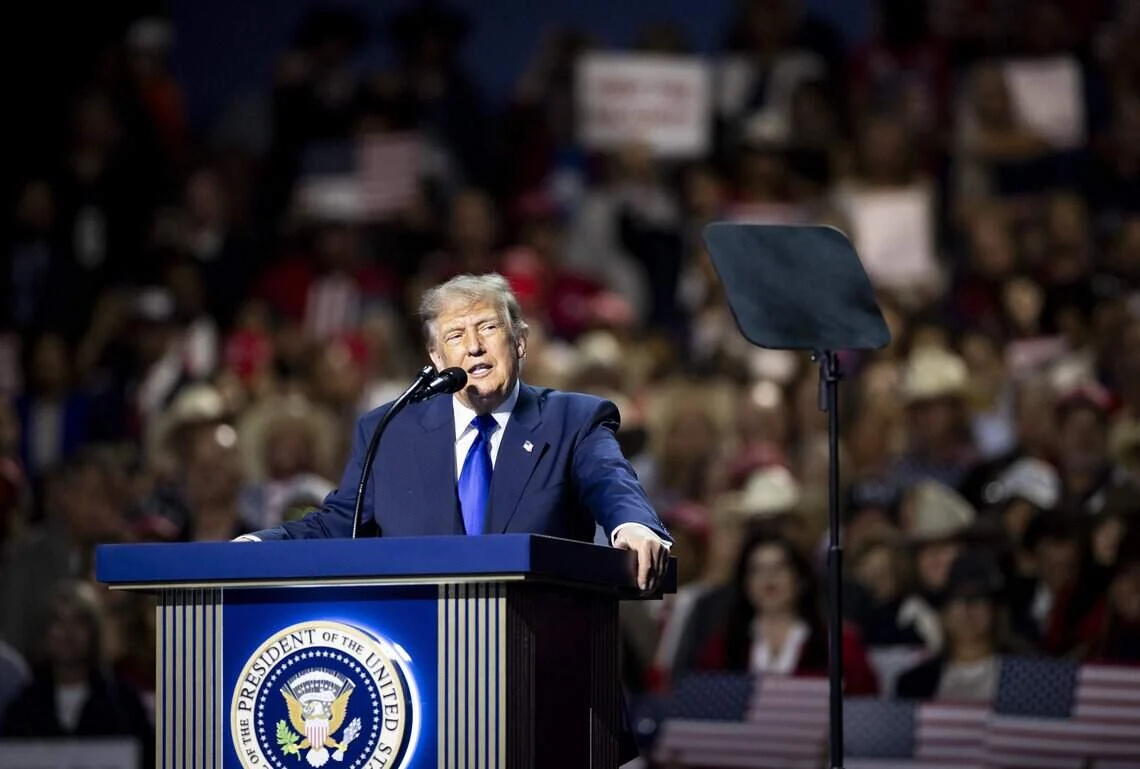
President Donald Trump unveiled a sweeping proposal during the Republican Party’s midterm convention in Dallas, pledging to send a $5,000 dividend check to every American adult should the party secure and maintain control of Congress in the upcoming elections. The announcement, made on September 11th, immediately ignited discussions about its feasibility, cost, and potential economic ramifications. The president framed the initiative, to be known as the "Trump Dividend," as a reflection of the nation’s robust economic performance and strength, drawing a parallel to how corporations distribute profits to their shareholders. However, the ambitious promise has been met with skepticism and varied reactions from within the Republican party itself, as well as staunch opposition from Democrats. This report delves into the details of the proposal, examining its potential costs, legal standing, economic implications, and historical context of similar unfulfilled promises.
The Scale of the "Trump Dividend": Financial Projections and Funding Questions
The sheer magnitude of the proposed "Trump Dividend" presents a significant fiscal challenge. Distributing $5,000 to every American adult, a demographic estimated to be well over 250 million individuals, would incur an astronomical cost of approximately $1.2 trillion. This figure alone dwarfs many annual government spending programs and raises immediate questions about how such an initiative would be financed.
President Trump offered limited specifics regarding the operational mechanics of the dividend, including the timeline for disbursement. He did, however, stipulate that the funds must be spent within the United States, a directive that raises practical questions about tracking and enforcement. The logistical complexities of ensuring domestic spending of such a vast sum remain largely undefined.
While President Trump did not explicitly detail the funding sources, Vice President JD Vance suggested that revenue generated from tariffs could potentially underwrite the program. However, analyses by nonpartisan fiscal watchdogs present a starkly different picture. The Tax Foundation, a respected research organization, projects that tariffs are expected to generate roughly $109 billion in revenue by 2026. This projection falls dramatically short of the $1.2 trillion required for the dividend, indicating a substantial funding gap if tariffs are to be the sole or primary source of revenue. This discrepancy suggests that either significant new revenue streams would need to be identified, or substantial cuts to existing government programs would be necessary, neither of which has been clearly articulated by the administration.
Navigating the Legislative Labyrinth: Congressional Approval and Internal Republican Divisions
The realization of the "Trump Dividend" is inherently tied to the legislative process, requiring explicit approval from Congress. While Senator Bernie Moreno, a Republican from Ohio, has publicly stated his intention to introduce legislation to expedite the passage of the "Trump Dividend" immediately following the November 3rd election, the path forward is far from guaranteed. The proposal has exposed a notable divergence of opinion within the Republican party itself.
Vice President Vance, in an apparent effort to temper the scope of the original announcement, indicated that the dividend might not extend to wealthy Americans. This qualification suggests a potential pivot towards a more targeted distribution, a move that could significantly alter the overall cost and political messaging of the proposal. Similarly, Senator Ted Cruz, a prominent Republican from Texas, expressed support for a dividend structured as a tax refund specifically for working Americans. This interpretation narrows the focus from a universal payment to a more targeted relief measure, fundamentally changing the nature of the original pledge.
Further complicating the narrative, Representative Chip Roy, another Texas Republican, appeared to express skepticism regarding the underlying philosophy of such direct payments. His statement on social media, suggesting that "dependency is evil & soul-sucking in all its forms," signals a potential ideological opposition to the concept of government-distributed dividends, even within his own party.
Democrats, predictably, have largely condemned the proposal, characterizing it as fiscally irresponsible and politically motivated. Their stance suggests a united opposition that would present a formidable hurdle in any legislative attempt to pass the "Trump Dividend." The internal divisions within the Republican party, coupled with the unified opposition from Democrats, paint a complex picture of the legislative viability of this ambitious promise.
Legal Standing: Campaign Promises Versus Prohibited Practices
The legality of President Trump’s proposal is a subject of considerable debate. Federal law strictly prohibits the offering of incentives or payments to influence an individual’s voting decision. However, the "Trump Dividend" is being framed as a campaign promise, a category of pledge that is generally protected under the First Amendment’s guarantee of free speech.
Legal scholars have drawn parallels between Trump’s proposal and past campaign promises made by politicians from both parties. For instance, proposals for student loan forgiveness, which have been advanced by Democratic candidates, are often cited as analogous. Rick Hasen, a distinguished law professor at UCLA specializing in election law, articulated this point in a blog post, questioning the fundamental difference between promising a dividend and pledging, for example, to implement universal healthcare or to enact significant tax cuts for all citizens. The core legal argument hinges on whether the promise is a direct quid pro quo for a vote or a broader policy commitment made in anticipation of electoral victory.
The legal framework surrounding campaign promises is nuanced. While direct bribery is illegal, broad policy pledges designed to appeal to voters are a cornerstone of political campaigning. The "Trump Dividend," therefore, likely resides within the realm of protected political speech, provided it is not structured as a direct, conditional payment for a vote. However, the sheer scale and specificity of the financial offering could invite scrutiny regarding its intent and potential impact on electoral fairness.
Economic Ripples: Inflation, Debt, and Fiscal Prudence
The potential economic consequences of injecting $1.2 trillion into the economy through direct payments are a significant concern for many economists and fiscal policy experts. The Committee for a Responsible Federal Budget, a nonpartisan organization dedicated to fiscal accountability, has warned that such a massive influx of cash could exacerbate inflationary pressures. In an economy already grappling with rising prices, a substantial increase in consumer spending driven by dividend checks could further drive up demand, potentially leading to higher inflation.
Furthermore, the proposal raises alarms about the national debt. The United States national debt recently surpassed the $40 trillion mark for the first time in history. Adding an unfunded liability of $1.2 trillion would significantly increase this already precarious figure. Maya MacGuineas, president of the Committee for a Responsible Federal Budget, described the proposal as "fiscally dangerous, economically backwards, and fundamentally unserious," highlighting the organization’s belief that the plan would negatively impact the nation’s long-term economic stability.
The argument that the dividend must be spent domestically, while intended to stimulate the U.S. economy, could also lead to a concentrated surge in demand for certain goods and services, potentially leading to supply chain bottlenecks and further price increases in those sectors. The long-term effects on economic growth, consumer behavior, and international trade remain largely unpredictable but are a source of significant concern among financial analysts.
A Pattern of Unfulfilled Promises: Historical Precedents
President Trump’s pledge of a "Trump Dividend" is not the first time he has proposed sending direct financial payments to Americans that have not materialized. In the past year, the former president has floated several similar initiatives. Notably, he promised $2,000 rebate checks funded by tariff revenue, a plan that ultimately did not come to fruition. He also suggested $5,000 stimulus checks, which were to be financed by savings derived from a proposed "Department of Government Efficiency." This initiative, which reportedly involved contributions from entrepreneur Elon Musk, ceased operations earlier this year without the promised stimulus checks being distributed.
These prior instances raise questions about the likelihood of the "Trump Dividend" being implemented, even if Republicans were to win control of Congress. While Trump did issue a $1,776 check to members of the military last year, which he termed a "warrior dividend," this was a significantly smaller-scale initiative and targeted a specific group rather than the entire adult population. The history of unfulfilled promises surrounding direct financial payouts suggests a pattern of ambitious proposals that have not translated into concrete action. This historical context is a crucial element for voters and policymakers to consider when evaluating the credibility and feasibility of the current "Trump Dividend" pledge.
The announcement of the "Trump Dividend" at the Republican midterm convention in Dallas on September 11th marks a significant moment in the political discourse surrounding economic policy and electoral promises. As the midterm elections approach, voters will undoubtedly weigh the appeal of such a substantial financial payout against the considerable economic and political hurdles it faces, as well as the historical precedent of similar pledges made by the former president. The debate over the "Trump Dividend" is likely to remain a central theme in the coming months, highlighting the intricate interplay between political ambition, economic realities, and the trust placed in campaign promises.