Candice Horbacz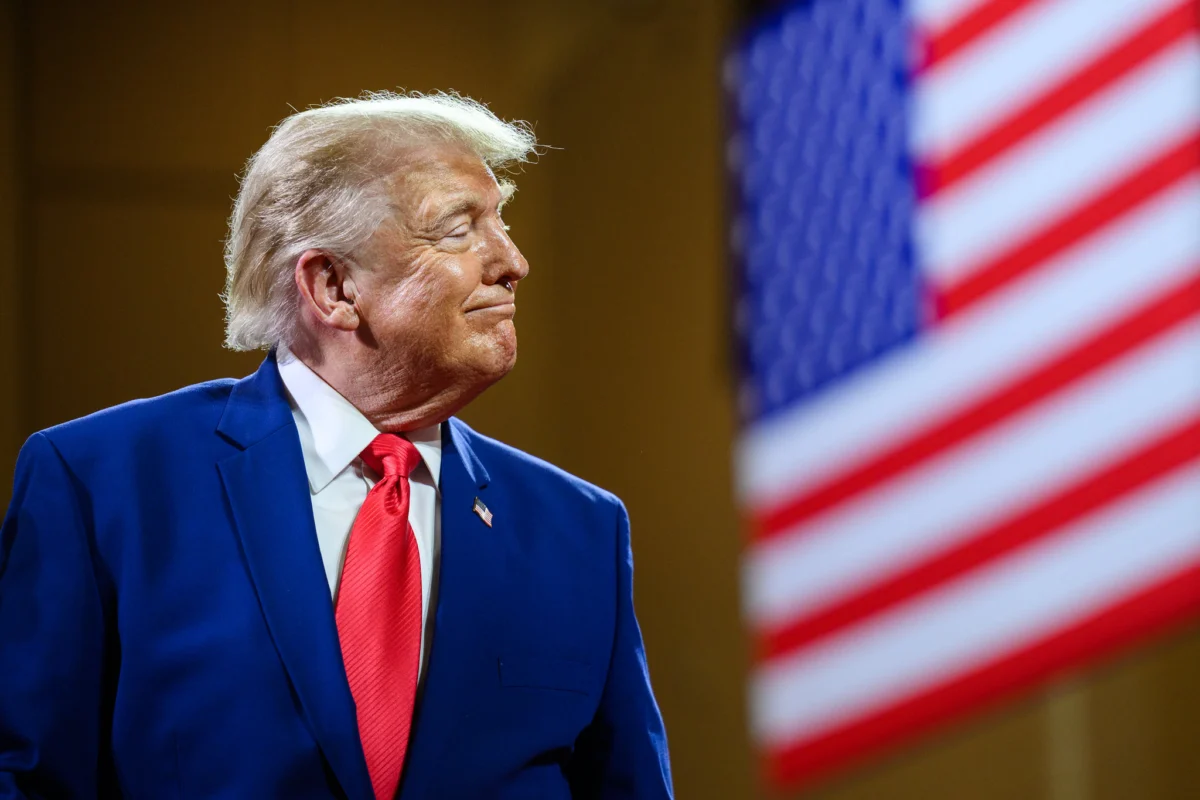
At the Republican National Convention held in Dallas, President Trump made a significant electoral promise, vowing to distribute $5,000 to every adult citizen in the United States. This substantial payment, he stated, would be contingent upon the Republican Party successfully retaining control of both the House of Representatives and the Senate in the upcoming midterm elections. The proposal quickly gained support from Vice President JD Vance, who elaborated on the funding mechanism, asserting that the administration’s new tariffs were generating ample revenue that could be directly shared with American citizens. This announcement immediately sparked widespread discussion among political analysts, economists, and the public, raising questions about its feasibility, economic impact, and the underlying fiscal health of the nation.
The Proposal Unveiled: A Direct Payment Promise
The President’s promise of a $5,000 dividend payment to an estimated 250 million eligible adult citizens represents a colossal financial commitment. While the populist appeal of such a direct payment is undeniable, particularly in an election cycle, the immediate fiscal implications are staggering. Without any specified income limitations or other restrictions, the proposed payment program would incur an estimated cost of $1.25 trillion. This figure, derived from multiplying the 250 million eligible adults by $5,000, immediately places the proposal in a category of unprecedented scale for a single, one-time federal disbursement outside of major national crises.
The lack of detailed stipulations regarding eligibility and distribution mechanisms has left many questions unanswered. Would the payments be universal, extending to all adult citizens regardless of income, wealth, or tax contributions? Or would there be means-testing or other criteria to target specific demographics? The current framework, as presented, suggests a broad, unconditional payment, which amplifies the budgetary challenge and potential economic ramifications.
Context of the Republican National Convention and Midterm Stakes
The Republican National Convention serves as a pivotal platform for the party to galvanize its base, articulate its vision, and lay out its agenda for the nation. The Dallas convention, in particular, was strategically timed ahead of crucial midterm elections, where control of Congress hangs in the balance. For the Republican Party, securing majorities in both the House and Senate is paramount to advance its legislative priorities and solidify its political power. President Trump’s $5,000 dividend promise can be seen as a direct appeal to voters, aiming to energize turnout and offer a tangible economic benefit to counter potential voter dissatisfaction or economic anxieties.
The political landscape leading up to these midterms is characterized by a polarized electorate, ongoing debates about inflation, economic growth, and the cost of living. Against this backdrop, a direct cash payment proposal could resonate deeply with segments of the population feeling the pinch of rising prices or seeking economic relief. Historically, direct payments have been used as economic stimulus, most notably during the COVID-19 pandemic, which familiarized the public with the concept of government-issued checks. However, those payments were made under extraordinary circumstances and were often justified as emergency relief to a struggling economy, a context that differs significantly from the current proposal.
Fiscal Realities: A Trillion-Dollar Question
The magnitude of the proposed $1.25 trillion payment comes into sharp focus when juxtaposed with the nation’s existing fiscal challenges. The federal government is already grappling with substantial budget deficits, with projections from the Congressional Budget Office (CBO) indicating a deficit of nearly $1.9 trillion for fiscal year 2027. Introducing an additional $1.25 trillion spending initiative without corresponding revenue increases would effectively balloon the deficit to nearly $3 trillion in that fiscal year alone.
Such a dramatic increase in the national debt raises immediate concerns among fiscal conservatives and economic watchdogs. A deficit of this scale could have far-reaching consequences, including increased borrowing costs for the government, potential crowding out of private investment, and long-term implications for fiscal sustainability. The national debt, already standing at historic levels, would surge further, adding to the interest payments that the government must make annually – funds that could otherwise be allocated to critical services or investments.
The Tariff Mechanism: Revenue Generation vs. Economic Cost
Vice President Vance’s assertion that "new tariffs are generating a lot of revenue that can be shared with Americans" points to the administration’s chosen funding mechanism for the proposed dividend. Tariffs, essentially taxes on imported goods, have been a hallmark of the Trump administration’s trade policy. The intent behind these tariffs is typically twofold: to protect domestic industries from foreign competition and to generate revenue for the federal government.
A Chronology of Tariff Collections and Fluctuations:
- Pre-Trump Tariffs (Calendar Year 2024): Prior to the implementation of the new tariff rounds under the Trump administration, the federal government collected approximately $79 billion in customs duties. This represents the baseline level of revenue from existing trade taxes.
- Post-Trump Tariff Implementation (Calendar Year 2025): Following the imposition of several rounds of new tariffs, notably on goods from China and other trading partners, customs duties saw a significant increase, rising to $264 billion in calendar year 2025. This surge in collections fueled the argument that tariffs could indeed be a substantial source of government revenue.
- Recent Fluctuations and Legal Challenges: More recently, tariff collections have exhibited volatility, with some months even showing negative figures. This phenomenon is largely attributed to the federal government being compelled to refund tariffs that were subsequently struck down as illegal by the Supreme Court. Such legal challenges introduce an element of uncertainty and instability into the tariff revenue stream.
The Net Revenue Reality:
Despite the initial increase in gross tariff collections, economic analysis suggests that the net revenue generated by these policies is considerably lower than often portrayed. According to estimates from the Tax Foundation, even after these fluctuations stabilize and assuming the policies remain in place, President Trump’s new tariffs are projected to generate approximately $125 billion in net revenue for the federal government in 2027. Over a decade, from 2026 through 2035, the total net revenue is estimated at $1.4 trillion.
The discrepancy between gross collections and net revenue arises from two primary factors:
- Reduced Imports: Tariffs increase the cost of imported goods, which can lead to a reduction in the volume of imports. While this might be an intended effect to promote domestic production, it simultaneously means that pre-existing tariffs (those not specifically part of the "new" rounds) generate less revenue due to a smaller tax base.
- Impact on Other Federal Taxes: Every dollar collected through tariffs effectively reduces the bases of other federal taxes, such as income and payroll taxes. This occurs because tariffs raise prices for businesses and consumers, which can diminish corporate profits, reduce real wages, and impact overall economic activity, thereby lowering the revenue that would otherwise be generated from these broader tax categories.
Comparing the projected net tariff revenue with the cost of the dividend payment reveals a stark contrast: the $125 billion in net tariff revenue for 2027 would cover only about one-tenth of the proposed $1.25 trillion dividend payment. It would require nearly a decade of sustained tariff collections, based on current projections, just to offset the cost of a single $5,000 universal payout. This highlights a significant funding gap and challenges the assertion that tariff revenue alone could comfortably finance such a large-scale dividend program.
Economic Implications and Expert Analysis
The prospect of a deficit-financed dividend payment of this scale has drawn sharp criticism and concern from economists across the political spectrum.
Inflationary Pressures:
One of the most immediate concerns is the potential for increased inflationary pressures. Inflation, defined as a general increase in the price of goods and services, has already been running above the Federal Reserve’s 2 percent target. Injecting an additional $1.25 trillion into the economy without a corresponding increase in productivity or supply could significantly exacerbate this problem. Economists often refer to inflation as a "hidden tax," as it erodes the purchasing power of currency, making paychecks cover less and reducing the value of savings. A large cash infusion could stimulate demand beyond the economy’s capacity to supply, driving prices even higher and effectively negating some of the benefit of the dividend for recipients.
Interest Rates and Market Response:
A massive increase in the budget deficit, driven by such a dividend payment, would signal to financial markets that the United States is not prioritizing fiscal responsibility. This could lead to a loss of confidence among investors, both domestic and international, potentially resulting in higher interest rates on government debt. When the government’s borrowing costs rise, it impacts everything from mortgage rates to business loans, making it more expensive for consumers and businesses to borrow and invest. This, in turn, could slow economic growth and further complicate the Federal Reserve’s efforts to manage monetary policy and maintain price stability. A weaker fiscal outlook could also put downward pressure on the U.S. dollar, impacting trade and investment flows.
Burden of Tariffs on Businesses and Workers:
Beyond the direct cost of the dividend, the reliance on tariffs as a funding mechanism carries its own economic drawbacks. Tariffs are taxes on imports, but their burden is typically borne not by foreign exporters but by domestic businesses and consumers. U.S. companies that rely on imported raw materials or components face higher input costs, which they often pass on to consumers in the form of higher prices for finished goods. This effectively acts as a regressive tax, disproportionately affecting lower and middle-income households. Moreover, tariffs can lead to retaliatory measures from other countries, harming U.S. exporters and creating economic uncertainty for American businesses operating in global markets. The Tax Foundation has consistently argued that tariffs burden businesses and workers in the U.S., hindering economic efficiency and competitiveness.
Broader Impact and Alternative Perspectives
Even if the $5,000 dividend program were to be trimmed, perhaps through income limitations, economists argue that it would still represent a misguided allocation of funds given the nation’s severe fiscal challenges. When the government is already on track to run massive budget deficits, prioritizing a large-scale, deficit-financed payment, even a smaller one, diverts resources that could be used for deficit reduction, infrastructure investment, or other programs with more demonstrable long-term economic benefits.
The Fiscal Responsibility Debate:
The proposal reignites the broader debate surrounding fiscal responsibility and the national debt. Critics argue that such a measure demonstrates a lack of seriousness in addressing the country’s long-term financial health, which includes confronting the rising costs of entitlement programs like Social Security and Medicare. A sustained commitment to fiscal discipline is often seen as essential for maintaining economic stability and ensuring intergenerational equity.
Political Repercussions:
Politically, the dividend promise is a powerful campaign tool, appealing directly to the economic anxieties of voters. However, it also opens the administration to attacks from political opponents who can highlight the fiscal irresponsibility and the regressive nature of tariffs. Opposing parties would likely frame the proposal as an election-year gimmick that prioritizes short-term political gain over long-term economic stability.
Call for Alternative Policies:
Many economists and policy experts suggest that Americans would be better served if the administration abandoned the tariffs altogether. Instead, they advocate for policies that promote free trade, reduce regulatory burdens, and foster sustainable economic growth through investment in human capital and infrastructure, rather than through temporary, deficit-financed payouts. The long-term economic benefits of open markets and efficient resource allocation, they argue, far outweigh the short-term gains of a one-time dividend funded by economically detrimental tariffs.
Conclusion
President Trump’s promise of a $5,000 dividend payment to adult citizens, contingent on Republican control of Congress, presents a compelling political narrative but faces significant economic and fiscal hurdles. While framed as a direct benefit to Americans, funded by tariff revenues, detailed analysis reveals that the cost of such a program far outstrips the projected net revenue from tariffs. The initiative would dramatically increase an already substantial budget deficit, risking further inflationary pressures, higher interest rates, and signaling a departure from fiscal prudence to financial markets.
The proposal, light on details regarding eligibility and distribution, underscores a fundamental tension between populist appeals for immediate financial relief and the long-term imperative of maintaining national fiscal health. As the midterm elections approach, the debate surrounding this $5,000 dividend will likely intensify, forcing a closer examination of its true economic costs and benefits against the backdrop of the nation’s complex fiscal landscape. Without a clear and sustainable funding mechanism that avoids ballooning the national debt and exacerbating economic challenges, the promise risks worsening the very problems it purports to solve.