Nila Kartika Wati
As the United States approaches its semiquincentennial in 2026, a profound tension has emerged between the traditional pageantry of American independence and the contemporary struggle over the mechanics of its democracy. While the "America 250" celebrations aim to highlight the nation’s founding ideals of life, liberty, and the pursuit of happiness, a growing coalition of organizers and political analysts warns of a widening gap between these aspirations and the lived reality of the American electorate. This disconnect is fueled by recent judicial rulings, shifting ideological movements among the financial elite, and a strategic vacuum in the symbolic landscape of patriotism.
The Legal Landscape and the Erosion of Voting Protections
The lead-up to the 250th anniversary of the United States has been marked by significant legal shifts regarding the Voting Rights Act (VRA) of 1965. In a pivotal development, the legal case Louisiana v. Callais has drawn intense scrutiny for its impact on minority representation. Critics and civil rights advocates argue that recent judicial interpretations have effectively weakened the VRA’s ability to prevent discriminatory redistricting.
Throughout the summer of 2024, several Republican-led statehouses across the American South engaged in extensive redistricting efforts. These maneuvers, often characterized as "partisan gerrymandering," have been accused of diluting the voting power of Black communities. The National Conference of State Legislatures (NCSL) has tracked these developments, noting that the scrambling of district lines has created a volatile environment for upcoming midterm and general elections. This legal trend suggests a movement away from the expansion of suffrage that defined much of the 20th century, returning instead to a framework where legislative boundaries are utilized as tools for political entrenchment.
The Rise of Technocratic Authoritarianism
A significant factor in the current political climate is the emergence of a well-funded ideological movement that questions the fundamental compatibility of freedom and democracy. This movement, often associated with prominent figures in the technology and finance sectors—sometimes referred to colloquially as "broligarchs"—proposes a radical departure from traditional self-governance.
Peter Thiel, a billionaire venture capitalist and influential political donor, has historically expressed skepticism regarding the democratic process, suggesting in various writings that the expansion of the electorate has complicated the pursuit of libertarian ideals. Supporting this shift are "court intellectuals" such as Curtis Yarvin, who has advocated for "neoreactionary" thought. This ideology posits that the state should be managed with the efficiency of a corporation, led by a chief executive or "CEO-monarch," rather than through the perceived "inconvenience" of popular elections.
This is no longer a fringe philosophy; it is a structured political project. It is backed by substantial capital, staffed by professional policy operatives, and finds increasing resonance in high-level political circles. The strategy involves maintaining the "aesthetic trappings" of democracy—the flags, the anthems, and the rhetoric—while systematically dismantling the institutions that allow for genuine popular influence over government.
The Symbolic Vacuum: Ceding the Flag
A critical analysis of the current cultural divide reveals that proponents of traditional democracy have largely ceded the symbols of patriotism to those who seek to restrict democratic norms. This retreat was driven by a complex set of factors, including a historical skepticism toward nationalism and a desire to remain critical of the nation’s past injustices.
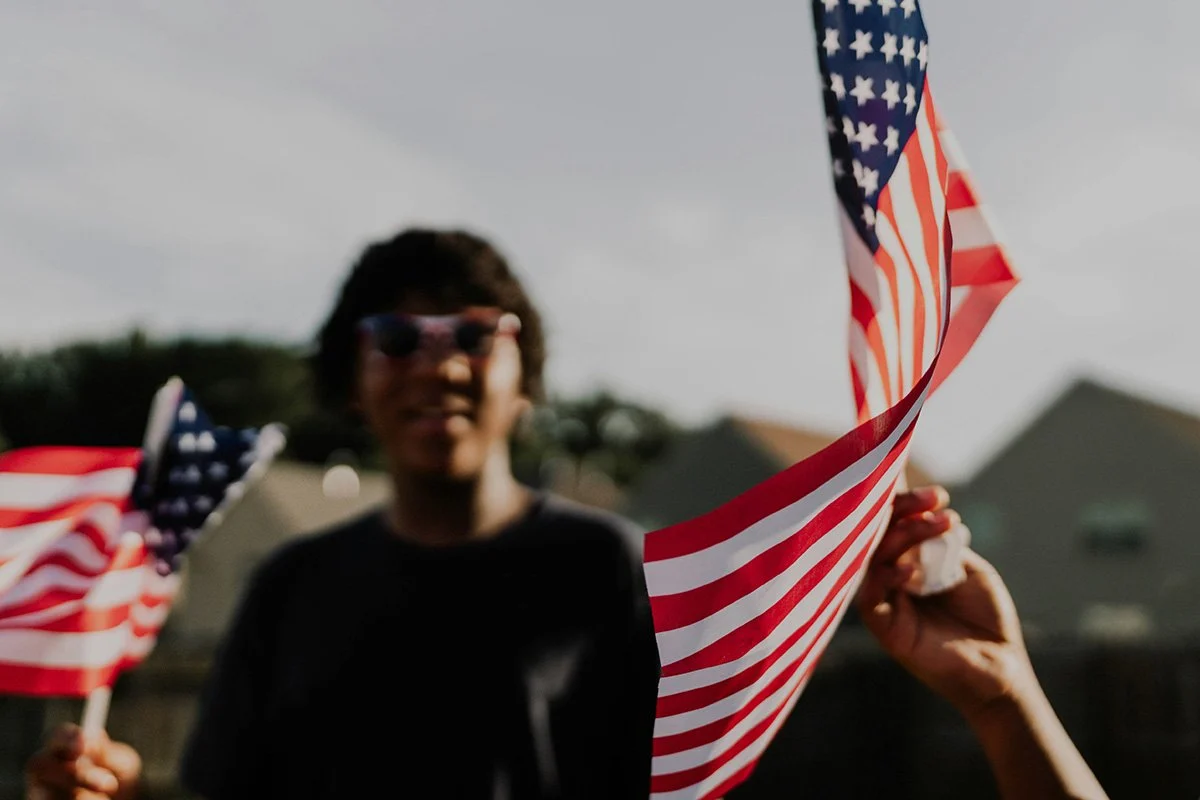
For many progressive and pro-democracy advocates, invoking U.S. values or displaying the flag felt like a tacit endorsement of the country’s history of systemic inequality. However, this impulse resulted in a "symbolic landscape" where the American flag and the Constitution are most prominently displayed by movements working to end birthright citizenship or restrict voting access.
The consequences of this symbolic cession are quantifiable. While the language of "inalienable rights" remains a rhetorical tool for the left, the visual and emotional iconography of the United States has been reclaimed by the right. This has created a situation where 80 percent of working-class Americans express pride in their national identity, yet many feel that the political movements most aligned with their economic interests are disconnected from that sense of patriotism.
The Data of Disconnect: Aspiration vs. Reality
Recent data from Working Families Power and the Justice Research Fund highlights a stark divergence between what Americans believe their country should be and what they perceive it to be today. A nationally representative survey of working-class and middle-income households revealed the following:
National Aspirations (What the U.S. Should Stand For):
- "We the People": 82 percent agreement.
- "Land of the Free": 78 percent agreement.
- "Government of the People": 76 percent agreement.
- "Equal Justice Under Law": 75 percent agreement.
- National Pride: 80 percent of working-class Americans remain proud to be American.
Current Reality (What the U.S. Stands For Today):
- "Government of the People": Only 36 percent believe this is currently true.
- The American Dream: 48 percent of respondents believe the American Dream is "dead."
- Trust Deficit: Governance phrases saw a 30 to 40-point drop when moving from aspiration to perceived performance.
This data suggests that while the "identity bond" to the country remains intact across partisan lines, the "performance bond"—the belief that the government delivers on its promises—has collapsed. The survey indicates that 62 percent of Americans believe the two major parties are performing so poorly that a third party is necessary.
The "Southern Made" Strategy and Local Governance
In response to these trends, organizations like the Working Families Party (WFP) are shifting their focus toward long-term, local-level infrastructure. Following the Callais decision, the WFP launched the "Southern Made" initiative. This program aims to recruit 1,000 pro-democracy, working-class candidates to run for office across ten Southern states by 2030.
The strategic logic behind "Southern Made" is based on the limits of gerrymandering. While state and federal district lines can be manipulated, it is much more difficult for anti-democratic forces to control every school board, city council, and county commission. These local seats often go uncontested; by filling these roles with service workers, teachers, and faith leaders, the movement seeks to "lead where you live."
The goal is to prove the efficacy of government through material results rather than rhetoric. Examples of this "proof of concept" can be found in Philadelphia, where WFP council members Kendra Brooks and Nicolas O’Rourke have successfully passed legislation to ban algorithmic rent pricing and protect renters. Proponents argue that a school board member who fixes a local issue is a more powerful argument for democracy than any poll-tested message.
The Economic Reality of Political Organizing
A major challenge facing the defense of democratic institutions is the "boom and bust" cycle of political funding. Most donor activity is concentrated around high-stakes election cycles, leading to a posture of "project-to-project" survival for grassroots organizations.
Political analysts argue that reclaiming democracy requires a "rent and utilities" approach to funding—consistent, long-term investment that allows organizations to maintain staff and presence in communities year-round, regardless of the election calendar. This shift from "vacation funding" (one-off mobilizations) to "infrastructure funding" is seen as essential for building a governing force that can compete with the well-funded technocratic movements.
Broader Implications and the Path to 2026
The struggle for the "soul" of American patriotism is inextricably linked to the economic divide. While 42 percent of the working class believes the government must ensure equal opportunity, 40 percent believe it already does too much in the name of fairness. Despite this split, the "trust deficit" regarding government performance is a shared conviction across all demographics.
As the United States moves toward its 250th anniversary, the path forward for pro-democracy advocates involves a "solidarity-populist patriotism." This approach combines a belief in the country’s founding ideals with a direct challenge to the "elites" who have rigged institutional systems.
The ultimate objective of this movement is to ensure that the next generation inherits a democracy that is functional and representative. By focusing on material benefits—such as lowering utility bills, making healthcare affordable, and providing childcare—organizers hope to reclaim the flag not through slogans, but by earning the public’s trust through the tangible delivery of the nation’s "unkept promises." The success of this strategy will likely determine whether the 2026 celebrations mark a genuine renewal of the American project or merely the hollow pageantry of a fading republic.