Pevita Pearce
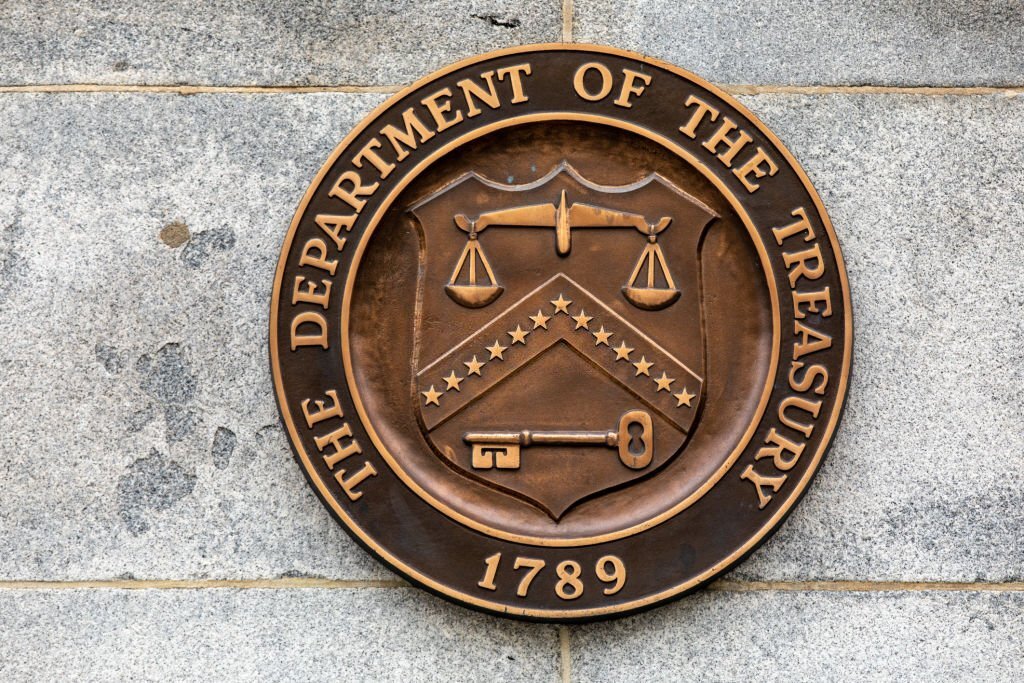
Proposed regulations issued by the Treasury Department and the Internal Revenue Service (IRS) on Thursday could lead to the revocation of federal tax-exempt status for as many as 18,000 private educational institutions that the Trump administration alleges engage in racial discrimination. These proposed rules, published in the Federal Register, aim to establish a clear standard for non-discrimination in educational institutions seeking or maintaining their tax-exempt status under Section 501(c)(3) of the Internal Revenue Code.
Under the proposed framework, any private, nonprofit school that adopts, maintains, or enforces a policy or practice discriminating on the basis of race, color, or national or ethnic origin would be deemed ineligible for federal tax-exempt status. This prohibition would extend across all facets of school operations, including admissions, educational policies, scholarship and loan programs, athletics, and any other school-administered or school-supported activity. The IRS stated on September 3rd that these rules are designed to ensure a comprehensive approach to non-discrimination. The regulations would apply to a wide range of institutions, from private primary and secondary schools to colleges, universities, professional schools, and trade schools.
The proposed rules are slated to take effect for taxable years beginning on or after May 31, 2027. This delayed implementation is intended to provide affected institutions with a substantial window of opportunity to review and revise their admissions, scholarship, and other policies to ensure compliance with the new standards.
This initiative by the Treasury Department and IRS emerges within a broader context of the Trump administration’s ongoing scrutiny of diversity, equity, and inclusion (DEI) programs within higher education. The administration has frequently stated that colleges and universities offering preferential treatment to minority students are in violation of President Donald Trump’s executive orders aimed at ending discrimination and restoring merit-based opportunities. This sentiment has been echoed in public statements by administration officials.
Several prominent educational institutions, including Harvard University, Cornell University, and the Massachusetts Institute of Technology, have recently found themselves under examination by the administration and congressional Republicans. These institutions have faced criticism regarding their handling of alleged antisemitism on their campuses, as well as concerns about the nature and implementation of certain diversity programs.
Treasury Secretary Scott Bessent articulated the administration’s position in a statement on September 3rd, asserting, "Under President Trump, this Administration is standing up for America’s students by ensuring racial discrimination has no place in American education. Schools rebranding race-based preferences as equitable, inclusive, or diversity-enhancing does not change their discriminatory nature. Today’s Treasury and IRS proposed regulations establish a clear standard, and the institutions that continue to use discriminatory practices will no longer receive the benefits of federal tax-exempt status."
The potential financial ramifications for hundreds of private educational institutions are significant. Tax-exempt status provides considerable financial advantages, including exemption from property taxes on educational buildings, the ability to issue tax-exempt bonds for construction projects, and the deductibility of donations for donors. These benefits have historically enabled many leading institutions to undertake ambitious capital projects and build substantial endowments, as reported by Bloomberg. The loss of this status could fundamentally alter the financial landscape for these schools, potentially impacting their ability to operate, expand, and provide educational services.
Further elaborating on the rationale behind the proposed rules, the Treasury Department and IRS indicated that the proposed regulations would also nullify outdated provisions within existing IRS guidance that had previously permitted schools to implement certain racial preferences in admissions, facilities, programs, scholarships, and financial assistance. The departments have concluded that these outdated provisions are incompatible with a uniform standard of non-discrimination and are inconsistent with established Supreme Court jurisprudence.
The legal precedent for revoking a school’s tax-exempt status due to discriminatory practices is not unprecedented. In a landmark decision in 1983, the Supreme Court upheld the IRS’s authority to revoke the tax-exempt status of Bob Jones University. The court ruled that the university’s racially discriminatory policies violated established public policy, thereby disqualifying it from tax-exempt status. Bob Jones University later apologized for its past policies and subsequently regained its tax-exempt status, according to Bloomberg.
The IRS emphasized the foundational principle that federal law grants tax-exempt status to organizations operating for charitable and educational purposes. "For decades, the Supreme Court has recognized that eligibility for tax-exempt status is conditioned on compliance with fundamental public policy, including the prohibition against racial discrimination," the IRS stated. "The proposed regulations update Treasury and IRS guidance to reflect that longstanding principle, as established in Brown v. Board of Education, Bob Jones University v. United States, and Students for Fair Admissions v. Harvard, and provide greater clarity for private educational institutions regarding the nondiscrimination requirements associated with federal tax-exempt status." This legal basis underscores the administration’s view that racial discrimination fundamentally undermines the charitable and educational missions that qualify institutions for tax exemption.
It is important to note that the proposed regulations explicitly state that they would not impede private schools from maintaining a religious mission, curriculum, or program of religious observance. Religious schools would continue to have the ability to select students based on genuine religious affiliation or membership, in alignment with existing federal law. This provision aims to distinguish between religiously motivated practices and unlawful racial discrimination.

Furthermore, the proposal allows institutions to continue developing and implementing programs aimed at expanding educational opportunities for disadvantaged students through race-neutral criteria. Such criteria could include factors like family income, geographic location, first-generation college student status, demonstrated individual hardship, military family status, or academic achievement when making admissions or financial assistance decisions. However, the IRS reiterated that schools remain prohibited from making decisions or conferring benefits on the basis of race, color, or national or ethnic origin.
IRS CEO Frank Bisignano reinforced the administration’s firm stance, stating, "Private educational institutions that promote discriminatory practices will no longer be afforded the benefits of federal tax-exempt status. Today’s proposed regulations put institutions on notice and schools that continue to engage in racial discrimination should expect to lose that status."
The proposed regulations have drawn sharp criticism from some congressional Democrats, who have voiced strong opposition to the Treasury Department’s initiative. A statement released by Representative Richard Neal of Massachusetts, the ranking member of the House Ways and Means Committee, characterized the proposal as "the Trump administration’s racist weaponization of the IRS."
Representative Neal further elaborated, "Trump’s desperate strong-arming of anyone who refuses to conform to his racist agenda reeks of weakness in the worst way, with those with the least paying the price. He is once again weaponizing the government to punch down and attack minority students, their families, and the schools expanding opportunities to build more financially stable futures. This isn’t about ‘fairness,’ it’s about the President targeting anyone who stands in the way of his campaign to roll back the clock on civil rights progress that generations of Americans have fought and bled for. To punish private institutions for seeking to diversify their campuses is an affront to true, meaningful equal opportunity. For Republicans, there’s never a problem giving those at the top every advantage money can buy. But when it comes to communities that have been denied opportunities for generations, they are being told to work harder and accept less. Democrats will not stand for this unlawful, gross abuse of power and will fight until these racist attacks are put to a stop once and for all."
In the Senate, Ranking Member of the Finance Committee, Senator Ron Wyden of Oregon, and Committee member, Senator Raphael Warnock of Georgia, announced on Thursday that they have initiated an inquiry into the Trump administration’s utilization of the IRS’s tax enforcement authority. Their concern centers on allegations that this authority is being used to target ideological opponents, potentially including the revocation of their tax-exempt status.
In a letter addressed to Secretary Bessent and IRS CEO Bisignano, the senators wrote, "We write regarding disturbing reports that senior Treasury officials are developing plans to target left-leaning tax-exempt organizations with IRS enforcement scrutiny and potentially revoke their tax-exempt status. Americans of every political persuasion must be able to trust that the IRS applies the tax code objectively under one set of rules. Organizations that violate section 501(c)(3) should face appropriate enforcement regardless of their politics—and organizations should never face IRS scrutiny because political officials disapprove of their views."
The senators’ letter outlines several ways in which they contend the alleged scheme is unlawful. This includes concerns about senior officials requesting IRS enforcement actions and IRS employees potentially failing to report such prohibited requests to the Treasury’s independent watchdog. The senators have formally requested that administration officials disclose any details concerning the development of a purported "blueprint" aimed at targeting left-leaning nonprofits, any communications that directed IRS employees to conduct prohibited enforcement actions, and to preserve all associated documents and communications related to this effort.
The broader implications of these proposed regulations extend beyond the immediate impact on educational institutions. They signal a potential shift in how tax-exempt status is viewed and enforced, particularly in relation to policies that have historically been used to promote diversity and inclusion. The debate surrounding these rules is likely to involve complex legal arguments about the definition of discrimination, the role of affirmative action in education, and the balance between federal oversight and institutional autonomy. As the comment period for the proposed regulations unfolds, further analysis and public discourse are anticipated regarding the future of tax-exempt status for private educational institutions and the administration’s approach to civil rights enforcement.
The original article was published on September 3, 2026.