Nila Kartika Wati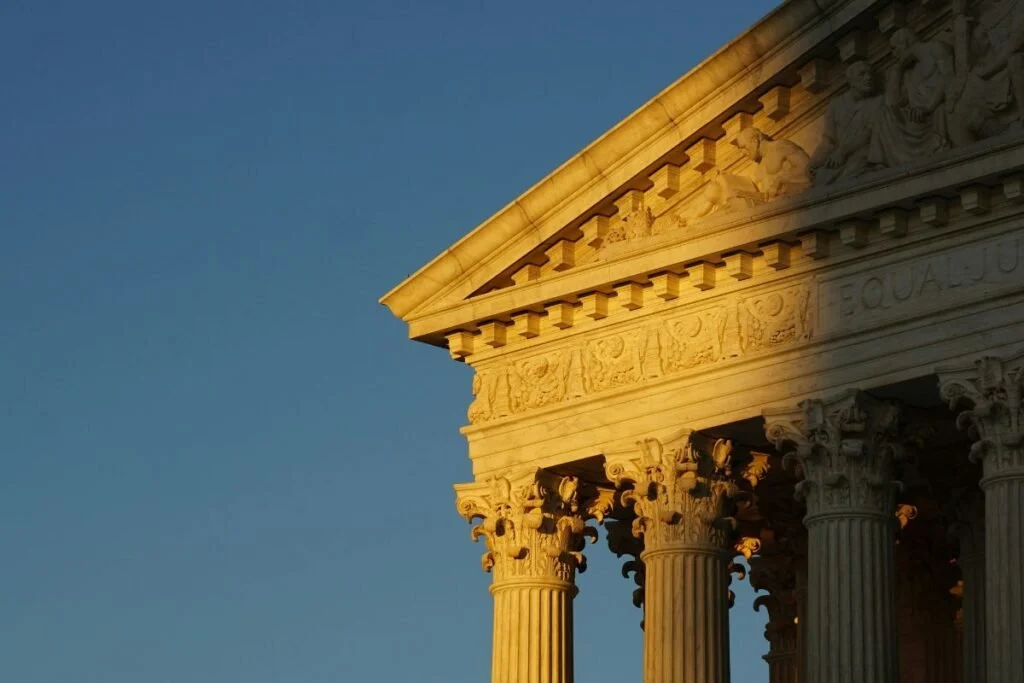
In a landmark decision that intersects the boundaries of professional regulation and constitutional liberty, the United States Supreme Court ruled 8-1 on Tuesday, March 31, 2026, that Colorado’s statutory ban on conversion therapy for minors violates the First Amendment rights of licensed mental health professionals. The ruling in the case of Chiles v. Salazar effectively halts the enforcement of the state’s prohibition against "talk therapy" aimed at altering a minor’s sexual orientation or gender identity, provided that such therapy does not involve physical interventions or medication. While the decision is a significant victory for proponents of religious and speech liberties, it has drawn sharp rebukes from the medical community and civil rights advocates who argue the practice is inherently harmful to LGBTQ+ youth.
The majority opinion, authored by Justice Neil Gorsuch, centered on the principle that the government cannot censor speech simply because it finds the ideas expressed to be offensive or even professionally discredited. The Court held that when a licensed counselor engages in talk therapy, they are participating in a form of speech that is protected from state-mandated "orthodoxy." The ruling does not validate conversion therapy as a medically sound practice, but rather asserts that the state’s method of regulation—a categorical ban on specific viewpoints—crosses the line into unconstitutional speech restriction.
The Case of Chiles v. Salazar
The legal challenge was brought by Kaley Chiles, a licensed Christian counselor based in Colorado. Chiles argued that the state’s 2019 law, which prohibited licensed therapists from engaging in "efforts to change an individual’s sexual orientation or gender identity" with minors, prevented her from practicing her faith and providing the specific type of guidance her clients sought. Crucially, Chiles maintained that her practice was limited to "talk therapy," involving dialogue and counseling based on her religious worldview, rather than the more controversial and physically invasive methods historically associated with the practice.
The state of Colorado defended the law by citing its "police power" to regulate the medical profession and protect children from practices that every major American medical association has deemed harmful. Lower courts had previously upheld the ban, following a precedent that treated professional counseling as "conduct" rather than "speech." However, the Supreme Court’s 8-1 decision rejects that distinction, placing professional counseling firmly within the protections of the First Amendment.
The Majority Opinion: Speech vs. Conduct
Writing for the majority, Justice Neil Gorsuch emphasized that the First Amendment serves as a "shield against any effort to enforce orthodoxy in thought or speech." The Court argued that the Colorado law was content-based and viewpoint-based because it singled out a specific type of message for prohibition. According to the majority, while the state has a legitimate interest in protecting public health, it cannot do so by silencing professionals who express ideas that the state disfavors.
"Colorado may regard its policy as essential to public health and safety," Gorsuch wrote. "But the First Amendment reflects a judgment that every American possesses an inalienable right to think and speak freely, and a faith in the free marketplace of ideas as the best means for discovering truth." The majority further clarified that the ruling applies specifically to "pure speech"—the verbal communication between a therapist and a client. It noted that the state remains free to regulate physical interventions, the administration of drugs, or other forms of medical conduct that do not rely primarily on expressive communication.
The 8-1 configuration of the Court suggests a broad consensus among the conservative and some liberal justices regarding the specific free speech implications of the Colorado statute. By focusing on the "talk therapy" aspect, the Court avoided a broader ruling that might have shielded more extreme or physically abusive forms of the practice.
The Dissent: A Warning on Public Health
Justice Ketanji Brown Jackson issued the sole dissent, offering a blistering critique of the majority’s reasoning. She argued that the Court failed to recognize the context in which the speech occurs: a regulated medical environment where the state has a duty to ensure that licensed professionals do not provide dangerous or ineffective treatments.
"Chiles is not speaking in the ether; she is providing therapy to minors as a licensed healthcare professional," Jackson wrote. She contended that the ruling undermines the long-recognized authority of states to set standards for the medical profession. Jackson warned that by characterizing professional advice as "pure speech," the Court has opened the door for professionals in other fields—such as doctors or lawyers—to bypass safety regulations by claiming their harmful advice is a protected form of expression. She described the majority’s position as "unprincipled and unworkable," predicting it would prove "untenable" for state regulators tasked with protecting public health.
Medical Consensus and the Risks of Conversion Therapy
The Supreme Court’s ruling arrives in direct opposition to the established positions of nearly every major medical and mental health organization in the United States. Organizations including the American Medical Association (AMA), the American Psychological Association (APA), the American Academy of Pediatrics (AAP), and the American Psychiatric Association have all issued statements condemning conversion therapy.
According to an AMA issue brief, conversion therapy—sometimes called "reparative therapy" or "sexual orientation change efforts" (SOCE)—is based on the false premise that homosexuality or gender non-conformity are mental disorders that need to be "cured." The AMA notes that these practices have been linked to significant psychological distress, including:
- Increased rates of depression and anxiety.
- Higher incidence of substance abuse.
- A significantly elevated risk of suicide and self-harm among LGBTQ+ youth.
Furthermore, the United Nations has classified the more extreme versions of conversion therapy as a form of torture. While the Chiles case focused on "talk therapy," advocates for the ban argue that even verbal "reconditioning" can be psychologically devastating for minors who are often forced into such programs by their parents or guardians.
Chronology of the Legal Battle
The path to the Supreme Court decision involved several years of legislative and legal maneuvering:
- May 2019: Colorado Governor Jared Polis signs House Bill 19-1129 into law, joining a growing number of states in banning conversion therapy for minors.
- 2022-2023: Kaley Chiles files a lawsuit in federal court, alleging that the law violates her First and Fourteenth Amendment rights. The U.S. District Court for the District of Colorado and the 10th U.S. Circuit Court of Appeals both rule in favor of the state, maintaining that the law regulates professional conduct, not speech.
- 2025: The Supreme Court grants certiorari to hear the case, signaling a potential shift in how the Court views professional speech.
- January 2026: Oral arguments are heard, with the justices questioning the limits of state power over the "private conversations" between therapists and clients.
- March 31, 2026: The Court issues its 8-1 decision, coinciding with International Transgender Day of Visibility.
Official Reactions and Social Impact
The ruling triggered immediate and polarized reactions across the political and social spectrum. Kelley Robinson, President of the Human Rights Campaign (HRC), condemned the decision as a "reckless" move that prioritizes bias over the safety of children. "Today’s decision means more American kids will suffer," Robinson said in a statement. "The Court has weaponized free-speech in order to prioritize anti-LGBTQ+ bias over the safety, health, and wellbeing of children."
Conversely, supporters of the ruling, including various religious liberty groups, hailed it as a necessary check on government overreach. They argued that the state should not have the power to dictate what a private counselor can say to a client who has sought their help.
Shannon Minter, legal director of the National Center for Lesbian Rights (NCLR), provided a more nuanced analysis, noting that the ruling is narrow in scope. Minter pointed out that while the categorical ban on "talk therapy" was struck down, other regulatory avenues remain open. "This decision is narrowly about how conversion therapy can be regulated," Minter said. "It does not mean that conversion therapy is safe or legal. Conversion therapy is still medical malpractice and consumer fraud."
Broader Implications and Future Litigation
The ruling in Chiles v. Salazar has immediate implications for the 23 states and the District of Columbia that currently have bans on conversion therapy. While the Court did not explicitly strike down those laws, the precedent set on Tuesday provides a roadmap for counselors in other jurisdictions to challenge similar bans.
However, legal experts suggest that the decision leaves significant room for states to continue regulating the practice through different frameworks. Specifically:
- Consumer Fraud: States can still prosecute providers who make false claims about the effectiveness of conversion therapy.
- Medical Malpractice: Survivors of conversion therapy can still sue providers for damages if the practice leads to psychological or physical harm.
- Licensing Boards: Professional boards can still investigate and discipline therapists who engage in practices that violate general standards of care or involve coercion and abuse.
The decision is the first of three major LGBTQ+ cases on the Supreme Court’s docket for the 2025-2026 term. The other two cases involve the participation of transgender athletes in sports, and the outcomes of those cases are expected to further define the legal landscape for LGBTQ+ rights in the United States. For now, the ruling on conversion therapy underscores a Court that is increasingly protective of First Amendment claims, even when those claims conflict with established medical consensus and state public health initiatives.