Nila Kartika Wati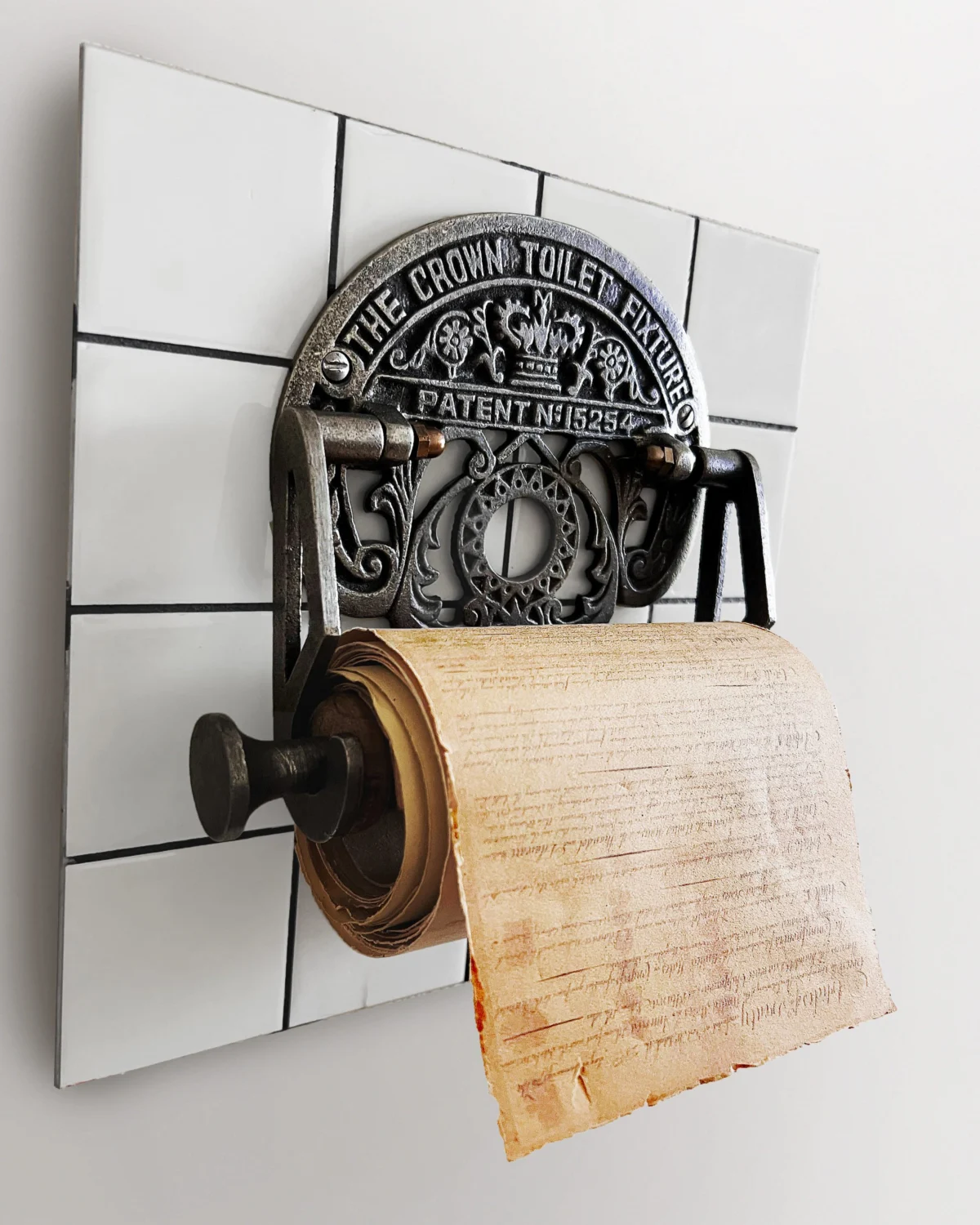
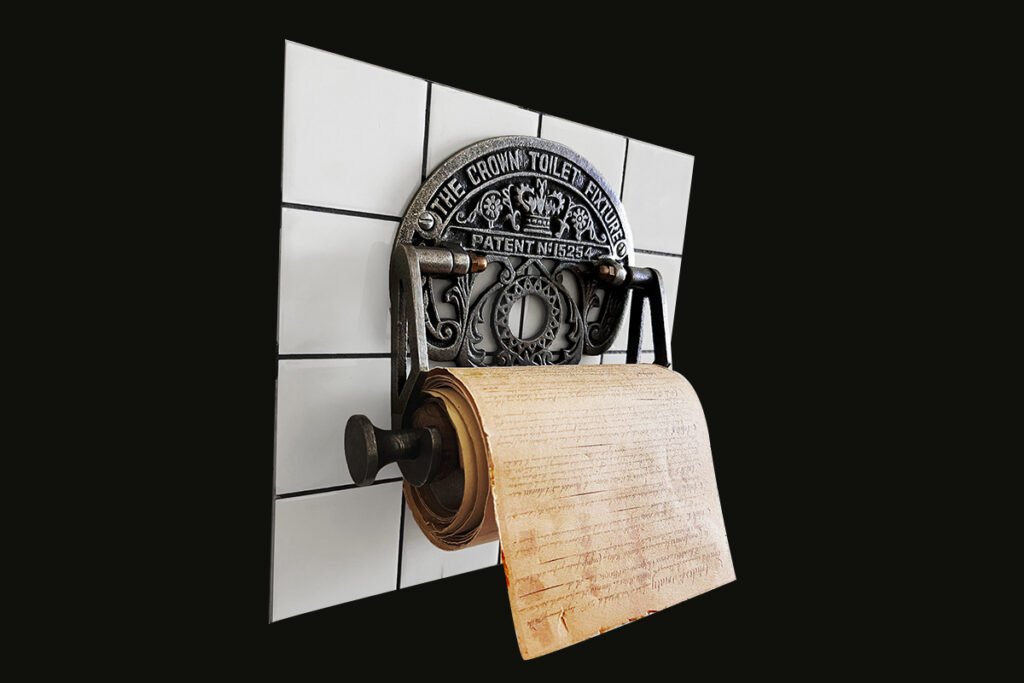
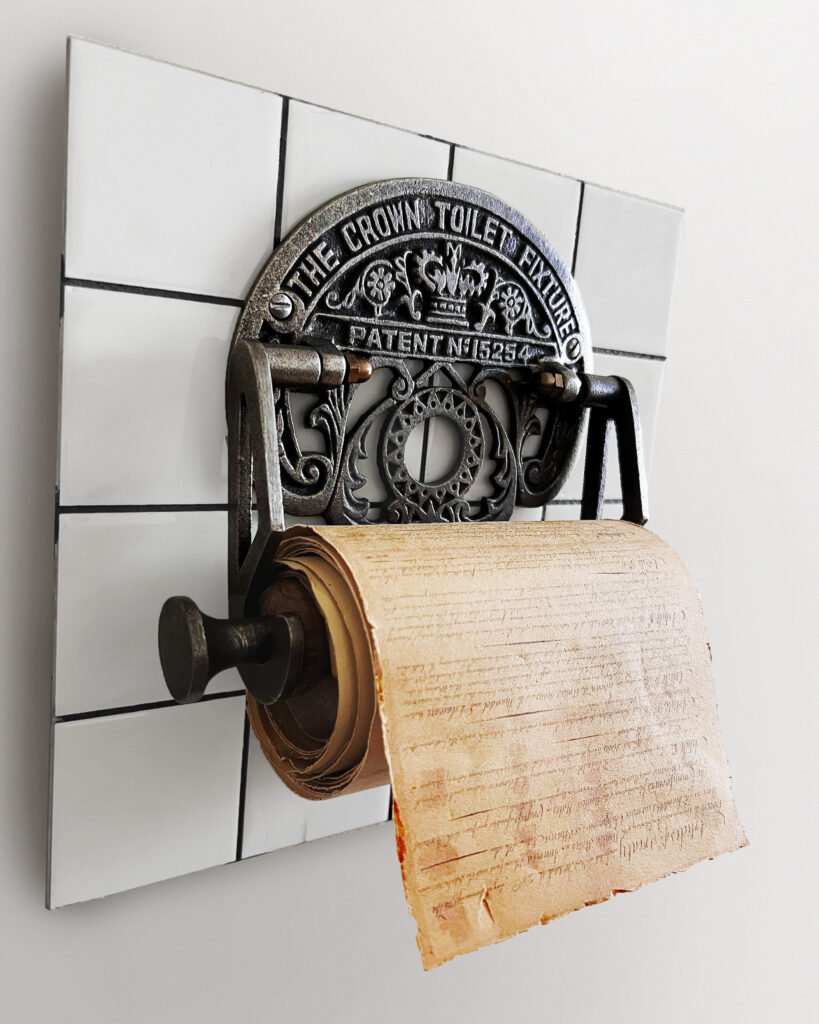
The discovery of hundreds of unmarked graves at former Indian residential school sites has catalyzed a profound cultural and artistic reckoning across North America, prompting Indigenous creators to translate historical trauma into visual narratives. Among those leading this movement is Brandon S. Copley, a two-spirit assemblage artist whose work utilizes found objects to interrogate the systemic erasure of Indigenous lives and the violation of sovereign agreements. Copley’s recent installations, particularly those featuring parchment paper inscribed with cursive legalities wrapped around utilitarian objects like toilet paper rolls, serve as a visceral critique of the United States’ history of broken treaties and the "disposability" of Native bodies within the colonial framework.
The impetus for Copley’s current creative trajectory was the 2021 announcement regarding the remains of children found at the Kamloops Indian Residential School in British Columbia, followed by similar revelations across the United States. For Copley, whose heritage spans the Seneca Nation of Western New York and the Maidu of Northern California, these discoveries were not merely headlines but a call to a "creative grieving state." His work seeks to reclaim the stories of those who were discarded, as he describes it, "like scraps of paper in the wind," while highlighting the legal weight of the promises—however hollow—made by the federal government to Indigenous nations.
The Historical Context of the Indian Residential School System
To understand the weight of Copley’s work, one must examine the institutional history of the Indian residential school system. In the United States, the system was formalized under the Civilization Fund Act of 1819, which provided federal funding to religious and private organizations to "civilize" Indigenous children. The overarching philosophy was famously summarized by Richard Henry Pratt, founder of the Carlisle Indian Industrial School, as: "Kill the Indian in him, and save the man."
Between the late 19th century and the mid-20th century, the U.S. government operated or supported over 400 boarding schools across 37 states. These institutions were designed to forcibly assimilate Native children by stripping them of their languages, religions, and cultural practices. Children were often taken from their families by force or through coercive legal measures. Once enrolled, they faced harsh discipline, manual labor, and, in many documented cases, physical and sexual abuse. The schools were also breeding grounds for infectious diseases due to overcrowding and poor sanitation, leading to thousands of deaths that often went unrecorded or were buried in unmarked graves on school grounds.
A Timeline of Modern Discovery and Federal Investigation
The contemporary crisis of conscience regarding these schools reached a turning point in May 2021. The Tk’emlúps te Secwépemc First Nation announced that ground-penetrating radar had identified the remains of 215 children at the site of the former Kamloops Indian Residential School. This discovery triggered a wave of similar investigations across Canada and the United States.
In response, U.S. Secretary of the Interior Deb Haaland, the first Native American to serve as a cabinet secretary, launched the Federal Indian Boarding School Initiative in June 2021. This comprehensive effort was tasked with identifying former school sites, locating known and unknown burial sites, and uncovering the identities and tribal affiliations of the children interred there.
In May 2022, the Department of the Interior released Volume I of its investigative report. The findings were stark:
- The U.S. federal school system consisted of 408 schools.
- The system focused on manual labor and vocational training, which frequently left graduates with few options for economic advancement.
- Initial records identified at least 500 student deaths across the system, though officials noted this number is expected to rise significantly—into the tens of thousands—as the investigation continues.
- Burial sites were identified at approximately 53 school locations.
The Symbolism of Broken Treaties in Assemblage Art
Copley’s art directly addresses the legal mechanisms that facilitated this era of forced assimilation. One of his most striking installations features old parchment paper, covered in formal cursive writing, wrapped around the barrel of a cast-iron English-style toilet paper roll. This choice of materials is a deliberate commentary on the 370-plus treaties signed between the United States and various Indigenous nations between 1778 and 1871.
While these treaties are legally binding documents under the U.S. Constitution—specifically the Supremacy Clause—the federal government has a long history of unilaterally breaking them to facilitate westward expansion, resource extraction, and cultural homogenization. By placing "treaty" parchment on a toilet paper holder, Copley highlights the government’s historical treatment of these sacred legal agreements as disposable and insignificant.
The use of assemblage art is particularly poignant in this context. Assemblage, a medium popularized by artists like Betye Saar, involves creating three-dimensional compositions from "found" or "readymade" objects. For Copley, the "found" nature of his materials mirrors the "lost" nature of Indigenous history. By reassembling discarded items into fine art, he mirrors the process of Indigenous communities piecing together their fractured histories from the remnants left behind by colonial institutions.
Identity and Influence: The Two-Spirit Perspective
Brandon S. Copley’s identity as a two-spirit artist adds another layer of complexity to his work. The term "two-spirit" is a modern pan-Indian term used by some Indigenous North Americans to describe Native people in their communities who fulfill a traditional third-gender (or gender-variant) ceremonial and social role. Historically, many Indigenous cultures recognized and honored gender diversity before colonial and missionary influence imposed strict binary structures.
Growing up in California’s Bay Area, off the reservation and not adhering to a specific religion, Copley describes himself as a "cultural sponge." This lack of a rigid, singular institutional upbringing allowed him to explore the intersection of traditional Native influences and contemporary fine art. His work is heavily influenced by Betye Saar, whose 1972 piece The Liberation of Aunt Jemima used assemblage to challenge racial stereotypes. Similarly, Copley uses his medium to redefine expectations of "Native art," moving away from purely traditional crafts toward a more confrontational, conceptual style that demands an emotional and political response.
Broader Implications and the Path Toward Reconciliation
The resonance of Copley’s work reflects a broader societal shift toward "Truth and Reconciliation" models. In Canada, the Truth and Reconciliation Commission (TRC) spent six years documenting the history and lasting impacts of the residential school system, culminating in 94 "Calls to Action." The United States is currently grappling with a similar need for a formal commission.
Legislative efforts, such as the Truth and Healing Commission on Indian Boarding School Policies Act, have been introduced in Congress. These bills aim to establish a formal commission to investigate the impacts of the boarding school era and provide recommendations for federal redress. Supporters argue that without a full accounting of the past, healing for Indigenous communities remains elusive.
From a sociological perspective, Copley’s work serves as a form of "counter-monument." Unlike traditional statues that often celebrate colonial figures, his assemblage pieces serve as memorials to the victims of those figures. They force the viewer to confront the uncomfortable reality that the foundations of modern American and Canadian prosperity were often built upon the systemic disenfranchisement and physical destruction of Indigenous families.
Conclusion: Art as a Vessel for Justice
As more remains are identified and more stories of the residential school era come to light, the role of the artist becomes increasingly vital. Brandon S. Copley’s work demonstrates that art is not merely an aesthetic pursuit but a necessary tool for processing collective grief and demanding accountability. By transforming "scraps of paper" and found objects into powerful statements on sovereignty and human rights, Copley ensures that the children lost to the residential school system are neither forgotten nor dismissed.
His installations remind the public that the treaties were more than ink on parchment; they were promises of mutual respect and survival. When those promises were discarded, the consequences were measured in lives. Through his creative process, Copley reclaims the narrative, turning the "useless" remnants of a painful past into a compelling demand for a more just and truthful future. As the United States continues to investigate its federal boarding school legacy, the voices of Indigenous artists will remain at the forefront, ensuring that the truth—no matter how buried—is finally brought to the surface.