Nila Kartika Wati
On March 13, 2026, Secretary of Defense Pete Hegseth addressed the press in a briefing that transcended standard military updates, pivoting into a critique of domestic media and the future of corporate ownership. During the session, Hegseth expressed public dissatisfaction with CNN’s recent coverage regarding the administration’s military engagements in the Middle East—specifically what has been characterized by critics as an unauthorized war on Iran. Hegseth’s remarks culminated in an endorsement of David Ellison’s pending acquisition of Warner Bros. Discovery (WBD), the parent company of CNN, suggesting that a change in leadership would rectify what he described as "unserious" reporting.
The controversy stems from a March 12, 2026, investigative report published by CNN. The report alleged that the Pentagon and the National Security Council (NSC) significantly underestimated the strategic resolve of the Iranian government, specifically its willingness to close the Strait of Hormuz in retaliation for U.S. military strikes. Hegseth dismissed the report during the press conference, stating, "The sooner David Ellison takes over that network, the better. CNN doesn’t think we thought of that. It’s a fundamentally unserious report."
In response, a CNN spokesperson issued a brief statement to the media: "We stand by our reporting." However, the exchange has reignited a national debate regarding the intersection of billionaire wealth, political loyalty, and the editorial independence of the fourth estate. The transition of CNN from its current corporate structure to the control of the Ellison family represents a pivotal moment in the history of American media consolidation.
The Mechanics of the $111 Billion Merger
The impending acquisition is the latest in a series of massive consolidations within the entertainment and news sectors. David Ellison, the founder of Skydance Media, successfully merged his studio with Paramount Global in August 2025. Less than a year later, Skydance-Paramount outbid competitors, including Netflix, to acquire Warner Bros. Discovery in a deal valued at approximately $111 billion.
Upon regulatory approval, the Ellison family—led by David and supported by the immense capital of his father, Oracle co-founder Larry Ellison—will oversee an unprecedented media empire. This portfolio includes not only CNN but also HBO, the Max streaming service, Warner Bros. Pictures, and a vast array of cable networks including HGTV, Discovery, TLC, TBS, and TNT. Furthermore, the merger brings CBS News under the same umbrella as CNN, placing two of the nation’s three primary legacy news organizations under a single ownership group.
The political dimensions of this deal are significant. Larry Ellison has been a vocal supporter and major financial donor to Donald Trump. Analysts suggest that the consolidation of these assets under a family with close ties to the executive branch creates a potential conflict of interest, particularly regarding how these outlets cover administration policies and military actions.
A Chronology of Media Consolidation and Capture
To understand the gravity of the WBD acquisition, it is necessary to examine the trajectory of the American media landscape over the last several decades. In 2011, approximately 90 percent of U.S. media was controlled by six major corporations: AT&T, CBS, Comcast, Disney, News Corp, and Viacom. While the names of these entities have shifted through various mergers and spinoffs, the concentration of power has only intensified.
- August 2025: David Ellison’s Skydance Media completes its merger with Paramount Global, bringing CBS News and MTV under his control.
- December 2025: Under the new editorial leadership of Bari Weiss at CBS News, the network pulls a high-profile 60 Minutes segment regarding the administration’s immigration policies just hours before airtime.
- February 2026: Skydance-Paramount announces the winning bid for Warner Bros. Discovery, signaling the start of the regulatory review process for the $111 billion deal.
- March 2026: Secretary Hegseth publicly advocates for the Ellison takeover of CNN following unfavorable reporting on the war in Iran.
This timeline illustrates a rapid narrowing of the "narrative ecosystem." As fewer individuals control the primary sources of information, the vulnerability of the press to political pressure increases.
Editorial Independence and the "Media Capitulation Index"
The concerns regarding the Ellison acquisition are not merely theoretical; they are informed by recent editorial shifts at other major outlets. In late 2025, the decision by CBS News to spike a segment on Venezuelan deportees—who had provided testimony critical of the U.S. administration—was met with internal and external backlash. Bari Weiss, appointed to lead the editorial direction at CBS, defended the decision by stating the report "did not advance the ball." However, the correspondent for the segment labeled the move as "political."
This incident followed a $16 million settlement paid by Paramount to Donald Trump in July 2025 to resolve a $10 billion lawsuit regarding a 60 Minutes interview with Kamala Harris. Legal experts suggested the settlement was a strategic move to "smooth the path" for the Skydance merger.
The media advocacy organization Free Press recently released a report titled Chokehold: Donald Trump’s War on Free Speech & the Need for Systemic Resistance. The report’s author, Nora Benavidez, identified "corporate capitulation" as a primary method through which the current administration undermines dissent. Benavidez argues that billionaire owners often prioritize regulatory favors and financial stability over journalistic integrity, leading to a "top-down degradation of the information environment."
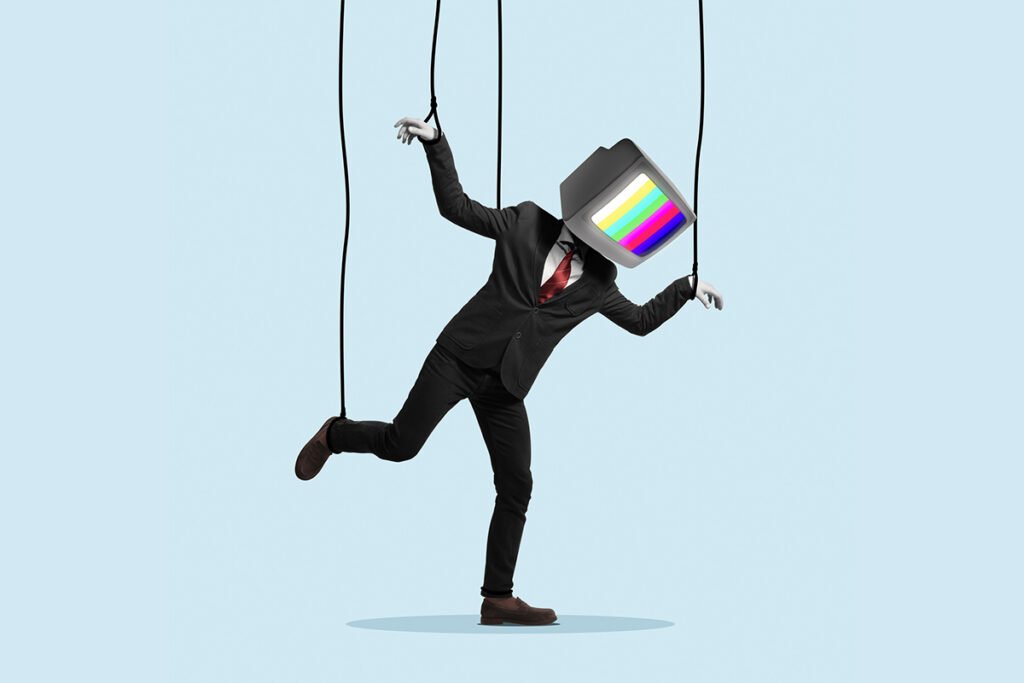
The Authoritarian Playbook: The Orbán Parallel
Political scientists have drawn parallels between the current trend of U.S. media consolidation and the strategies employed by Hungarian Prime Minister Viktor Orbán. Under Orbán’s tenure, the Hungarian media landscape was reshaped through the acquisition of independent outlets by government-aligned business interests. This resulted in an unofficial "nationalized" media that promotes state messaging while marginalizing opposition voices.
At the 2022 Conservative Political Action Conference (CPAC), Orbán explicitly advised American conservatives that the path to sustained power required "having their own media outlets." The Ellison family’s acquisition of WBD, combined with their existing stakes in tech and social media, appears to align with this strategy.
Larry Ellison’s vision for the future of information technology adds another layer to this concern. During an Oracle financial analyst meeting in September 2024, the elder Ellison discussed the integration of AI and ubiquitous surveillance. He envisioned a future where "citizens will be on their best behavior" because AI will be "constantly recording and reporting everything that’s going on." As Oracle holds a significant stake in the U.S. operations of TikTok, the convergence of social media, AI surveillance, and legacy news ownership suggests a move toward what some scholars term "technofascism."
The Rise of News Deserts and Information Vulnerability
The consolidation of national media is occurring simultaneously with the collapse of local journalism. According to the State of Local News Project at Northwestern University’s Medill School, the United States is currently facing a crisis of "news deserts."
Data from October 2025 indicates:
- 212 U.S. counties now have zero locally based news sources.
- 1,525 counties have only one remaining news source.
- 50 million Americans (one in seven) live in areas with limited or no access to local news.
In these deserts, citizens increasingly rely on unvetted social media platforms—such as TikTok and X—for information. When the ownership of these platforms and the remaining national news networks converges under a single group of politically aligned billionaires, the ability of the public to access diverse viewpoints is severely restricted.
Broader Implications and Official Responses
The administrative pressure on the media is not limited to verbal critiques from the Secretary of Defense. Brendan Carr, the chairman of the Federal Communications Commission (FCC), has recently suggested that the government could revoke the broadcasting licenses of networks based on their coverage of the war with Iran.
This regulatory environment, combined with the WBD merger, creates a "pincer effect" on journalism. On one side, the threat of license revocation incentivizes self-censorship; on the other, new ownership structures may naturally align editorial content with administration goals to protect corporate interests.
The potential impact on CNN’s 3,000 employees and its roster of high-profile journalists—many of whom have spent years reporting critically on the current administration—remains uncertain. The merger is currently pending regulatory review, a process that will be overseen by administration appointees.
The Role of the Independent Sector
As legacy media undergoes this transition, advocates for a free press are emphasizing the necessity of independent, non-commercial journalism. Organizations such as ProPublica, NPR, and various nonprofit newsrooms are being highlighted as the last remaining bastions of narrative independence.
The Free Press report concludes that the only way to counter the "chokehold" of media consolidation is to advance structural solutions that invest in local, diverse, and non-commercial journalism. This includes protecting the rights of journalists to report without fear of retribution and ensuring that the public has access to information that is not moderated by the whims of billionaire owners or the strategic needs of a political administration.
The Ellison-WBD merger is more than a financial transaction; it is a fundamental shift in the American information landscape. As the deal moves toward completion, the resilience of the nation’s democratic institutions may depend on the ability of independent outlets to provide a check on the consolidated power of a new media elite.