Nila Kartika Wati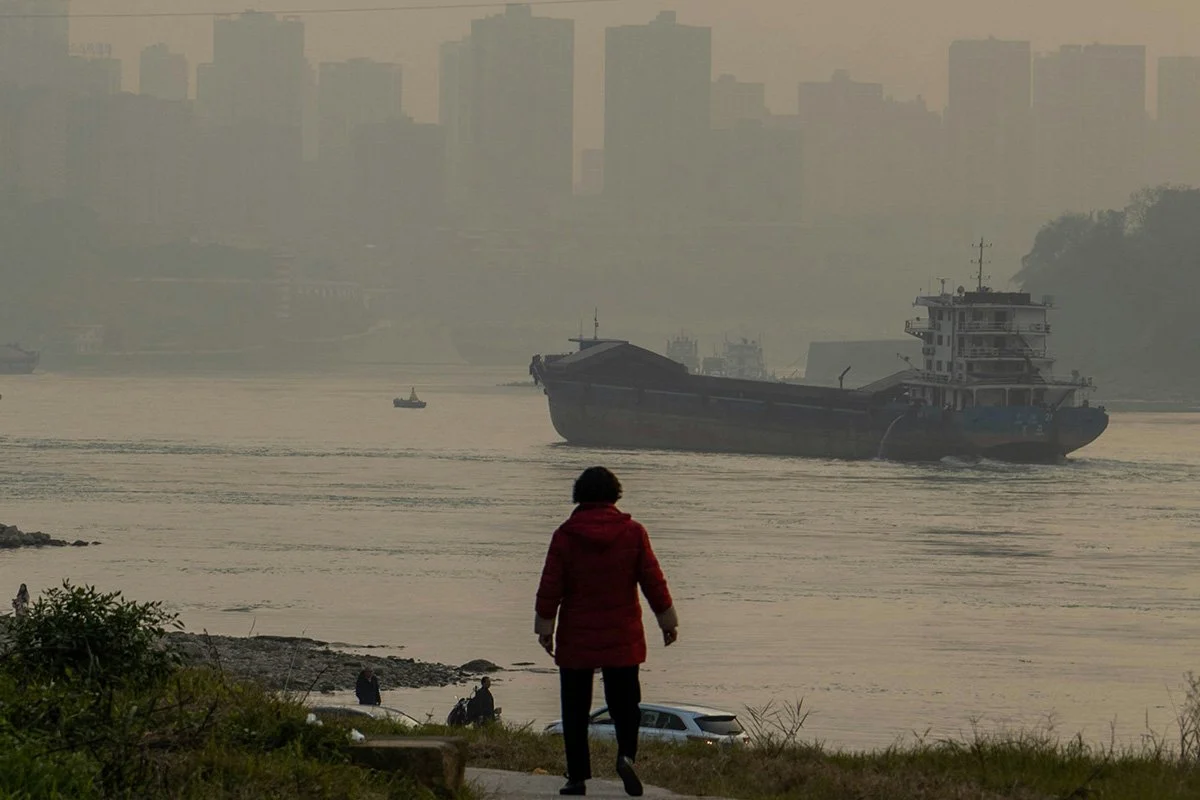
The global distribution of philanthropic funding for air quality management remains fundamentally misaligned with the severity of the crisis, as North America continues to receive the lion’s share of financial resources despite suffering from significantly lower pollution levels than the Global South. According to the 2024 report by the Clean Air Fund (CAF), titled Philanthropic Foundation Funding for Clean Air, North America accounted for 34 percent of all foundation funding dedicated to air quality in 2023. In stark contrast, the African continent received less than 1 percent of these resources, while Asia—excluding the economic giants of India and China—received a mere 6 percent. This geographic disconnect exists despite the fact that no city in the United States currently ranks among the 50 most polluted urban centers globally, whereas the majority of the world’s most toxic environments are concentrated in Africa and Asia.
Experts in the field of environmental health have expressed bewilderment at this allocation strategy. Christa Hasenkopf, director of the Clean Air Program and founder of the EPIC Air Quality Fund at the Energy Policy Institute at the University of Chicago, noted that from an objective, external perspective, the current funding model is illogical. She observed that resources are being disproportionately directed toward regions where the population density is lower and the pollution levels are comparatively mild, leaving the most vulnerable populations in the Global South with virtually no institutional support.
The Human and Economic Toll of Atmospheric Neglect
The consequences of this funding gap are measured in human lives and economic stagnation. In 2023, approximately eight million deaths were attributed to ambient air pollution, with the vast majority of these fatalities occurring in Asia and Africa. The primary culprit is fine particulate matter, known as PM2.5—microscopic particles generally emitted from internal combustion engines, industrial manufacturing, and agricultural burning. These particles are small enough to enter the bloodstream, leading to a spectrum of debilitating conditions, including chronic obstructive pulmonary disease (COPD), various cancers, and heart failure. Recent medical research has further linked prolonged exposure to PM2.5 to developmental delays in children and an increased risk of dementia in aging populations.
Beyond the humanitarian crisis, the economic burden of air pollution is staggering. Data from the World Bank indicates that pollution-related illnesses cost the global economy approximately $8.1 trillion annually. This figure includes the direct costs of healthcare as well as the indirect costs of lost productivity. The Organisation for Economic Co-operation and Development (OECD) estimates that roughly 1.2 billion work days are lost globally every year because workers are either too ill to perform their duties or must care for family members affected by toxic air.
The Logic of Proximity and the Exportation of Pollution
The disparity in funding is often attributed to the "proximity bias" of major philanthropic organizations. Many of the world’s largest foundations, such as the Bezos Earth Fund and Bloomberg Philanthropies, are headquartered in the United States. While these organizations have made significant strides in funding clean energy transitions and green transport within North America, their focus remains largely domestic. According to the CAF report, 57 percent of total air quality funding in North America, or $164 million, originated from U.S.-based donors.
Sean Maguire, CAF’s executive director of strategic partnerships, explained that while it is legitimate for foundations to fund projects close to home, the resulting vacuum in the Global South is a systemic failure. This failure is compounded by the fact that many of the pollution problems in Asia and Africa are exacerbated by the consumption patterns of the Global North. Weenarin Lulitanonda, cofounder of the Thailand Clean Air Network, argues that the Global North has effectively "exported" its pollution by outsourcing high-emission industries—such as petrochemicals, heavy manufacturing, and industrial agriculture—to countries with more lenient environmental regulations. Consequently, the Global South bears the environmental cost of a global supply chain that primarily benefits wealthier nations.
Institutional Barriers and the Awareness Gap
The lack of funding in lower-income countries is also driven by a lack of awareness among international donors. Chris Hagerbaumer, executive director of OpenAQ, pointed out that air pollution is frequently overlooked because it is an "invisible killer." While issues like infectious diseases or food insecurity have clear, immediate visual representations that drive donor engagement, the gradual health decline caused by smog is often harder to market to boards of directors.
Furthermore, international funders often face administrative and cultural barriers when attempting to disperse funds in the Global South. Local advocacy groups in Africa or Asia, which could facilitate industry regulation or educate farmers on alternatives to crop burning, are often not on the radar of Western philanthropists. Without established relationships or local funding networks, many donors choose the path of least resistance, reinvesting in well-known organizations in the Global North rather than taking the perceived risk of funding grassroots movements in developing nations.
A Chronology of Declining Public and Private Support
The current funding landscape follows a worrying trend of stagnation and decline in specific sectors. Between 2019 and 2023, only 0.1 percent of all global philanthropic capital was directed toward clean air initiatives. Even within the health sector, support is waning. The CAF report found that 74 percent of foundations investing in air quality are focused on climate and energy rather than public health. Alarmingly, health-focused foundations actually reduced their investments in air quality during the 2019–2023 period.
Public sector support has mirrored this private sector retreat. For every $1,000 spent by international development agencies, only $11 is currently directed toward air pollution mitigation. This meager allocation is expected to shrink further following significant cuts to overseas development budgets in the United Kingdom and the United States.
A critical blow to global air quality monitoring occurred when the U.S. State Department shuttered its embassy-based air quality monitoring program. For years, this program provided vital PM2.5 data in over 80 countries where local monitoring was non-existent. The loss of these sensors has left researchers and local policymakers in the dark, making it nearly impossible to track the effectiveness of local interventions or to issue public health warnings during periods of extreme smog.
The Data Solution: A High-Return Investment
Despite the grim outlook, experts emphasize that solving the air quality crisis does not necessarily require the same level of capital as other global challenges. One of the most effective tools for change is the capture and dissemination of real-time air quality data. Currently, 36 percent of countries—representing one billion people—do not monitor their air quality. Most of these nations are located in the Global South.
Research from the Energy Policy Institute at the University of Chicago (EPIC) suggests that a modest annual investment of $4 million to $8 million in air quality data infrastructure could lead to significant pollution reductions for 838 million people. Data acts as a catalyst for policy change; it allows local governments to identify pollution hotspots, hold industrial polluters accountable, and provide the evidence needed to pass clean air legislation.
The impact of small-scale funding is already being demonstrated. In 2024, EPIC’s Air Quality Fund began providing financial support to underfunded countries to help them establish monitoring networks. The results have been immediate:
- The Gambia: The national government is utilizing new data to draft its first comprehensive clean air policies.
- Malawi: The government has begun issuing regular air quality bulletins to protect public health.
- Ghana: New legislation for air quality management is currently being fast-tracked through the legislative process.
Strategic Implications and the Path Forward
The path to cleaner air requires a shift from "proximity-based" giving to "impact-based" giving. Christa Hasenkopf and other leaders in the field are calling for a diversification of the philanthropic actor pool. The presence of more diverse funders would encourage different risk-taking profiles and innovative approaches to advocacy and industry reform.
However, some experts warn against a sole reliance on new philanthropic dollars. Ruaraidh Dobson, founder of South London Scientific, suggests that the sector must innovate with existing resources. He argues that the current model of international aid is not delivering results at the required scale and that the focus must shift toward building sustainable, long-term capacity within low- and middle-income countries. This includes training local scientists, supporting domestic manufacturing of low-cost sensors, and fostering local political will.
The disparity in air quality funding is a clear example of the inequality inherent in global environmental governance. While citizens in North America enjoy increasingly cleaner air supported by robust philanthropic investment, billions in the Global South remain trapped in a cycle of pollution-induced illness and economic hardship. Rectifying this imbalance is not merely a matter of charity; it is a prerequisite for global health security and economic stability in the 21st century. Without a strategic redistribution of resources, the most polluted regions of the world will continue to suffer the consequences of a problem that is largely fueled by global industrial demands, but ignored by global financial power.