Nila Kartika Wati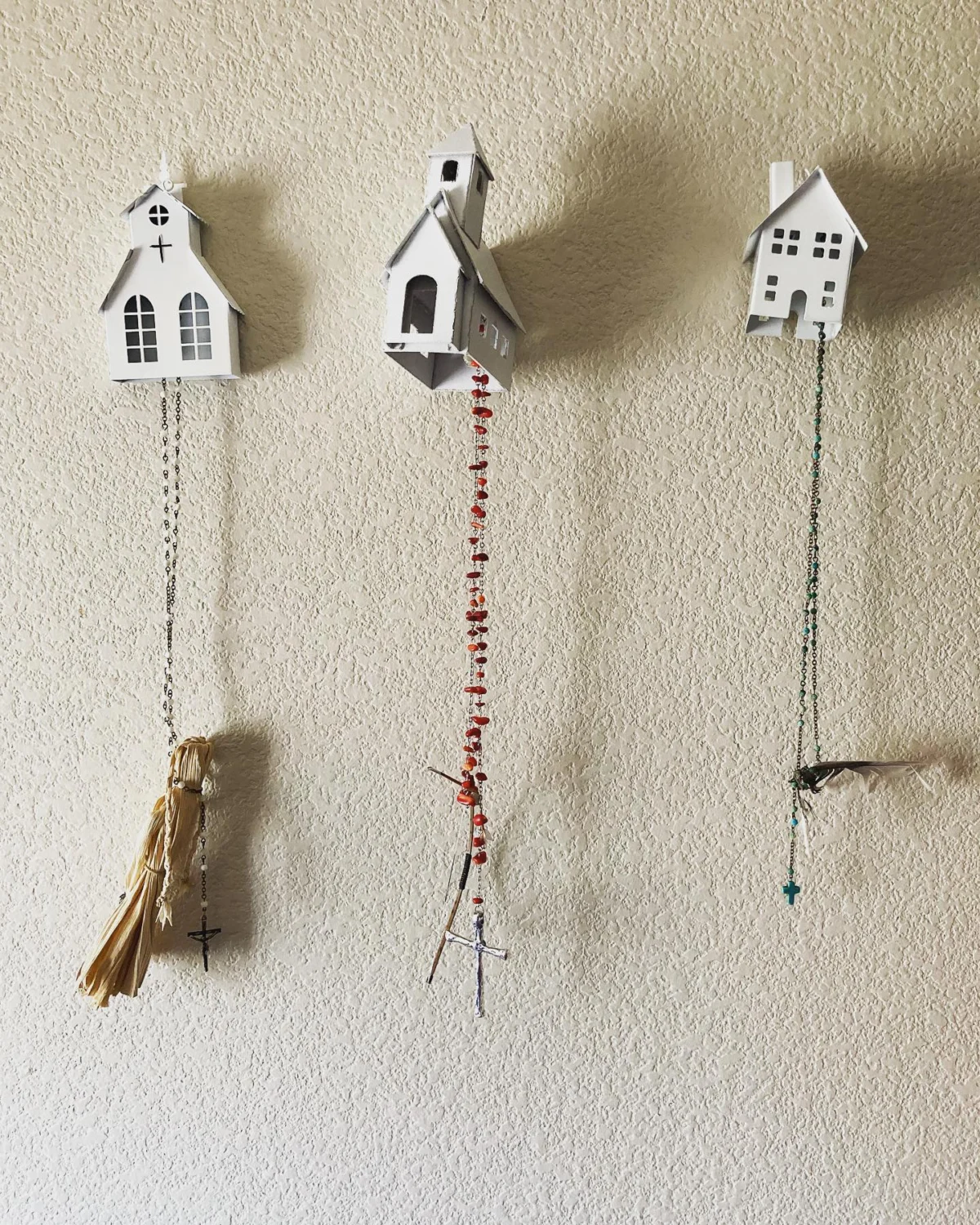
The landscape of contemporary American art is increasingly defined by voices that navigate the complex intersections of heritage, historical erasure, and creative reclamation. Among these voices is Brandon S. Copley, a two-spirit artist whose work serves as a conduit for Indigenous storytelling through the meticulous medium of assemblage and mixed media. Copley’s artistic trajectory is not merely a pursuit of aesthetic innovation but a profound response to the systemic challenges facing multiracial democracy and the ongoing revelation of historical atrocities committed against Indigenous populations. By utilizing found objects and symbolic arrangements, Copley processes collective grief and explores the nuances of an identity forged between traditional Native influences and the contemporary fine art world.
The Artistic Evolution of Brandon S. Copley
Born and raised in California’s Bay Area, Brandon S. Copley represents a unique fusion of tribal lineages. His paternal heritage traces back to the Seneca Nation of Western New York, while his maternal roots lie with a small band of Maidu in Northern California. Despite being raised off the reservation and in a non-religious environment, Copley developed an insatiable curiosity for cultural exploration, describing himself as a "cultural sponge." This background provided him with a distinctive vantage point, allowing him to observe and synthesize various cultural currents without the constraints of a single traditionalist dogma.
Copley’s creative journey began in the realm of photography, a medium that focuses on the capture of existing reality. However, his desire to manipulate and recontextualize that reality led him toward more tactile forms of expression. He transitioned through collage and sewing before finding his definitive voice in assemblage—the art of creating three-dimensional compositions from disparate, often discarded, objects. This progression mirrors a deeper psychological movement from observation to construction, where the artist takes the "found" remnants of a fractured history and assembles them into a cohesive narrative of resilience.
Central to Copley’s development was the influence of Betye Saar, a legendary figure in the assemblage movement. Saar is renowned for her ability to take derogatory stereotypes and mundane objects, such as washboards or birdcages, and transform them into powerful critiques of racism and symbols of spiritual empowerment. Inspired by Saar’s ability to push boundaries and subvert expectations, Copley adopted a similar approach, using his work to redefine Indigenous stereotypes and challenge the viewer’s preconceived notions of Native American art.
The Catalyst of Historical Reckoning
The pivotal moment in Copley’s recent artistic output was the harrowing discovery of child remains on the grounds of former Indian residential schools. This news, which gained significant international attention in 2021, served as a catalyst for Copley to process intergenerational grief through his creative practice. For many Indigenous artists, these discoveries were not a revelation of unknown facts, but a confirmation of long-held oral histories regarding the brutality of the boarding school system.
The Indian residential school system, which operated in both the United States and Canada from the late 19th century through the late 20th century, was designed with the explicit goal of "civilizing" Indigenous children by forcibly removing them from their families, prohibiting their languages, and suppressing their cultural practices. The discovery of unmarked graves at sites like the Kamloops Indian Residential School in British Columbia and various locations across the United States brought the "Kill the Indian, Save the Man" philosophy of the 19th century into sharp, modern relief.
Copley’s work in this period became a form of visual eulogy. By using found objects—items that have been lost, discarded, or forgotten—he creates a physical metaphor for the lives interrupted and the cultures suppressed by these institutions. His use of symbolism allows him to address these heavy themes without relying solely on trauma-centric imagery, instead focusing on the endurance of the Indigenous spirit.
A Timeline of the Residential School Discovery and Response
To understand the context in which Copley and other Indigenous artists are working, it is essential to review the timeline of recent events that have reshaped the national conversation on Indigenous history:
- May 2021: The Tk’emlúps te Secwépemc First Nation announces the discovery of the remains of 215 children buried at the site of the former Kamloops Indian Residential School in British Columbia.
- June 2021: United States Secretary of the Interior Deb Haaland, the first Native American to hold the position, announces the Federal Indian Boarding School Initiative. The goal is to review the legacy of federal boarding school policies and identify former school sites and possible burial grounds.
- May 2022: The U.S. Department of the Interior releases Volume 1 of its investigative report, revealing that between 1819 and 1969, the federal school system consisted of 408 federal schools across 37 states or then-territories. The report confirms that the system was intentionally designed for cultural assimilation and territorial dispossession.
- 2023-2024: Continued investigations and community-led searches lead to further discoveries of unmarked graves, prompting a surge in Indigenous-led advocacy for the Truth and Healing Commission on Indian Boarding School Policies Act.
This timeline highlights a period of intense national soul-searching. For artists like Copley, the "assemblage" of these facts into a public consciousness is as much a part of their work as the physical art they produce.
Supporting Data: The Scope of the Boarding School System
The scale of the institutional impact on Indigenous communities is documented in the 2022 Federal Indian Boarding School Initiative Investigative Report. Key data points include:

- Institutional Reach: The U.S. government operated or supported 408 boarding schools.
- Mortality: The investigation identified marked and unmarked burial sites at approximately 53 different schools, with the expectation that the number of identified deceased children will reach into the thousands as the investigation continues.
- Systemic Erasure: The report detailed the use of systematic identity-alteration methodologies, including renaming children with English names, cutting their hair, and mandating military-style drills.
- Geographic Concentration: While schools were located across the country, high concentrations were found in Oklahoma, Arizona, and New Mexico—regions where Copley’s Seneca and Maidu ancestors faced significant colonial pressure.
These statistics provide the empirical backbone to the emotional and spiritual weight found in Copley’s art. The "found objects" in his assemblages often represent the physical remnants of a world that the boarding school system attempted to dismantle.
The Role of Two-Spirit Identity in Contemporary Art
Copley identifies as a two-spirit artist, a term used by some Indigenous North Americans to describe people who fulfill a traditional third-gender (or gender-variant) ceremonial and social role in their cultures. The term "two-spirit" was reclaimed in the 1990s as a way to distance Indigenous queer and gender-diverse identities from Western colonial terminology.
In the context of Copley’s work, being two-spirit adds a layer of intersectional complexity. Historically, many Indigenous cultures held space for gender diversity before the imposition of binary gender roles by colonial religious and educational institutions. By identifying as two-spirit, Copley is not only reclaiming his tribal heritage but also the specific spiritual and social roles that were targeted for eradication by the boarding school system. His art, therefore, becomes a site of multiracial and multi-gendered democracy, where the "power of the voice" is used to protect and project identities that were once silenced.
Institutional Support and the Fight for Truth
The background of Copley’s profile, as featured by the Nonprofit Quarterly (NPQ), underscores a broader movement within the nonprofit and journalistic sectors to protect marginalized voices. NPQ emphasizes that journalism and nonprofits are currently under attack, particularly those that support a multiracial democracy. The publication’s commitment to paying every contributor and sharing essential insights from nonprofit leaders highlights the economic and social infrastructure required to sustain artists like Copley.
Statements from advocacy groups like the National Native American Boarding School Healing Coalition (NABS) mirror this sentiment. NABS has argued that "the truth about the boarding school policy must be told so that the healing can begin." This alignment between artistic expression, investigative journalism, and nonprofit advocacy creates a robust ecosystem for historical reconciliation.
Analysis of Implications and Broader Impact
The work of Brandon S. Copley and the broader Indigenous assemblage movement has several long-term implications for American culture and policy.
First, there is the cultural impact. By moving beyond traditional "fine art" categories and embracing assemblage, Copley is helping to broaden the definition of Native American art. This challenges the commercial art market’s tendency to pigeonhole Indigenous creators into specific "traditional" or "folk" categories, allowing for a more contemporary and politically engaged discourse.
Second, there is the psychological impact of processing grief through creativity. For the Seneca and Maidu communities, and the broader Indigenous population, seeing their history reflected in high-concept art provides a form of public validation. It transforms "private" community trauma into a "public" dialogue, which is a necessary step in the collective healing process.
Third, the political implication cannot be overlooked. As the U.S. government continues its investigation into the boarding school system, the cultural pressure exerted by artists, journalists, and nonprofits ensures that the issue remains in the public eye. This pressure is vital for the passage of legislation such as the Truth and Healing Commission on Indian Boarding School Policies Act, which seeks to establish a formal body to investigate these historical wrongs.
Conclusion
Brandon S. Copley’s journey from a "cultural sponge" in the Bay Area to a prominent two-spirit assemblage artist is a testament to the power of creative resilience. His work does more than just fill a gallery space; it fills the gaps in a historical record that was intentionally left blank. By synthesizing the influences of Betye Saar with the painful realities of the Indian residential school system, Copley creates a visual language that speaks to both the past and the future.
In an era where the foundations of multiracial democracy are being tested, the voices of artists who bridge the gap between tradition and contemporary critique are essential. Through the support of organizations like the Nonprofit Quarterly and the continued courage of Indigenous storytellers, the "truth" that Copley seeks to keep alive remains a potent force for change. His assemblages are not just collections of objects; they are reconstructions of a history that refused to be buried.