Lana Rhoades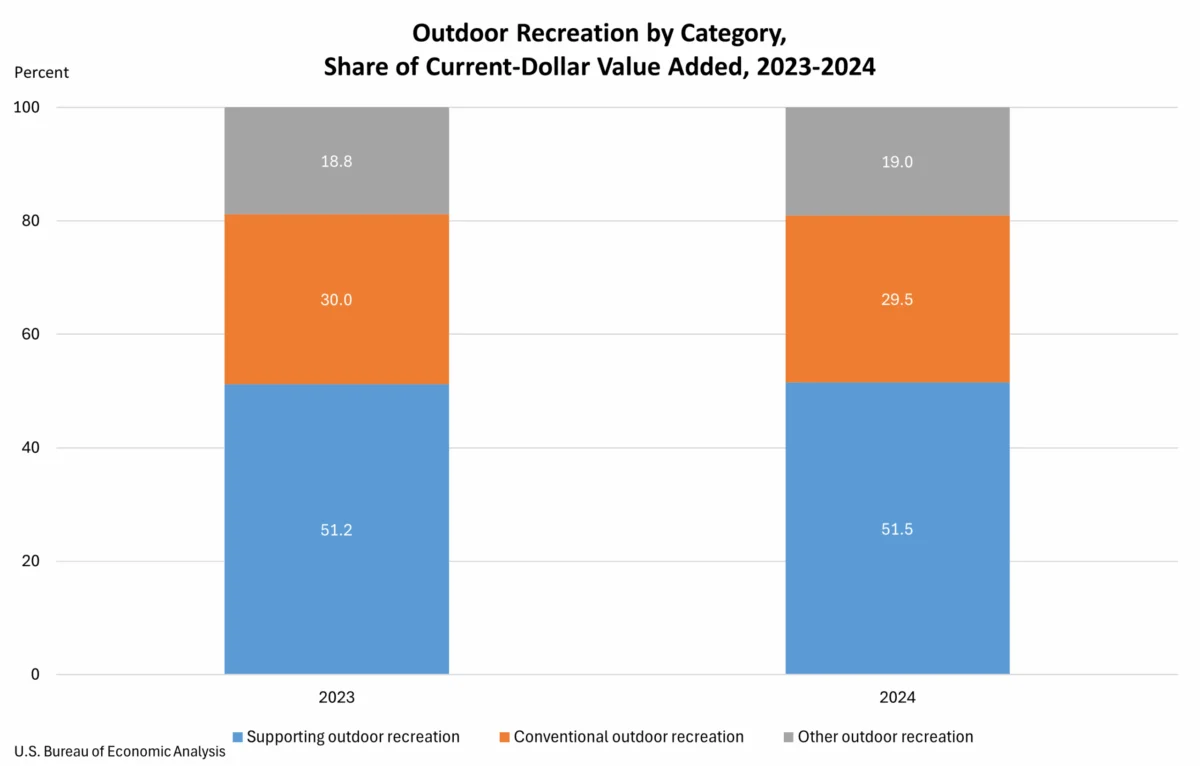
The U.S. Bureau of Economic Analysis (BEA) has released its comprehensive annual statistics detailing the significant economic impact of the outdoor recreation sector across the nation, all 50 states, and the District of Columbia. The latest data reveals that in 2024, the outdoor recreation economy accounted for a substantial 2.4 percent of the nation’s current-dollar Gross Domestic Product (GDP), translating to an impressive $696.7 billion. This robust contribution underscores the sector’s enduring importance to the American economy, providing a consistent engine for job creation and economic activity.
The BEA’s findings highlight a dynamic and evolving landscape for outdoor pursuits, demonstrating that while the sector experienced a slight deceleration in its growth rate compared to the previous year, it continues to expand at a healthy pace. This annual update, which incorporates revised national and regional economic data, offers a granular look at how various states and industries benefit from the thriving outdoor recreation market.
National Economic Performance of Outdoor Recreation in 2024
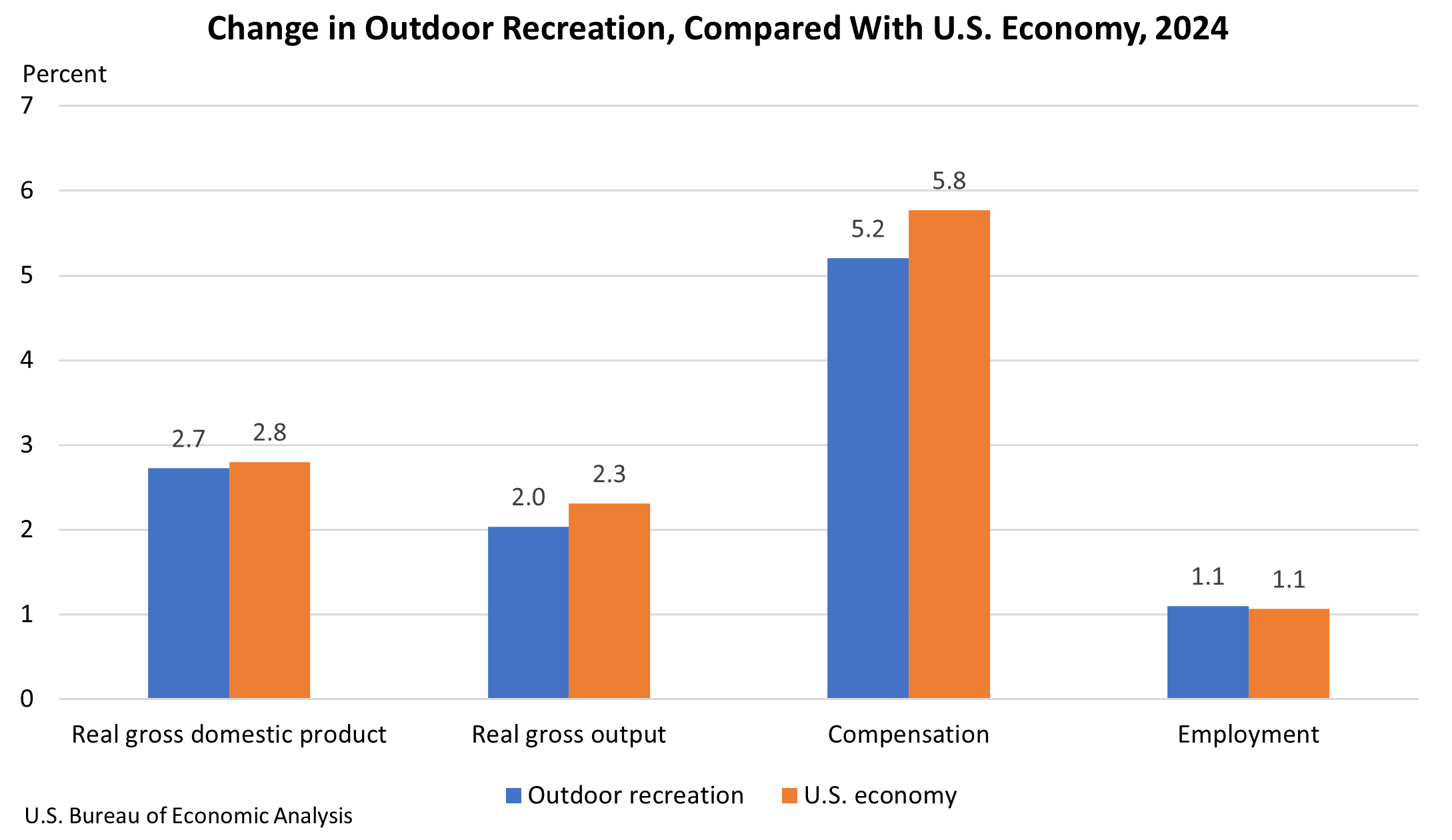
In 2024, the inflation-adjusted (real) GDP for the outdoor recreation economy saw an increase of 2.7 percent. This growth, while robust, represents a modest slowdown from the 5.3 percent surge recorded in 2023, a period that likely benefited from a strong post-pandemic rebound in consumer spending on leisure activities. The overall U.S. economy also experienced growth in 2024, with real GDP increasing by 2.8 percent, indicating that the outdoor recreation sector’s expansion kept pace with, and in some areas, slightly lagged behind the broader economic trends.
Further underscoring the sector’s economic vitality, real gross output for outdoor recreation experienced a 2.0 percent increase. This metric measures the total value of goods and services produced by the industry. Alongside this output growth, compensation for those employed in outdoor recreation rose by a significant 5.2 percent, signaling increased wages and earnings for workers in this sector. Employment within the outdoor recreation economy also saw positive momentum, increasing by 1.1 percent nationwide.
These figures provide a clear picture of a sector that, despite some normalization after a period of exceptional growth, continues to be a vital contributor to the national economy. The BEA’s annual update, drawing from the latest comprehensive economic accounts, ensures that these statistics are as accurate and up-to-date as possible, reflecting the most current economic conditions and trends.
State-Level Economic Contributions and Variations
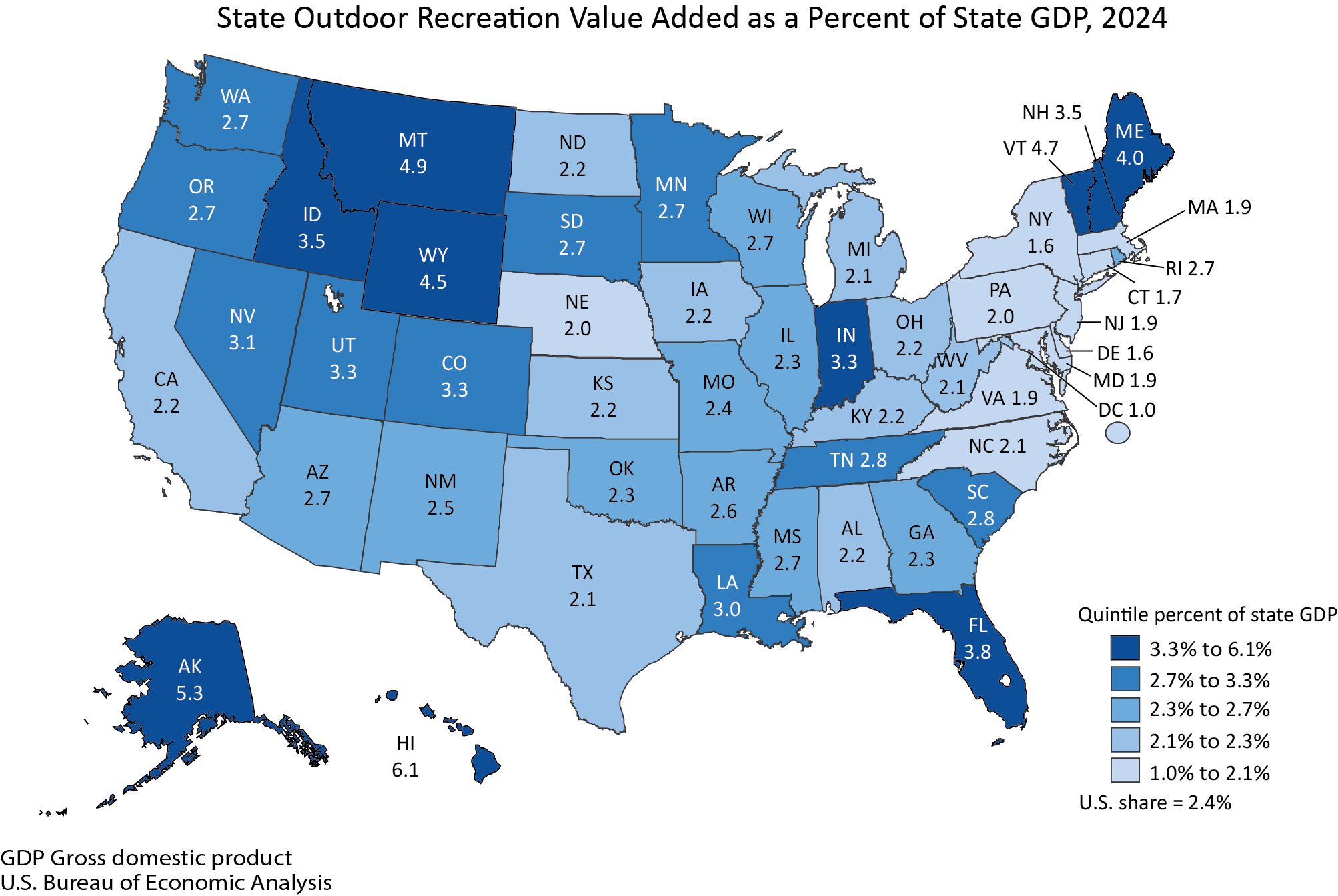
The economic impact of outdoor recreation varies considerably across the United States, reflecting diverse geographic landscapes, population densities, and state economies. The BEA data illustrates this disparity, with Hawaii leading the nation in the proportion of its state GDP derived from outdoor recreation, accounting for an impressive 6.1 percent. This highlights the critical role of the islands’ natural beauty and tourism infrastructure in driving their economy.
Conversely, the District of Columbia recorded the lowest share of its state GDP from outdoor recreation at 1.0 percent. This is not entirely unexpected, given the District’s primary function as a governmental and administrative hub, with a different economic composition compared to states heavily reliant on tourism and natural resource-based industries.
Across the states and the District of Columbia, the share of state GDP attributable to outdoor recreation paints a compelling picture of regional economic reliance and opportunity. While specific state-by-state figures are detailed in the BEA’s comprehensive tables, the broad range from Hawaii’s 6.1 percent to the District of Columbia’s 1.0 percent emphasizes the diverse economic landscapes influenced by outdoor activities.
Employment Trends: A Patchwork of Growth
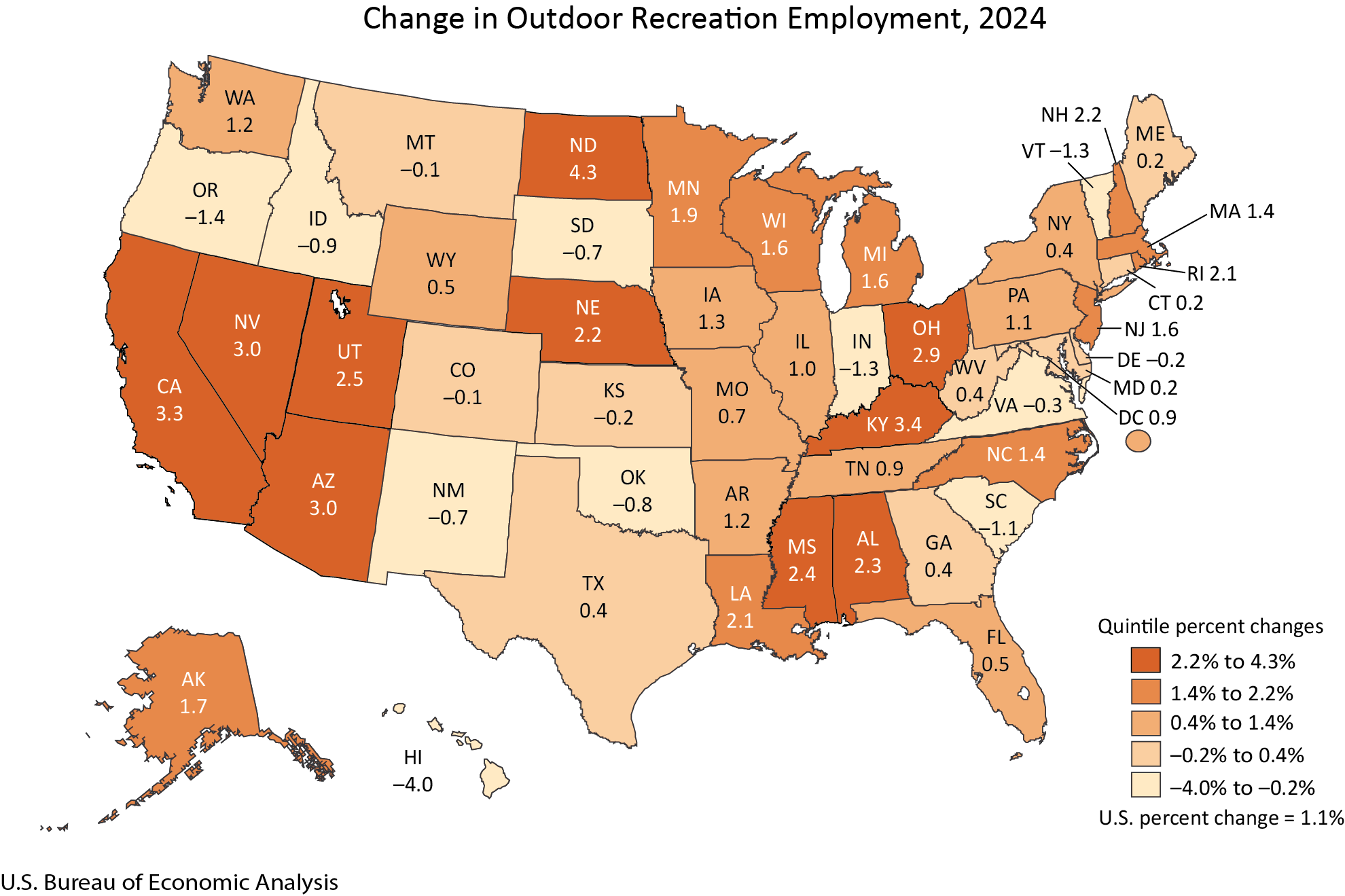
The impact of outdoor recreation on employment also shows significant state-level variation. In 2024, employment in the outdoor recreation sector expanded in 36 states and the District of Columbia, indicating a widespread positive trend. The percentage change in outdoor recreation employment ranged from a robust 4.3 percent increase in North Dakota to a notable decline of 4.0 percent in Hawaii.
The strong growth in North Dakota, despite not being a traditional outdoor recreation hotspot, suggests potential diversification of its economy or a surge in specific activities. The decline in Hawaii, while seemingly counterintuitive given its high GDP contribution, could be attributed to various factors, including shifts in tourism patterns, labor market dynamics, or the specific methodology of how certain activities are categorized within the BEA’s framework. These figures are derived from the BEA’s interactive tables, allowing for deeper exploration of individual state performance.
Categorization of Outdoor Recreation Activities
The BEA categorizes outdoor recreation into three primary segments, providing a more nuanced understanding of where economic value is generated within the sector:
- Conventional Activities: This category encompasses a wide array of traditional outdoor pursuits such as bicycling, boating, hiking, hunting, fishing, camping, and skiing. These are activities that most people readily associate with the outdoors.
- Other Activities: This broader segment includes pursuits like gardening, outdoor concerts, festivals, and other recreational events that take place outdoors but may not fit the more physically demanding or nature-centric definition of conventional activities.
- Supporting Activities: This crucial category includes the infrastructure, services, and economic activities that enable and facilitate outdoor recreation. This includes construction of outdoor recreation facilities, travel and tourism services (transportation, accommodation, food services), local trips and excursions, and government expenditures related to public lands and recreation management.
Shifts in Value Added by Category
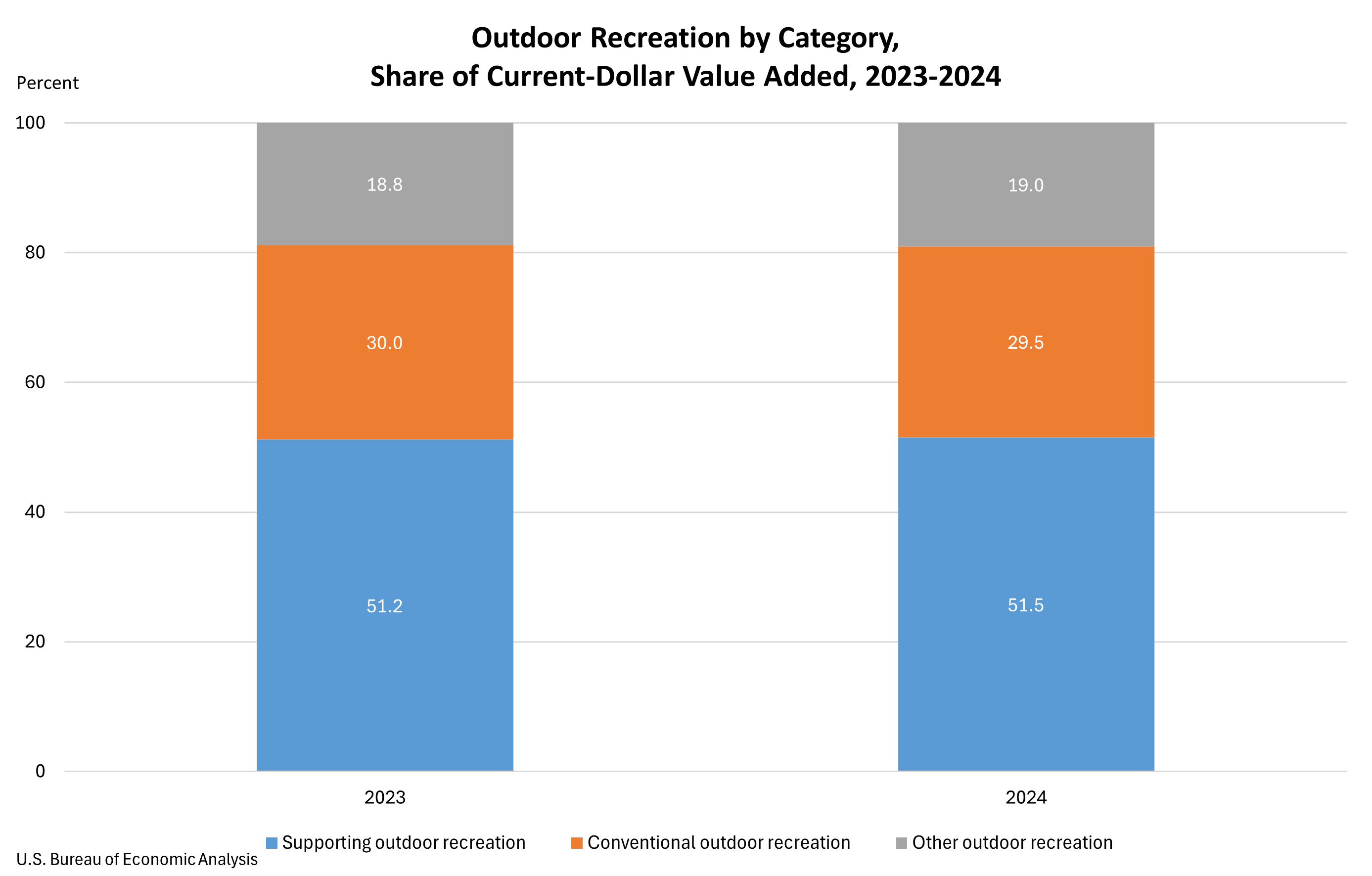
In 2024, conventional outdoor recreation activities accounted for 29.5 percent of the total U.S. outdoor recreation value added. This represents a slight decrease from 30.0 percent in 2023, suggesting a marginal shift in consumer spending away from purely activity-based pursuits towards other segments.
"Other outdoor recreation" saw a modest increase in its share, rising to 19.0 percent of value added in 2024, up from 18.8 percent in 2023. This indicates a growing economic contribution from a diverse range of outdoor events and leisure pursuits.
The largest segment, supporting activities, continued to dominate the economic landscape, accounting for 51.5 percent of value added in 2024, a slight increase from 51.2 percent in the previous year. This segment’s growth was primarily propelled by travel and tourism, which saw increased spending on transportation, hotels, and restaurants. This highlights the interconnectedness of the outdoor recreation economy with broader consumer spending patterns and the travel industry.
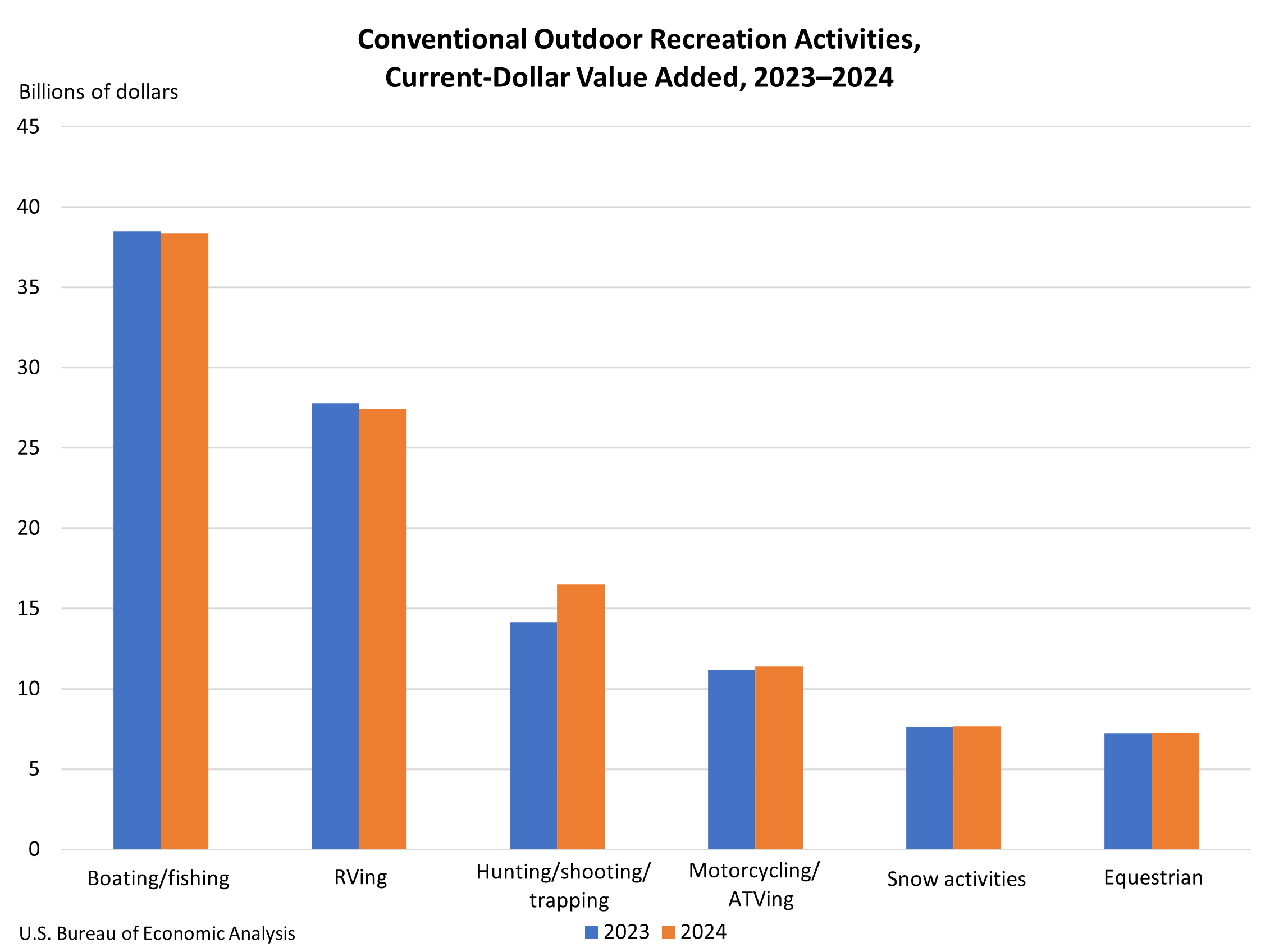
The BEA’s detailed data on value added by activity provides critical insights into the economic drivers of the outdoor recreation sector. For instance, within conventional activities, the BEA may track specific sub-categories like boating and fishing, or hiking and camping, to understand which specific pursuits are experiencing the most significant growth or decline. Similarly, within supporting activities, the breakdown of spending on transportation versus accommodation can reveal key trends in how people are engaging with and traveling for outdoor recreation.
Industry Contributions to the Outdoor Recreation Economy
The BEA’s analysis also breaks down the outdoor recreation economy by industry, revealing which sectors of the broader economy are most significantly impacted and contribute the most to outdoor recreation’s economic output.
Arts, Entertainment, Recreation, Accommodation, and Food Services: The Leading Contributor
The industry group encompassing arts, entertainment, recreation, accommodation, and food services emerged as the largest contributor to the U.S. outdoor recreation value added in 2024. This sector generated $174.4 billion, representing 25.0 percent of the total value added. This underscores the direct relationship between outdoor activities and the hospitality and leisure industries.
At the state level, this industry group was the primary driver of outdoor recreation value added in 23 states and the District of Columbia. California, with its diverse array of natural attractions and vibrant tourism sector, led the nation with a $24.1 billion contribution from this industry group. Florida, another major tourist destination, followed with $22.7 billion, and New York, with its significant parks, recreational areas, and cultural attractions, contributed $11.8 billion.
Retail Trade: A Significant Economic Partner
Retail trade stands as the second-largest industry group contributing to the nation’s outdoor recreation economy. In 2024, it accounted for $169.1 billion, or 24.3 percent of the total value added. This reflects the substantial consumer spending on equipment, apparel, and supplies necessary for outdoor activities, from camping gear and sporting goods to bicycles and watercraft.
Retail trade was the leading industry group for outdoor recreation value added in 24 states, highlighting its widespread economic importance. California again demonstrated its economic might with a $19.3 billion contribution from retail trade to its outdoor recreation sector. Texas followed with $14.4 billion, and Florida with $13.4 billion, underscoring the significant role of large, populous states with strong consumer markets.
Manufacturing: Essential Goods for Outdoor Pursuits
Manufacturing holds the third position in terms of contribution to the national outdoor recreation economy, accounting for $91.3 billion, or 13.1 percent of the value added in 2024. This sector is vital for the production of goods such as boats, recreational vehicles, camping equipment, and performance apparel that are essential for many outdoor activities.
Manufacturing was identified as the largest industry group for outdoor recreation in two states: Indiana and Louisiana. Texas led the nation in manufacturing’s contribution to outdoor recreation with $13.1 billion, followed by California ($11.6 billion) and Indiana ($9.1 billion). This indicates that states with strong manufacturing bases often have a significant advantage in supporting the production side of the outdoor recreation supply chain.
Annual Update Process and Future Outlook
The release of these statistics is part of the BEA’s ongoing commitment to providing timely and accurate economic data. The estimates for 2020 through 2023 have been updated as part of this release, incorporating the results of the 2025 annual update of the National Economic Accounts. This update includes revisions to the National Income and Product Accounts (NIPA) and the Industry Economic Accounts, as well as newly available and revised source data.
Similarly, the state-level statistics have been revised to reflect these updated national data, along with the 2025 annual update of the Regional Economic Accounts and newly available and revised regional source data. This rigorous update process ensures that the statistics remain a reliable reflection of economic realities.
The BEA also provides access to previously published estimates through its Data Archive, allowing researchers and the public to track historical trends and understand the evolution of the outdoor recreation economy over time.
The next release of Outdoor Recreation Economic Statistics for the U.S. and States is scheduled for Fall 2026, which will cover the 2025 data. This consistent annual release schedule allows for ongoing monitoring of the sector’s performance and its contribution to the broader American economy. The data serves as a critical resource for policymakers, industry leaders, and researchers seeking to understand and foster growth in this vital economic sector.
The implications of these findings are far-reaching. For policymakers, the data highlights the economic significance of investing in public lands, trails, and recreational infrastructure, as well as supporting industries that cater to outdoor enthusiasts. For businesses, it offers valuable insights into consumer trends and market opportunities. For the public, it underscores the economic value of enjoying the outdoors, reinforcing its importance not just for well-being but also for national prosperity. The continued growth of the outdoor recreation economy, even with slight moderations, points to its resilience and its integral role in the fabric of the U.S. economy.