Candice Horbacz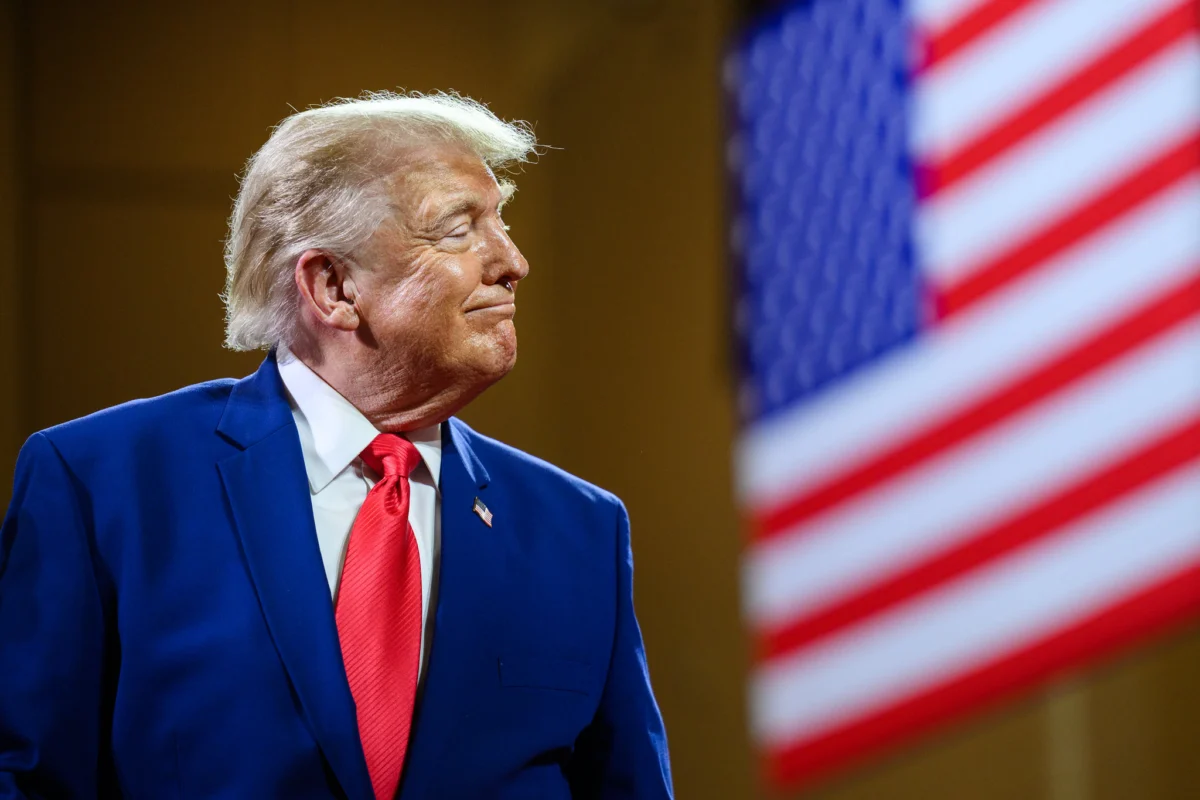
At the Republican National Convention in Dallas, President Donald Trump unveiled a significant economic proposal, pledging payments of $5,000 to every adult citizen in the United States, contingent upon Republicans retaining control of both the House of Representatives and the Senate in the upcoming midterm elections. The audacious plan, which quickly became a focal point of discussion, was subsequently championed by Vice President J.D. Vance, who asserted that the substantial revenue generated by the president’s new tariffs would provide the necessary funds to share directly with American citizens. This announcement injects a new dimension into the ongoing political and economic discourse, raising immediate questions about fiscal feasibility, economic impact, and the broader implications for federal budgetary policy.
The Proposed Dividend: Details and Staggering Scope
The core of President Trump’s proposal is a direct payment of $5,000 to every adult citizen. While the specifics regarding eligibility criteria, such as income limitations or residency requirements, remain largely undefined, the initial framing suggests a broad-based distribution. Based on current demographic data, the United States is home to approximately 250 million adults eligible to vote, according to projections by the Pew Research Center. Without any further restrictions or means-testing, distributing a $5,000 payment to this vast demographic would incur an astronomical cost of $1.25 trillion. This colossal sum immediately flags significant challenges, particularly given the nation’s existing fiscal trajectory.
The scale of this proposed expenditure is unprecedented outside of major national emergencies or wartime spending. For context, the entire discretionary budget for many federal agencies combined pales in comparison to this single, one-time payment. The sheer magnitude necessitates a deep dive into the nation’s financial health and the proposed funding mechanisms.
The Fiscal Landscape: A Deep Dive into Deficits and Debt
The announcement comes at a time when the federal government is already grappling with substantial budgetary challenges. The Congressional Budget Office (CBO) projects a federal budget deficit of nearly $1.9 trillion for fiscal year 2027. This projection reflects a sustained trend of federal spending outpacing revenue, contributing to a ballooning national debt that has surpassed $35 trillion. Against this backdrop, the addition of a $1.25 trillion expenditure without a clearly defined, offsetting revenue source would dramatically exacerbate the nation’s fiscal imbalance.
Should the $5,000 dividend payment be implemented without corresponding cuts elsewhere or truly adequate new revenue, it would push the projected deficit for fiscal year 2027 to nearly $3 trillion. Such an increase would represent one of the largest single-year deficits in U.S. history, outside of periods directly following major financial crises or global pandemics. Economists and fiscal watchdogs routinely warn that persistent, large deficits contribute to a growing national debt, which can have long-term adverse effects, including higher interest rates, reduced government flexibility in future crises, and potential strain on future economic growth. The interest payments alone on the national debt already constitute a significant and rapidly growing portion of the federal budget, diverting funds from other critical programs and investments. Adding another trillion-plus to the deficit would only intensify these pressures.
Tariff Revenue: A Closer Look at the Proposed Funding Mechanism
A central tenet of the Trump administration’s justification for the dividend payment rests on the premise that its new tariffs are generating substantial revenue. Tariffs, by definition, are taxes imposed by one country on goods imported from another. These trade barriers are intended to make imported goods more expensive, thereby protecting domestic industries and, in theory, generating revenue for the imposing government.
Since President Trump first assumed office, tariff collections have indeed seen a notable increase. Prior to the imposition of these new tariffs, the federal government collected approximately $79 billion in customs duties in calendar year 2024. Following several rounds of new tariffs implemented by the Trump administration, this figure surged to $264 billion in calendar year 2025. This significant rise in raw collections is often cited by proponents as evidence of the tariffs’ success in generating revenue.
However, the trajectory of tariff collections has not been consistently upward. In recent months, collections have experienced fluctuations, at times even dipping into negative territory. This phenomenon can be attributed to several factors, notably the federal government being compelled to issue refunds for tariffs that were ultimately struck down as illegal by the Supreme Court. These legal challenges have introduced an element of unpredictability and instability into the tariff revenue stream.
The Tax Foundation, an independent tax policy research organization, has conducted detailed analyses of the net revenue generated by these tariffs. After accounting for these fluctuations and assuming current policies remain in place, the organization estimates that President Trump’s new tariffs are projected to generate approximately $125 billion in net revenue for the federal government in 2027. Looking further ahead, the cumulative net revenue is estimated to reach $1.4 trillion over the ten-year period from 2026 through 2035.
It is crucial to understand why net revenue figures are considerably lower than gross tariff collections. There are two primary reasons for this disparity. Firstly, tariffs are designed to reduce imports by making them more expensive. When imports decrease, the volume of goods subject to pre-existing tariffs also declines, leading to a reduction in revenue from those older tariffs. Secondly, every dollar collected through tariffs effectively reduces the base of other federal taxes, such as income and payroll taxes. This occurs because tariffs increase the cost of goods for businesses and consumers, which can lead to lower corporate profits, reduced wages, and decreased purchasing power, thereby diminishing the revenue that would otherwise be generated from these other federal tax streams. Consequently, the actual "net" gain to the federal treasury is often less than the headline figures of gross tariff collections suggest.
Economic Feasibility and the Striking Funding Gap
When comparing the estimated net revenue from tariffs to the cost of the proposed dividend payment, a stark funding gap emerges. The projected $125 billion in net tariff revenue for 2027 would cover only approximately one-tenth of the $1.25 trillion required for the $5,000 dividend payment in that same year. To fully cover the cost of a single year’s dividend payment using only the estimated net tariff revenue, it would take nearly a decade of continuous collections. This substantial discrepancy underscores the challenge of funding such a large-scale program solely through existing tariff revenues, even with the increases observed.
The analysis by the Tax Foundation highlights that the premise of tariffs fully funding a $1.25 trillion dividend payment is economically unsound without significant additional revenue sources or drastic cuts elsewhere. This fiscal reality places the burden of the payment squarely on increased borrowing, further contributing to the national debt.
Expert Analysis and Broader Economic Concerns
The proposal has drawn significant attention from economists across the political spectrum, many of whom express serious reservations. Beyond the immediate funding shortfall, a deficit-financed dividend payment of this scale carries substantial macroeconomic risks.
One primary concern is the potential for increased inflationary pressures. The Federal Reserve has been actively working to bring inflation down to its target of 2 percent, and while progress has been made, inflation has remained stubbornly above this level. Injecting $1.25 trillion directly into the economy, particularly if not offset by real economic growth or reduced spending elsewhere, would represent a massive surge in aggregate demand. Such a demand shock could easily reignite inflationary pressures, eroding the purchasing power of the very payments being distributed and effectively functioning as a "hidden tax" on all Americans. This could negate any perceived benefit of the dividend, leaving citizens no better off, or even worse, as prices for goods and services rise across the board.
Furthermore, a significant increase in deficit spending could signal to financial markets that the United States is not serious about addressing its long-term fiscal challenges. Such a perception could lead to a loss of confidence among investors, particularly those who purchase U.S. Treasury bonds. A reduced demand for U.S. debt, or an increased perception of risk, would likely result in higher interest rates. Higher interest rates would not only increase the cost of borrowing for the federal government, further exacerbating the national debt, but also for businesses and consumers, potentially stifling investment, job creation, and economic growth. Mortgage rates, auto loan rates, and business credit lines would all likely increase, making it more expensive for ordinary Americans to buy homes, cars, or for businesses to expand.
Some proponents might suggest limiting the dividend payments based on income to reduce the overall cost. While a smaller, more targeted program would indeed reduce the total expenditure, even such an adjusted approach would be viewed by many economists as a misguided use of funds when the government is already on track to run massive budget deficits. The fundamental issue of fiscal responsibility and the broader economic context of inflation and interest rates would persist, albeit on a smaller scale.
Political Ramifications and Public Discourse
Politically, the proposal represents a significant populist appeal, directly offering a tangible benefit to voters ahead of critical midterm elections. It aligns with a strategy of direct economic intervention and a focus on "America First" principles, where tariff revenues are presented as a means to directly benefit citizens rather than being absorbed into the general treasury. Vice President Vance’s swift endorsement underscores the unified front within the campaign to promote this economic vision.
However, the proposal is certain to face intense scrutiny and opposition from Democratic lawmakers, budget watchdogs, and many independent economists. They are likely to highlight the fiscal irresponsibility, the inflationary risks, and the inherent economic distortions caused by tariffs themselves. Opposition arguments would likely emphasize that tariffs are ultimately paid by American consumers and businesses in the form of higher prices for imported goods and materials, rather than by foreign entities. This perspective suggests that the "revenue" from tariffs is effectively a tax on American citizens, which is then partially returned as a dividend, with significant administrative costs and economic inefficiencies in between.
The debate will likely extend to the broader philosophical question of universal basic income (UBI) versus targeted economic relief. While not explicitly framed as UBI, a universal $5,000 payment shares some characteristics with UBI proposals, albeit as a one-time rather than recurring payment. This could ignite discussions about the role of government in direct wealth distribution and the most effective ways to support citizens.
Historical Context of Direct Payments
The concept of direct payments to citizens is not entirely without precedent in recent U.S. history. During the COVID-19 pandemic, the federal government issued multiple rounds of stimulus checks to Americans as part of broader relief packages. These payments, while designed to mitigate the economic fallout of a national crisis, significantly contributed to the national debt. The current proposal, however, differs in its stated funding mechanism (tariffs) and its explicit linkage to an electoral outcome, making it a distinct policy proposition. The economic conditions are also different, with the nation currently facing inflationary pressures rather than deflationary risks as seen at the start of the pandemic.
Conclusion: A Crossroads for Fiscal Policy
The proposal for a $5,000 citizen dividend presents a complex economic and political challenge. While it offers an immediate and attractive benefit to voters, its fiscal implications are profound. The analysis suggests a massive funding gap if reliant solely on current tariff revenues, pushing the nation further into deficit territory. Such an approach risks exacerbating inflation, increasing interest rates, and signaling a disregard for long-term fiscal stability.
Many economists argue that a more prudent course of action for the Trump administration would be to re-evaluate the tariff policies themselves. Tariffs, while generating some revenue, are often seen as a burden on American businesses and consumers, raising input costs for manufacturers and prices for everyday goods. Abandoning or significantly reforming these tariffs, coupled with a concerted effort to address the nation’s burgeoning budget deficits, would, in the view of these experts, better serve the long-term economic interests of American citizens. The debate surrounding this proposal will undoubtedly be a defining feature of the upcoming election cycle, forcing a national conversation on fiscal responsibility, trade policy, and the future direction of the American economy.