admin
admin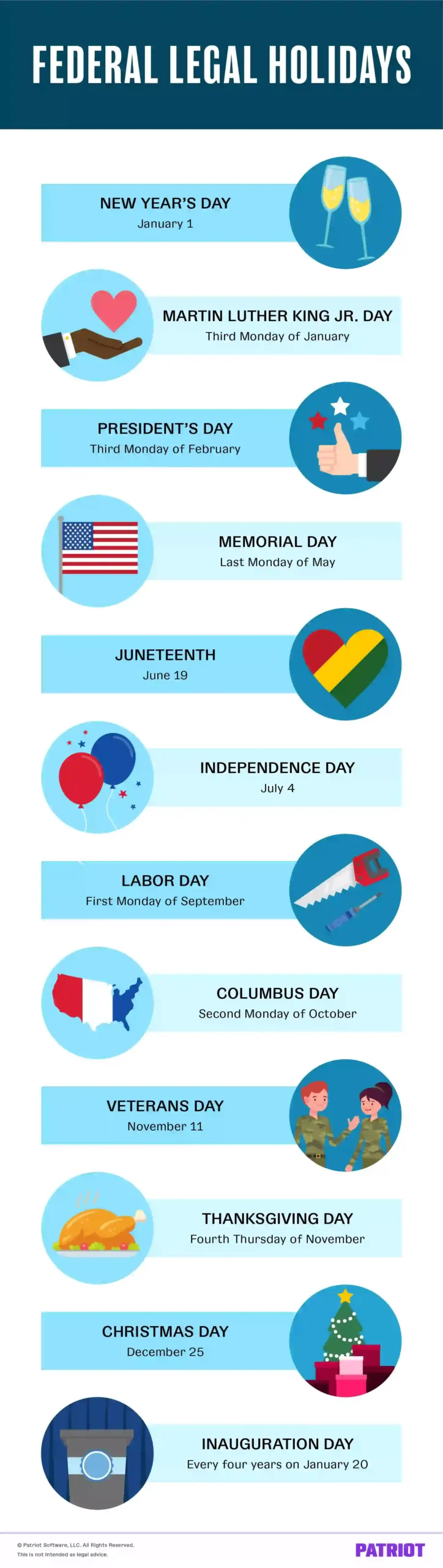
For small business owners, the rhythm of operations often dictates hours of availability, and unlike some larger corporations, doors are rarely open 24/7. This reality frequently means closures on designated federal legal holidays, such as Thanksgiving or Christmas, aligning with national observances. The Bureau of Labor Statistics (BLS) consistently reports that the average full-time private industry employee in the United States benefits from approximately 7.6 paid holidays annually, a figure that underscores the prevalence and expectation of such benefits in the modern workforce. For employers navigating the complexities of payroll, human resources, and employee retention, a clear understanding of these federal observances is not merely a matter of compliance but a strategic imperative. This knowledge allows businesses to proactively plan operational schedules, manage staffing needs, and craft competitive benefits packages that attract and retain top talent. Beyond the practicalities, acknowledging these holidays reflects a broader commitment to employee well-being and alignment with national civic and cultural milestones.
Defining Federal Legal Holidays and Their Mandate
Federal legal holidays are days recognized by the U.S. government on which federal agencies, the Federal Reserve banking system, and the U.S. Postal Service are closed. These holidays serve various purposes, from commemorating historical events and honoring significant figures to celebrating national values and providing a collective pause for rest and reflection. While the federal government mandates their observance for its own employees and related entities, private employers are generally not legally obligated to close their businesses or offer paid time off (PTO) on these days. However, the federal schedule often serves as a widely accepted benchmark for private sector holiday policies.
The observance of these holidays follows specific rules regarding weekend occurrences: if a federal holiday falls on a Saturday, it is typically observed by federal employees and many businesses on the preceding Friday. Conversely, if a holiday falls on a Sunday, it is observed on the following Monday. This "in-lieu-of" observance ensures that employees receive the benefit of the holiday regardless of its calendar placement, maintaining consistency in workplace expectations.
For private businesses, the decision to observe federal holidays, offer paid time off, or provide premium pay for employees who work on these days, is a discretionary one. This flexibility allows businesses to tailor their policies to industry demands, economic conditions, and company culture. For instance, essential services like healthcare or hospitality often remain open, compensating employees with enhanced holiday pay rates, such as time-and-a-half or double-time. While not legally mandated for private entities, offering competitive holiday benefits has emerged as a critical component of a robust human resources strategy, enhancing employee satisfaction and providing a distinct competitive edge in the labor market.
The Strategic Value of Holiday Observance for Private Sector Employers
In today’s competitive job market, employee benefits extend far beyond salary. Offering paid federal holidays is a significant differentiator that contributes to a positive work environment and supports employee well-being. According to numerous HR surveys, paid time off, including holidays, consistently ranks among the most valued benefits by employees. This is particularly true for small businesses, where every benefit can have a magnified impact on team morale and loyalty.
The benefits of observing federal holidays, even when not legally required, are multifaceted:
- Employee Morale and Retention: Providing paid holidays signals an employer’s commitment to work-life balance and employee welfare. This gesture can significantly boost morale, reduce burnout, and foster a sense of appreciation, leading to higher retention rates. Employees who feel valued are more likely to remain with a company long-term.
- Attraction of Talent: In a tight labor market, competitive benefits packages are crucial for attracting skilled professionals. Businesses that offer paid federal holidays stand out to prospective employees who prioritize such considerations.
- Reduced Absenteeism: When holidays are officially observed, employees can plan personal commitments without needing to use personal PTO days, potentially reducing unscheduled absences around holiday periods.
- Increased Productivity: A well-rested workforce is a more productive workforce. Time off for holidays allows employees to recharge, spend time with family, and return to work refreshed and focused.
- Positive Public Image: Observing national holidays aligns a business with broader societal values and norms, enhancing its public image and community standing.
While the financial implications of paid holidays must be carefully considered by small businesses, the long-term gains in employee satisfaction, retention, and productivity often outweigh the direct costs. The decision to offer paid holidays, or premium pay for holiday work, becomes an integral part of a company’s HR processes and compensation strategy.
A Chronology of U.S. Federal Legal Holidays
The list of federal legal holidays has evolved over time, reflecting changes in national priorities, historical understanding, and societal values. Understanding the context behind each holiday enriches its observance and helps businesses communicate its significance to their teams.
-
New Year’s Day (January 1):
The first federal holiday of the year, New Year’s Day marks the beginning of the Gregorian calendar year. It is a time for celebration, reflection, and setting new goals. Globally recognized, it provides a universal pause after the year-end festivities. While New Year’s Eve (December 31) is widely celebrated, it is not a federal holiday, leaving the decision to observe it as a paid day off to individual businesses. -
Martin Luther King, Jr. Day (Third Monday in January):
This holiday honors the life and legacy of civil rights leader Dr. Martin Luther King, Jr., a pivotal figure in the American civil rights movement. Celebrated on the third Monday of January, close to his January 15th birthday, it became a federal holiday in 1983, following years of advocacy. It is often observed as a day of service, encouraging Americans to volunteer and engage in community betterment, embodying King’s spirit of activism and social justice. -
Presidents’ Day (Third Monday in February):
Officially known as Washington’s Birthday, this holiday, observed on the third Monday in February, initially commemorated George Washington’s birth (February 22). Over time, it evolved to honor all U.S. presidents, particularly Abraham Lincoln, whose birthday is February 12th. It provides an opportunity for reflection on the nation’s leadership and the historical figures who have shaped its course. Retailers often leverage this holiday for significant sales events. -
Memorial Day (Last Monday in May):
Originating as Decoration Day in the aftermath of the Civil War, Memorial Day is dedicated to honoring military personnel who died while serving in the United States Armed Forces. Observed on the last Monday of May, it traditionally marks the unofficial start of the summer season, often accompanied by parades, remembrance ceremonies, and family gatherings. Its solemn purpose is a nationwide recognition of the sacrifices made for national freedom and security. -
Juneteenth National Independence Day (June 19):
A recent addition to the federal holiday calendar, Juneteenth became a federal legal holiday in June 2021. It commemorates June 19, 1865, when Union Army General Gordon Granger arrived in Galveston, Texas, and announced the freedom of enslaved African Americans, more than two years after the Emancipation Proclamation was issued. Also known as Emancipation Day or Freedom Day, Juneteenth celebrates the end of slavery in America and serves as a powerful reminder of the nation’s journey toward racial justice and equality. Its designation as a federal holiday signifies a significant step in acknowledging and celebrating a crucial part of American history.
-
Independence Day (July 4):
Commonly known as the Fourth of July, this holiday commemorates the adoption of the Declaration of Independence on July 4, 1776, marking the birth of the United States as an independent nation. It is celebrated with widespread patriotic displays, including fireworks, parades, concerts, and family barbecues. Independence Day is a quintessential American celebration of liberty and nationhood, with significant economic activity driven by travel and festivities. -
Labor Day (First Monday in September):
Labor Day honors the American labor movement and the contributions of workers to the development and achievements of the United States. Celebrated on the first Monday of September, it emerged from the late 19th-century labor movement, advocating for workers’ rights and better conditions. It traditionally signifies the unofficial end of summer and is often marked by parades, picnics, and community events, providing a moment to reflect on the dignity of work and the importance of the workforce. -
Columbus Day (Second Monday in October):
Columbus Day commemorates the arrival of Christopher Columbus in the Americas on October 12, 1492. It became a federal holiday in 1937. However, in recent decades, the holiday has become a subject of considerable debate and controversy, particularly regarding its historical context and impact on indigenous populations. Many states and localities have chosen to observe Indigenous Peoples’ Day instead, or in addition to, Columbus Day, to honor the history and cultures of Native American peoples. This evolving perspective highlights the dynamic nature of historical recognition and public sentiment. -
Veterans Day (November 11):
Veterans Day is celebrated annually on November 11 to honor all military veterans who have served in the United States Armed Forces. Originally known as Armistice Day, commemorating the end of World War I on November 11, 1918, it was renamed Veterans Day in 1954 to recognize veterans of all American wars. It is distinct from Memorial Day, which specifically honors those who died in service. Veterans Day is a solemn observance, often marked by ceremonies, parades, and moments of silence, to express gratitude for the service and sacrifice of living and deceased veterans. -
Thanksgiving Day (Fourth Thursday in November):
Thanksgiving Day, observed on the fourth Thursday in November, originated as a harvest festival. Its modern observance is often traced back to the 1621 feast shared by Plymouth colonists and the Wampanoag people. Over time, it has evolved into a national holiday focused on gratitude, family gatherings, and feasting. It also marks the unofficial start of the winter holiday shopping season, with Black Friday following directly after. -
Christmas Day (December 25):
Christmas Day is a widely celebrated religious and cultural holiday, observed on December 25. Commemorating the birth of Jesus Christ, it is a significant day for Christians worldwide. Beyond its religious significance, it has become a global cultural phenomenon characterized by gift-giving, festive decorations, family gatherings, and expressions of goodwill. For businesses, Christmas is the peak of the retail holiday season, generating substantial economic activity. Many businesses also choose to observe Christmas Eve (December 24) as an additional paid day off, reflecting its cultural importance and allowing employees extended time with family.
Quadrennial Federal Holiday: Inauguration Day
Beyond the annually observed holidays, the U.S. also recognizes a quadrennial federal legal holiday:
- Inauguration Day (January 20, every four years):
This unique federal holiday marks the swearing-in of the U.S. President and Vice President. It occurs every four years, specifically on January 20th following a presidential election (or January 21st if January 20th falls on a Sunday). Inauguration Day is observed primarily by federal employees in the Washington D.C. metropolitan area and is not typically a widely observed holiday for the private sector or federal employees nationwide, underscoring its specific governmental and ceremonial purpose. If a President is reelected, Inauguration Day celebrates the commencement of their second term.
The Broader Landscape: State and Local Holidays
It is crucial for businesses, especially those operating across multiple states or localities, to recognize that the federal holiday schedule is not exhaustive. Each state and local jurisdiction has the authority to declare its own legal holidays, which may or may not align with federal observances. For example:
- Indigenous Peoples’ Day: As mentioned, many states and cities now officially observe Indigenous Peoples’ Day, often on the same day as Columbus Day, or as a standalone holiday.
- Patriots’ Day: Celebrated in Massachusetts and Maine on the third Monday of April, commemorating the Battles of Lexington and Concord.
- Mardi Gras: A legal holiday in parts of Louisiana, particularly New Orleans, before Ash Wednesday.
- Nevada Day: Celebrated on the last Friday in October in Nevada, commemorating the state’s admission to the Union.
- Pioneer Day: A legal holiday in Utah on July 24, commemorating the arrival of Brigham Young and the Mormon pioneers in the Salt Lake Valley.
These state-specific holidays introduce additional layers of complexity for businesses, necessitating careful attention to local labor laws and cultural practices. Compliance with state-mandated holidays, if any, is distinct from federal obligations and typically applies to state government employees and sometimes to private sector businesses within that state, depending on local statutes. Employers with a multi-state footprint must consult local regulations to ensure adherence to all applicable holiday observance requirements.
Crafting Your Holiday Policy: Employee Handbooks and Best Practices
Given the discretionary nature of holiday observance for private employers, a well-defined and clearly communicated holiday policy is indispensable. This policy should be a prominent section within the employee handbook, serving as a comprehensive guide for both management and staff.
A robust holiday policy should explicitly outline:
- List of Observed Holidays: A definitive list of all federal, state, and company-specific holidays that the business will observe.
- Paid vs. Unpaid Status: Clearly state which holidays are paid and which are unpaid.
- Eligibility Requirements: Define any criteria for employees to receive holiday pay (e.g., full-time status, minimum tenure, working the day before/after the holiday).
- Premium Pay for Holiday Work: Detail the compensation structure for employees who are required to work on an observed holiday (e.g., time-and-a-half, double-time, compensatory time off).
- Treatment of Part-Time or Temporary Employees: Specify how holiday pay applies, if at all, to non-full-time staff.
- Floating Holidays: If offered, explain the rules for using floating holidays, which allow employees to choose a personal day off in addition to fixed holidays.
- Impact on Accrued PTO/Vacation: Clarify how observed holidays interact with an employee’s general paid time off accruals.
- Policy for Holidays Falling on Weekends: Reiterate the "in-lieu-of" observance for holidays falling on Saturdays or Sundays.
Regularly reviewing and updating the holiday policy, especially in response to new federal or state designations (like Juneteenth), is crucial. Transparent communication about these policies helps manage employee expectations, reduces potential misunderstandings, and fosters a fair and consistent work environment. Leveraging human resources software can streamline the management and communication of these policies, allowing for easy updates and ensuring all employees have access to the most current information.
Conclusion
Federal legal holidays are more than just days off; they are integral components of national identity, historical remembrance, and employee well-being. For small business owners, understanding and strategically approaching these observances is vital. While not always legally mandated for the private sector, aligning with federal holidays, and thoughtfully crafting a holiday policy, offers significant advantages in attracting and retaining talent, boosting morale, and fostering a positive workplace culture. The average full-time employee’s expectation of paid holidays underscores their value, transforming them from a mere compliance point into a strategic HR tool that contributes to a business’s long-term success and resilience.
This article has been updated from its original publication date of April 12, 2012. This is not intended as legal advice; for more information, please consult a qualified legal professional.