Pevita Pearce
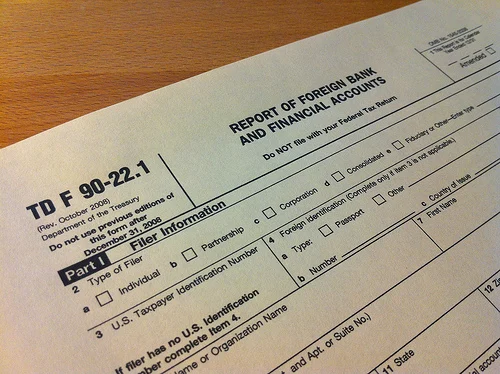
A recent U.S. Court of Appeals for the Fourth Circuit decision in United States v. Rund is sending ripples through the financial and legal communities, carrying significant implications for U.S. taxpayers with foreign bank accounts and the professionals who advise them. The court’s affirmation of a substantial civil penalty against Richard M. Rund, a U.S. citizen and businessman who failed to report over a dozen foreign accounts for eight non-consecutive years, underscores a more stringent interpretation of "willfulness" in the context of the Report of Foreign Bank and Financial Accounts (FBAR). This ruling not only solidifies a challenging legal standard for taxpayers within the Fourth Circuit’s jurisdiction—Maryland, Virginia, West Virginia, North Carolina, and South Carolina—but also serves as a potent cautionary tale for individuals with international financial ties nationwide.
The crux of the Rund decision lies in its redefinition of what constitutes a "willful" FBAR violation. Previously, proving intent to deceive the Internal Revenue Service (IRS) was often a primary hurdle for the government. However, the Fourth Circuit has established a lower bar, holding that for taxpayers within its purview, the government does not need to demonstrate explicit intent to conceal assets. Instead, the IRS merely needs to show that a taxpayer "clearly should have known there was a grave risk that the Report of Foreign Bank and Financial Accounts (FBAR) was not filed accurately, and the error could have been discovered very easily." This objective standard significantly shifts the burden onto taxpayers to proactively ensure the accuracy and completeness of their FBAR filings, even when relying on the services of return preparers.
The financial stakes associated with FBAR violations are immense. A non-willful violation currently carries a maximum civil penalty of $16,536. In stark contrast, a willful violation can result in a penalty of the greater of $165,353 or 50% of the account balance at the time of the violation, applicable to each account and each year of non-compliance. In the Rund case, the government calculated the statutory maximum penalty to be a staggering $9,842,840. The IRS ultimately imposed a penalty of $2,915,663, which represented approximately 30% of this maximum. The Fourth Circuit’s decision to uphold this penalty, in part because the IRS demonstrated restraint, highlights the court’s willingness to endorse significant financial consequences for non-compliance.
Background of FBAR Reporting and the Bank Secrecy Act
The requirement for U.S. persons to report foreign financial accounts stems from the Bank Secrecy Act of 1970, a cornerstone of U.S. anti-money laundering efforts. This legislation, along with its subsequent regulations, mandates that U.S. individuals with a financial interest in, or signature or other authority over, foreign financial accounts exceeding an aggregate value of $10,000 in a calendar year must file an FBAR with the Financial Crimes Enforcement Network (FinCEN), a bureau of the U.S. Department of the Treasury. The Supreme Court, in its landmark decision Bittner v. United States, clarified that these reports are crucial tools for the government to track financial flows that could be associated with illicit activities and to identify unreported income subject to taxation.
The penalty structure for FBAR violations is bifurcated based on the taxpayer’s intent. For inadvertent or non-willful violations, the maximum penalty is $16,536, with a provision for waiver if the failure to file was due to reasonable cause. However, when non-disclosure is deemed willful, the IRS has the authority to impose significantly higher penalties. This is where the interpretation of "willful" becomes paramount, as it dictates the difference between a manageable financial consequence and potentially ruinous penalties that can escalate into millions of dollars.
The Rund Case: A Detailed Examination
Richard M. Rund’s case, which concluded with the Fourth Circuit’s affirmation of a substantial civil penalty, provides a critical case study in the application of FBAR reporting requirements. Rund, a businessman, failed to report more than a dozen foreign financial accounts over a period spanning eight non-consecutive years. The government’s pursuit of this penalty was rooted in the assertion that Rund’s omissions were willful.
The legal strategy employed by the government in Rund hinged on establishing willfulness not by proving a deliberate intent to deceive the IRS, but by demonstrating a reckless disregard for reporting obligations. The court’s focus on the absence of evidence of proactive engagement with tax professionals proved decisive. While Rund had retained professional advisors, the government successfully argued that he failed to produce documentation proving he had specifically inquired about his foreign account reporting obligations and relied on their advice. This lack of demonstrable diligence in seeking and acting upon professional guidance became a key factor in the court’s determination of willfulness.
The Fourth Circuit’s ruling effectively established that in its jurisdiction, a taxpayer’s failure to file an accurate FBAR can be deemed willful if they should have been aware of a significant risk of non-compliance and that such errors could have been easily discovered. This "should have known" standard, coupled with the ease of discovery, significantly lowers the threshold for the government to prove willfulness, particularly for taxpayers who work with return preparers but fail to fully disclose all foreign financial interests. The implication for taxpayers is clear: ignorance or oversight, when coupled with a failure to proactively seek clarification, can lead to severe penalties.
Broader Implications of the Rund Decision
The United States v. Rund decision carries profound implications that extend beyond the specific circumstances of the case and the geographic confines of the Fourth Circuit. For taxpayers residing in Maryland, Virginia, West Virginia, North Carolina, and South Carolina, the ruling solidifies a challenging legal landscape where the burden of proof for demonstrating non-willfulness is considerably higher. The objective standard applied by the court means that even if a taxpayer did not intentionally defraud the IRS, a finding of willfulness can still be made based on their awareness of a high risk of error and the ease with which such errors could have been identified.
Beyond these five states, the Rund decision serves as a critical warning for any U.S. taxpayer with foreign financial accounts. The case underscores the IRS’s ongoing focus on international tax compliance and the severe financial consequences of failing to meet FBAR obligations. The decision reinforces the notion that the IRS is increasingly equipped and willing to pursue aggressive enforcement actions, particularly concerning willful violations.
Tax professionals, including attorneys and Certified Public Accountants (CPAs), must pay close attention to this ruling. The case highlights the critical importance of thorough client intake processes and meticulous record-keeping. When advising clients with foreign accounts, professionals must ensure they are not only providing accurate tax advice but also documenting the advice given and the client’s reliance on it. The Rund decision suggests that a taxpayer’s proactive engagement with their advisor, coupled with documented inquiries about foreign account reporting and subsequent reliance on professional guidance, can be a crucial defense against claims of willfulness.
Practical Guidance for Taxpayers and Advisors
The Rund decision offers several practical lessons for tax professionals advising clients with foreign financial interests:
- Proactive Inquiry is Key: Taxpayers should not assume that their tax preparer is aware of all their foreign financial accounts. It is incumbent upon the taxpayer to initiate conversations about any and all foreign financial assets, entities, and signature authorities.
- Documentation is Paramount: For taxpayers who do inquire about their foreign reporting obligations, maintaining detailed records of these conversations, including the specific questions asked, the advice received, and the date of the interaction, is essential. This documentation can serve as vital evidence to refute claims of willfulness.
- Understand the "Grave Risk" Standard: Taxpayers must be aware that simply relying on a tax preparer without actively ensuring the accuracy of their filings can be interpreted as a willful disregard for their reporting duties, especially if a significant risk of error was present and easily discoverable.
- Seek Specialized Advice: For complex international financial situations, consulting with tax attorneys or CPAs specializing in international tax compliance is highly recommended. These professionals possess the expertise to navigate the intricacies of FBAR regulations and other international reporting requirements.
- Regular Review and Disclosure: Taxpayers should conduct annual reviews of their foreign financial accounts and ensure timely and accurate FBAR filings. Proactive disclosure, even if the value of accounts is below the reporting threshold in prior years, can demonstrate good faith.
The Rund decision reinforces a fundamental principle: proactive compliance and thorough documentation are the most effective defenses against severe FBAR penalties. The ease with which errors could have been discovered, coupled with a taxpayer’s failure to demonstrate due diligence, proved to be the undoing of Mr. Rund’s defense.
The Evolving Landscape of International Tax Compliance
The Rund decision is part of a broader trend of increased IRS scrutiny and enforcement in the realm of international tax compliance. The government has invested significant resources in identifying U.S. taxpayers with undisclosed foreign financial assets. Initiatives such as the Foreign Account Tax Compliance Act (FATCA) and various voluntary disclosure programs have signaled a clear intent to close tax loopholes and ensure that all U.S. taxpayers meet their reporting obligations, regardless of where their assets are held.
The legal intersection of the Bank Secrecy Act, the Internal Revenue Code, and constitutional law, particularly the Eighth Amendment’s Excessive Fines Clause, continues to be a complex area. However, the Rund decision demonstrates the judiciary’s continued support for robust enforcement mechanisms designed to deter tax evasion and ensure fairness in the tax system.
The takeaway for taxpayers with foreign financial interests is unequivocal: ignorance is not a defense, and a failure to diligently fulfill FBAR reporting requirements can lead to devastating financial consequences. The IRS is actively pursuing cases like Rund, and the courts are largely upholding substantial penalties when non-compliance is found to be willful, even under a more objective standard. Proactive engagement with tax professionals and meticulous record-keeping are no longer optional but essential components of responsible financial stewardship for individuals with international financial ties. The time to address potential FBAR non-compliance is not when an IRS examination is initiated, but well before, through diligent and informed reporting.