Lana Rhoades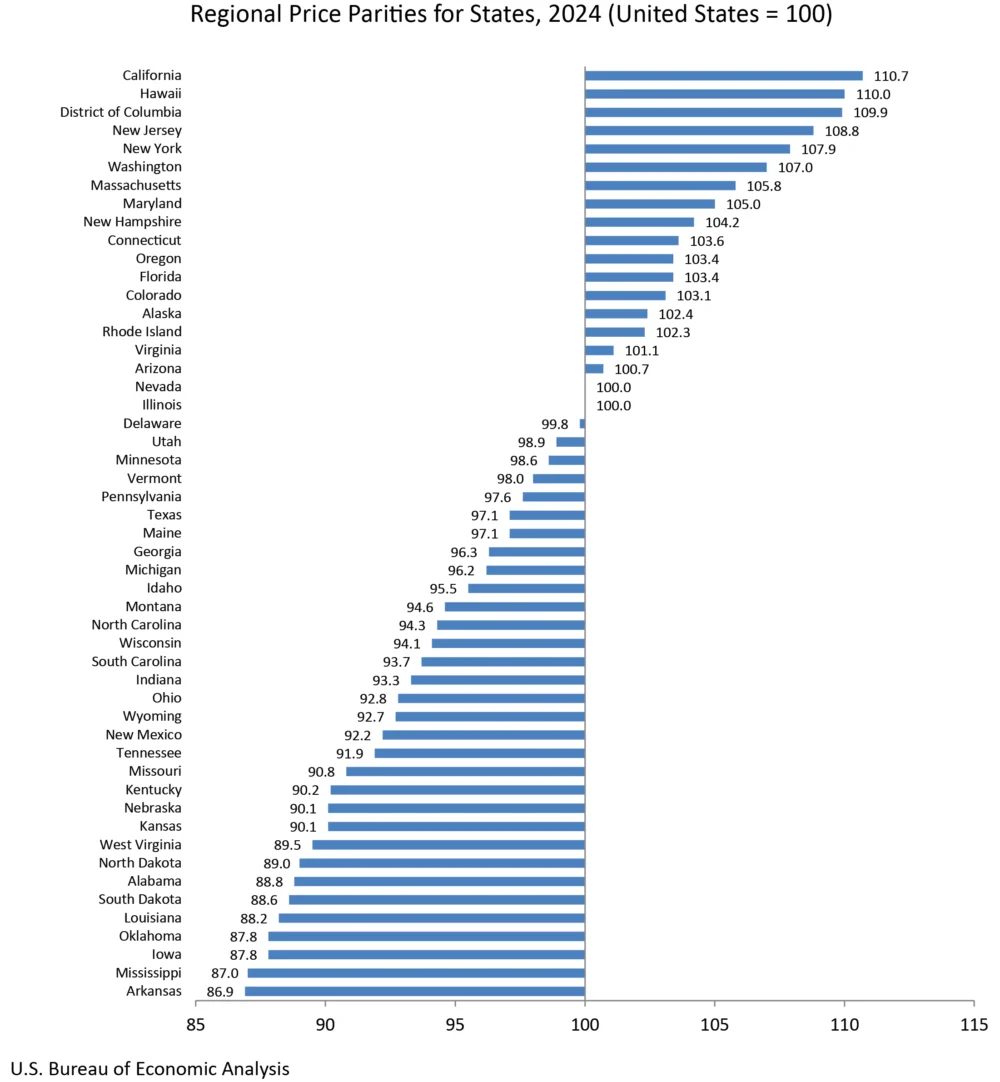
The U.S. Bureau of Economic Analysis (BEA) today unveiled its comprehensive annual statistics for 2024, offering a detailed snapshot of real personal consumption expenditures (PCE), real personal income, and regional price parities (RPPs) across all 50 states and the District of Columbia. This significant release provides crucial insights into the economic health and purchasing power disparities at the state level, reflecting the ongoing dynamics of the American economy. The data comes at a time when policymakers, businesses, and individuals are keenly interested in understanding regional economic trends and their implications for future growth and stability.
Real Personal Consumption Expenditures Show Widespread Growth
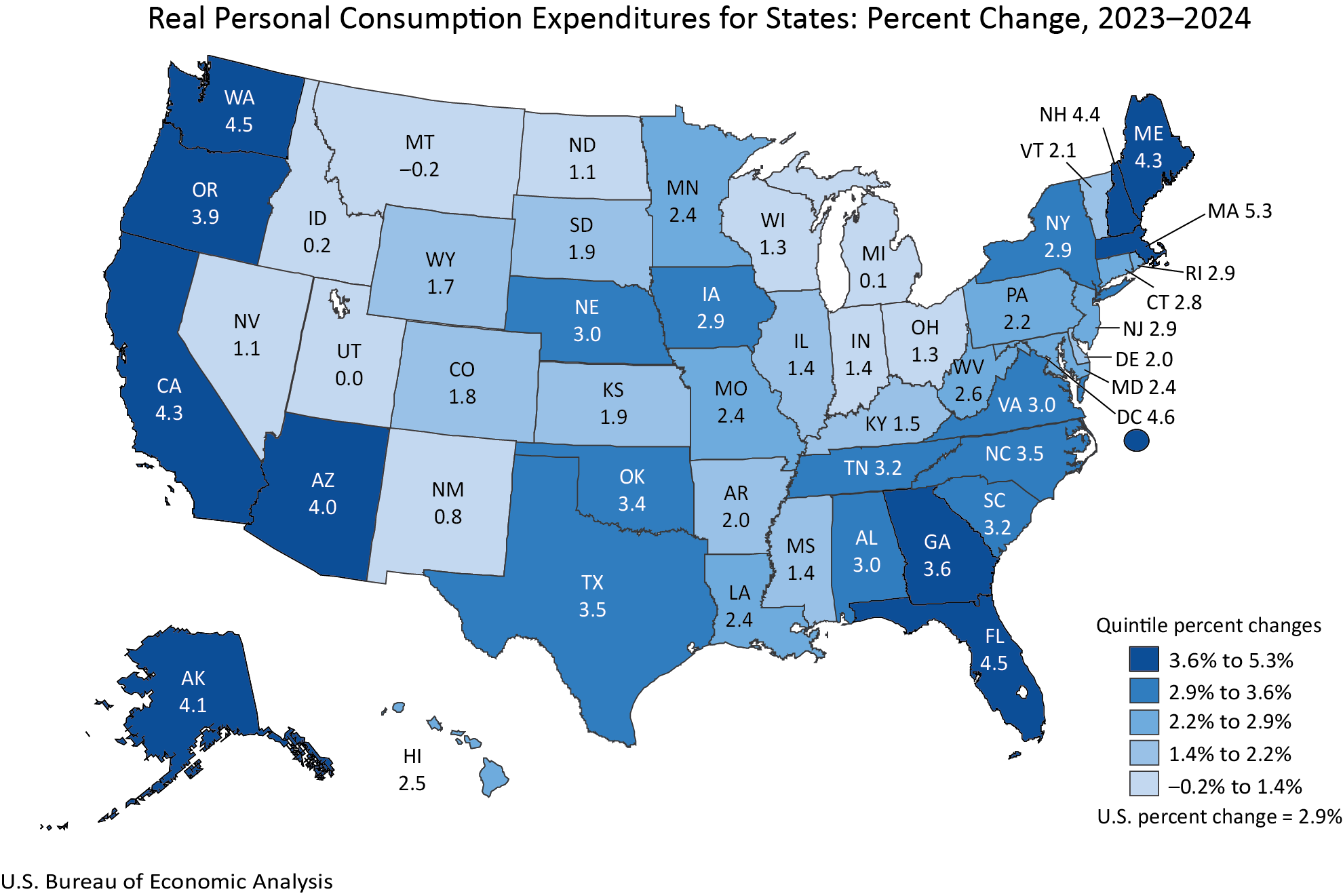
A key finding from the BEA’s latest report is the broad-based increase in real personal consumption expenditures. In 2024, a substantial 48 states and the District of Columbia experienced an uptick in real PCE, indicating a general rise in the volume of goods and services purchased by households. This widespread growth suggests a resilient consumer base, even amidst varying economic conditions across the nation.
The magnitude of this growth, however, varied significantly. Massachusetts led the nation with an impressive 5.3 percent increase in real PCE. This surge in consumer spending in the Bay State points to robust economic activity, potentially fueled by strong employment figures, rising wages, or increased investment in key sectors such as technology and biotechnology. On the other end of the spectrum, Montana registered a slight contraction of -0.2 percent in real PCE. While a modest decline, it highlights a localized economic slowdown or a shift in consumer behavior within the state.
Nationally, real PCE saw an increase of 2.9 percent in 2024. This figure is particularly telling when compared to the growth in current-dollar PCE, which rose by 5.6 percent. The divergence between real and current-dollar figures underscores the impact of inflation. The national PCE price index, a measure of inflation for consumer goods and services, stood at 2.6 percent. This means that while consumers spent more dollars, a portion of that increase was attributable to higher prices rather than an actual increase in the quantity of goods and services consumed. The fact that current-dollar PCE grew at a rate significantly higher than the PCE price index suggests that, on aggregate, real consumption did indeed increase.
The BEA’s methodology for calculating real PCE involves adjusting current-dollar estimates by the corresponding regional price parity and the national PCE price index. RPPs are critical for accurately comparing price levels and purchasing power across different geographic areas, ensuring that the "real" value of consumption is accurately represented.
Real Personal Income Demonstrates Broad Gains, with Notable Variations
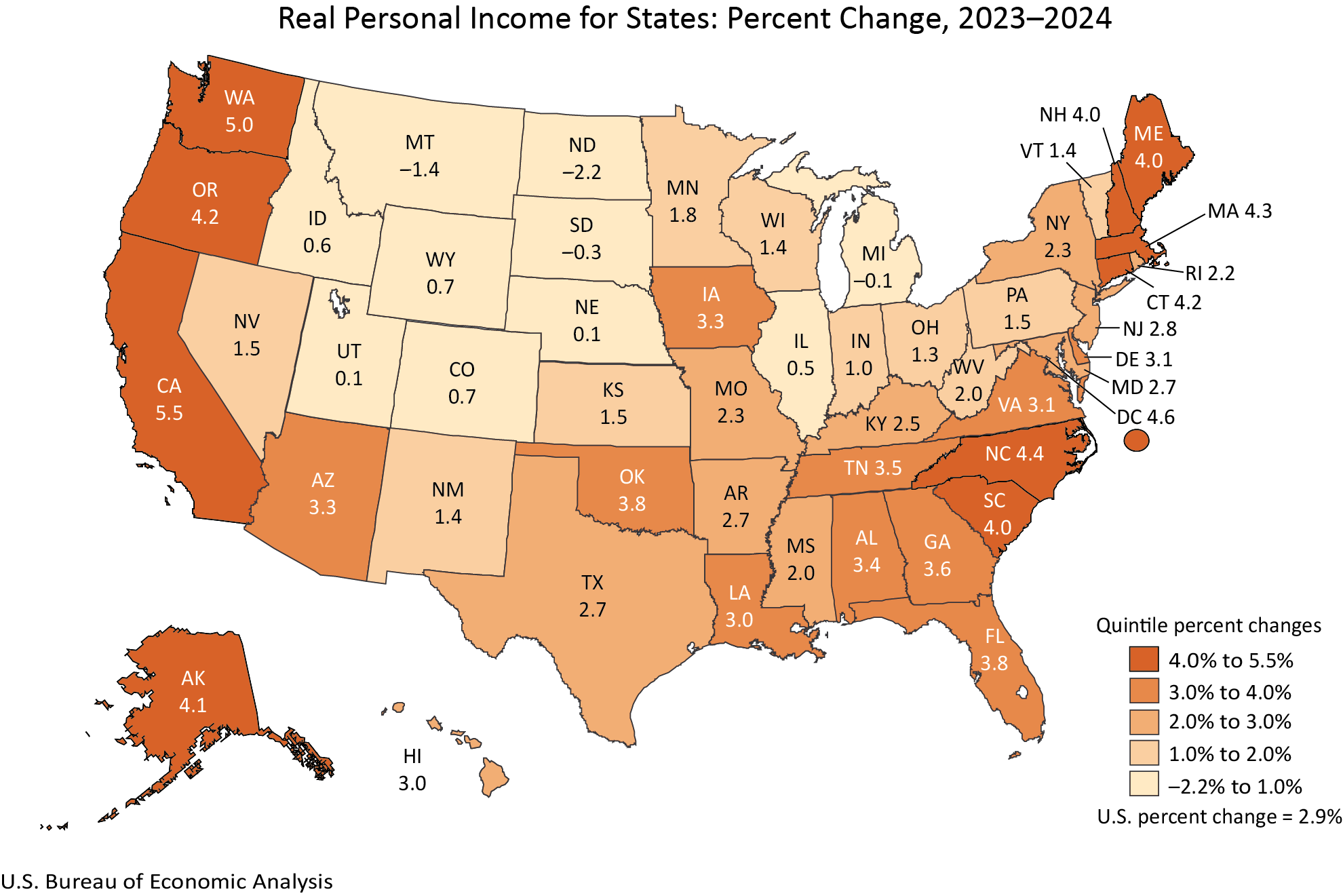
Complementing the consumption data, the report also detailed trends in real personal income. For 2024, 46 states and the District of Columbia saw their real personal income grow. This widespread increase in real income suggests that, for a majority of Americans, their earnings, adjusted for inflation, have risen, enhancing their capacity to spend and save.
California emerged as a standout performer in terms of real personal income growth, with a robust increase of 5.5 percent. This strong showing in the Golden State can be attributed to a dynamic economy, particularly in its technology and entertainment sectors, which often drive higher wages and employment opportunities. Conversely, North Dakota experienced a decline of -2.2 percent in real personal income. Such a contraction could be influenced by factors specific to the state’s economy, such as fluctuations in commodity prices or shifts in key industries.
Nationally, real personal income increased by 2.9 percent in 2024, mirroring the growth rate of real PCE. Similar to consumption, current-dollar personal income saw a more substantial increase of 5.6 percent, outpacing the national PCE price index of 2.6 percent. This again indicates that the real purchasing power of personal income has grown.
The BEA’s calculation of real personal income involves adjusting current-dollar personal income by the regional price parity and the national PCE price index, ensuring that the reported figures reflect the true purchasing power of income across different states.
Regional Price Parities Reveal Persistent Cost of Living Differences
The release also provided updated statistics on regional price parities (RPPs) for 2024. RPPs are essential for understanding the relative cost of living across states. They measure the differences in price levels for a basket of goods and services, expressed as a percentage of the overall national price level.
The BEA highlights that the "all items RPP," which encompasses all consumption goods and services including housing rents, is particularly sensitive to housing costs. Housing rents are frequently identified as a primary driver of disparities in RPPs among states. This suggests that areas with higher housing costs will generally exhibit higher RPPs, meaning that a dollar of income will purchase less in those regions compared to areas with lower housing expenses.
While specific state-level RPP figures for 2024 are detailed in the interactive data tables, the general trend often shows higher RPPs in more developed or densely populated coastal states, reflecting higher costs for essential goods and services, particularly housing. Conversely, states with lower costs of living, often in the Midwest or South, tend to have lower RPPs. These price differences are crucial for accurately comparing economic well-being and the real value of income and consumption across the country.
Updates and Revisions to Historical Data
A significant aspect of this annual release is the revision of historical data. The BEA has updated its annual estimates of real PCE by state and real personal income by state for the period spanning 2008 to 2023. These revisions incorporate new and more comprehensive source data, which are often more detailed than previously available. This alignment with updated national accounts and GDP by industry statistics, released earlier this fall, ensures greater accuracy and consistency in the BEA’s economic reporting.
The BEA also introduced new estimates for real per capita PCE and real per capita personal income for 2024. These per capita figures are derived using U.S. Census Bureau population data and provide an important measure of individual economic well-being within each state. The inclusion of per capita data for 2020 through 2024 allows for a more granular analysis of how economic trends have impacted individuals over the recent past.
Discontinuation of Metropolitan Area Statistics
In a notable shift in its reporting practices, the BEA has announced the discontinuation of publication for statistics specifically for metropolitan statistical areas (MSAs) and their metropolitan and nonmetropolitan portions, coinciding with the release of the 2024 data. While real PCE and real personal income will continue to be reported at the state level, and RPPs will still be available for state and local areas, the granular breakdown by MSA is being phased out. This decision aims to streamline data dissemination and focus resources on core state-level reporting. The BEA has provided an FAQ to address user queries regarding this change.
Modernizing Data Presentation
Further enhancing accessibility and user experience, the BEA has updated its presentation of data tables. Previously embedded within news releases, these tables are now integrated into the BEA’s online Interactive Data Application. This move is intended to reduce redundancy, improve efficiency, and direct users to the most comprehensive and flexible data sources. The interactive application allows for customization of data views, inclusion of full time series, and downloading of data in various formats such as PDF, Excel, and CSV. This modernization aligns with broader trends in government data dissemination, emphasizing digital accessibility and user-driven analysis.
Implications and Broader Economic Context
The release of these detailed state-level economic indicators provides a vital resource for understanding the diverse economic landscape of the United States. The widespread growth in real PCE and personal income suggests a generally positive economic environment for consumers in most states during 2024. However, the variations in growth rates and the presence of states experiencing declines underscore the importance of localized economic strategies and the need for targeted policy interventions.
The significant difference between current-dollar and real figures for both PCE and personal income serves as a clear reminder of the persistent impact of inflation on household budgets. While nominal incomes and spending may appear robust, the real gains in purchasing power are more modest, emphasizing the ongoing challenge of managing the cost of living. The RPP data further contextualizes these figures, illustrating how geographic price differences can substantially alter the effective value of income and spending.
For businesses, this data offers critical insights into consumer demand and purchasing power across different markets, informing strategic decisions regarding investment, marketing, and expansion. For policymakers, the state-level breakdowns are indispensable for designing economic development programs, assessing regional disparities, and formulating fiscal policies that address the unique needs of various states.
The BEA’s commitment to revising historical data and incorporating the latest source information ensures that these statistics remain a reliable benchmark for economic analysis. The shift towards a more interactive and accessible data platform signifies the BEA’s effort to adapt to the evolving needs of data users in the digital age. As the nation continues to navigate a complex economic environment, these detailed state-level statistics will be instrumental in fostering informed decision-making and promoting equitable economic growth.
The next release of these key regional economic statistics is scheduled for December 10, 2026, at 8:30 a.m. EST, which will cover the 2025 data and supersede the figures released today. The 2024 data will then be archived for historical reference.