Nila Kartika Wati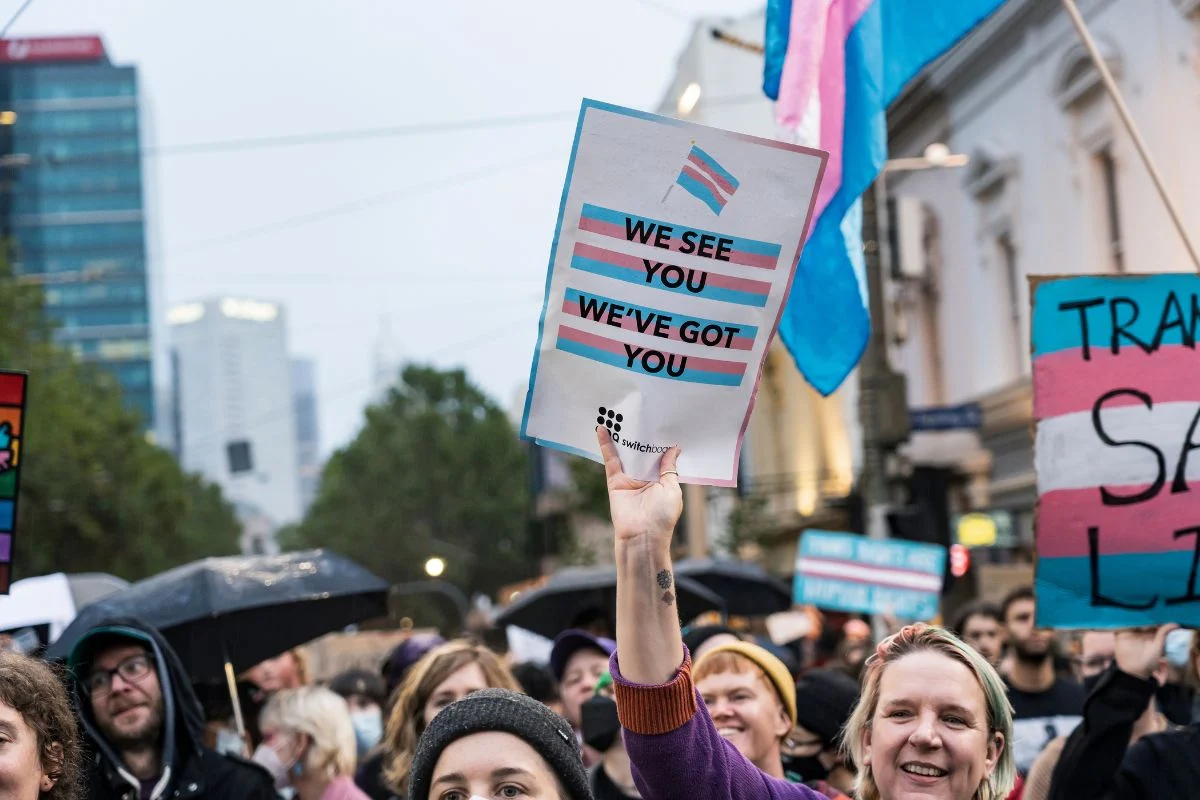
The landscape of American civil rights is currently facing a significant shift as the Department of Health and Human Services (HHS) under the Trump administration proposes a new rule aimed at stripping federal disability protections from transgender individuals. This move, announced by HHS Secretary Robert F. Kennedy Jr., seeks to revive and broaden statutory exclusions that date back to the original passage of the Americans with Disabilities Act (ADA) in 1990. However, unlike the political climate of the late 1980s, when disability advocates were forced to make concessions that marginalized the LGBTQ+ community, today’s disability rights organizations are standing in firm solidarity with trans individuals, arguing that the narrowing of civil rights for one group threatens the protections of all.
The proposed regulation seeks to codify a strict interpretation of the ADA that would explicitly exclude gender dysphoria and related conditions from the definition of a disability. This follows several years of legal momentum during the Biden administration, where federal courts increasingly recognized that while "gender identity disorders" were historically excluded, the modern medical diagnosis of gender dysphoria—which involves significant distress and functional impairment—qualifies for protection under the ADA. The administration’s new stance marks a direct confrontation with the judiciary and a re-litigation of a compromise made nearly four decades ago.
The 1989 Compromise: A History of Necessary Exclusion
To understand the current conflict, one must look back to the late 1980s, during the intense negotiations that led to the passage of the ADA. Chai Feldblum, a key architect of the ADA and a former commissioner of the Equal Employment Opportunity Commission (EEOC), recalls the high-stakes environment on the Senate floor in 1989. At the time, disability advocates were desperate to secure enough Republican support to pass the landmark legislation, which promised to transform the lives of millions of Americans with physical and mental impairments.
Conservative lawmakers, led by a faction of Republican senators, expressed concern that the law’s definition of disability was too broad and could be used to protect behaviors or identities they found morally objectionable. Initially, a proposed amendment sought to exclude approximately 50 psychiatric conditions, as well as homosexuality. Feldblum, who was working for the ACLU at the time, managed to negotiate the removal of homosexuality from the list, arguing that it was not a disability and should not be framed as such.
However, the political price for this victory was steep. To appease the holdouts, advocates were forced to accept a list of eight specific exclusions. These included "transsexualism," "transvestism," and "gender identity disorders not resulting from physical impairments." These terms, now largely considered obsolete or offensive by the medical community, were added to the bill in a matter of minutes. At the time, Senator Ted Kennedy, a primary sponsor of the bill, noted that while he did not favor the exclusions, they were a compromise the movement "could live with" to ensure the broader protections of the ADA became law.
The Legal Evolution of Gender Dysphoria
For decades, these exclusions remained largely unchallenged. However, the 2008 ADA Amendments Act (ADAAA) signaled a shift in congressional intent. The 2008 law explicitly stated that the definition of disability should be construed broadly and that the primary focus of the ADA should be whether discrimination occurred, rather than whether an individual meets a highly technical definition of disabled.
In recent years, the medical understanding of gender-related distress has evolved. The Diagnostic and Statistical Manual of Mental Disorders (DSM-5) replaced "Gender Identity Disorder" with "Gender Dysphoria," focusing on the clinical distress associated with the condition rather than the identity itself. This distinction proved pivotal in the courts. In 2022, the U.S. Court of Appeals for the Fourth Circuit ruled in Williams v. Kincaid that gender dysphoria is not the same as the "gender identity disorders" excluded by the 1990 ADA. The court found that because gender dysphoria involves a "physical impairment" in the form of hormonal and neurological components, it falls outside the original statutory exclusions.
This ruling opened the door for transgender people to seek "reasonable accommodations" in the workplace and protection from discrimination in public accommodations, much like individuals with depression, anxiety, or mobility impairments.
The Trump Administration’s Regulatory Reversal
The current administration’s proposed rule seeks to shut this door. In a recent agency event, Secretary Robert F. Kennedy Jr. framed the inclusion of gender dysphoria under the ADA as a betrayal of the law’s "original intention." He argued that the designation serves the interests of a "predatory, multibillion-dollar industry" and claimed the move would "protect children" from what he termed "transgender ideology."
Legal experts point out that the administration is attempting to use the executive branch’s rulemaking authority to override judicial interpretations of the law. Kevin Barry, a professor of law at Quinnipiac University who helped negotiate the 2008 ADAAA, argues that the administration’s logic is flawed. He notes that the 2008 amendments were intended to prevent exactly this kind of narrow, exclusionary interpretation. "What the administration is saying is that in 1990, Congress excluded every possible condition associated with gender identity in perpetuity," Barry said. "That is not something written into existing law, and it is something the courts have repeatedly rejected."
A New Era of Advocacy: The Disability-Trans Alliance
One of the most notable shifts in this debate is the reaction of the disability rights community. In 1989, the community felt forced to sacrifice trans rights to secure their own. In 2025, the stance is one of unified resistance. Leading organizations, such as the Disability Rights Education and Defense Fund (DREDF), have come out strongly against the proposed HHS rule.
Claudia Center, the legal director for DREDF, emphasizes that the disability movement is now rooted in the principle of universal inclusion. "We don’t agree with disabilities that are unpopular not being covered by our laws," Center told The 19th. The consensus among advocates is that allowing the government to "slice out" one group from civil rights protections sets a dangerous precedent that could eventually be used to exclude other marginalized groups or "unpopular" disabilities.
This solidarity is also reflected in the data regarding the intersectionality of these communities. According to various studies, including reports from the Movement Advancement Project (MAP), transgender people are more likely to report having a disability than the general population. Specifically, nearly 40 percent of transgender adults in the United States identify as having a disability, compared to roughly 26 percent of the general adult population. For these individuals, the rollback of ADA protections represents a double blow to their ability to navigate the world and maintain employment.
Practical Implications: Workplace and Public Accommodations
The practical impact of these protections—or the loss thereof—is best illustrated through workplace accommodations. Ezra Young, a legal scholar who has litigated gender dysphoria cases, notes that for many trans people, the ADA provides a framework for simple, low-cost adjustments that allow them to perform their jobs effectively.
Young cites examples such as a trans woman requesting a specific uniform cut that does not trigger gender dysphoria, or an individual needing a modified schedule to attend medical appointments related to their transition. These are "opt-in" protections; a person does not have to identify as disabled to use them, but the law provides a safety net if they choose to disclose their condition to an employer.
If the Trump administration’s rule is finalized, employers and state entities could potentially deny these requests without fear of federal repercussion under the ADA. This could lead to an increase in workplace discrimination and a decrease in economic stability for transgender workers, who already face an unemployment rate three times higher than the national average, according to the 2015 U.S. Transgender Survey.
The Path Forward: Litigation and Constitutional Challenges
The proposed rule is currently in a notice-and-comment period, a standard part of the federal rulemaking process that allows the public to weigh in before a rule is finalized. Once finalized, however, it is almost certain to face immediate legal challenges.
Ma’ayan Anafi, senior counsel at the National Women’s Law Center, argues that the administration cannot rewrite the law through regulation. "The Trump administration cannot make laws through regulation, and attempting to do so leaves them open to litigation," Anafi stated. Legal experts suggest that if the administration insists that the 1990 Congress intended to exclude all trans-related conditions forever, they may inadvertently be arguing that the original law was unconstitutional under the Equal Protection Clause.
The battle over the ADA is more than a technical dispute over medical definitions; it is a fundamental struggle over the scope of American civil rights. As the disability community and LGBTQ+ advocates join forces, the outcome of this regulatory fight will likely be decided in the Supreme Court, with profound implications for how the United States defines disability and protects its most vulnerable citizens in the 21st century. For now, the message from advocates is clear: the era of trading one group’s rights for another’s is over.