Nila Kartika Wati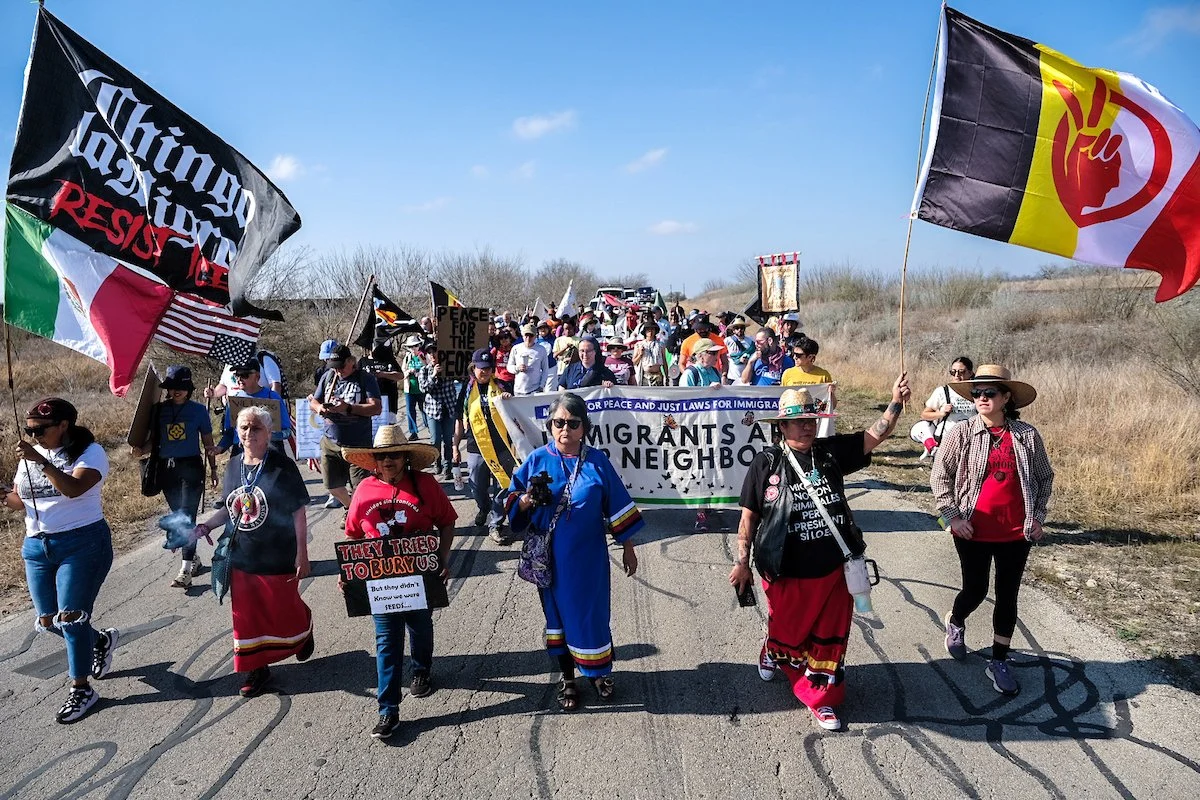
In the first week of March 2026, a coalition of community activists, faith leaders, and human rights advocates embarked on a grueling 90-mile march from the Dilley immigrant detention facility to San Antonio, Texas. The demonstration, organized to protest the rapid expansion of the child detention industry, marks a significant escalation in the domestic struggle over immigration policy. Led by the National Coalition to End Child Detention—a network born from the anti-separation campaigns of 2018—the marchers aimed to draw national attention to what they describe as a systemic failure of the Department of Homeland Security (DHS) to protect vulnerable minors. Among the prominent figures leading the trek were Alix Webb, Chief of Staff at the Kairos Center for Religions, Rights, and Social Justice, and Mike Ishii, Director of Tsuru for Solidarity. Their message was singular: the scale and severity of child detention in 2026 have surpassed the crisis levels seen nearly a decade ago.
The current landscape of immigration enforcement has shifted dramatically over the past year. According to data analyzed by the Marshall Project, Immigration and Customs Enforcement (ICE) was holding approximately 170 children as of January 2026. While this number may seem lower than peak historical surges of unaccompanied minors, it represents a sixfold increase from the previous administration’s baseline. More alarmingly, the facility at Dilley has once again become the epicenter for family detention, a practice that advocates had hoped was a relic of the past. Webb noted that the geographical isolation of these facilities often masks the reality of the situation from the broader American public. She emphasized that the lack of cross-state communication allows the industry to expand in the shadows, with residents in the Northeast or Northwest often unaware of the deteriorating conditions in Texas, Kansas, or Oregon.
A Chronology of Policy Shifts and Legal Challenges
The current crisis is the latest chapter in a decades-long legal and political battle over the treatment of immigrant children. To understand the gravity of the 2026 march, one must look at the timeline of the Flores Settlement Agreement of 1997. This landmark legal framework established national standards for the detention, release, and treatment of minors in federal custody, most notably stipulating that children should generally not be held in secure, unlicensed facilities for more than 20 days. During the "zero-tolerance" policy era of 2018, the world watched as more than 2,300 children were separated from their parents, leading to a massive public outcry and the eventual formation of many of the organizations marching today.
Following a brief period of policy relaxation, the pendulum swung back in January 2025. Reports indicate that at least 3,800 children have been detained since the start of 2025. Crucially, advocacy groups highlight that 1,300 of these children—nearly 35 percent—have been held beyond the 20-day limit mandated by the Flores agreement. This breach of legal precedent has triggered a wave of litigation and grassroots resistance. By early 2026, the situation reached a breaking point as reports emerged of measles outbreaks, inadequate access to potable water, and a near-total lack of medical care within detention centers. The educational mandate for detained children, which should provide a semblance of normalcy, has reportedly been slashed to just one hour of schooling per day in several facilities.
The Humanitarian Toll and Behavioral Regressions
The impact of these policies extends far beyond the physical walls of the Dilley facility. Wendy Cervantes, Director of Immigration and Immigrant Families at the Center for Law and Social Policy (CLASP), has documented the psychological trauma permeating immigrant communities. For over 30 years, federal guidelines generally restricted immigration enforcement in "sensitive places" such as schools, hospitals, and houses of worship. However, the erosion of these protections has created a climate of pervasive fear. Cervantes’ research, which includes interviews with parents and early childhood providers, reveals a disturbing trend of behavioral regressions in children as young as three years old.
These children, many of whom are U.S. citizens or legal residents living in mixed-status households, are exhibiting signs of severe anxiety. Reports of toddlers losing the ability to speak, changes in eating and sleeping habits, and acute panic attacks during school drop-offs have become common. The fear that a parent might not be there at the end of the day has transformed routine transitions into traumatic events. For those children actually in custody, the sense of hopelessness is even more profound. Cory Shindel, Deputy Director of Policy at Kids in Need of Defense (KIND), noted that many unaccompanied minors are now facing stays of six months or longer in institutional settings. The isolation is so severe that some children have reportedly begged to be returned to the dangerous conditions they originally fled, simply to escape the vacuum of the American detention system.
Data Analysis: The Scope of Mixed-Status Families
The reach of immigration enforcement is not confined to those without legal standing. The policy organization FWD.us estimates that nearly 9.7 million U.S. citizens live in mixed-status households—families that include at least one undocumented or temporarily protected member. This demographic reality means that millions of American children are directly affected by the threat of deportation. In Texas, where the 90-mile march took place, the Migration Policy Institute finds that 34 percent of all children have at least one foreign-born parent.
Trudy Taylor Smith of the Texas Children’s Defense Fund highlighted a secondary crisis: the mass disenrollment of eligible children from public benefit programs. Families with U.S.-citizen children are increasingly withdrawing from SNAP (Supplemental Nutrition Assistance Program) and Medicaid due to fears that their personal data will be shared with ICE. This "chilling effect" deprives children of essential nutrition and healthcare during critical developmental windows. The long-term implications are severe, with public health experts warning of a future spike in chronic health issues and a decline in academic achievement among this population, which will ultimately impact the broader American economy and social fabric.
The Economic Strain on the Nonprofit Sector
As the needs of immigrant families grow, the nonprofit organizations tasked with supporting them are facing an unprecedented financial squeeze. Throughout 2025 and into early 2026, interruptions in federal funding have crippled legal service providers. Many of these services are technically protected by congressional appropriations and federal anti-trafficking laws, yet administrative blocks have led to a freeze in disbursements. This has forced major organizations like RAICES in Texas and various immigrant rights centers in Michigan and Delaware to implement staff layoffs and program closures.
The irony of the current situation is that these cuts are occurring precisely when the demand for legal counsel and family preparedness planning is at its peak. Organizations that once focused on path-to-citizenship programs are now pivoting to "deportation defense" and "family separation kits." Wendy Cervantes noted that her organization had to develop specific resources on how to talk to children about the reality of a parent being deported. The shift from "prevention" to "crisis management" reflects a grim acknowledgement among advocates that the current enforcement trajectory is unlikely to change without significant legislative intervention.
Historical Parallels and the Path Forward
For participants like Mike Ishii, the struggle against child detention is a continuation of a much older American story. Ishii’s mother was 10 years old when she was forcibly removed from her home in Seattle and placed in an incarceration camp during World War II. Of the 125,000 Japanese Americans incarcerated during the war, approximately half were children. Ishii argues that the current carceral system, which he describes as the largest in the world, is repeating the mistakes of the past by prioritizing state security over fundamental human rights and civil liberties.
Despite the bleak outlook, the 90-mile march to San Antonio concluded with a message of "deepening solidarity." Kristin Kumpf, coordinator of the National Coalition to End Family and Child Detention, emphasized that the movement is expanding to include professionals who were previously on the sidelines. Pediatricians, social workers, and educators are increasingly joining faith leaders in vocalizing their opposition to the detention of minors. This "community care" model—where teachers organize carpools for at-risk families and neighbors watch over school routes—is seen by advocates as the ultimate defense against a centralized enforcement apparatus.
As the marchers reached San Antonio, the call for a total end to child detention remained the central demand. While the political path forward remains fraught with challenges, the coalition intends to use the momentum from the Texas march to push for federal legislation that would codify the "sensitive places" policy into law and provide permanent protections for children in mixed-status families. For the advocates on the frontlines, the march was not just a protest, but a physical manifestation of their commitment to a multiracial democracy that protects its most vulnerable members, regardless of their birthplace. The implications of this struggle will likely resonate through the 2026 midterm elections and beyond, as the nation grapples with the moral and legal costs of its immigration enforcement strategies.