Lana Rhoades

The Washington Department of Revenue (DOR) oversees a system where the state sales tax rate is set at 6.5%, though the total rate paid by consumers often reaches between 8% and 10.5% once local jurisdictional taxes are applied. For merchants, particularly those operating in the burgeoning sectors of software-as-a-service (SaaS) and professional consulting, understanding the nuances of what constitutes a "taxable service" is no longer optional—it is a requirement for survival in a high-audit environment.
The Historical Context and Legislative Foundation of Washington’s Tax Code
To understand why Washington taxes services more aggressively than many of its neighbors, one must look at the state’s legislative history. The foundation of the state’s tax system was established by the Revenue Act of 1935. At that time, the tax was almost exclusively focused on the sale of physical goods. However, as the 20th century progressed, the definition of a "retail sale" began to expand.
A pivotal moment occurred in 2008 when Washington transitioned to a destination-based sales tax system. This shift required businesses to collect sales tax based on the location where the buyer receives the goods or services, rather than the location of the seller. This was followed closely by the landmark 2009 legislation regarding digital products. Washington was one of the first states to aggressively codify the taxation of digital goods, including downloaded music, movies, and ebooks, as well as remote access software (SaaS).
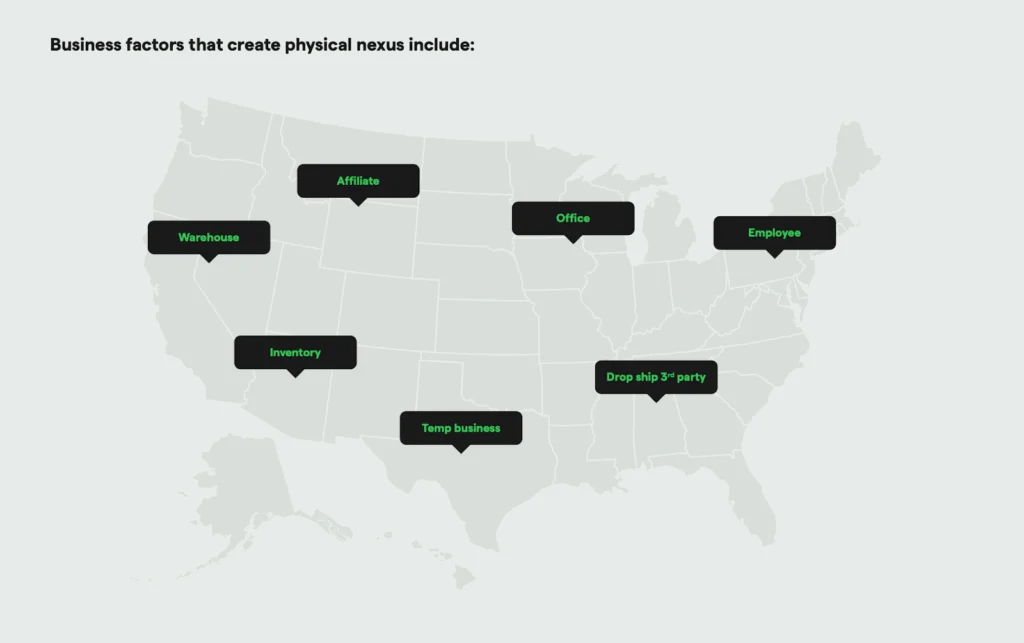
The 2018 U.S. Supreme Court decision in South Dakota v. Wayfair, Inc. further revolutionized this landscape. The ruling allowed Washington to enforce "economic nexus" laws, meaning that out-of-state service providers with no physical presence in the state must still collect and remit sales tax if they exceed $100,000 in annual gross receipts from Washington customers. This effectively leveled the playing field between local service providers and global digital firms but introduced a massive compliance burden for small to medium-sized enterprises (SMEs).
Defining Taxable Services: The Retail vs. Professional Divide
Washington’s approach to taxing services is categorized by the distinction between "retail services" and "professional services." Unlike states that exempt all services by default, Washington law explicitly lists dozens of service categories that are subject to the 6.5% state retail sales tax.
Retail services subject to tax generally include those involving the construction, repair, cleaning, alteration, or improvement of tangible personal property or real property. Specific examples include:
- Construction and Landscaping: New construction, clearing land, and even the planting of trees are considered retail services.
- Repair and Maintenance: Fixing a car, repairing a computer, or cleaning a residential home (with certain exceptions) fall under the taxable umbrella.
- Personal Enhancements: Physical fitness programs, tanning, and tattooing are classified as retail sales.
- Digital Services: This includes automated services and SaaS. If a customer pays a subscription to access software hosted on a cloud server, Washington views this as a taxable retail sale.
Conversely, "professional services" have historically been exempt from the retail sales tax, though they remain subject to the B&O tax. These include legal services, accounting, medical practices, and certain types of specialized consulting. However, the line is often blurred. For instance, while "consulting" is generally exempt, if that consulting results in the creation of a "custom software" product that is then maintained by the consultant, the transaction may attract different tax implications depending on how the contract is structured.
Data Analysis: The Economic Impact of Service Taxation
Data from the Washington Department of Revenue indicates that sales tax is the state’s largest source of tax revenue, accounting for approximately 50% of all state-collected taxes. In the fiscal year 2023, the state collected over $16 billion in retail sales tax alone. As the share of physical goods in the consumer basket continues to shrink relative to services and digital content, the taxation of the service sector has become the primary engine of revenue growth.
| Category | Tax Treatment in Washington |
|---|---|
| Tangible Personal Property | Taxable (6.5% state + local) |
| Software-as-a-Service (SaaS) | Taxable |
| Custom Software | Exempt (from sales tax) |
| Janitorial Services | Exempt |
| Professional Consulting | Exempt (from sales tax; B&O applies) |
| Physical Fitness Services | Taxable |
Local variations significantly impact these figures. In Seattle, the combined sales tax rate is 10.25%, whereas in unincorporated parts of some counties, it remains closer to the 7% mark. This creates a complex "tax map" for service providers who perform work at various client sites across the state.
Chronology of Modern Compliance Standards
The timeline of compliance for service-based businesses has accelerated over the last decade, driven by technological advancements and shifting legal precedents:
- July 2008: Washington adopts destination-based sourcing, forcing service providers to track the location of every client.
- July 2009: House Bill 2075 goes into effect, clarifying that "digital automated services" and "remote access software" are subject to retail sales tax.
- October 2018: Following the Wayfair decision, Washington implements economic nexus thresholds for out-of-state retailers and service providers.
- January 2020: Washington clarifies that marketplace facilitators (platforms like Amazon or specialized service marketplaces) are responsible for collecting tax on behalf of their third-party sellers if they meet the nexus threshold.
Official Responses and Regulatory Guidance
The Washington Department of Revenue maintains that its goal is "voluntary compliance through education." However, the complexity of the code has led to frequent disputes, particularly regarding the "primary purpose" of a transaction. If a contract includes both a taxable service (like installing hardware) and a non-taxable service (like professional training), the entire invoice may be taxed unless the charges are clearly and reasonably separated.
State tax officials emphasize that businesses should not rely on "common sense" to determine taxability. "The definition of a retail sale in Washington is broader than in almost any other state," noted one tax analyst during a recent DOR seminar. "If you are improving, repairing, or altering something, or providing access to a digital tool, you should assume it is taxable until proven otherwise."
Industry groups and chambers of commerce have expressed concerns that these rules disproportionately affect freelancers and small digital agencies. The Washington State Society of CPAs has frequently advocated for clearer guidelines on where "consulting" ends and "taxable digital services" begin, as many modern consultants provide their advice through digital platforms or integrated software tools.
Broader Implications for the Future of State Revenue
The Washington model provides a blueprint for how other states might adapt to the "Amazon-ification" of the economy. As more states face budget shortfalls due to the decline of brick-and-mortar retail, the "Washington approach"—taxing SaaS, digital goods, and a wide array of services—is likely to be emulated.
For businesses, the implications are clear: the cost of compliance is rising. Automated tax solutions have become a necessity rather than a luxury. A freelancer in Spokane or a software developer in Bellevue must now function as a de facto tax collector for the state, managing different rates for clients in Tacoma, Vancouver, or Everett. Failure to do so can result in significant back-tax liabilities, often discovered during routine audits that can look back several years.
Furthermore, the distinction between "custom" and "pre-written" software remains a major point of contention. In Washington, custom software—software created specifically for a single user—is exempt from sales tax. However, the moment that software is sold to a second user, it becomes "pre-written" and thus taxable. In an era of "low-code" and "no-code" platforms where customization is baked into standard products, this 1980s-era distinction is increasingly difficult to apply to 2020s-era technology.
Conclusion: Navigating the Path Forward
Washington’s tax system is a reflection of its modern, high-tech economy. By capturing revenue from the services and digital products that define the 21st century, the state ensures a stable fiscal foundation without the need for an income tax. However, this places a heavy burden of precision on the business community.
Merchants must remain vigilant, staying abreast of the Washington Department of Revenue’s evolving definitions and the shifting local rates. As the economy continues to move away from the "tangible" and toward the "virtual," the definition of a taxable sale will only continue to expand. For the modern entrepreneur, success in Washington requires not just a viable service or product, but a sophisticated understanding of the state’s ever-reaching tax code. Compliance is the price of entry into one of the nation’s most vibrant and innovative state economies.