Layla Zulfa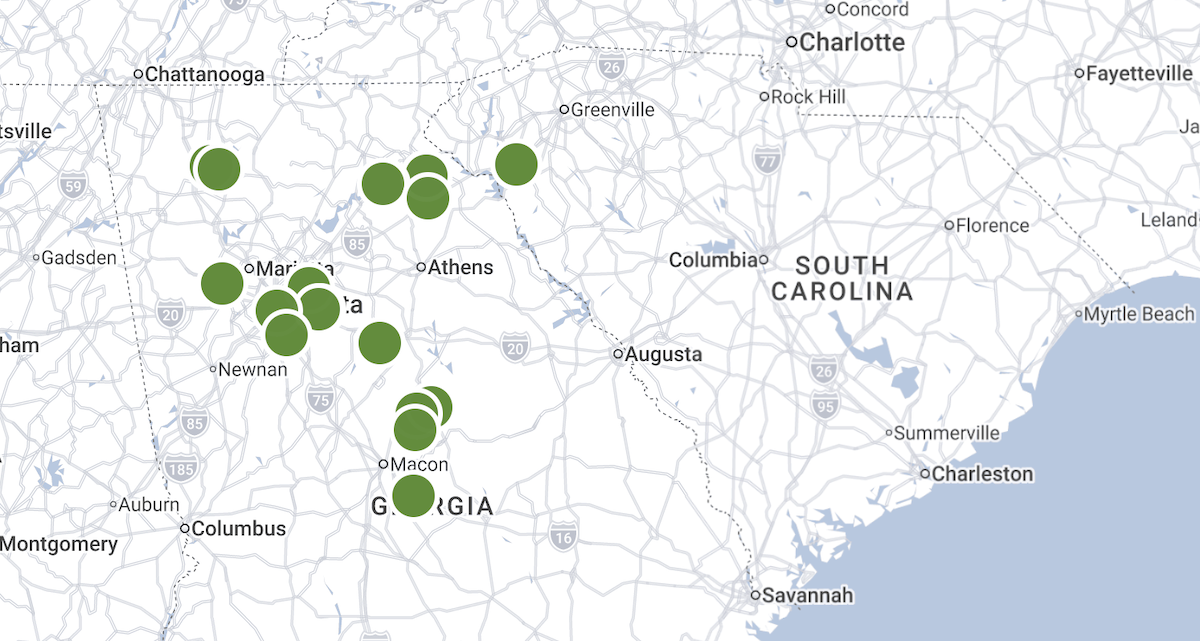
Eastwood Homes’ acquisition of Atlanta-based Peachtree Building Group, announced today, appears on the surface as a straightforward expansion move. Eastwood Homes, HousingWire Homebuilder Rankings’ No. 11-ranked private homebuilder, is a fast-growing Charlotte-based builder that, with this deal, deepens its Southeastern footprint by adding local scale, operating capability, and market presence in one of the nation’s most strategically consequential housing markets. However, this initial assessment belies a more significant narrative unfolding within a mergers and acquisitions landscape characterized by shifting motivations, competitive pressures, and evolving power dynamics.
This transaction is emblematic of a prevailing trend in homebuilding consolidation: the ascent of the multi-regional private homebuilder as a formidable force in the M&A arena. These are not the Wall Street-backed public giants nor the globally capitalized housing conglomerates from overseas, but rather well-capitalized, operationally disciplined, and strategically ambitious private entities. They are increasingly attractive to seller-founders who prioritize legacy, employee well-being, and reputation alongside financial considerations.
The Ascendancy of Private Acquirers in Homebuilder M&A
Data compiled by JTW Advisors, which served as the financial advisor to Eastwood Homes on this transaction, underscores this dramatic shift. Through April of 2026, private builders accounted for a significant 39% of homebuilder M&A buyers. This figure surpasses that of Japanese acquirers, who represented 30%, and public builders, at 26%. This represents a substantial departure from prior M&A cycles, where public builders historically dominated acquisition activity.
From 2010 to 2014, private buyers constituted a mere 12% of U.S. homebuilder acquisitions. By the period of 2020 to 2024, this share had climbed to 25%. The current window, from 2025 to the present year of 2026, shows a marked acceleration to 39%. This escalating participation by private entities is a crucial, though often subtler, component of the homebuilding M&A narrative. The underlying forces driving this trend are critical to understanding the present power shifts within the industry. A growing cohort of "super-private" builders is achieving economies of scale, geographic diversification, and operational leverage that render M&A not merely opportunistic but, in many instances, competitively imperative.
The financial advantages of scale are increasingly evident. Trailing-12-month Selling, General, and Administrative (SG&A) expenses for small-cap builders typically hover around 13%, compared to 10.8% for mid-cap builders and a more efficient 8.4% for large-cap builders. Earnings Before Interest, Taxes, Depreciation, and Amortization (EBITDA) performance follows a similar pattern, demonstrating the profitability advantages associated with greater scale. In a market grappling with affordability pressures, consumer hesitancy, escalating incentive costs, land acquisition complexities, entitlement risks, insurance volatility, and extended sales cycles, operational efficiency and robust financial performance are paramount. Larger entities are better equipped to absorb these challenges.
Eastwood Homes, under the leadership of CEO Clark Stewart and CFO Kevin Hutchins, has clearly recognized and capitalized on this evolving market dynamic. "This is an exciting moment for Eastwood Homes," stated Clark Stewart, President of Eastwood Homes, in a prepared release. "Our continued growth is a reflection of the strength and health of our company, as well as the dedication of our team members across every market we serve. We are proud to continue expanding thoughtfully into markets that align with our long-term vision and values."
Atlanta: A Strategic Nexus for Growth
Atlanta continues to stand out as one of the most strategically attractive growth markets in the American homebuilding landscape. Driven by robust population migration, a diversifying economy, consistent employment growth, and a relative affordability advantage compared to coastal metropolitan areas, metro Atlanta remains a powerful magnet for household formation and subsequent builder investment. This sustained appeal is precisely why other major builders, such as KB Home, have recently intensified their presence in the Atlanta market, as noted by industry analysts tracking demographic momentum and long-term growth corridors.
While Eastwood Homes already possessed a presence in Atlanta, the acquisition of Peachtree Building Group signifies a substantial leap from merely "being in a market" to achieving "scaled relevance." This transaction is evidently designed to accelerate that transition.
Peachtree Building Group brings over 35 years of experience to the table, with leadership roots tracing back to top-five Atlanta builders. Their track record encompasses the construction of thousands of homes across various Southeastern markets. This depth of local expertise is invaluable in a market like Atlanta, where success hinges on more than just geographical proximity. Building genuine competitive runway to outmaneuver larger, better-capitalized players in such a dynamic and attractive market is a considerable undertaking. Acquiring established local intelligence, trusted relationships, a strong reputation, and a proven ability to navigate competitive challenges offers a faster and potentially less risky pathway to scaled relevance.

Eastwood’s Strategic M&A Trajectory
The acquisition of Peachtree Building Group is not an isolated geographic land grab for Eastwood Homes. Instead, it aligns with a broader strategic evolution evident in the company’s growth trajectory and acquisition methodology. Last year, Eastwood’s acquisition of Napolitano Homes in the Hampton Roads market provided an early signal of this approach. That transaction was framed not solely as an expansion but as a synergistic combination built on shared operating values, local reputation, and cultural compatibility, underscoring the importance of alignment in business philosophies.
The Peachtree acquisition builds upon this pattern, albeit with a more overtly growth-oriented strategic rationale. Atlanta represents a significantly different scale of opportunity compared to Hampton Roads. This move is not merely an adjacency expansion; it is an entry into one of the nation’s most strategically contested housing-growth corridors, fueled by demographic migration, economic diversification, and sustained long-term household formation trends. Even within this market-opportunity-driven deal, Eastwood appears to be adhering to its disciplined playbook.
The public messaging surrounding the acquisition emphasizes continuity, particularly concerning the preservation of Peachtree Building Group’s established operating relationships with employees, trade partners, and customers. Sophisticated homebuilding acquirers increasingly recognize that the most valuable assets of local private builders are often intangible: market credibility, municipal relationships, trade contractor trust, institutional knowledge, and experienced operating teams possessing the specific know-how to successfully construct and deliver homes in particular local environments. These critical assets can diminish rapidly if integration is managed poorly. Eastwood’s approach suggests a buyer that understands it is acquiring more than just lots, backlog, or revenue; it is acquiring local operating capability that has been meticulously cultivated over decades. This distinction separates strategic acquirers from purely financial opportunists.
Seller Motivations in a Shifting Market
While no official statement has been released detailing the specific reasons behind Peachtree Building Group’s decision to sell, the broader market context provides ample explanation. Operating an independent homebuilding business has become substantially more challenging, with a pronounced advantage accruing to entities possessing access to more patient and cost-effective capital for operations, land investment, and construction.
The cost of capital remains elevated relative to the period when many private builders formulated their expansion strategies. Land acquisition competition has intensified, entitlement processes continue to lengthen development cycles, and customer acquisition costs have escalated significantly in an environment where buyers are more hesitant, price-sensitive, and harder to convert. Insurance risks introduce new layers of uncertainty into project underwriting and community development. Entitlement risks can ensnare land parcels for extended periods, tying up capital and impacting loan covenants. Sales velocity can fluctuate rapidly, leading to lengthening cash conversion cycles.
Ultimately, scale increasingly confers advantages that smaller operators struggle to replicate. Purchasing power improves with size, overhead is spread more efficiently, technology investments become more economically rational, and talent recruitment is facilitated. Geographic diversification serves as a buffer against localized economic shocks. For founder-led private operators, this presents a critical strategic decision: continue competing independently against increasingly industrialized rivals, or join forces with an acquirer whose resources can enhance the probability of long-term success.
"This transaction reflects the continued strength of the homebuilding M&A market, particularly among well-positioned operators pursuing strategic expansion opportunities," commented Chris Jasinski, Founder & CEO of JTW Advisors. "Eastwood Homes has built an impressive business and reputation over multiple generations, and we are honored to advise them on this acquisition."
Furthermore, seller preferences vary. Some founders are hesitant to transition into public-company structures, where their businesses become regional reporting units within much larger organizations. Others may be reluctant to become part of globally owned enterprises, where local autonomy could be perceived as uncertain. For sellers who place a high value on continuity for their employees, customers, and operating culture, the appeal of a culturally aligned private acquirer can be exceptionally compelling. This is precisely where Eastwood appears to be positioning itself—not merely as a buyer, but as a responsible and enduring steward of the trustmark that Peachtree Building Group has meticulously built over decades.
The Maturation of the Private Buyer Advantage
Public homebuilders undeniably retain significant acquisition advantages. They can access capital markets with greater efficiency, and public equity can serve as a valuable acquisition currency. Their purchasing power is formidable, and their operating infrastructure is already scaled. However, multi-regional private builders are increasingly demonstrating their unique strengths in competitive acquisition scenarios.

Private acquirers often possess the ability to move more swiftly due to less bureaucratic decision-making structures. They are not subjected to the constant scrutiny of quarterly earnings reports, allowing for a potentially longer and less reactive strategic time horizon. Perhaps most significantly, in founder-to-founder transactions, they may offer greater cultural familiarity and a shared understanding of long-term vision.
JTW Advisors’ latest market analysis directly corroborates this shift, identifying "foreign and private entities with long-term strategies" as particularly active buyer groups in the current environment. This characterization aptly describes entities that are not merely opportunistic bargain hunters but are strategically leveraging acquisitions to build platforms for sustained growth. The private acquirer cohort increasingly recognizes that scale in homebuilding is no longer solely about market share or prestige; it is fundamental to operating economics, resilience, and competitive durability in an increasingly demanding industry landscape. Eastwood Homes’ recent actions strongly suggest a company operating with precisely this strategic mindset.
Geographic Diversification and Regional Strength
Another notable shift in homebuilding consolidation is evident in its geographic focus. Historically, homebuilder M&A activity was overwhelmingly concentrated in major primary markets. However, JTW’s data indicates a meaningful change, with secondary-market transactions now constituting a majority of recent activity. This evolution reflects a broader reality about where sophisticated operators perceive the most sustainable opportunities to exist.
Many of the strongest private builders have cultivated their businesses not by exclusively pursuing the largest metropolitan areas, but by excelling in markets where operational discipline, established local relationships, and precise execution create durable competitive advantages. While Atlanta is undeniably a primary market, Eastwood’s broader expansion strategy appears philosophically aligned with this same logic: to build a resilient regional operating footprint rather than simply accumulating marquee market names. Regional density often fosters advantages that disconnected geographic expansion struggles to achieve.
Shared leadership capabilities, overlapping trade relationships, enhanced market intelligence transfer, and consistent operating practices become more attainable when a company grows within coherent regional corridors. Eastwood’s current Southeastern expansion initiative increasingly embodies this model, emphasizing strategic regional build-out over fragmented market acquisition.
A Competitive Signal for the Industry
The temptation to view the Peachtree acquisition as a minor, incremental addition would be a significant miscalculation. Eastwood Homes now operates with substantial multi-market scale, a factor that fundamentally alters the competitive equation. A builder with broader geographic reach can more efficiently spread overhead costs, attract and retain top leadership talent by offering more expansive career pathways, and justify greater investments in systems, technology, and process improvements. Furthermore, capital can be redeployed across markets based on relative opportunity rather than dictated by localized necessity.
This expanded scale also provides a critical advantage in uncertain housing cycles: enhanced optionality. If demand softens in one market, stronger performance in other regions can offset localized pressures. If land acquisition becomes constrained or prohibitively expensive in one geography, investment can be strategically shifted. If product demand evolves by price segment or consumer profile, operating diversity provides crucial flexibility. While scale does not eliminate execution risk, the Eastwood operational system is demonstrating its capacity as a resilient, high-performing value stream, thereby improving the Eastwood team’s strategic maneuverability.
The overarching narrative emerging from this transaction is the evolving landscape of homebuilding consolidation. While public builders remain formidable acquirers, and Japan’s global housing giants continue their assertive U.S. expansion, another powerful force is increasingly shaping the market: the rise of the strategically ambitious, multi-regional private acquirer. These entities are demonstrating that a well-capitalized, disciplined, and culturally aligned approach can effectively compete for and integrate valuable assets, signaling a new era in the industry’s ongoing consolidation.