Layla Zulfa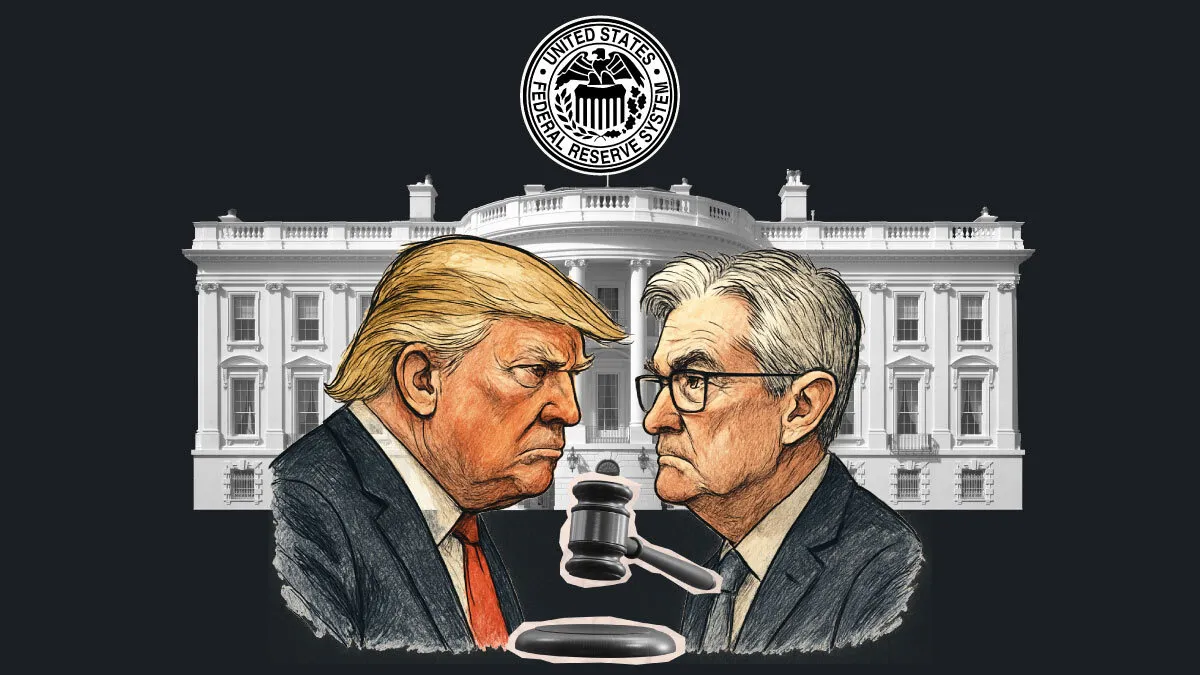
A federal judge has intervened in a contentious legal battle, blocking grand jury subpoenas issued by the U.S. Department of Justice against the Federal Reserve. U.S. District Judge James Boasberg ruled on Friday that the subpoenas, which were aimed at Federal Reserve Chair Jerome Powell concerning his congressional testimony on the central bank’s headquarters renovation, appeared to be an effort to "harass and pressure" Powell to either lower interest rates or resign from his influential position.
The Department of Justice had served the Federal Reserve with these subpoenas in January, with indications that criminal indictment against Powell was being considered. While the stated focus of Powell’s testimony that triggered the investigation was the Federal Reserve’s $2.5 billion renovation of its Washington D.C. headquarters, Powell himself stated in a video released upon receiving the subpoenas that concerns over the renovation were merely a pretext for the government’s actions. Judge Boasberg’s memorandum opinion strongly supported this assertion.
Judicial Scrutiny and Findings
In his ruling, Judge Boasberg stated, "There is abundant evidence that the subpoenas’ dominant (if not sole) purpose is to harass and pressure Powell either to yield to the President or to resign and make way for a Fed Chair who will." He further elaborated on the government’s case, noting, "On the other side of the scale, the Government has offered no evidence whatsoever that Powell committed any crime other than displeasing the President. The Court must thus conclude that the asserted justifications for these subpoenas are mere pretexts."
The judge’s decision granted a motion filed by the Board of Governors of the Federal Reserve System to quash the subpoenas. The case was heard in the U.S. District Court for the District of Columbia. A spokesperson for the Federal Reserve indicated that the institution had no further comment beyond acknowledging the judge’s decision.
Department of Justice Response and Future Actions
Jeanine Pirro, the U.S. Attorney for the District of Columbia, expressed strong criticism of the ruling during a press conference held on Friday. Pirro characterized Judge Boasberg as "an activist judge" and argued that the decision significantly impedes the Department of Justice’s capacity to investigate potential criminal activities.
"He has neutered the grand jury’s ability to investigate crime," Pirro stated. "Jerome Powell today is now bathed in immunity preventing my office from investigating the Federal Reserve. This is wrong, and it is without legal authority." Pirro confirmed that the Department of Justice intends to appeal what she described as an "outrageous" decision.
Pirro provided further details regarding the origins of the investigation, stating that the DOJ initiated its inquiry into Powell in November 2025. The alleged basis for the investigation stemmed from purported discrepancies in his testimony before the Senate regarding cost overruns exceeding $1 billion associated with the renovation of the Federal Reserve’s headquarters. According to Pirro, prosecutors had made multiple attempts to obtain documents and schedule meetings with the Federal Reserve, but these requests were met with no response, which ultimately led to the issuance of two grand jury subpoenas in January.
Background of Political Pressure on the Federal Reserve
This legal confrontation occurs against a backdrop of significant political pressure exerted by the Trump administration on the Federal Reserve and its leadership. Former President Donald Trump had consistently urged the Federal Reserve to lower interest rates shortly after taking office in 2017. This pressure intensified over time. In July 2025, Trump publicly stated his intention to "likely fire" then-Federal Reserve Chair Jerome Powell soon, indicating a deep dissatisfaction with the central bank’s monetary policy.
The administration’s efforts to influence the Federal Reserve extended beyond Chair Powell. In August 2025, the White House attempted to remove Fed Governor Lisa Cook from her position, a move that was seen by many as an unprecedented attempt to pack the central bank with appointees more aligned with the administration’s policy objectives. Amidst this sustained campaign of pressure, Fed Governor Adriana Kugler resigned from her post and was subsequently replaced by Stephen Miran. The administration’s persistent calls for lower interest rates were often framed by critics as an attempt to manipulate monetary policy for short-term political gain, potentially at the expense of long-term economic stability.
Economic Context and Federal Reserve Mandate
The Federal Reserve operates under a dual mandate from Congress: to promote maximum employment and stable prices. Its independence from direct political control is considered crucial for its ability to make monetary policy decisions based on economic data and analysis, rather than short-term political considerations. The value of this independence is often debated, but it is a cornerstone of the central bank’s credibility and effectiveness.
Interest rates, as set by the Federal Reserve, have a profound impact on the U.S. economy. Lower interest rates can stimulate borrowing and spending, potentially boosting economic growth and employment. However, they can also lead to inflation if the economy overheats. Conversely, higher interest rates can help curb inflation but may slow economic growth. The Federal Reserve’s decisions are therefore delicate balancing acts, aimed at navigating these competing economic forces.
The Federal Reserve’s headquarters renovation project, a substantial undertaking involving significant public funds, is subject to oversight and scrutiny. However, the legal avenue chosen by the Department of Justice, and the judicial assessment of its motives, raise fundamental questions about the separation of powers and the appropriate boundaries between the executive branch and an independent federal agency.
Analysis of Implications
Judge Boasberg’s ruling carries significant implications for the functioning of independent federal agencies and the limits of prosecutorial power. By characterizing the DOJ’s subpoenas as a form of harassment and undue pressure, the court has underscored the importance of protecting institutional independence from political interference.
The decision could set a precedent for how future investigations involving federal agencies and high-ranking officials are conducted. It suggests that courts will scrutinize the motivations behind such investigations, particularly when there is evidence of potential political pressure or retaliatory intent. The Department of Justice’s planned appeal signifies that this legal battle is far from over, and the ultimate resolution could shape the relationship between the judiciary, the executive branch, and independent regulatory bodies for years to come.
The Federal Reserve, for its part, is likely to view this ruling as a validation of its efforts to maintain its operational independence. However, the ongoing legal challenges and the public nature of the dispute could still create distractions and potentially undermine public confidence in the institution’s impartiality. The case highlights the complex interplay of law, politics, and economics in the governance of the nation’s monetary policy.
The cost overruns on the Federal Reserve’s headquarters renovation, while a legitimate area of inquiry, have become entangled in a broader narrative of political friction. The judge’s determination that these cost concerns were a pretext for a broader agenda to influence monetary policy or personnel at the Fed is a critical aspect of the ruling. The DOJ’s assertion of its investigative authority and Pirro’s strong reaction underscore the ongoing tension between different branches of government and their respective interpretations of legal and institutional boundaries. The upcoming appeal will undoubtedly bring further scrutiny to these fundamental questions.