Lana Rhoades
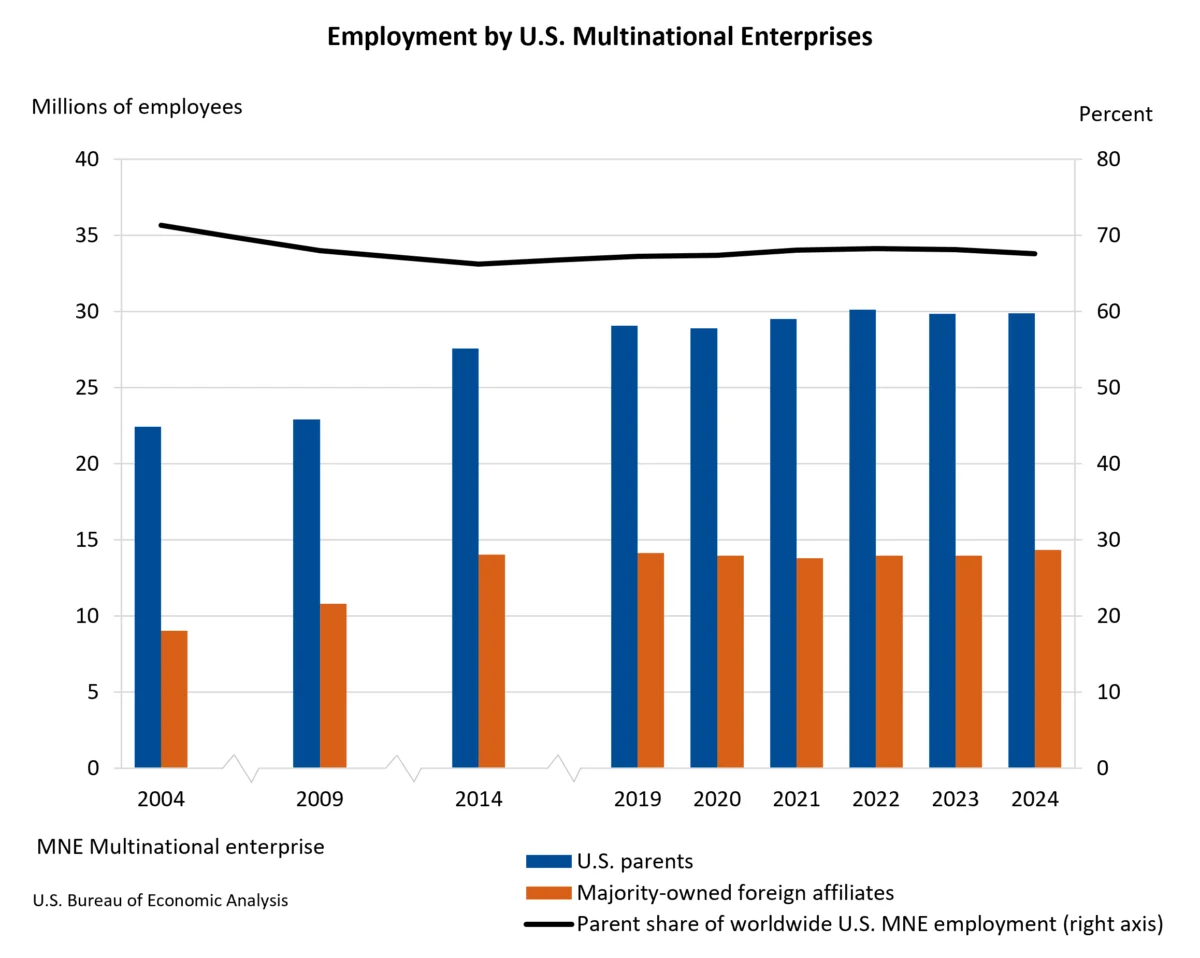
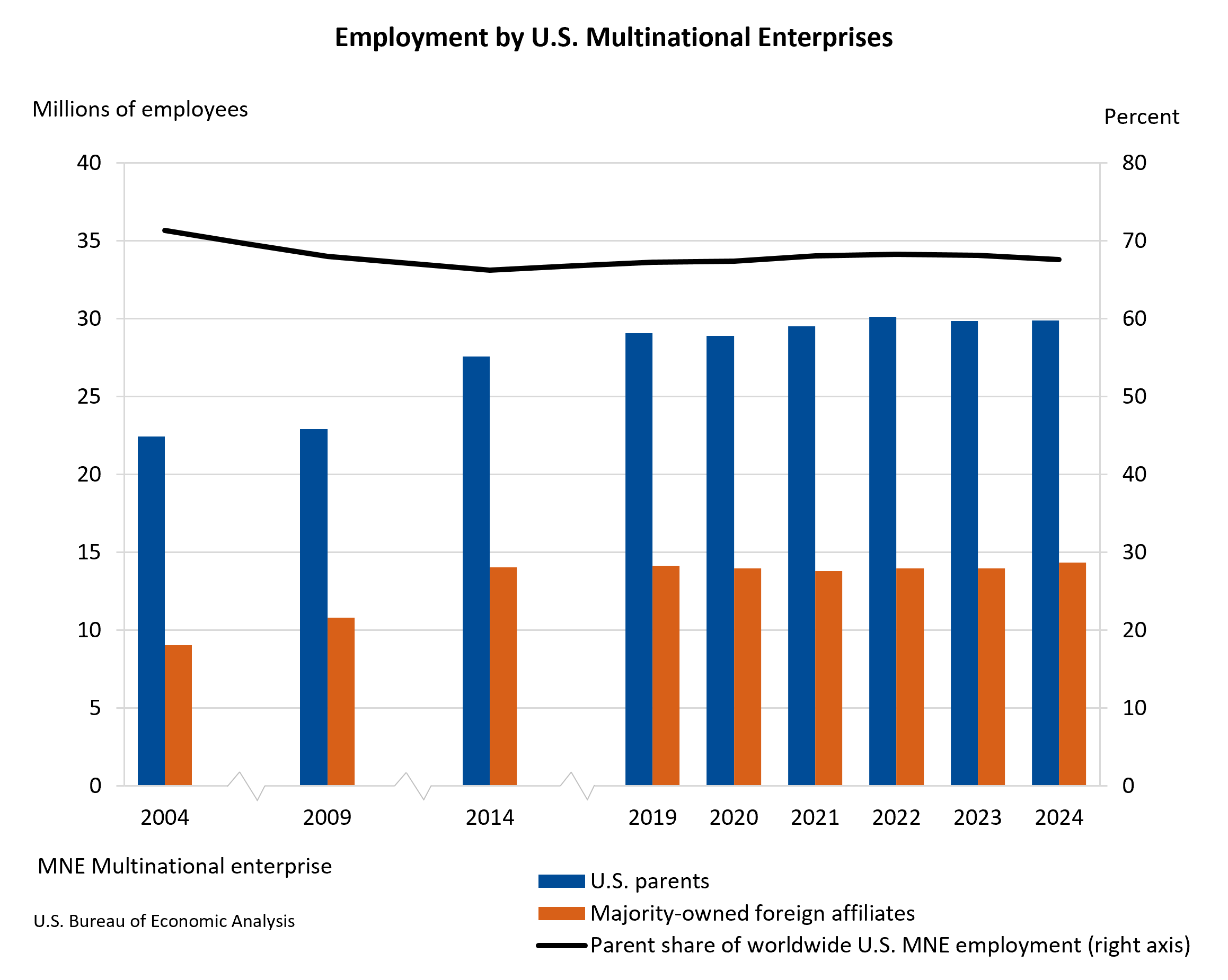
The worldwide employment figures for U.S. multinational enterprises (MNEs) have registered a moderate uptick, increasing by 0.9 percent to reach 44.2 million workers in 2024. This preliminary data, released by the U.S. Bureau of Economic Analysis (BEA), signifies a continued expansion of the global footprint of American businesses. This growth follows a revised figure of 43.8 million workers in 2023, indicating a sustained, albeit gradual, increase in international labor engagement by U.S. parent companies and their majority-owned foreign affiliates.
This latest statistical snapshot provides crucial insights into the operational and financial dynamics of U.S. MNEs, offering a detailed view of both domestic and international activities. The BEA’s comprehensive report, a cornerstone for understanding the global economic contributions of American corporations, highlights a complex interplay between domestic job creation and overseas employment.
Domestic Employment Trends Amidst Global Expansion
Within the United States, employment by U.S. parent companies saw a more subdued growth of 0.1 percent in 2024, reaching 29.9 million workers. Despite this slower pace of domestic job creation, U.S. parents continue to represent the significant majority of employment by U.S. MNEs, accounting for 67.6 percent of the total workforce. This figure, however, represents a slight decrease from 68.1 percent in 2023, suggesting a proportionally larger expansion in overseas operations.
The BEA data further reveals that U.S. parents are substantial contributors to the overall U.S. private industry employment landscape. In 2024, they accounted for 21.7 percent of total private industry employment, a marginal decline from 21.9 percent in the previous year. This sustained high proportion underscores the critical role U.S. multinational corporations play in the domestic job market. The primary sectors benefiting from U.S. parent employment remain manufacturing, a broad category encompassing "other industries" – notably transportation and warehousing – and retail trade.
Overseas Employment Surges, Driving Global Workforce Expansion
In stark contrast to domestic trends, employment abroad by foreign affiliates of U.S. MNEs experienced a more robust expansion, climbing 2.7 percent to 14.3 million workers. This significant increase means that overseas operations now account for 32.4 percent of the total global employment by U.S. MNEs. This differential growth rate points towards a strategic focus on expanding international production, service delivery, and market presence by American multinational corporations.
The leading destinations for this overseas employment are reported to be India, Mexico, and the United Kingdom, countries that consistently attract substantial foreign direct investment and host significant operational bases for U.S. firms. The growth in these regions suggests a continued reliance on global talent pools to support the operational needs of U.S. businesses operating on an international scale.
Economic Value Added: A Measure of Global Economic Impact
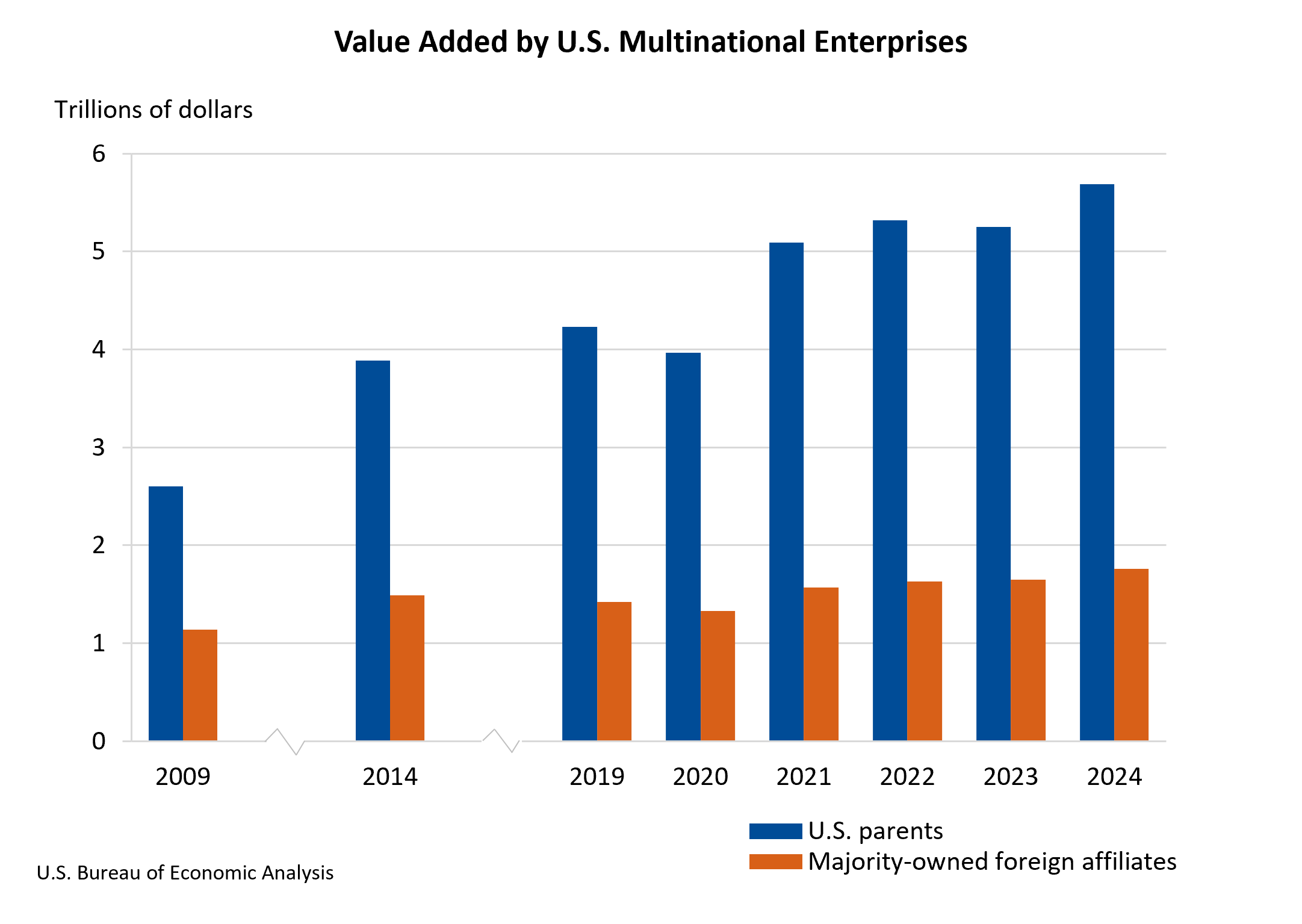
Beyond employment figures, the BEA report details the economic value added by U.S. MNEs, a key indicator of their direct contribution to economic output. Worldwide current-dollar value added by these enterprises surged by an impressive 8.0 percent in 2024, reaching a substantial $7.4 trillion. This robust growth reflects increased productivity, sales, and overall economic activity generated by U.S. multinational corporations across their global operations.
The value added by U.S. parent companies, a direct measure of their contribution to the U.S. Gross Domestic Product (GDP), also saw significant growth, increasing by 8.5 percent to $5.7 trillion. This domestic component represented 21.8 percent of total U.S. private-industry value added, an increase from 21.2 percent in 2023, indicating a strengthening of their economic impact within the United States.
Meanwhile, the value added by foreign affiliates experienced a healthy increase of 6.5 percent, reaching $1.8 trillion. The top contributors to this foreign value added were the United Kingdom, Ireland, and Canada, reflecting strong economic performance and significant operational contributions from U.S. subsidiaries in these key economies. This dual growth in both domestic and international value added underscores the interconnectedness of global business operations and their contribution to both national and international economic prosperity.
Investment in the Future: Capital Expenditures and R&D
The report also sheds light on the investment strategies of U.S. MNEs, particularly in property, plant, and equipment (capital expenditures) and research and development (R&D). Worldwide expenditures for property, plant, and equipment by U.S. MNEs rose by 7.1 percent to $1.2 trillion in 2024. Of this total, U.S. parent expenditures accounted for $968.7 billion, representing a significant 36.5 percent of all U.S. private-business capital expenditures. This strong domestic investment signals a commitment to expanding and modernizing U.S.-based operations.
Expenditures by foreign affiliates on property, plant, and equipment amounted to $216.2 billion. This demonstrates a continued global investment in infrastructure and productive capacity by U.S. companies abroad, supporting their international market strategies and operational efficiencies.
A particularly striking area of growth is in research and development (R&D) expenditures. Worldwide R&D spending by U.S. MNEs saw a significant increase of 10.1 percent, reaching $622.7 billion. U.S. parents were the primary drivers of this innovation investment, accounting for $536.5 billion in R&D expenditures. This figure represents a substantial 69.6 percent of all business R&D performed in the United States, highlighting the central role of U.S. multinational corporations in driving technological advancement and innovation domestically.
R&D expenditures by foreign affiliates also increased, reaching $86.2 billion. This global investment in innovation suggests a strategic approach to tapping into international talent and research ecosystems, fostering a worldwide culture of discovery and development within U.S. multinational enterprises. The BEA’s release marks the first time detailed statistics on U.S. parent shares of domestic R&D and capital expenditures are being published, offering greater transparency into these critical investment areas.
A Look Back: Revisions and Data Refinement
The BEA’s annual release is not only a forward-looking snapshot but also an opportunity to revise and refine previous data. Statistics for 2023 have been updated to incorporate newly available and revised source data, offering a more accurate picture of that year’s economic activities. Preliminary statistics for 2023 were initially released in August 2025, and these subsequent revisions provide a more complete and reliable historical record.
The table below summarizes these key revisions for 2023:
| Metric | U.S. Parents (Preliminary) | U.S. Parents (Revised) | Foreign Affiliates (Preliminary) | Foreign Affiliates (Revised) |
|---|---|---|---|---|
| Number of employees (thousands) | 29,890.6 | 29,841.8 | 14,008.4 | 13,958.5 |
| Value added (Billions of dollars) | 5,265.5 | 5,245.4 | 1,645.6 | 1,648.4 |
| Expenditures for property, plant, and equipment (Billions of dollars) | 886.1 | 891.9 | 216.2 | 214.0 |
| Research and development expenditures (Billions of dollars) | 476.6 | 481.5 | 81.7 | 84.1 |
These revisions, while minor in percentage terms, are crucial for maintaining the integrity and accuracy of economic analysis and forecasting. They reflect the dynamic nature of data collection and the BEA’s commitment to providing the most up-to-date and reliable economic statistics.
Broader Implications and Future Outlook
The data released by the BEA provides valuable insights into the current state and future trajectory of U.S. multinational enterprises. The continued growth in global employment, coupled with a significant surge in both domestic and international investment, suggests a robust outlook for these companies. The increased investment in R&D, in particular, signals a strong focus on innovation and future competitiveness.
The slight decrease in the proportion of domestic employment relative to overseas employment warrants continued observation. While domestic job creation remains strong, the faster growth rate abroad indicates a strategic internationalization of operations. This trend could have implications for domestic labor markets and the distribution of economic activity.
The BEA’s commitment to enhancing data transparency, including the recent update to its disclosure avoidance method, is a positive step towards making more granular economic data accessible to researchers, policymakers, and the public. This improved access to information is vital for informed decision-making and a deeper understanding of the complex global economic landscape shaped by U.S. multinational enterprises.
The next release of statistics on the activities of U.S. multinational enterprises is scheduled for August 20, 2027, which will cover activities in 2025. This upcoming release will undoubtedly provide further insights into the evolving strategies and economic impact of these globally influential corporations. The BEA’s ongoing data collection and analysis are essential for tracking the vital contributions of U.S. MNEs to both the U.S. economy and the global economic system.