Layla Zulfa
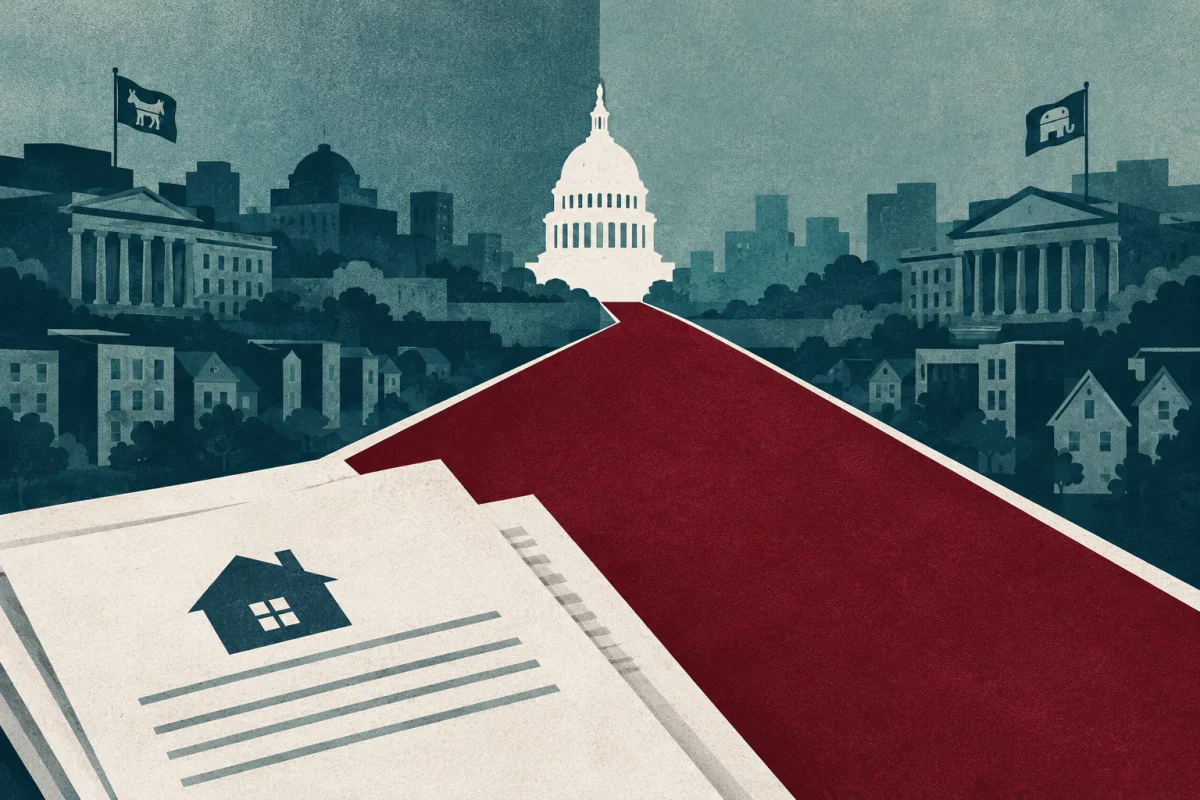
The recent shift in power within Congress, with Democrats securing control of both the House and Senate while the White House remains under Republican leadership, has presented a complex, yet potentially fertile, landscape for housing policy. Despite the inherent divisions in Washington D.C., industry leaders express optimism that there remains significant room for bipartisan collaboration on issues critical to American homeowners and renters. The election outcomes, which saw Democrats capture both chambers, necessitate that any new housing legislation will require the support of President Donald Trump and a sufficient number of Republican votes to pass the Senate, signaling a need for pragmatic compromise.
"Voters made it clear that affordability is a central concern, and housing is the biggest line item in most family budgets," stated Isaac Boltansky, head of public policy at Pennymac. "The ROAD to Housing Act laid a solid foundation, and we believe lawmakers on both sides of the aisle should work on a ROAD to Housing 2.0 package that builds on it and helps more families buy and keep a home." This sentiment underscores a prevailing view within the housing and mortgage sectors: that the fundamental need for accessible and affordable housing transcends partisan divides and presents a compelling area for unified legislative action.
The Road to Affordability: A Call for Policy Evolution
Boltansky elaborated on the potential components of a "Housing 2.0" package, highlighting the need to address systemic issues that hinder market fluidity and affordability. A key concern is the "lock-in effect" exacerbated by capital gains taxes on home sales, which can disincentivize homeowners from moving and thus reduce housing inventory. This phenomenon, where existing low mortgage rates make selling and buying a new home financially prohibitive, contributes to supply constraints and upward pressure on prices. The Neighborhood Homes Investment Act was also cited as a positive starting point, suggesting a focus on incentivizing the rehabilitation and development of affordable housing stock.
The Mortgage Bankers Association (MBA), a prominent trade group representing the mortgage industry, echoed this sentiment of potential bipartisan cooperation. In a statement, the MBA affirmed that housing remains a fundamentally bipartisan issue and pledged to "work with new and returning lawmakers as well as the Trump administration to advance common sense proposals to lower costs." This proactive stance indicates a readiness to engage with the incoming legislative bodies and the executive branch to identify and champion policy solutions.
In October, the MBA released a comprehensive policy road map designed to tackle rising housing costs. This roadmap outlines several key proposals aimed at reducing closing costs, enhancing credit access for a broader range of borrowers, and lowering financing costs for rental housing. Specific recommendations include easing the use of tri-merge credit reports, which can provide a more holistic view of a borrower’s creditworthiness; aligning loan-level price adjustments (LLPAs) to ensure fairness and transparency; and reducing the annual mortgage insurance premium (MIP) for Federal Housing Administration (FHA) loans, a move that could significantly lower the upfront and ongoing costs for FHA-insured borrowers, many of whom are first-time homebuyers. These proposals demonstrate a clear understanding of the multifaceted challenges within the housing market and offer concrete, data-driven solutions.
"Every Election Brings Opportunity": A New Legislative Chapter
Scott Norman, CEO of the Texas Mortgage Bankers Association, articulated a perspective that frames electoral shifts not as disruptions, but as inherent mechanisms for policy recalibration. "It was a surprising night, but every election brings opportunity," Norman told HousingWire. "In Austin and in Washington, a gavel is something you borrow, and last night voters took a few back. That’s the system working as designed. No chairmanship belongs to the person holding it, and no majority is permanent. In much of the world, a change in power signals a crisis. Here, it simply means new leadership and a fresh look at policy." This viewpoint emphasizes the cyclical nature of American governance and the potential for new administrations and legislative bodies to re-evaluate and refine existing policies. The recent election, by altering the composition of congressional leadership, opens the door for previously stalled or overlooked initiatives to gain traction.
The American Land Title Association (ALTA) highlighted another crucial aspect of housing policy: consumer protection. As policymakers grapple with affordability challenges, ALTA stressed the imperative to maintain a strong focus on safeguarding consumers from fraudulent activities. "Fraud is unaffordable, and increasingly sophisticated schemes are putting American homeowners and their property rights at risk," ALTA stated. This concern is particularly relevant in an environment where market dynamics might create vulnerabilities for consumers. The rise of digital transactions and complex financial instruments necessitates robust defenses against emerging forms of fraud, such as wire fraud and title fraud, which can have devastating financial consequences for individuals and erode confidence in the housing market.
"A Mandate to Focus on Pocketbook Issues": Economic Realities and Policy Imperatives
Jake Krimmel, senior economist at Realtor.com, observed that many Democratic campaigns strategically emphasized economic issues, suggesting a public mandate for policies that address immediate financial concerns. However, Krimmel cautioned that the precise impact of the election results on the broader economy and, crucially, on mortgage rates remains uncertain. "Democrats have a clear mandate to focus on pocketbook issues, but whether they can translate that into a legislative agenda that delivers on that mandate remains to be seen," Krimmel commented. This highlights the critical distinction between electoral promises and legislative execution, a challenge amplified by the divided government structure.
Krimmel also pointed to geopolitical factors, specifically the conflict in the Middle East, as a significant variable influencing economic stability and, by extension, housing affordability. He noted that the election outcome’s effect on the Iran war, a known source of inflationary pressure, is a key uncertainty. Democrats have generally been vocal critics of the conflict, and any resolution that leads to an improvement in global oil supply could potentially ease inflationary pressures and provide relief for mortgage rates. The intricate relationship between global events, energy prices, inflation, and interest rates underscores the complex web of factors influencing the housing market, making a clear path forward challenging. "Wanting the conflict to end, and finding terms that work for all involved are two different things," Krimmel remarked, underscoring the diplomatic complexities involved.
Further complicating the fiscal landscape, Boltansky projected another potential debt ceiling confrontation in 2027. "Any focus on addressing the country’s harrowing fiscal trajectory would be welcome for the bond market, which obviously has a direct impact on rates," he stated. A stable fiscal outlook is fundamental to investor confidence and can contribute to lower borrowing costs across the economy, including for mortgages. The prospect of fiscal uncertainty, however, could inject volatility into the bond market, leading to higher mortgage rates and further straining housing affordability.
"No Overnight Rewrite of the Rules": Navigating Executive Authority and Regulatory Implementation
While Congress holds the power to set agendas, control oversight, and shape spending, the implementation of housing and mortgage regulations will continue to be significantly driven by the executive branch. Tim Rood, founder and CEO of Impact Capitol, a Washington D.C.-based advisory and technology firm, provided insight into this dynamic. In his newsletter, Rood detailed how Democratic majorities can influence legislative priorities by controlling the agendas for key committees such as the House Financial Services and Senate Banking committees. They can also leverage their oversight powers to investigate agencies, influence spending negotiations, and potentially withhold Senate confirmation of presidential nominees.
However, Rood emphasized that President Trump retains substantial executive authority, and leadership within regulatory agencies does not automatically shift with congressional power. "The real fight will be over which existing policies can still be executed, funded, and defended," he asserted. This suggests that while legislative efforts can reshape the policy landscape, the practical application and enforcement of those policies will depend heavily on the actions and priorities of the executive branch and its appointed officials. For mortgage executives, this new alignment portends an increase in congressional hearings, more rigorous confirmation processes for nominees, and a more contested calendar for policy implementation, rather than an immediate overhaul of existing regulations.
A particularly closely watched appointment is the nomination of Brian Johnson to lead the Consumer Financial Protection Bureau (CFPB). An attorney familiar with the process indicated to HousingWire that this confirmation is now at risk. Democrats may leverage this appointment as a bargaining chip in broader negotiations, potentially demanding greater representation across various financial agencies in exchange for their support. This highlights the intricate political maneuvering that often accompanies high-stakes appointments in a divided government.
Furthermore, an industry priority – revisions to the loan originator compensation rule – remains unresolved. The attorney noted that there are aspects of this rule that could benefit from bipartisan support, such as increasing credit availability by allowing lenders greater flexibility in clawing back compensation in specific situations or fostering a more competitive lending environment. However, the path forward for such coordinated policy action remains uncertain. "Maybe something will happen that is coordinated, but I think it’s kind of open in the air at the moment," the attorney concluded, reflecting the ongoing fluidity and unpredictability of the legislative process in the current political climate. The impact of these unresolved regulatory issues on the housing market and consumer access to credit will be a key area to monitor in the coming months.