Lana Rhoades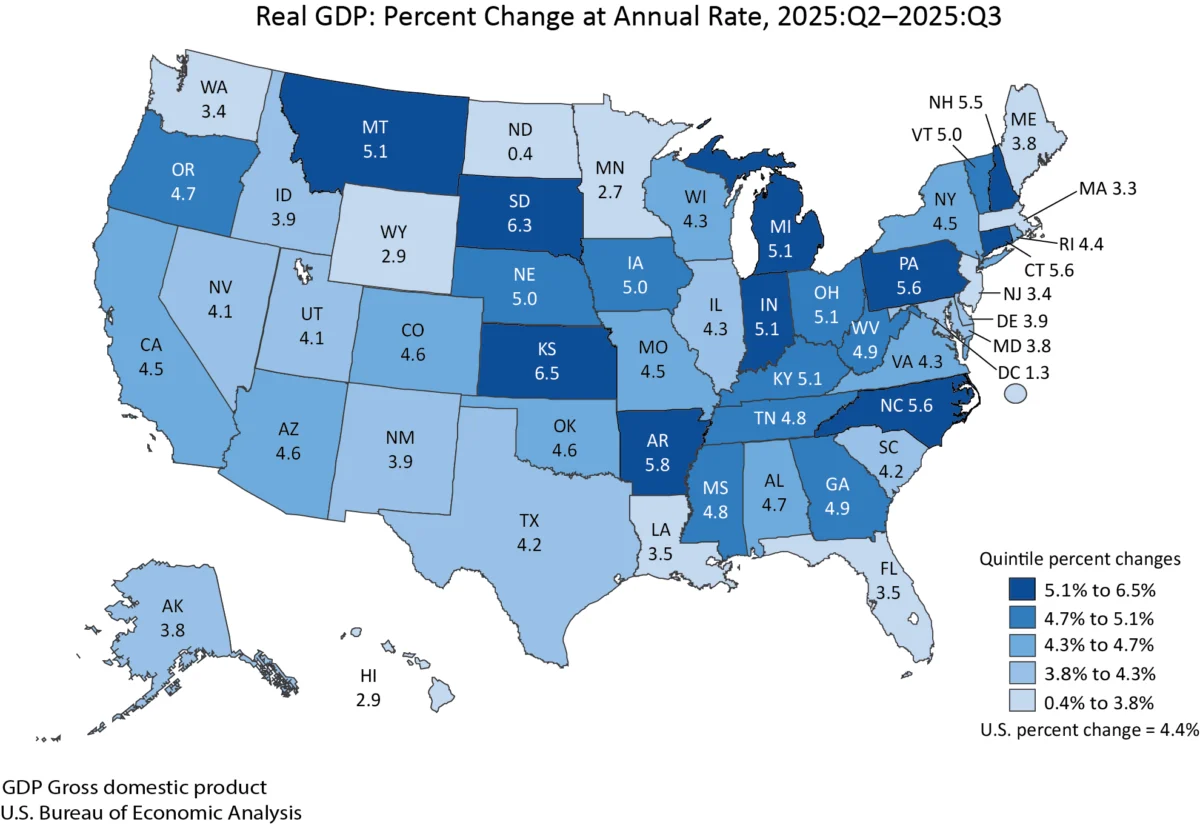
The U.S. Bureau of Economic Analysis (BEA) has unveiled its comprehensive third-quarter 2025 economic report, detailing a robust expansion across all 50 states and the District of Columbia. The data, released today, showcases a significant increase in Gross Domestic Product (GDP) and a widespread rise in personal income, painting a picture of a dynamic and resilient national economy during July, August, and September of last year. This latest release also includes important updates to previously published state-level economic statistics and signals forthcoming changes in how the BEA will present its national and state data.
Broad-Based Economic Expansion Fuels National GDP Growth
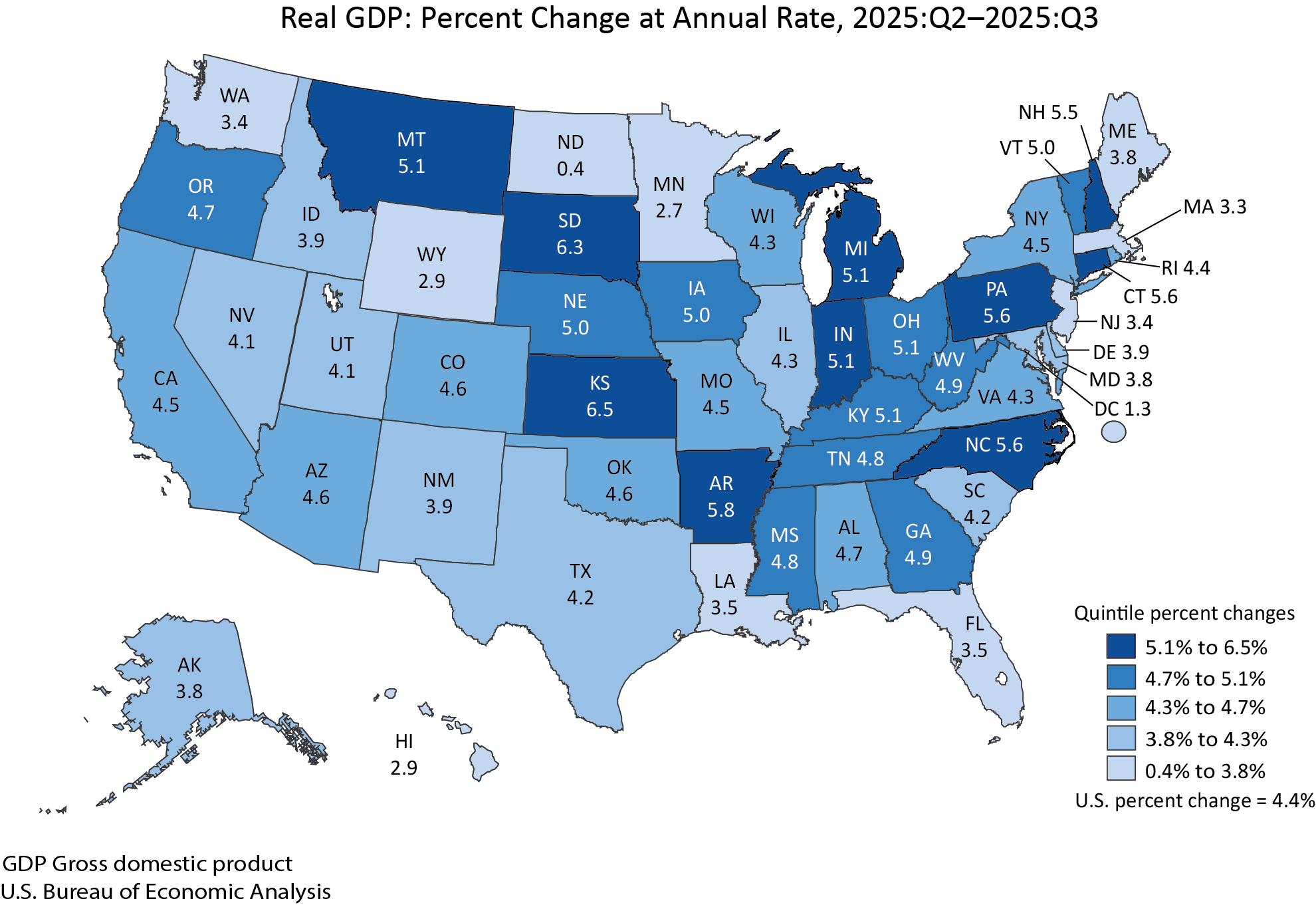
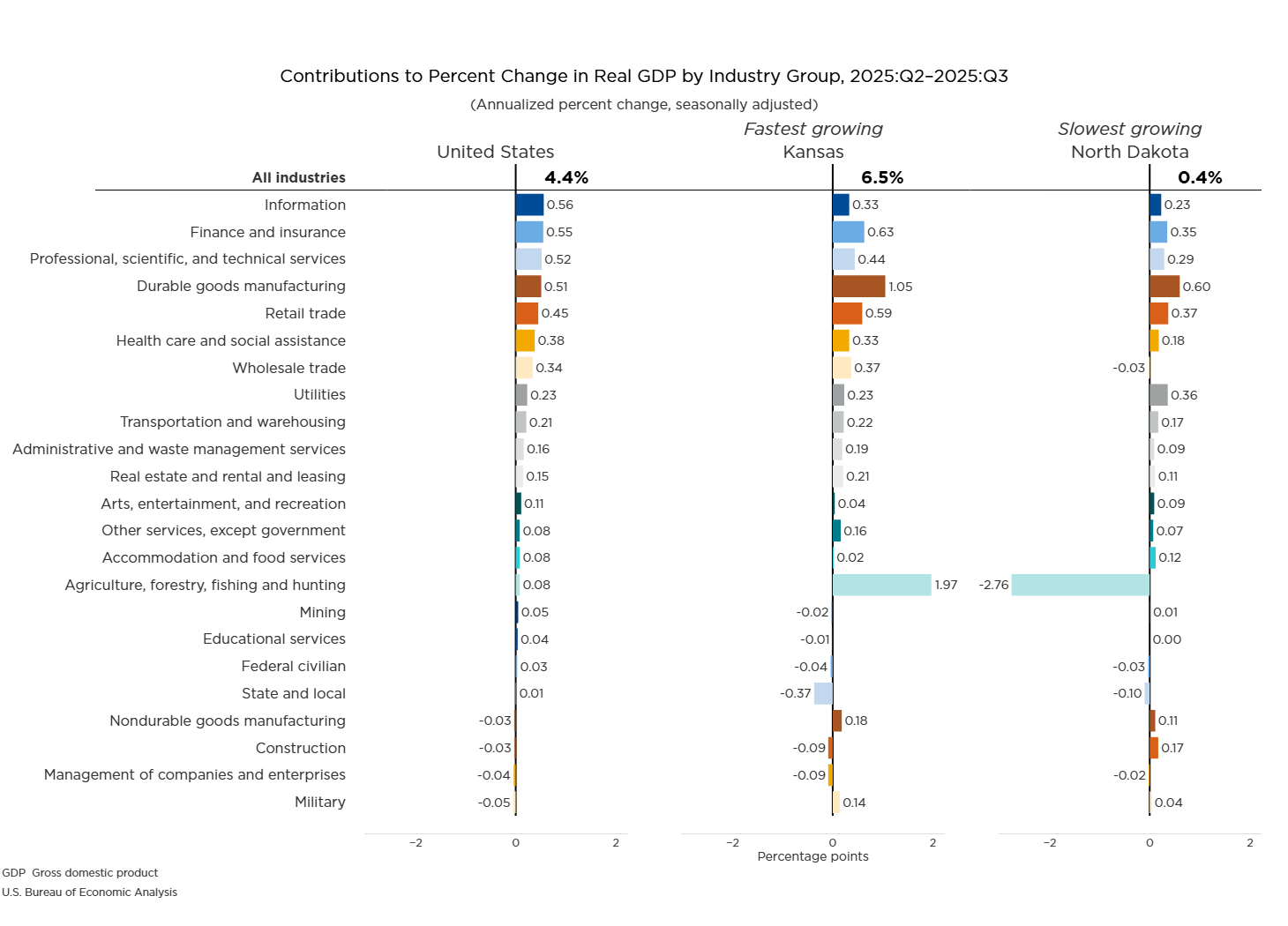
The most striking finding from the BEA’s report is the universal growth in real GDP, which saw an annual rate increase of 4.4 percent nationwide. This broad-based expansion signifies a healthy economic environment where nearly every region contributed to the upward trend. The disparity in growth rates among states was notable, with Kansas leading the pack at an impressive 6.5 percent annual increase in real GDP, while North Dakota experienced a more modest, yet still positive, growth of 0.4 percent. This range highlights the diverse economic engines operating within the United States, influenced by a multitude of local and regional factors.
The report further dissects this growth by industry, revealing that 19 out of the 23 industry groups tracked by the BEA contributed to the expansion of real GDP at the state level. Dominant sectors fueling this national surge included information technology, finance and insurance, and professional, scientific, and technical services. These industries, often characterized by innovation and high-value output, played a pivotal role in driving economic activity not only nationally but also in a substantial portion of individual states. The resilience and growth of these knowledge-based sectors underscore their increasing importance in the modern U.S. economy.
Additionally, the durable-goods manufacturing sector demonstrated a significant impact on GDP growth in several states. This indicates that traditional manufacturing, when strategically positioned and innovative, continues to be a vital component of economic prosperity. The interplay between these diverse industries – from cutting-edge technology and financial services to tangible goods production – creates a complex and interconnected economic ecosystem that is currently experiencing a strong upward trajectory.
The BEA also reported an increase in current-dollar GDP across all states and the District of Columbia, with a national annual growth rate of 8.3 percent. This figure, which does not adjust for inflation, reflects the overall value of goods and services produced. Kansas again stood out with a remarkable 10.5 percent increase in current-dollar GDP, while North Dakota recorded a 2.6 percent rise. The larger gap between real and current-dollar GDP growth rates in many states suggests that inflationary pressures, while present, are being outpaced by actual increases in economic output and economic activity value.
Personal Income Sees Widespread Gains Across the Nation
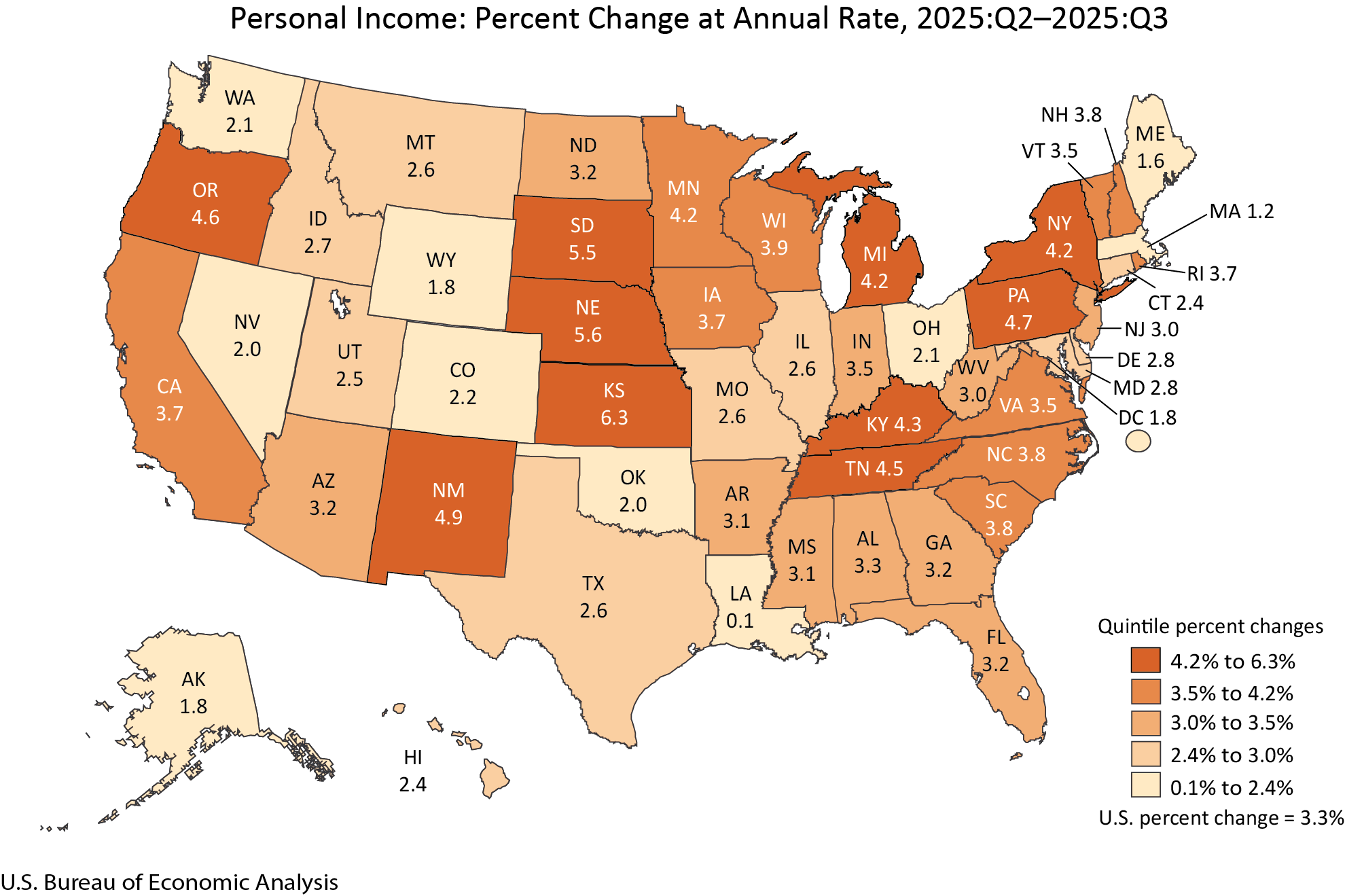
Complementing the strong GDP performance, personal income also experienced a broad-based increase in the third quarter of 2025, with all 50 states and the District of Columbia reporting gains. This is a crucial indicator of household financial well-being and consumer spending potential. Nationally, current-dollar personal income rose at an annual rate of 3.3 percent. Similar to GDP, there was a variation in growth rates among states, with Kansas again demonstrating robust growth at 6.3 percent, while Louisiana saw a more subdued increase of 0.1 percent.
The BEA’s analysis attributes this rise in personal income to the collective performance of its key components: earnings, transfer receipts, and property income (which includes dividends, interest, and rent). Notably, earnings, the largest component of personal income, increased in every state and the District of Columbia. This widespread growth in earnings suggests improvements in employment and wage levels across the country, a positive sign for the economic health of American households. The consistent increase across all components of personal income signifies a well-rounded economic recovery that benefits individuals through various income streams.
Context and Background: The BEA’s Role in Economic Measurement
The U.S. Bureau of Economic Analysis is the primary federal agency responsible for measuring the nation’s economic performance. Its quarterly reports on GDP and personal income are critical for policymakers, businesses, and the public to understand the current economic climate, identify trends, and make informed decisions. The data released today for the third quarter of 2025 builds upon a long history of economic tracking, providing a vital snapshot of economic activity during a period of significant global and domestic economic developments.
The BEA’s methodology involves collecting vast amounts of data from various government agencies and private sources, which are then analyzed and synthesized to produce estimates. The quarterly releases are subject to revision as more complete data becomes available, a process highlighted by the BEA’s announcement of updated state statistics. This commitment to refining its estimates ensures the accuracy and reliability of its economic indicators.
Updates to State Economic Statistics and Future Reporting Changes
In addition to the Q3 2025 data, the BEA also released revised quarterly estimates for personal income by state for the first and second quarters of 2025. These revisions are a standard part of the BEA’s statistical process, incorporating new and more detailed source data that was not available at the time of the initial releases. These updates are crucial for maintaining the integrity of historical economic data and ensuring that state-level figures align with the national economic accounts.
Furthermore, the BEA announced upcoming changes to its publication schedule and format. Beginning April 9, 2026, the BEA will consolidate national and state economic data releases. This new integrated approach will present GDP, GDP by industry, corporate profits, and state-level GDP and personal income statistics simultaneously. The goal of this change is to provide a more holistic and synchronized view of the U.S. economy, allowing users to more easily access and analyze interconnected economic data. This move is expected to enhance efficiency and provide a more comprehensive understanding of economic performance at both national and sub-national levels.
The BEA also noted recent changes in how its data tables are presented. Previously embedded within news releases, detailed data tables are now exclusively available through the BEA’s online Interactive Data Application. This shift aims to streamline data access, offering users greater flexibility in customizing, downloading, and analyzing historical and current data in various formats, including PDF, Excel, and CSV. This modernization of data delivery is intended to empower data users with more direct and efficient access to the BEA’s extensive statistical resources.
Broader Implications and Economic Analysis
The strong performance reported for Q3 2025 suggests a period of sustained economic momentum. The broad-based GDP growth across all states indicates that the economic recovery is not concentrated in a few isolated regions but is rather a widespread phenomenon. This can be attributed to a combination of factors, potentially including consumer resilience, business investment, and the continued strength of key sectors like technology and finance.
The rise in personal income, particularly driven by earnings, is a positive indicator for consumer confidence and spending. As households see their incomes grow, they are more likely to engage in discretionary spending, which in turn can further stimulate economic activity. This creates a virtuous cycle where economic growth fuels higher incomes, which then fuels more economic growth.
However, it is also important to consider the context of inflation. While real GDP growth measures the increase in the volume of goods and services, current-dollar GDP reflects both volume and price changes. The higher growth rate in current-dollar GDP compared to real GDP in many states suggests that price increases are a contributing factor to the overall nominal economic expansion. Policymakers will likely continue to monitor inflation closely to ensure that economic growth is sustainable and does not outpace the ability of households and businesses to absorb rising costs.
The industry-specific drivers of growth – information, finance, and professional services – highlight the ongoing shift towards a more service-oriented and knowledge-based economy. The continued strength of these sectors suggests that investments in education, innovation, and technology will remain crucial for future economic prosperity. The resilience of durable-goods manufacturing in certain regions also points to the importance of maintaining a diversified industrial base.
The BEA’s commitment to providing timely and accurate economic data is fundamental to understanding the complex dynamics of the U.S. economy. The upcoming integration of national and state data releases promises to be a significant step forward in making this information more accessible and actionable. As the nation navigates the evolving economic landscape, these comprehensive reports will continue to serve as an indispensable guide for economic analysis and policy development.
The next major release from the BEA is scheduled for April 9, 2026, at 8:30 a.m. EDT, which will cover the fourth-quarter and full-year 2025 GDP and personal income data for states, alongside national estimates for GDP, industries, and corporate profits. This upcoming release will provide a comprehensive picture of the nation’s economic performance throughout 2025.