Layla Zulfa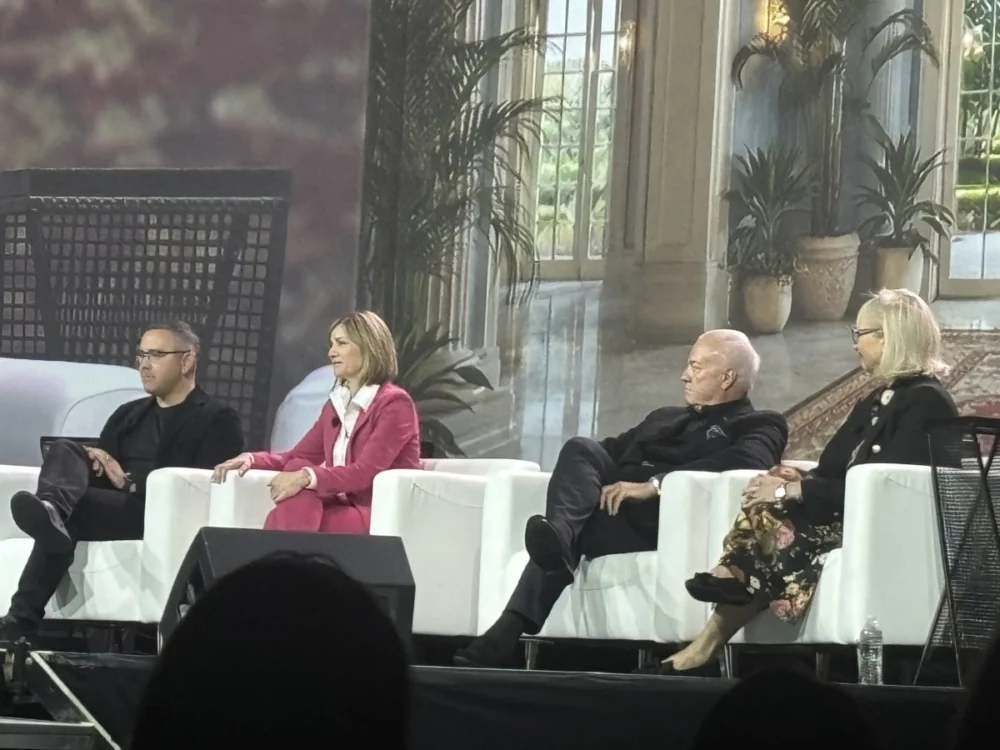
The real estate industry, perpetually characterized by its inherent volatility, is currently navigating a complex landscape shaped by consolidation, evolving commission structures, and rapid technological advancements. Amidst these significant shifts, a prevailing message emerged from a distinguished panel of brokerage leaders, moderated by Paul Boomsma, president and CEO of Leading Real Estate Companies of the World (LeadingRE). The core tenet underscored by these industry veterans was the paramount importance of perspective in charting a successful course forward. This sentiment served as the foundational tone for discussions that delved into how independent brokerages are not only adapting to these dynamic forces but also steadfastly preserving their unique identities. The esteemed panel comprised Nick Boyd of Belle Property Australia, Dava Davin of Portside Real Estate Group, Mike Hickman of Seven Gables Real Estate, and Jill Butler of RedKey Realty Leaders, each offering distinct yet interconnected insights into the future of brokerage operations.
Global Perspectives on Productivity: Learning from International Markets
Nick Boyd, representing Belle Property Australia, provided a crucial reminder that the pressures confronting the U.S. real estate market are far from isolated. His presence at the event, having traveled from Australia, highlighted the interconnectedness of global real estate trends and the value of cross-border learning. Belle Property, a significant player in the Australian market, boasts a robust network of 211 offices and a team of approximately 3,500 professionals. The company’s annual sales volume, equivalent to roughly $14 billion USD, underscores its substantial market presence.
However, Boyd’s emphasis extended beyond sheer volume, focusing instead on the critical metric of agent productivity. He proudly noted that, on average, each agent within the Belle Property network completes 28 deals annually. Given that Australian agents often manage both sides of a transaction, this translates to an impressive average of approximately 56 sides per agent each year. This level of productivity is particularly noteworthy when considering the unique economic dynamics of Australia’s listing ecosystem.
The cost of real estate portals in Australia presents a significant operational challenge for agents. Boyd explained that securing a digital presence on these platforms for a single listing can incur expenses of up to $10,000 USD. This substantial cost has necessitated a strategic shift towards vendor-paid advertising, a model that Belle Property has effectively embraced. "We’ve gotten really good at this beautiful [thing] called vendor-paid advertising, and we fundamentally drive our market on the seller paying for advertising now," Boyd stated, illustrating a proactive approach to managing listing expenses and ensuring market visibility.
For Boyd, the ability to adapt is the defining characteristic for brokers anticipating the challenges and opportunities of 2026 and beyond. His pragmatic outlook serves as a stark warning against complacency: "If you think, ‘Oh, I wish it was how it was,’ you’ll lose. If you don’t accept change, it’s going to change without you." This philosophy underscores the necessity of embracing evolution rather than resisting it, a principle vital for sustained success in a rapidly transforming industry.
Culture as the Ultimate Differentiator: Building Authentic Connections
While Nick Boyd focused on operational efficiencies and market adaptations, Dava Davin of Portside Real Estate Group zeroed in on a less tangible, yet profoundly powerful, element: organizational culture. Portside Real Estate Group operates within the picturesque coastal regions of Maine and New Hampshire, an area Davin affectionately describes as "a beautiful part of the state." In an increasingly saturated brokerage landscape, Davin posits that authenticity is the key to establishing a distinct and memorable presence.
"It’s such a crowded market out there, and I think that culture is the ultimate differentiator," Davin articulated. She elaborated on how fostering genuine connections with both agents and consumers has been instrumental in maintaining Portside’s relevance. "Agents and consumers realizing that I’m an actual person, not a holding company… has helped us stay connected in our communities." This emphasis on personal interaction and genuine engagement stands in contrast to the often impersonal nature of larger corporate entities.
Davin highlighted a successful initiative that exemplifies this commitment to local engagement: "Coffees on Us." This annual program involves Portside Real Estate Group partnering with independent coffee shops across Maine. "We actually have 50 coffee shops participating," Davin shared, pointedly excluding large chains like Starbucks and Dunkin’ Donuts to underscore their dedication to supporting truly local enterprises. This initiative provides a tangible avenue for agents to connect with their spheres of influence while simultaneously bolstering small businesses within their communities, thereby reinforcing the brokerage’s deeply ingrained local-first identity. "It’s like that kind of thing that we just lean into, and that has really helped with our presence and our branding," she concluded, emphasizing the strategic value of such community-focused programs.
Coaching as a Competitive Advantage: Empowering People Over Tools
As Seven Gables Real Estate commemorates its 50th anniversary, Mike Hickman shared insights into the brokerage’s journey toward differentiation, attributing its success to a strategic investment in leadership development and coaching. "Our niche in the market has always been… how do we stand out in the sea of sameness?" Hickman posed, framing the core challenge faced by many established brokerages.
Seven Gables Real Estate has made significant investments in performance coaching for both its agents and management team, with a deliberate focus on empowering individuals rather than solely relying on technological solutions. Hickman proudly reported that this approach has yielded remarkable results, with the brokerage ranking number one in Orange County, California, for Production Per Person (PPP). This metric signifies a highly efficient and productive agent base.
While acknowledging the role of technology, including artificial intelligence, Hickman clarified that it is not the primary driver of their strategy. "AI is not our strategy at all," he stated. "Our strategy is focus." Instead, Seven Gables leverages AI as a tool to streamline administrative tasks, thereby freeing up managers to dedicate more time and energy to critical functions such as recruiting and coaching. This strategic allocation of resources has yielded quantifiable improvements. "We’ve actually been able to quantify it now and say that our managers are 24% more effective in their use of time," Hickman reported. This enhanced managerial effectiveness allows leadership teams to foster stronger relationships with agents, a crucial element that larger, more dispersed organizations often find challenging to maintain.
Opportunity in Consolidation: Independent Brokerages Finding Their Niche
For Jill Butler, the founder of RedKey Realty Leaders in St. Louis, the prevailing wave of mergers and acquisitions within the brokerage sector has unexpectedly created fertile ground for independent firms. "I think it’s actually a great time right now," Butler declared, expressing a sense of optimism and fortune for her position as an independent broker.
As national companies consolidate and expand their footprints, Butler observed a growing segment of agents re-evaluating their allegiances. "We’re getting calls from people who say, ‘I don’t want to be in a huge company,’" she revealed. This sentiment suggests a yearning for more personalized environments and a desire to escape the perceived anonymity of mega-brokerages.
In many instances, agents who had previously departed for larger firms are now returning to independent brokerages like RedKey Realty Leaders. Butler attributed this trend to a recalibration of priorities. "Sometimes brokerages were writing big checks, and it sounded really exciting," she explained. "And then later… [the agents] kind of look at things, decide that where they were was a better fit for them." The allure of substantial financial incentives can often wane when compared to the tangible benefits of strong local leadership, direct support, and a sense of community. "I think having leadership in town, people there to help, that’s what’s really important," Butler emphasized, highlighting the enduring value of accessible and responsive guidance.
Relationships Remain the Bedrock of the Business: Enduring Human Connections
Despite ongoing discussions surrounding artificial intelligence, the evolving role of real estate portals, and the pervasive trend of industry consolidation, Nick Boyd reiterated a fundamental truth about the real estate business: its core remains intrinsically linked to human connection. "There are three elements… relationships, moments, and the memories of those relationships and moments," Boyd stated.
He argued that when the complexities and distractions of technology are stripped away, the foundational principles of the industry become undeniably clear. "It does not matter," he asserted. "It comes down to how many relationships you have on a daily basis." This profound insight serves as the industry’s most enduring and constant principle. Even as business models undergo transformation and profit margins face increasing pressure, the firms poised for sustained success are likely those that prioritize and nurture the human element of the business. This includes fostering strong connections with their agents, diligently serving their clients, and actively contributing to the communities in which they operate. The ability to cultivate and maintain these vital relationships, it appears, will continue to be the most reliable indicator of long-term prosperity in the ever-evolving real estate landscape.