Nila Kartika Wati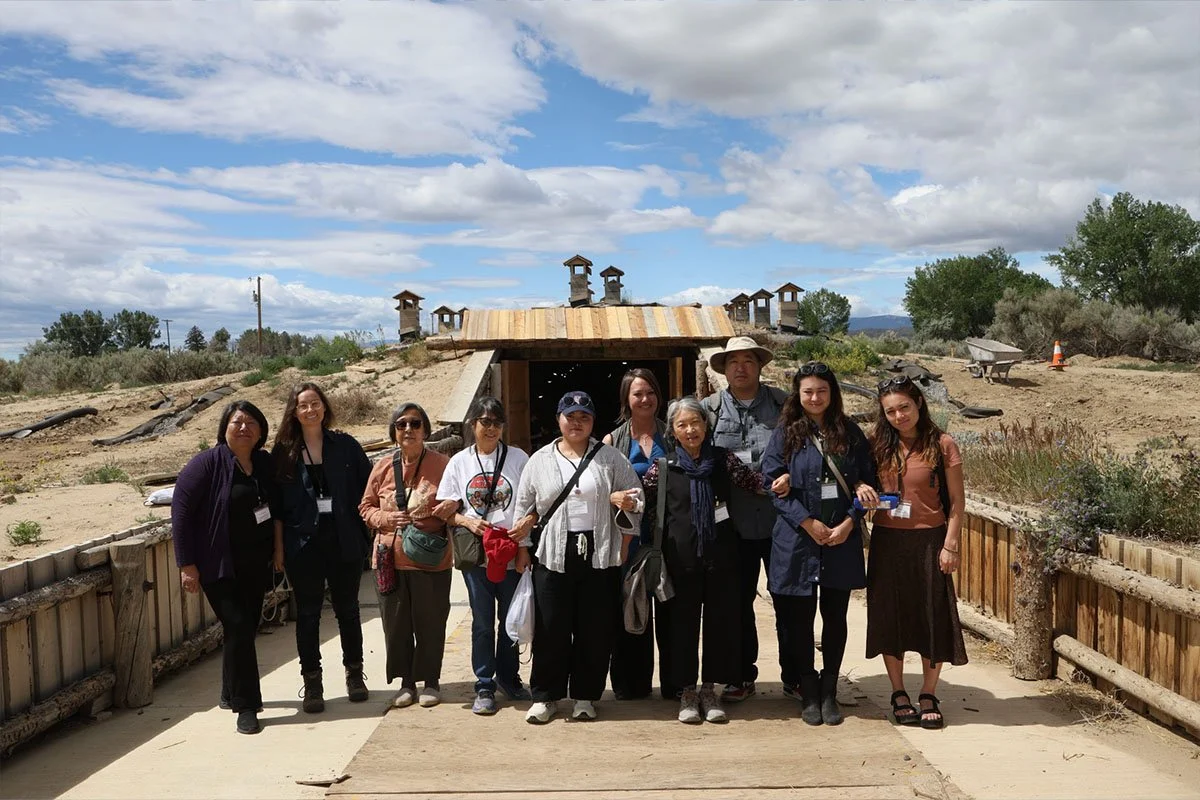
On June 30, as the United States approached the 250th anniversary of its founding, a delegation of 125 community organizers, artists, philanthropists, and civic leaders from 21 states convened at the base of Heart Mountain in Powell, Wyoming. The gathering, organized by the AAPI Civic Engagement Fund, served as a solemn pilgrimage to one of the ten primary incarceration sites where Japanese Americans were held during World War II. Under the banner "We were here before. We will be here after," the group sought to integrate one of the nation’s darkest chapters into the broader narrative of the American semi-quincentennial, arguing that a true national reckoning requires acknowledging both the country’s democratic promises and its historical betrayals.
The Historical Context of Executive Order 9066
The Heart Mountain Relocation Center was established following the signing of Executive Order 9066 by President Franklin D. Roosevelt on February 19, 1942. This order authorized the forced removal of more than 120,000 individuals of Japanese ancestry—two-thirds of whom were U.S. citizens—from the West Coast. These individuals were relocated to inland concentration camps without formal charges, trials, or due process.
Heart Mountain, located between the towns of Powell and Cody, became the third-largest "city" in Wyoming during its operation. At its peak, it held 14,025 people. The site was chosen for its isolation and its proximity to the Shoshone River, where incarcerated laborers were forced to build irrigation systems that would benefit the region’s agricultural development long after their release.
The recent pilgrimage included descendants of those held at the camp, such as Lisa Hasegawa, co-author of the initial reflections on the event. Her father was incarcerated at Heart Mountain as a child between the ages of two and five. For many descendants, the visit served as a collective bearing of witness, ensuring that the personal trauma of their ancestors is recognized as a pivotal component of the American story.
A Chronology of Injustice and Resistance
The history of Heart Mountain is often framed through the lens of victimization, but the June 30 gathering emphasized a timeline of active resistance and complex loyalty.
In 1944, Heart Mountain became the site of the largest mass trial in Wyoming’s history. Sixty-three Japanese American men, known as the Fair Play Committee, refused to be drafted into the U.S. military while their families remained behind barbed wire. They argued that they would not serve a country that stripped them of their constitutional rights. These men were ultimately sentenced to three years in federal prison for draft evasion, though they were later pardoned by President Harry Truman in 1947.
Simultaneously, other young men from Heart Mountain joined the 442nd Regimental Combat Team, a segregated unit composed almost entirely of second-generation Japanese Americans (Nisei). The 442nd became the most decorated unit in U.S. military history for its size and length of service, earning more than 18,000 individual decorations, including 21 Medals of Honor and 9,486 Purple Hearts. This paradox—fighting for democracy abroad while being denied it at home—remains a central theme in the site’s interpretive education.
Archaeological and Educational Preservation
The group began their visit at the Heart Mountain Interpretive Center, an award-winning museum designed to evoke the aesthetic of the original tar-paper barracks. The center’s exhibits detail the daily lives of the incarcerated, from the harsh Wyoming winters to the communal mess halls and latrines.
A significant portion of the tour focused on the physical remnants of the camp, including the hospital complex and a reconstructed guard tower. Participants also visited the root cellar, a massive underground structure built by the incarcerated to store vegetables like daikon radishes and napa cabbage. These crops were cultivated in the arid Wyoming soil through the sheer ingenuity and agricultural expertise of the Japanese American community, who managed to produce enough food to supplement the meager rations provided by the government.
The pilgrimage also incorporated the perspectives of Indigenous communities. Docent Johnny Tim reminded the visitors that the land occupied by Heart Mountain was originally the ancestral territory of the Crow, Blackfeet, and Shoshone peoples. This layer of history highlights a recurring pattern of federal land seizure and dispossession that preceded the events of 1942.
Data and the Economic Impact of Incarceration
The forced removal of Japanese Americans resulted in catastrophic economic losses that were never fully compensated. In 1942, Japanese Americans owned or operated more than 6,000 farms on the West Coast, producing nearly 40 percent of California’s commercial vegetables. Upon their forced removal, most were given only days to sell their property, leading to the loss of homes, businesses, and land valued at hundreds of millions of dollars in 1940s currency—billions in today’s market.
The Civil Liberties Act of 1988, signed by President Ronald Reagan, eventually provided a formal apology and $20,000 in restitution to each surviving victim. The act was the culmination of the "Redress Movement," a decades-long organizing effort by the Japanese American community. However, the June 30 participants noted that the struggle for justice did not end with the 1988 Act; rather, it set a precedent for ongoing civil rights advocacy.
Cross-Racial Solidarity and Modern Implications
The AAPI Civic Engagement Fund has intentionally designed its annual gatherings to foster cross-racial solidarity. In 2023, the organization brought leaders to the Legacy Museum and the National Memorial for Peace and Justice in Montgomery, Alabama. That site, founded by the Equal Justice Initiative, documents the history of enslavement, lynching, and mass incarceration of Black Americans.
The transition from Montgomery to Heart Mountain was a deliberate choice to show the "interwoven expressions of the same logic" that has historically determined which groups are protected by American law. Organizers emphasized that the incarceration of Japanese Americans was not an isolated wartime "mistake" but a calculated political move. Historical records show that the Justice Department and the FBI had already identified and detained "dangerous" individuals after Pearl Harbor, and that the mass incarceration of 120,000 people was deemed unnecessary by several military and intelligence officials at the time.
Today, the Japanese American community remains active in broader social justice movements. They have utilized the legacy of Heart Mountain to advocate against the 2017 "Muslim Ban," protest the separation of families at the U.S.-Mexico border, and support the movement for Black reparations. By linking their history to the struggles of other marginalized groups, they aim to build a "cross-constituency alliance" capable of defending democratic institutions.
Analysis: The Role of Memory in a Divided Democracy
The gathering at Heart Mountain arrives at a time of heightened national debate over how American history is taught and memorialized. As the country prepares for its 250th anniversary in 2026, there is a clear tension between celebratory "patriotic" narratives and those that demand a critical examination of systemic failures.
A nation that can hold the reality of Heart Mountain within its founding narrative, organizers argue, is more resilient against modern efforts to divide the electorate along racial or ethnic lines. The site serves as a physical reminder of what happens when the rule of law is subverted by "race prejudice, war hysteria, and a failure of political leadership"—the three factors cited by the 1982 Commission on Wartime Relocation and Internment of Civilians.
As the delegation from 21 states departed the Wyoming desert, the message was clear: the 250th anniversary must be more than a celebration of independence. It must be a moment of profound reflection on the fragility of civil liberties. The experience of the 125 organizers suggests that the communities who have survived the nation’s hardest chapters are often the most equipped to safeguard its future promises.
The Heart Mountain Interpretive Center continues to expand its programming, recently receiving federal grants to preserve the remaining barracks and enhance digital archives. These efforts ensure that the voices of the 14,025 people held in the shadow of the mountain continue to inform the American dialogue as the country moves toward its next quarter-millennium.