Candice Horbacz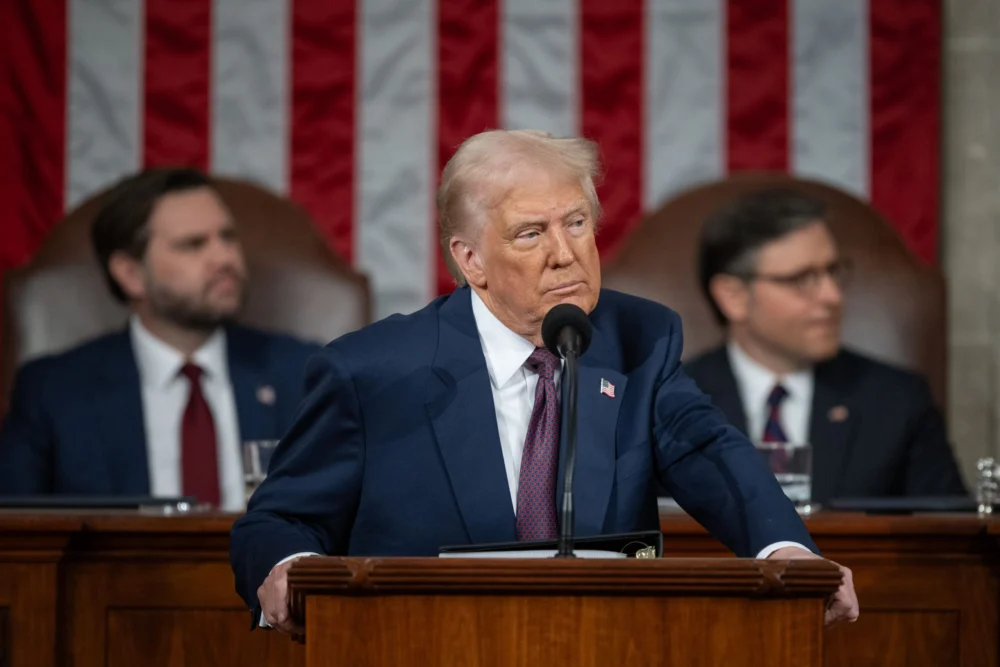
As President Trump prepares to deliver his annual State of the Union address to a joint session of Congress, anticipation is high for his remarks on the nation’s economic landscape. While a broad array of topics will likely be covered, particular scrutiny is expected on the administration’s contentious trade policies, specifically tariffs, and the sweeping tax reform enacted through the "One Big Beautiful Bill Act" (OBBBA). These two pillars of the President’s economic agenda have profoundly reshaped the fiscal outlook and stirred vigorous debate across political and economic spectrums. The address is poised to serve as a platform for the President to champion his achievements, particularly the recent tax refunds, and defend his trade strategies, even as new economic analyses continue to emerge regarding their long-term implications.
A Nation Divided: Economic Policy Takes Center Stage at the State of the Union
The State of the Union address is a cornerstone of American political tradition, providing the President an unparalleled opportunity to communicate directly with the American people, outline legislative priorities, and reflect on the nation’s condition. For President Trump, this address comes at a pivotal moment, with his "America First" economic philosophy having driven significant shifts in both domestic and international policy. His administration has consistently advocated for policies aimed at boosting domestic manufacturing, rebalancing trade relationships, and stimulating economic growth through deregulation and tax cuts. However, these aggressive strategies have also generated considerable controversy, particularly concerning their impact on global trade stability and the national debt. The upcoming speech is expected to double down on these themes, presenting the President’s vision for continued prosperity while potentially glossing over the significant economic challenges and policy criticisms.
The Unfolding Saga of Tariffs: A Cornerstone of "America First" Trade Policy
Tariffs have been a defining characteristic of President Trump’s economic foreign policy, dominating headlines and trade negotiations for an extended period. Positioned as a tool to protect American industries from unfair foreign competition and to compel trade partners into more equitable agreements, these import taxes have fundamentally altered global supply chains and consumer prices.
Origins and Evolution of Trade Barriers
The administration’s tariff strategy began with the imposition of duties on steel and aluminum imports under Section 232 of the Trade Expansion Act of 1962, citing national security concerns. This move, initiated in early 2018, quickly expanded to include a broad range of goods from China, justified under Section 301 of the Trade Act of 1974, which addresses unfair trade practices. The rationale often articulated by the President and his trade advisors centered on rectifying decades of perceived imbalances, intellectual property theft, and non-tariff barriers that allegedly disadvantaged American businesses and workers. The initial tariffs led to retaliatory measures from trading partners like China, the European Union, Canada, and Mexico, igniting a series of trade disputes that injected substantial uncertainty into the global economy. For example, American farmers, particularly soybean producers, faced significant losses as China redirected its purchases to other nations. Throughout this period, the administration frequently adjusted tariff rates, added new products, and offered temporary exemptions, creating a fluid and often unpredictable trade environment.
The Supreme Court’s Landmark Intervention
A critical development in the tariff saga occurred on Friday, February 20, 2025, when the Supreme Court issued a landmark ruling that significantly curtailed the President’s authority to impose tariffs. The Court struck down tariffs levied under the International Emergency Economic Powers Act (IEEPA), deeming them unconstitutional. This decision, a major legal setback for the administration, invalidated nearly three-fourths of the anticipated new revenue from these specific duties. The legal reasoning behind the ruling reportedly centered on the separation of powers doctrine, asserting that IEEPA granted overly broad authority to the executive branch, encroaching on Congress’s constitutional power to regulate commerce. The decision sent shockwaves through the economic policy community, forcing an immediate re-evaluation of the administration’s trade strategy and its fiscal projections.
Presidential Response and New Tariff Landscape
In the wake of the Supreme Court’s ruling, President Trump responded swiftly by announcing a new 10 percent baseline tariff. This new levy was ostensibly imposed under Section 122 authority, a different statutory provision designed for temporary trade adjustments. The President justified this pivot as a necessary measure to continue his trade agenda and protect domestic interests despite the judicial constraint. Just a day later, the administration further escalated the situation, raising this new baseline tariff rate to 15 percent. This Section 122 tariff, however, is scheduled to be temporary, with an expiration date set after 150 days. It also includes significant exemptions, indicating a more nuanced approach than previous blanket tariffs.
Economists at the Tax Foundation now estimate that, with the combined effect of Section 232 and the new Section 122 tariffs, the revised tariff regime is projected to generate approximately $668 billion in new taxes over the next decade. This figure is significantly lower than the $2.0 trillion previously anticipated when IEEPA tariffs were still in effect. Consequently, imports are now expected to face a 12.1 percent weighted average applied tax rate, a decrease from the 13.8 percent rate under the prior IEEPA and Section 232 framework. Once the temporary Section 122 tariffs expire, the weighted average applied tariff rate is expected to further decline to 6.7 percent, highlighting the substantial fiscal and economic implications of the Supreme Court’s decision.
The Burden on American Consumers and Businesses
A critical aspect of the tariff debate revolves around who ultimately bears the economic cost. Contrary to the administration’s claims that foreign exporters would absorb the duties, recent empirical evidence, including research from the Federal Reserve Bank of New York, indicates that almost the entire burden of these tariffs falls on individuals and firms within the United States. This means American consumers pay higher prices for imported goods, and American businesses face increased input costs for materials and components. The burden can manifest even without a general rise in overall inflation, as the specific prices of affected goods increase, eroding purchasing power. Moreover, domestic suppliers often capitalize on the reduced international competition by raising their own prices, further exacerbating costs for consumers and businesses. Retail associations, manufacturing groups, and agricultural lobbies have consistently voiced concerns about these impacts, citing disrupted supply chains, reduced competitiveness, and retaliatory tariffs that harm export markets. The increased costs can also translate into reduced investment and slower job growth in affected sectors, challenging the administration’s stated goals of fostering domestic economic expansion.
The One Big Beautiful Bill Act (OBBBA): A Sweeping Fiscal Overhaul
Beyond tariffs, the other major fiscal policy topic expected to feature prominently in the State of the Union is the "One Big Beautiful Bill Act," or OBBBA. This legislative package, passed earlier in the administration, represents a significant overhaul of the federal tax code and includes various spending adjustments.
Legislative Genesis and Core Provisions
The OBBBA, despite its somewhat abstract name, was a comprehensive piece of legislation with far-reaching implications. Its passage was the culmination of the administration’s commitment to tax reform, aiming to simplify the tax code, stimulate economic growth, and encourage domestic investment. While the original article did not detail the specific provisions, typical legislative efforts under this administration often included:
- Corporate Tax Rate Reduction: A substantial cut in the corporate income tax rate, often from 35% to 21%, intended to make the U.S. more competitive globally and encourage businesses to repatriate overseas profits and invest domestically.
- Individual Income Tax Adjustments: Revisions to individual income tax brackets, potentially lowering rates for many, alongside an increase in the standard deduction. This was often framed as providing middle-class tax relief.
- Specific Deductions and Credits: Introduction of new deductions or expansion of existing ones, such as those targeting specific industries, family support, or, as mentioned in the original text, certain tipped and overtime income. These provisions aim to incentivize particular economic behaviors or support specific demographic groups.
- Capital Investment Incentives: Measures like immediate expensing for certain business investments, designed to spur capital formation and productivity growth.
- Spending Cuts: To partially offset the revenue loss from tax cuts and address concerns about the national debt, the OBBBA also reportedly included a range of spending cuts across various federal programs, though the specifics of these cuts were often subject to intense negotiation and debate.
The legislative process for OBBBA was characterized by rapid development and significant partisan divisions, with the administration and its congressional allies pushing for its swift passage, often citing the need for immediate economic stimulus.
Fiscal Projections and Economic Impact
According to comprehensive analysis by the Tax Foundation, the OBBBA is projected to reduce federal revenue by an estimated $5.2 trillion between 2025 and 2034 on a static basis, meaning without accounting for dynamic economic feedback. When factoring in the long-run economic effects of the tax cuts, the spending reductions included in the bill, and the higher interest costs necessitated by increased deficits, the total cost of the package comes to approximately $4.1 trillion over the decade. This considerable fiscal impact has been a central point of contention, with critics arguing that it disproportionately benefits corporations and wealthy individuals while adding substantially to the national debt. Proponents, however, maintain that the growth spurred by the tax cuts will ultimately generate more revenue, partially offsetting the initial costs.
The Tax Foundation’s analysis also projects that OBBBA will lead to a long-run GDP increase of 0.7 percent. This positive economic impact is attributed to the incentives for increased investment and work created by lower tax burdens on businesses and individuals. However, the distribution of these benefits and the long-term sustainability of the associated debt remain subjects of ongoing economic and political debate. Many economists agree that while tax cuts can stimulate growth, the magnitude of that growth and its ability to "pay for itself" are often overstated, especially in the context of significant deficit increases.
Understanding Your Tax Refund: The OBBBA’s Immediate Effect on Households
A topic expected to be highlighted by the President is the increase in tax refunds for the 2025 tax year, a development directly linked to the OBBBA. This outcome has been championed by the administration as a tangible benefit of its tax reform efforts for American families.
The Phenomenon of Larger Refunds
Tax filers receive a refund when the amount of income tax withheld from their paychecks throughout the year exceeds their actual tax liability. For the 2025 tax year, on average, tax refunds are indeed expected to be higher. This is primarily due to a timing mismatch: several provisions within OBBBA, such as new deductions for certain tipped and overtime income, retroactively applied to some or all of the 2025 tax year. However, the Internal Revenue Service (IRS) did not immediately update its withholding tables to reflect these changes once the law was passed. As a result, many taxpayers had more income withheld than they ultimately owed under the new rules, leading to larger refunds.
The Tax Foundation estimates that the average tax cut for the 2025 tax year was approximately $611 per taxpayer. It is crucial to note, however, that the actual size of the refund increase will vary significantly based on individual taxpayer circumstances. For instance, taxpayers who directly benefited from targeted provisions, such as those with tipped or overtime income deductions, are likely to see more substantial benefits compared to, say, a salaried worker whose primary benefit comes from a retroactively boosted standard deduction. This variability underscores that while the average is positive, the experience for individual households can differ widely.
Future Outlook for Take-Home Pay
Looking ahead, the administration clarifies that the direct financial benefits of these tax changes should be reflected in lower withholding from paychecks in subsequent tax years, rather than in larger tax refunds. This means that, going forward, taxpayers should experience an increase in their regular take-home pay, as less tax will be withheld. This shift is intended to provide a more consistent financial benefit throughout the year, rather than a single lump sum refund. The goal is to provide immediate, perceptible increases in disposable income, which could influence consumer spending patterns and household budgeting.
The Great Fiscal Debate: Tariffs vs. OBBBA and the National Debt
A recurring argument from defenders of OBBBA, including the President himself, is that the revenue generated from tariffs could offset the cost of the tax cuts. The President has, at times, gone even further, claiming that tariffs could raise enough revenue to allow for a wholesale repeal of the income tax and cover the cost of numerous new spending initiatives. This assertion has fueled a significant fiscal debate.
The Administration’s Revenue Claims
President Trump has consistently presented tariffs as a powerful revenue-generating mechanism, often implying they could significantly contribute to reducing the national debt or funding new projects. This narrative seeks to counter criticisms regarding the OBBBA’s impact on the deficit by suggesting an offsetting revenue stream. The idea that tariffs could replace the federal income tax entirely, or even cover the vast spending of the government, represents a highly ambitious and, according to most independent analyses, unrealistic projection.
Economic Realities and Deficit Projections
However, rigorous economic analysis firmly refutes these claims. Tariffs, by their very nature, are not designed to be primary revenue generators on the scale required to replace a major tax source like the federal income tax. Their primary purpose is to influence trade flows and protect domestic industries, often at the cost of economic efficiency. More importantly, the tariffs imposed to date simply do not possess the revenue-generating capacity to offset the deficit impact of OBBBA.
As previously mentioned, OBBBA’s total deficit impact is estimated to be around $4.1 trillion over a decade. If one sets aside dynamic interest costs for an "apples-to-apples" comparison of direct revenue and spending, that number still represents a substantial $3.3 trillion increase in the deficit. In stark contrast, even before the Supreme Court ruling that nullified the IEEPA tariffs, the cumulative dynamic revenue projected from the combined IEEPA and Section 232 tariffs was only about $2.0 trillion over a decade. With the IEEPA tariffs now removed and the new, temporary Section 122 baseline tariff in place, the current tariffs (Section 232 and Section 122) are projected to raise a mere $668 billion over the same ten-year period.
This significant disparity unequivocally demonstrates that the President’s tariffs are insufficient to offset the tax cuts from OBBBA, let alone fund other ambitious spending priorities or address the nation’s underlying structural deficit problem. Fiscal watchdog groups and non-partisan budget offices have consistently highlighted this gap, cautioning that both the tax cuts and the tariff policies contribute to a growing national debt, with potentially severe long-term consequences for fiscal sustainability and intergenerational equity.
The Combined Economic Picture: Short-Term Volatility, Long-Term Adjustments
The interplay between OBBBA and the tariff regime creates a complex economic environment, presenting a mix of incentives and disincentives that shape the nation’s economic trajectory.
Competing Economic Forces
According to the Tax Foundation’s analysis, the OBBBA is projected to result in a long-run GDP increase of 0.7 percent, primarily driven by the improved tax treatment of work and investment. These tax cuts are designed to encourage businesses to expand and individuals to participate more actively in the workforce, leading to higher productivity and economic output. Conversely, the existing tariffs are estimated to reduce long-run GDP by 0.2 percent. Tariffs act as a drag on economic growth by raising costs for businesses and consumers, disrupting supply chains, and fostering trade disputes that diminish global economic integration. When these two opposing forces are considered together, the overall long-run effect on the economy is suggested to be modestly positive.
The Cost of Uncertainty and Policy Shifts
However, the short-term economic effects are considerably more intricate and volatile, particularly concerning tariffs. While some tariffs may prove temporary, the constant threat and implementation of changing trade policies introduce significant uncertainty into the economic landscape. Businesses facing potential new tariffs or retaliatory measures often delay investment decisions, hoard capital, or re-evaluate supply chains, even if a tariff is ultimately not implemented or collects no revenue. This "tariff uncertainty" can dampen economic growth by stifling innovation and capital expenditure.
Economists also face challenges in isolating the specific impacts of these policies on short-run economic indicators like GDP growth, unemployment rates, or productivity. Short-run data is often noisy and influenced by numerous other factors, making it difficult to attribute changes solely to these policies. Nevertheless, the fundamental economic principles remain clear: tariffs inherently disincentivize economic growth by creating barriers and increasing costs, while broad-based tax cuts, like those in OBBBA, aim to incentivize work and investment. The balance of these competing forces, along with the psychological impact of policy uncertainty, will continue to shape the nation’s economic performance in the immediate future. For example, while manufacturing might benefit from OBBBA’s tax incentives, it could simultaneously face higher input costs due to tariffs on raw materials, creating a mixed and often contradictory operating environment.
Looking Ahead: The Enduring Legacy of Trump’s Economic Strategy
As President Trump delivers his State of the Union address, the spotlight will be firmly on the complex economic landscape his administration has forged. The combination of ambitious tax reform through OBBBA and an aggressive, often unpredictable, tariff policy has created a unique and challenging economic environment. The debate over these policies is not merely academic; it has tangible impacts on American households, businesses, and the nation’s standing in the global economy.
The administration will likely celebrate increased tax refunds and overall economic growth, framing them as direct successes of its "America First" agenda. Yet, beneath the surface, profound questions persist regarding the sustainability of the national debt, the long-term efficacy of tariffs as an economic tool, and the implications of policy uncertainty for future investment and innovation. The enduring legacy of President Trump’s economic strategy will be measured not just by short-term indicators, but by how these foundational shifts in fiscal and trade policy shape America’s economic resilience and competitiveness for decades to come. Future administrations will undoubtedly grapple with the fiscal implications of OBBBA and the potential need for continued trade negotiations and adjustments in a world reshaped by these transformative policies.