Candice Horbacz
For decades, economic policymakers globally have grappled with what many perceived as an unavoidable dilemma: the need to choose between collecting substantial tax revenue to fund public services and maintaining a tax system competitive enough to attract investment and foster economic growth. This long-standing assumption often led to policy paralysis or difficult compromises, with nations frequently feeling compelled to either accept lower revenue targets in pursuit of competitiveness or tolerate a less dynamic economy for the sake of robust public coffers. However, a recent comprehensive analysis by the Tax Foundation, evaluating developed countries’ tax collections against their performance in the International Tax Competitiveness Index (ITCI), challenges this deeply entrenched belief. The findings suggest that this trade-off is often overstated, revealing significant opportunities for policymakers to enhance the structure of their tax systems and boost tax competitiveness without necessarily compromising revenue generation.
Across a diverse range of developed economies, the study found no clear, consistent relationship between the sheer volume of revenue governments collect and the inherent quality or structure of their tax systems. Contrary to popular intuition, nations with comparatively high tax burdens are not automatically relegated to the bottom of competitiveness rankings. In fact, many manage to sustain impressive levels of tax competitiveness. Conversely, some countries that collect relatively low levels of revenue surprisingly operate tax systems characterized by inefficiency and significant economic distortions. This pivotal insight underscores that a nation’s standing in the ITCI is not primarily determined by how much it taxes its citizens and businesses, but rather by how efficiently and neutrally it taxes them.
Understanding the International Tax Competitiveness Index (ITCI)
To fully appreciate these findings, it’s crucial to understand the methodology behind the International Tax Competitiveness Index. The ITCI serves as a critical benchmark, evaluating OECD tax systems based on two fundamental principles: competitiveness and neutrality. Competitiveness refers to how effectively a tax system encourages domestic and foreign investment, stimulates economic activity, and promotes entrepreneurship. A competitive tax system minimizes the tax burden on capital and labor, making a country an attractive place to do business. Neutrality, on the other hand, assesses how minimally the tax system distorts economic decisions. A neutral tax system avoids favoring one type of economic activity, investment, or consumption over another, allowing market forces to guide resource allocation efficiently.
The ITCI is a robust analytical tool, encompassing more than 40 distinct variables meticulously categorized across five key areas of taxation: corporate taxes, individual income taxes, consumption taxes (such as VAT or GST), property taxes, and cross-border tax rules. Each variable is weighted according to its typical impact on competitiveness and neutrality, providing a nuanced and comprehensive snapshot of a country’s tax environment. The index’s annual publication (e.g., the upcoming 2025 edition referenced in the study) provides an ongoing assessment, allowing policymakers to track progress and identify areas for reform.
If the conventional wisdom—that low tax collections inherently lead to high competitiveness—were true, one would expect to observe a distinct negative correlation between countries’ tax-to-GDP ratios and their ITCI scores. That is, as tax-to-GDP rises, ITCI scores should consistently fall. However, the Tax Foundation’s analysis reveals only weak and inconsistent patterns, challenging this simplistic assumption. This lack of a strong inverse relationship signals that structural design choices play a far more significant role than the overall revenue level.
Consider the top-ranking countries in the ITCI: Estonia, Latvia, and New Zealand. Despite their stellar performance in tax competitiveness, their tax collections are remarkably similar, clustering closely around the OECD average tax-to-GDP ratio of approximately 34 percent. This fact alone debunks the notion that achieving top-tier competitiveness necessitates significantly lower revenue. Instead, countries spanning a wide spectrum of revenue levels appear throughout the ITCI rankings. For instance, some nations with tax-to-GDP ratios exceeding 40 percent manage to secure positions in the upper half of the ITCI, demonstrating that high revenue does not automatically translate to poor competitiveness. Conversely, several countries with comparatively low tax collections still languish near the bottom of the rankings, indicating that merely taxing less is not a guarantee of a competitive or efficient system. This divergence emphasizes that the quality of taxation—its structure, breadth, and neutrality—is paramount.
Efficient Structure at Average Revenue Levels: The Baltic and Pacific Models
Estonia (1st), Latvia (2nd), and New Zealand (3rd) stand as prime examples of how the most competitive tax systems within the OECD can effectively coexist with average revenue collections. Their success is rooted in a deliberate and intelligent design philosophy that prioritizes broad-based, neutral taxation.
All three nations heavily rely on broad-based consumption taxes, such as Value-Added Tax (VAT) or Goods and Services Tax (GST), which are generally considered less distortionary than income or capital taxes. New Zealand, for instance, applies its comprehensive GST at a moderate rate of 15 percent to nearly all final consumption, minimizing exemptions and thereby broadening the tax base significantly. Similarly, Estonia and Latvia maintain broad VAT bases, covering approximately 70 percent and 65 percent of final consumption, respectively—figures well above the OECD average of 55 percent. By applying a single, moderate rate to a wide range of goods and services, these countries can generate substantial revenue with minimal economic friction, as consumption taxes tend to have a smaller impact on investment and labor supply decisions compared to other tax types.
Beyond consumption, their income tax systems are also designed for efficiency. Estonia and Latvia employ a unique corporate tax system that taxes corporate profits only when they are distributed to shareholders as dividends. Retained earnings, which are often reinvested by businesses, remain untaxed. This "distributed profits tax" model offers a powerful incentive for companies to reinvest their earnings, fostering business expansion, innovation, and job creation. It significantly simplifies business taxation and reduces compliance costs, making their corporate tax rates, which lie below the OECD average, even more attractive. Crucially, these systems avoid additional layers of dividend or withholding taxes, which can create disincentives for capital formation and cross-border investment.
Furthermore, a key characteristic shared by these top performers is their deliberate avoidance of highly distortionary capital taxes—taxes that typically raise relatively low levels of revenue while imposing significant economic costs. These include net wealth taxes, financial transaction taxes, property transfer taxes, capital duties, and estate or inheritance taxes. Such taxes often disincentivize saving, investment, and capital accumulation, leading to capital flight and administrative complexities. Estonia’s property tax system further exemplifies this principle of neutrality, applying only to the value of land and explicitly excluding built structures. This approach discourages land speculation while avoiding disincentives for property development and improvement.
These strategic design choices collectively reduce economic distortions, lower compliance burdens for businesses and individuals, and yet manage to collect tax revenue levels comparable to the OECD average. This demonstrates a powerful model for achieving both fiscal stability and economic dynamism.
High-Tax Countries Don’t Need to Be Uncompetitive: The Scandinavian Experience
The Scandinavian countries—Denmark (27th), Norway (21st), and Sweden (11th)—present a different yet equally insightful pattern. These nations are renowned for their extensive welfare states, which necessitate some of the highest tax-to-GDP ratios in the OECD, frequently exceeding 40 percent. Despite this high revenue collection, their scores for tax competitiveness are far from uniformly low. Instead, their ITCI ranks vary considerably, ranging from the lower-middle to the upper third of the index, underscoring that high levels of public spending do not automatically preclude a degree of tax competitiveness.
These countries primarily fund their substantial government expenditures through broad-based taxes on consumption and labor income, a strategy that, while yielding high revenue, attempts to minimize distortions. For instance, they apply high VAT rates, often around 25 percent, to comparably broad consumption bases. Their VAT registration thresholds are typically a small fraction of the OECD average, ensuring that even smaller businesses contribute to the tax base and costly distortions from exemptions are minimized. While top personal income tax rates in Scandinavian countries tend to be high, exceeding 55 percent in Denmark, they are generally applied to a broad base, with top rate thresholds set at a multiple (e.g., 1.1 to 1.8 times) of the average wage. This broad application, combined with generous social benefits, helps maintain public acceptance despite the high rates. Crucially, these countries also maintain corporate tax rates that are often below the OECD average, recognizing the mobility of capital and the importance of attracting corporate investment.
However, key structural differences between the Scandinavian nations account for their varying ITCI ranks. Norway, for example, is one of only a few OECD countries to levy a net wealth tax in addition to a high capital gains tax. While this might detract from its competitiveness score, Norway can sustain high public spending and comparatively lower income tax rates due to significant revenues derived from its vast oil and gas reserves. This unique fiscal buffer allows for policy choices that might be unsustainable in other economies.
Sweden generally ranks highest among the Scandinavian group, largely because it implements some of the lowest tax rates on corporate income, dividends, and capital gains within the group. Furthermore, Sweden offers above-average capital cost recovery provisions for investments, encouraging business expansion and modernization. It also notably levies no estate or inheritance taxes, further enhancing its appeal for wealth creation and transfer.
In contrast, Denmark faces competitiveness challenges due to one of the highest dividend and capital gains tax rates in the OECD, at 42 percent. This high rate can significantly hinder the accumulation of household savings outside of tax-preferred retirement accounts, potentially impacting domestic capital formation and investment.
The Scandinavian experience collectively demonstrates that high levels of tax revenue do not automatically equate to poor tax competitiveness. By relying heavily on broad and relatively neutral tax bases like labor income and consumption, these nations can sustain extensive public services. However, their tax systems are not without structural inefficiencies. The variations in their ITCI scores highlight that even within a high-tax paradigm, continuous structural improvements to tax codes remain essential for optimizing competitiveness.
Poor Structure Harms Both High- and Low-Revenue Countries
The bottom-ranking countries in the ITCI further underscore the critical lesson that weak tax competitiveness is not exclusive to high-tax economies. It can plague nations regardless of their overall revenue collection levels, primarily due to inefficient and distortionary tax structures.
Consider France (38th) and Italy (37th), which are among the OECD countries collecting the highest tax revenues as a share of GDP, often exceeding 40 percent—a level comparable to the Scandinavian countries. In stark contrast, Colombia (36th) has one of the lowest tax-to-GDP ratios in the OECD, typically below 20 percent. Despite these vast differences in revenue collection, all three nations exhibit similarly uncompetitive tax systems characterized by high corporate tax rates, narrow VAT bases, stringent cross-border rules, and a proliferation of distortionary capital taxes.
Corporate tax rates in these countries significantly exceed the OECD average, which stood at 24.2 percent in 2025. France, for example, levies one of the highest combined top corporate rates at 36.1 percent, a figure that includes multiple surtaxes and economically distortive production taxes. Colombia follows closely with a high corporate rate of 35 percent. Such high rates deter investment, encourage profit shifting, and reduce the overall attractiveness of these economies for businesses.
The tax codes of these lowest-ranking countries are further burdened by numerous layers of harmful capital taxes. These often include taxes on bank and business assets, complex estate and inheritance taxes, financial transaction taxes, and property transfer taxes. Colombia, in particular, levies a comprehensive net wealth tax, which has been widely criticized by economists for its negative impact on capital accumulation and investment. These taxes not only discourage savings and investment but also create significant administrative complexity and compliance costs.
Their VAT bases are notably narrow, falling significantly below the OECD average of 55 percent. Colombia covers only 38.5 percent of final consumption, Italy 43.3 percent, and France 50 percent. Narrow VAT bases necessitate higher headline rates to generate sufficient revenue, leading to greater distortions as consumers and businesses seek to avoid taxed goods or services. They also create inequities and increase administrative complexity due to numerous exemptions and special rates.
Colombia’s exceptionally low overall revenue reflects an extremely narrow personal income tax base that effectively taxes only a small segment of high-income earners, generating a mere 2.2 percent of GDP as revenue from this source. In stark contrast, both France and Italy raise substantial revenue from personal income taxes and social contributions, approximately 24 percent of GDP. With limited revenue from a broad personal income tax base, Colombia becomes disproportionately reliant on economically harmful taxes, such as corporate income tax, which targets highly mobile capital and can significantly deter foreign direct investment.
These examples clearly demonstrate that both high-revenue and low-revenue countries can operate uncompetitive tax systems when they erode their consumption and labor income tax bases through exemptions and special treatments, and simultaneously impose highly distortive taxes on capital. This structural imbalance undermines economic efficiency and growth potential.
Improving Tax Design Without Reducing Revenue: A Path Forward
The weak and often non-existent link between overall tax collections and tax competitiveness highlights a crucial distinction for policymakers. The traditional assumption posits that improving competitiveness inevitably demands a trade-off: reducing distortionary taxes will lead to a corresponding reduction in collected revenue. This trade-off is indeed real, particularly in the short run, and especially as governments exhaust their least distortive means of raising revenue, causing the marginal economic costs of taxation to rise with the tax burden.
However, the Tax Foundation’s analysis reveals that many countries are still raising revenue in ways that generate substantial, unnecessary economic friction. This inefficiency leaves considerable room to improve tax competitiveness and stimulate economic growth without necessarily reducing overall government revenues. The key lies in strategic structural reforms.
Policymakers can make their tax codes significantly more competitive by systematically eliminating distortive tax incentives and harmful capital taxes. For instance, phasing out net wealth taxes, financial transaction taxes, and complex estate and inheritance taxes would remove significant impediments to capital formation and investment. Simultaneously, improving capital cost recovery provisions for businesses—allowing for faster and more comprehensive expensing of investments—can powerfully incentivize domestic and foreign investment.
Crucially, these reforms can be financed by shifting the tax burden towards broader, less mobile, and less distortionary tax bases. Expanding the base of consumption taxes (VAT/GST) by minimizing exemptions and applying a single, moderate rate can generate significant revenue efficiently. Similarly, taxes on land value, which are generally considered among the least distortionary taxes because land is immobile and its supply inelastic, offer another avenue for revenue generation without harming economic activity. Broadening the personal income tax base, perhaps by reducing exemptions or consolidating numerous deductions, can also allow for lower marginal rates while maintaining revenue levels.
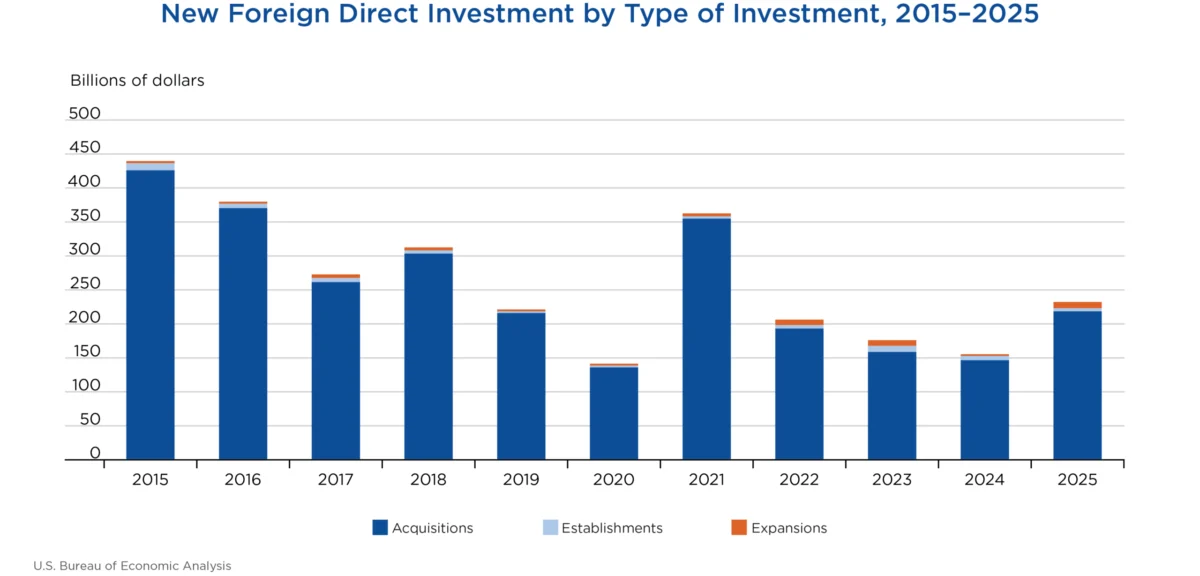
The long-term implications of such structural reforms are profound. A more competitive and neutral tax system can attract greater foreign direct investment, foster domestic entrepreneurship, encourage innovation, and ultimately lead to higher economic growth, increased employment, and improved living standards. While implementing such reforms often presents political challenges, requiring difficult choices and potentially facing resistance from vested interests, the evidence strongly suggests that the economic benefits of a well-designed tax system far outweigh the short-term discomforts. By focusing on how they tax, rather than simply how much, nations can unlock a powerful engine for sustainable prosperity without compromising their ability to fund essential public services.