Nila Kartika Wati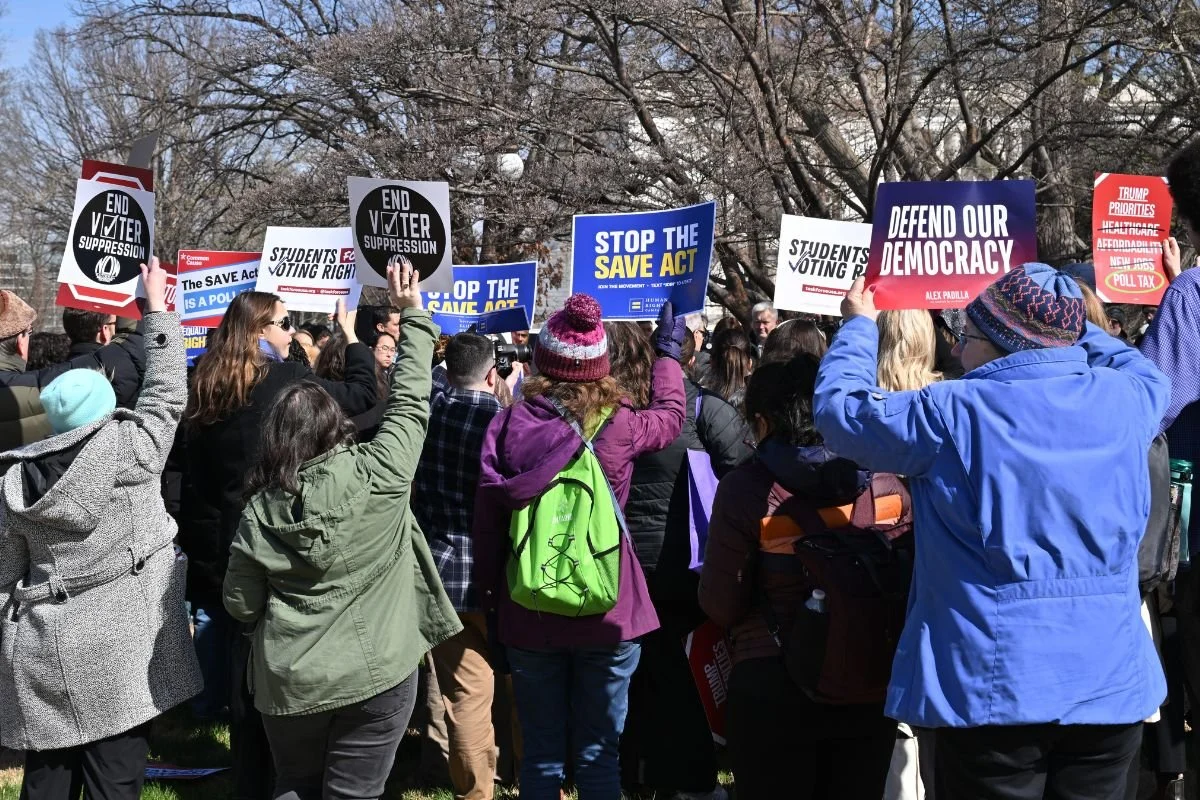
The United States Senate has commenced a high-stakes debate over the Safeguard American Voter Eligibility (SAVE) America Act, a sweeping piece of legislation that seeks to overhaul federal voter registration requirements. Proponents of the bill, primarily within the Republican party, argue that the measure is essential to ensuring election integrity by preventing non-citizens from participating in federal elections. However, the bill has sparked intense national controversy, with voting rights advocates and Democratic lawmakers warning that the proposed restrictions could disenfranchise millions of eligible American citizens, particularly women, transgender individuals, and low-income voters. As the Senate considers the second iteration of this bill, the legislative path remains fraught with challenges, including a steep 60-vote threshold and escalating demands from President Donald Trump to include even more stringent provisions.
The SAVE America Act represents an intensified effort to mandate documentary proof of citizenship (DPOC) at the point of voter registration. While it is already illegal for non-citizens to vote in federal elections—a crime punishable by fines, imprisonment, and deportation—supporters of the act contend that current self-attestation methods are insufficient. The bill’s arrival on the Senate floor follows its successful passage in the House of Representatives, but its future in the upper chamber remains uncertain as the 2026 midterm elections approach.
Legislative Chronology and the Evolution of the SAVE Act
The current debate is the culmination of a multi-year legislative push that began shortly after the 2024 general election. The original version of the bill, known simply as the SAVE Act, was introduced in 2025. While it garnered significant support in the House, it stalled in the Senate due to a unified Democratic filibuster and concerns from some moderate Republicans regarding the administrative burden on state election offices.
Following the stalemate in 2025, House leadership revised the legislation, rebranding it as the SAVE America Act. The 2026 version includes several modifications intended to address earlier criticisms, such as allowing for a "sworn statement" process for individuals who cannot locate their primary documents. Despite these changes, the core requirements remain largely intact. The House passed this revised version in early 2026, leading to the current Senate standoff.
The timeline for implementation is a point of significant concern for election administrators. If passed, the law’s provisions would take effect immediately. With the midterm elections only months away, state officials have warned that shifting registration requirements mid-cycle could lead to widespread confusion among voters and a backlog of unprocessed registrations at local election offices.
Core Provisions and Documentation Requirements
Under the SAVE America Act, individuals wishing to register to vote in federal elections would be required to provide physical evidence of U.S. citizenship. The legislation lists several "accepted documents," but the practical availability of these documents varies significantly across the American population.
- U.S. Passports: A valid U.S. passport is considered the gold standard for proof of citizenship under the bill. However, data from the State Department and various civil rights organizations indicate that approximately 50 percent of U.S. citizens do not possess a valid passport. For these individuals, the registration process becomes significantly more complex.
- Birth Certificates and Secondary ID: Those without passports would be required to present a government-issued photo ID, such as a driver’s license, alongside a birth certificate or adoption paperwork. This requirement must be fulfilled in person at a designated election office, a provision that critics argue places a disproportionate burden on rural voters and those with limited mobility or inflexible work schedules.
- Photo ID Mandates: The bill requires all voters to present a photo ID with a visible expiration date at the polls. While many states already have voter ID laws, the SAVE America Act would standardize this at the federal level, disqualifying non-expiring IDs or non-photo documents like utility bills, which are currently accepted in several jurisdictions.
- Mail-in Ballot Restrictions: For the first time at the federal level, mail-in voters would be required to submit copies of their identification documents along with their ballots, a move that election experts suggest could lead to a high rate of ballot rejection due to technical errors or privacy concerns.
Data on Voter Identification and Impacted Demographics
Statistical analysis of the American electorate suggests that the SAVE America Act could have a profound impact on voter participation. According to a 2024 study by the Brennan Center for Justice, approximately 9 percent of eligible American voters—roughly 21 million people—do not have ready access to the specific types of identification required by stringent DPOC laws.
The burden of these requirements is not distributed evenly. Women are frequently cited by advocates as a primary group at risk of disenfranchisement. An estimated 90 percent of married women change their names, often resulting in a discrepancy between their current government-issued ID and their birth certificate. Under the SAVE America Act, these individuals would likely need to provide additional documentation, such as marriage licenses or court orders, to bridge the gap between their documents.
Similarly, the transgender community faces significant hurdles. According to the 2022 U.S. Transgender Survey, only about 44 percent of transgender people have at least one ID that matches their preferred name and gender identity. The requirement for in-person verification and the matching of historical documents like birth certificates could lead to increased scrutiny and potential harassment of trans voters at registration sites.
Furthermore, the cost of obtaining these documents can be prohibitive. While the bill does not technically charge a "poll tax," the fees associated with obtaining a certified copy of a birth certificate or a new passport act as a financial barrier for low-income citizens.
Political Maneuvering and Presidential Demands
The legislative landscape has been further complicated by the intervention of President Donald Trump. Despite the SAVE America Act already being viewed as one of the most restrictive voting bills in modern history, the President has urged Senate Republicans to "go for the gold" by adding even more controversial provisions.
President Trump has publicly proposed amending the bill to include a near-total ban on mail-in voting, with only very narrow exceptions. Additionally, he has suggested tying the voting legislation to unrelated "culture war" issues, such as federal bans on gender-affirming care for minors and restrictions on transgender women participating in sports.
"I will not sign other bills until this is passed, and not the watered-down version," the President stated recently. This "all-or-nothing" approach has created a rift within the Republican party. While firebrand senators like Mike Lee of Utah support the President’s aggressive stance, others, such as outgoing Senator Thom Tillis of North Carolina, have expressed concern that overreaching could alienate moderate voters and jeopardize the bill’s chances of passing even a simple majority vote.
Senate Dynamics and the Filibuster Debate
The primary obstacle for the SAVE America Act in the Senate is the filibuster. With a 60-vote threshold required to end debate and move to a final vote, Republicans—who hold a 53-seat majority—would need to secure the support of at least seven Democrats or Independents. Given the near-unanimous Democratic opposition to the bill, this appears unlikely.
Senate Majority Leader John Thune has faced immense pressure from the "Make America Great Again" (MAGA) wing of his party to employ the "talking filibuster" or to attempt to change Senate rules to pass the bill with a simple majority. However, Thune has remained cautious, noting that the math does not currently favor such a move and expressing concern over the long-term institutional stability of the Senate.
The debate on the Senate floor has been characterized by marathon sessions and heated exchanges. Democrats have focused their arguments on the rarity of non-citizen voting, citing studies from the Heritage Foundation and other conservative-leaning groups that show only a handful of documented cases of non-citizen voting over several decades. They characterize the bill as a "solution in search of a problem" designed to suppress the vote of marginalized groups.
Broader Implications and Potential Outcomes
The outcome of the SAVE America Act debate will have significant implications for the 2026 midterms and the future of American elections. If the bill fails to reach the President’s desk, it is expected to become a central campaign issue, with Republicans accusing Democrats of being "soft" on election security and Democrats accusing Republicans of attempting to "rig" the election through voter suppression.
If a version of the bill were to pass, the immediate impact would likely be a wave of litigation. Civil rights organizations have already signaled their intent to challenge the law in federal court, arguing that it violates the Voting Rights Act and the 26th Amendment. The resulting legal uncertainty could persist well into the election season, leaving voters and election officials in a state of limbo.
For now, the Senate remains at a standstill. The tension between the House’s desire for rapid reform, the President’s demand for more restrictive measures, and the Senate’s institutional hurdles suggests that the SAVE America Act will remain the focal point of American political discourse for the foreseeable future. As the debate continues, the fundamental question remains: how does a democracy balance the need for secure elections with the constitutional mandate to ensure that every eligible citizen has the right to vote?