Layla Zulfa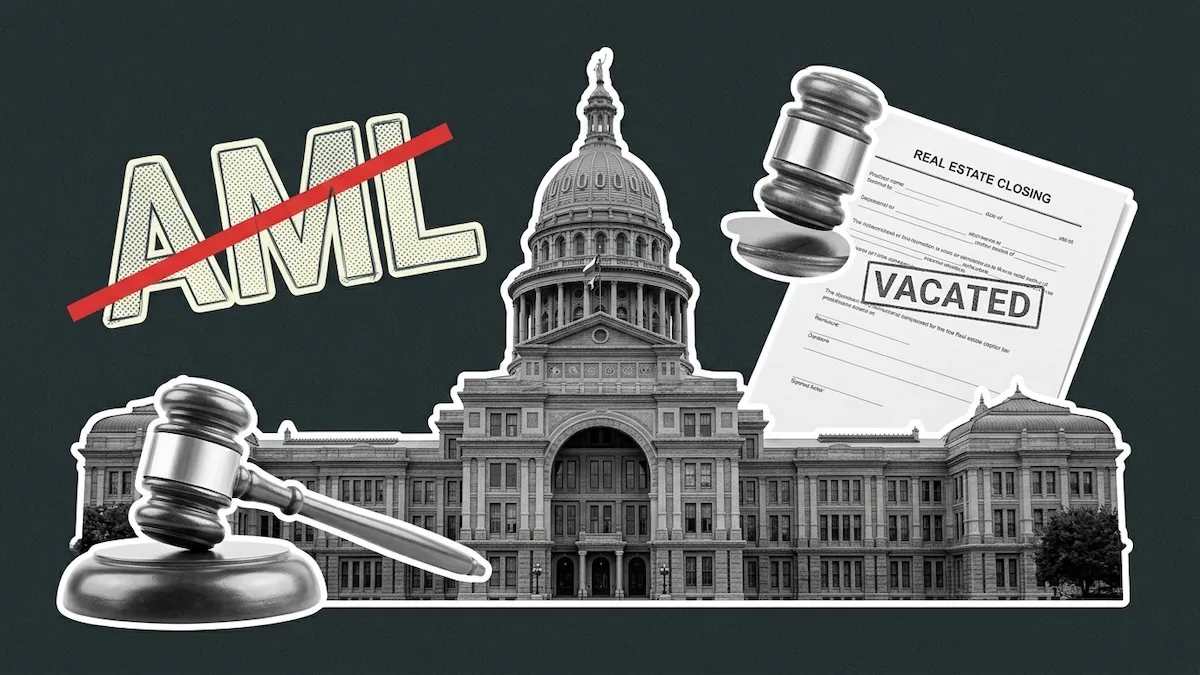
A federal judge in Texas has vacated the Financial Crimes Enforcement Network’s (FinCEN) nationwide anti-money laundering (AML) rule concerning residential real estate transactions, plunging title and real estate professionals into a state of legal vacuum and uncertainty. While the ruling offers a reprieve from compliance burdens that had drawn significant criticism from industry groups, legal experts caution that FinCEN’s broad authority over real estate transactions remains intact and could lead to the imposition of even more stringent requirements in the future.
The now-vacated rule, which took effect on March 1, mandated reporting for all non-financed residential real estate transfers where ownership was held by an entity or trust, irrespective of geographic location or transaction value. This broad mandate aimed to curb illicit financial activities within the U.S. real estate market, a sector long identified as a vulnerable conduit for money laundering.
The legal challenge was spearheaded by Flowers Title Companies LLC, which argued under the Administrative Procedure Act that FinCEN exceeded its statutory authority granted by the Bank Secrecy Act (BSA) in implementing such sweeping reporting obligations. The court’s decision hinged on FinCEN’s perceived failure to adequately demonstrate that non-financed residential real estate transfers to entities or trusts are inherently suspicious transactions warranting such a broad reporting requirement. This ruling contrasts with a previous challenge brought by Fidelity National Financial in the Middle District of Florida, which had initially upheld the rule.
Background and Chronology of the AML Rule
The push for enhanced AML measures in the real estate sector gained momentum following the enactment of the 2020 Anti-Money Laundering Act. This legislation empowered FinCEN with expanded authorities, including the ability to establish reporting requirements in a "streamlined and non-complex manner." James Vivenzio, a partner at Perkins Coie and former director for BSA and AML policy at the Office of the Comptroller of the Currency (OCC), played a role in drafting these provisions. He explained that the concept originated from an OCC interpretive letter that permitted banks to automate certain filings.
"The provision actually references structuring transactions as a category of transactions for FinCEN to consider this for, clearly kind of giving a nod to the OCC interpretive letter from the earlier year," Vivenzio told HousingWire. "The idea was that FinCEN can actually determine what is suspicious and kind of mandate that banks file in a streamlined, non-complex manner. And that was the idea behind that particular provision in the AML act that was struck down by this court."
The rule’s implementation on March 1 marked a significant shift in compliance for the title and real estate industries. It required reporting entities to identify and document transactions involving specific ownership structures, aiming to provide greater transparency into property ownership and deter illicit financial flows. The lack of geographic or price thresholds meant that virtually any non-financed residential transaction involving an entity or trust could fall under its purview, creating a substantial compliance undertaking for businesses involved in these transactions.
Legal Precedents and Future Uncertainty
Legal observers, including Jamie Schafer, another partner at Perkins Coie, suggest that the trajectory of legal challenges to FinCEN’s real estate AML rule may mirror the protracted legal battles surrounding the Corporate Transparency Act (CTA). "With the Corporate Transparency Act, there was a temporary order that went all the way to the Supreme Court and then was reversed in the Supreme Court and then FinCEN took action," Schafer noted. "So, we could see quite a lot of flip flopping, just based on the precedent we have." This suggests a period of potential instability and evolving legal interpretations for the real estate sector.
The ruling has created an immediate void in nationwide AML reporting requirements for residential real estate transactions involving entities and trusts. This lack of a clear, federal mandate leaves title companies, escrow agents, and other real estate professionals in a precarious position, uncertain about the expected standards of due diligence and reporting.
FinCEN’s Enduring Authority and Potential Future Actions
Despite the vacatur of this specific rule, legal experts emphasize that FinCEN’s authority to regulate persons involved in real estate transactions remains robust. "FinCEN clearly has the authority to regulate persons involved in real estate transactions," Vivenzio reiterated. "And typically, the way FinCEN regulates financial institutions is they will require them to establish a BSA compliance program and also require them to file suspicious activity reports."
The Department of the Treasury has consistently identified the real estate sector as a significant pathway for money laundering in its national threat risk assessments. Data from various government reports over the years has highlighted how shell companies and complex trust structures can be utilized to obscure the true ownership of real estate, facilitating illicit financial activities. For instance, a 2022 report by the Treasury Department’s Anti-Money Laundering Program identified real estate as a sector susceptible to money laundering and illicit finance. This persistent concern suggests that federal oversight in some form is highly likely to continue, regardless of the Texas ruling.
Vivenzio issued a stark warning, suggesting that the vacated rule represented a relatively "light-touch" approach compared to what FinCEN could potentially implement in the future. "I would just be careful what you ask for, because again, FinCEN clearly has the authority to regulate persons involved in real estate transactions," he stated. "And in this particular instance, rather than requiring these persons to actually have to establish entire AML programs that include [suspicious activity report] monitoring processes, FinCEN instead used this different approach to just require reporting on a narrow category of transactions." He added that FinCEN could "certainly come down even harder and require more reporting or more burden."
The vacated rule was likely intended as a less burdensome alternative to more comprehensive AML program requirements. Schafer concurred, expressing confidence that the U.S. Treasury is unlikely to abandon its efforts to regulate the real estate industry’s role in combating financial crime. "I think the practical reality is that the Department of Treasury has been issuing national money laundering threat risk assessments for many, many years that have identified the real estate sector as a major vector of money laundering," she said. "So, we would expect that this will continue to be an area that is targeted. If this particular rule were overturned, I think we would expect the department to still look for other opportunities to revise the rule, to limit it in some way as necessary. But I don’t expect that the Department of Treasury is just going to kind of wash its hands of regulating the real estate industry."
Navigating the Evolving Compliance Landscape: Best Practices for Industry Stakeholders
For title insurance and real estate operations that had already invested in building compliance protocols around the now-vacated rule, experts strongly recommend maintaining that infrastructure rather than dismantling it entirely. "I think a similar approach to how folks handled CTA during the time when the Corporate Transparency Act was in flux," Schafer advised. "I think this is likely to be in flux for some time. The application in particular districts, in particular segments of the industry or plaintiff groups, is going to change over time. I certainly wouldn’t be advising any of our clients to be throwing away the work that they’ve done to put in place compliance.”
This proactive stance is crucial given the potential for the rule to be reinstated or for FinCEN to issue revised regulations. Schafer cautioned against making voluntary filings in the absence of a clear mandate but stressed the importance of building flexibility into transaction agreements. "Players in the market should continue to include in all relevant agreements provisions that require compliance with the rule, because the rule could come back into play at any time," she stated. "They should be agreements that continue to contemplate potential delays on the basis of collecting information that may be required under the rule, so that nobody finds themselves running afoul of a commercial term because the rule comes back into effect."
Regarding filings that were made during the period when the rule was active, Schafer assured that reporting parties should not face liability for privacy-related claims. "They should not be liable for any sort of privacy or other related claims because they were required at that time to make the filings," she explained. "In fact, had the brokerages or whoever was the reporting the person not made the filings, they would have been viable under the law as it was applicable at the time, regardless of the fact that this ruling came out later."
Vivenzio also pointed out that FinCEN has historically demonstrated flexibility when legal challenges disrupt compliance timelines. "Whenever FinCEN had to restart the CTA process as a result of some of the legal decisions that were coming in, FinCEN always granted extensions of time and they considered the impact that the court decision had on filers," he recalled. "And so, I would expect that there will be a similar process in place should FinCEN ultimately prevail here." This suggests that even if FinCEN successfully re-establishes similar reporting requirements, affected parties might receive grace periods for compliance.
The vacatur of this AML rule highlights the ongoing tension between the need to combat financial crime and the compliance burdens placed upon industries. As the legal landscape continues to evolve, title and real estate professionals must remain vigilant, adapt their compliance strategies, and stay informed about potential regulatory changes to navigate this dynamic environment effectively. The underlying concern about money laundering in real estate remains, and it is highly probable that FinCEN will continue to explore avenues to address this risk.