Lana Rhoades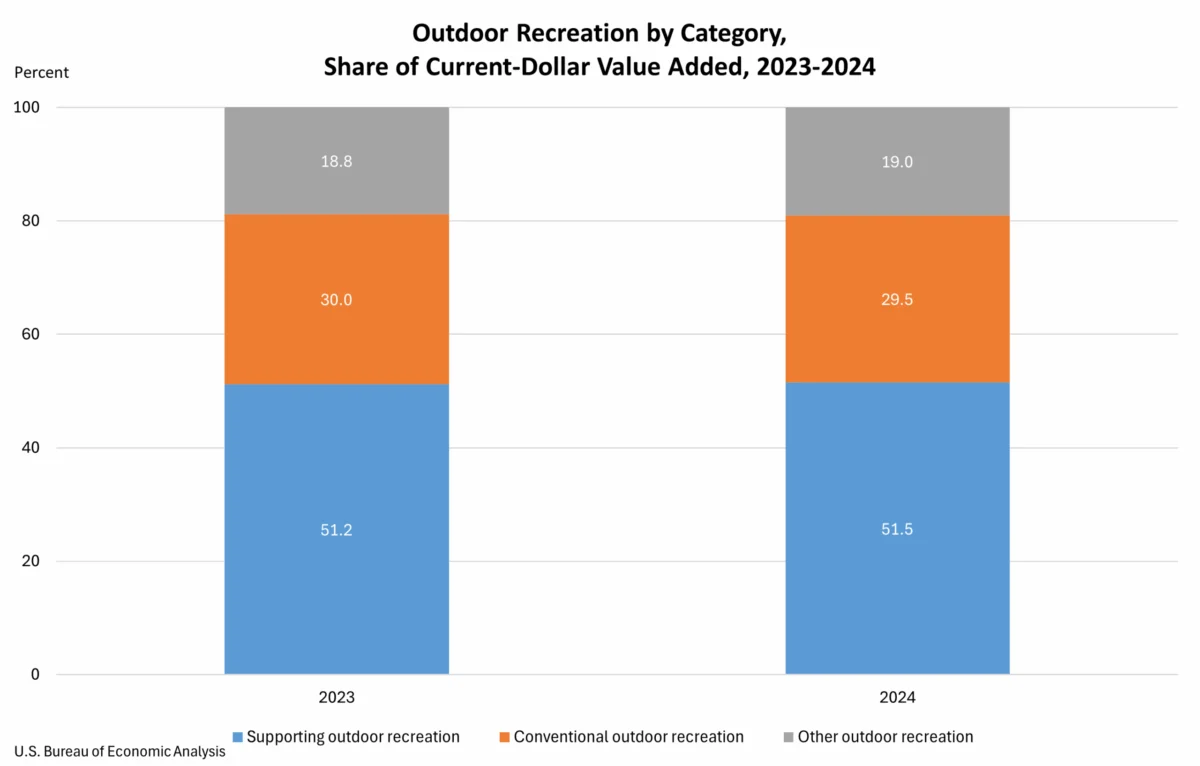
The U.S. Bureau of Economic Analysis (BEA) has unveiled its latest comprehensive report on the nation’s outdoor recreation economy, revealing a significant economic powerhouse that contributed $696.7 billion, or 2.4 percent, to the current-dollar Gross Domestic Product (GDP) in 2024. This substantial figure underscores the enduring importance of outdoor activities to the American economy, impacting all 50 states and the District of Columbia. The release of these detailed statistics, based on extensive data collection and analysis, provides an invaluable snapshot of an industry that touches millions of Americans, both as participants and as workers.
A Deep Dive into the Data: National and State Performance
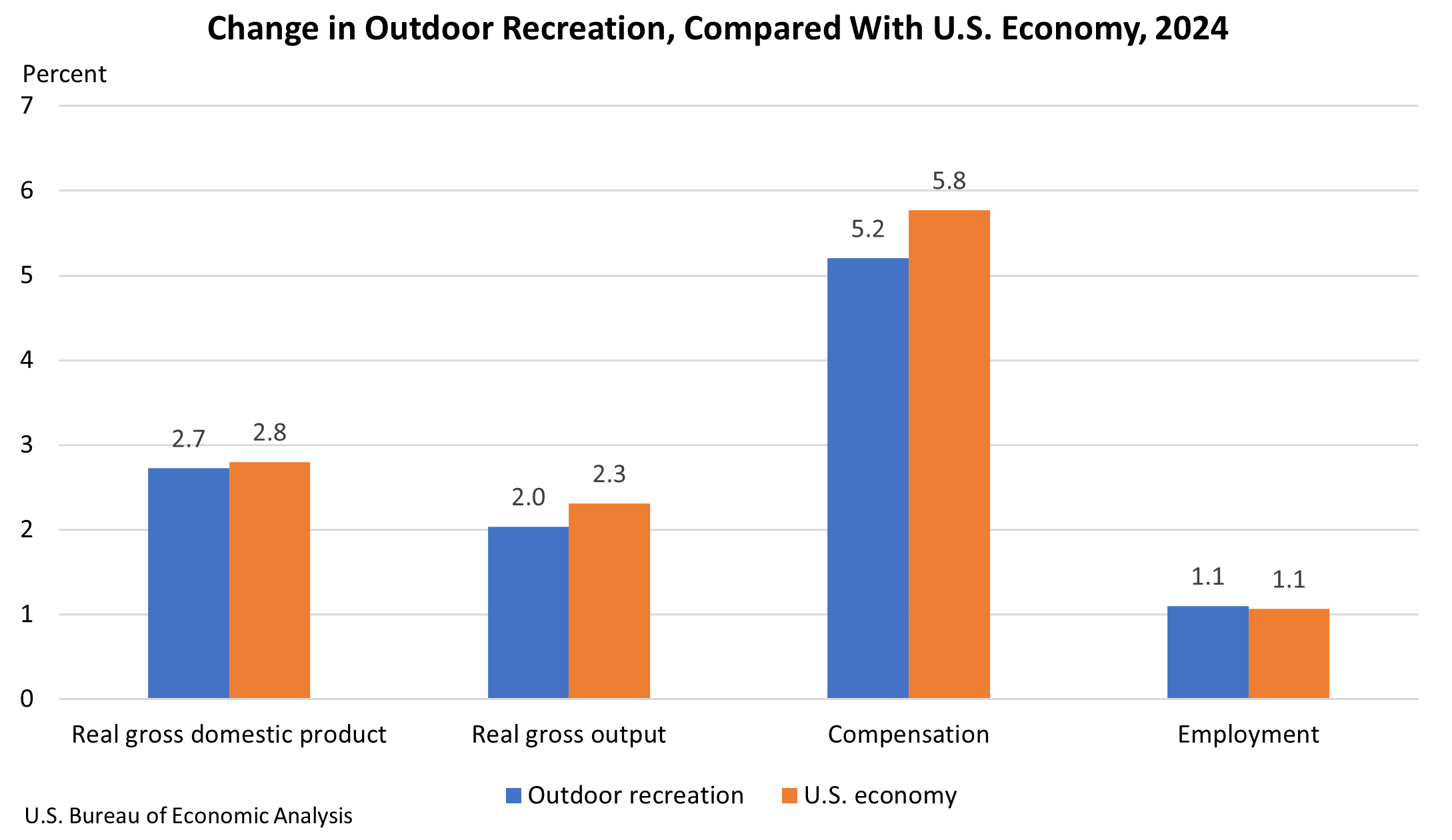
At the national level, the data paints a picture of a robust and growing sector. Inflation-adjusted (real) GDP for the outdoor recreation economy experienced a 2.7 percent increase in 2024. While this represents a slight deceleration from the impressive 5.3 percent growth seen in 2023, it still outpaced the overall U.S. economy’s 2.8 percent growth in 2024. This sustained expansion highlights the sector’s resilience and its capacity to adapt and thrive even amidst broader economic fluctuations.
The report also indicates healthy growth in other key metrics. Real gross output for the outdoor recreation economy saw a 2.0 percent increase, while compensation for outdoor recreation workers rose by a significant 5.2 percent. Employment within the sector also expanded, with a 1.1 percent increase nationwide. These figures collectively suggest a vibrant job market and growing earning potential within outdoor recreation industries.
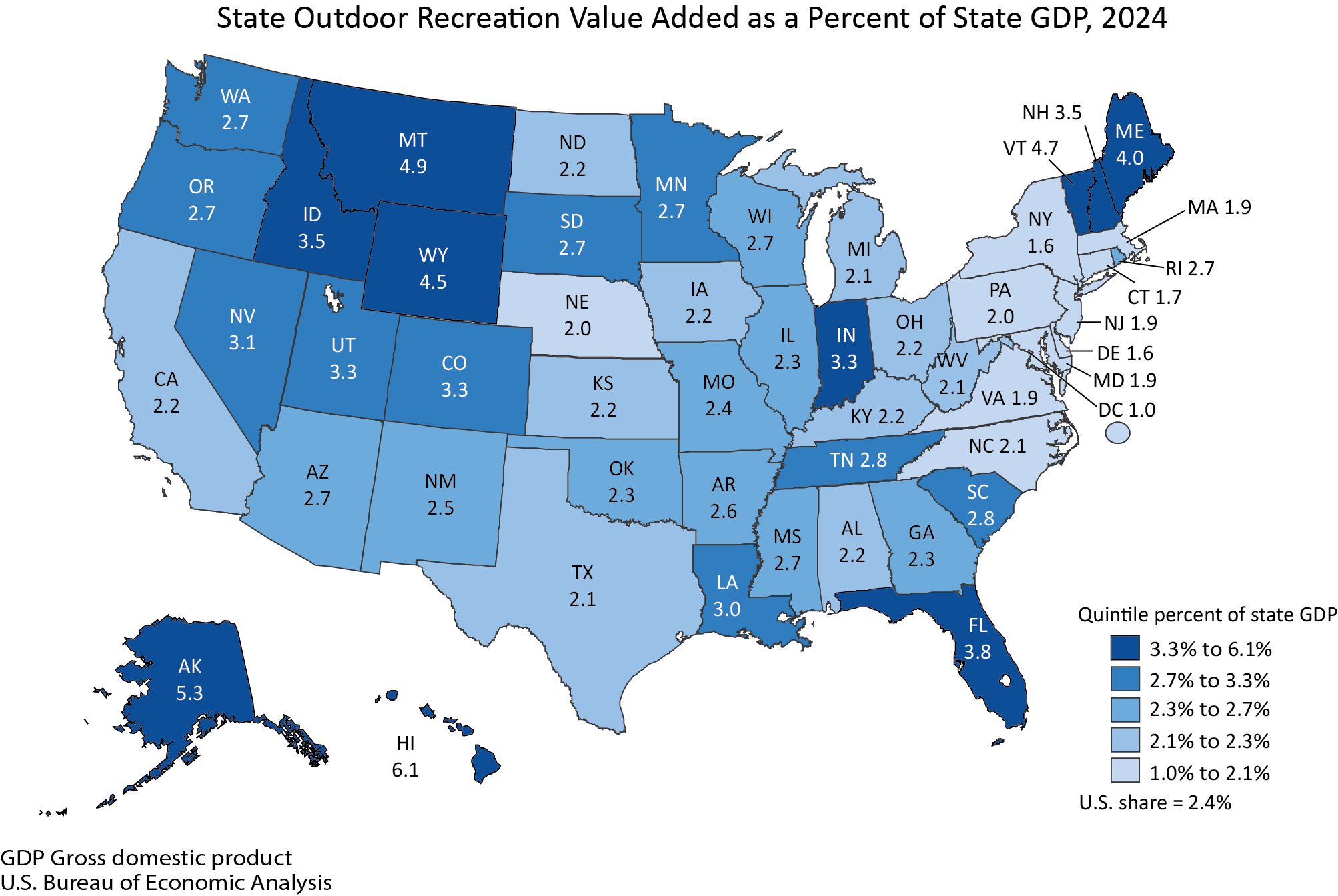
However, the economic impact of outdoor recreation varies considerably across the nation. State-level data reveals a wide spectrum, with Hawaii leading the pack, where outdoor recreation accounted for a remarkable 6.1 percent of its state GDP. This high percentage can be attributed to Hawaii’s unique natural landscape and its strong reliance on tourism and recreational activities like surfing, hiking, and water sports. In contrast, the District of Columbia registered the lowest share at 1.0 percent, reflecting its different economic drivers and urban landscape.
Employment Trends: A Mixed Landscape
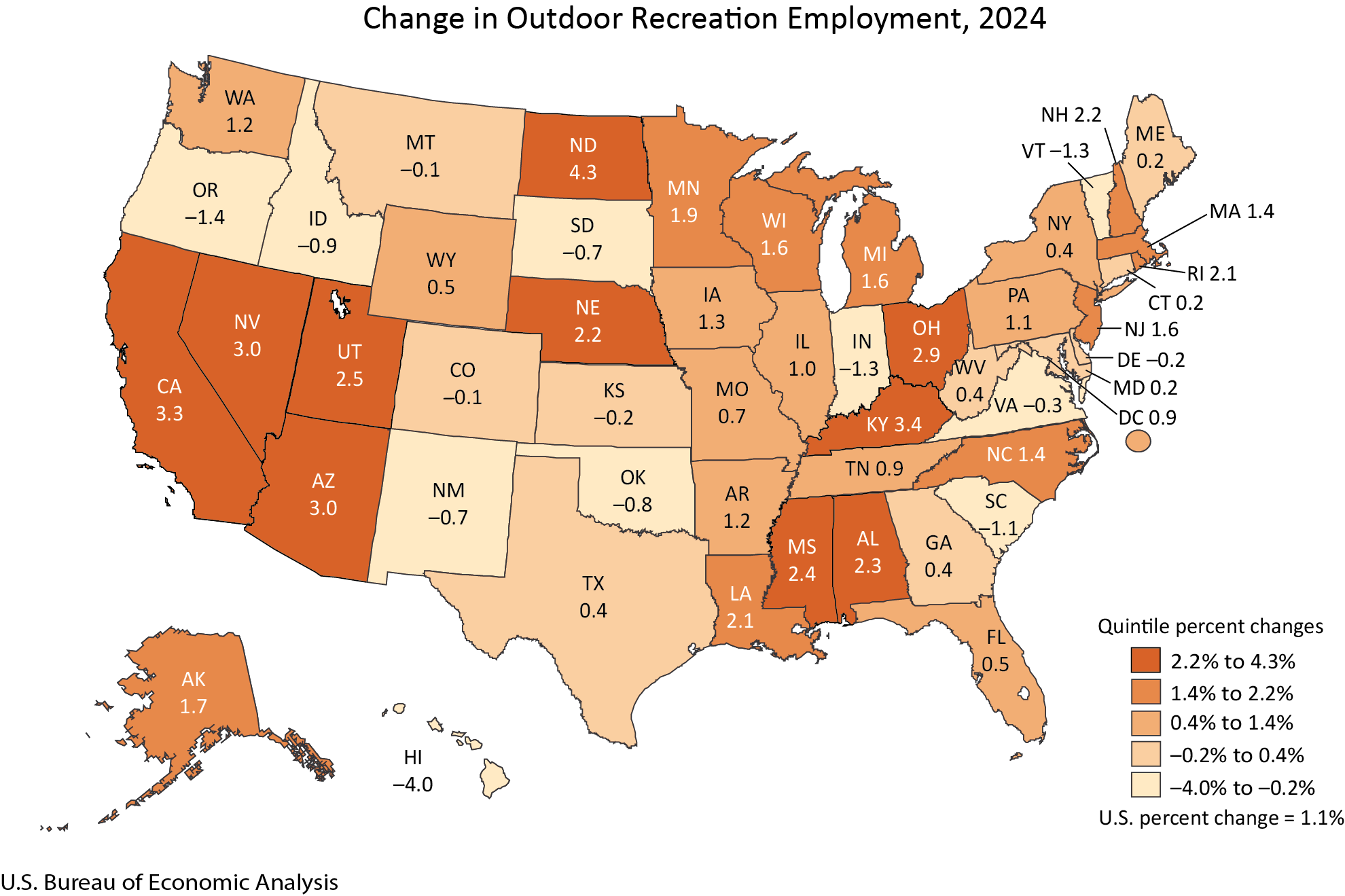
The employment figures at the state level present a more nuanced picture. Outdoor recreation employment saw an increase in 36 states and the District of Columbia in 2024. North Dakota emerged as a leader in employment growth, with a 4.3 percent increase in its outdoor recreation sector. This suggests a burgeoning interest in and development of outdoor recreational opportunities in the state. Conversely, Hawaii experienced a decline of 4.0 percent in outdoor recreation employment, a trend that warrants further investigation given its high overall contribution to the state’s GDP. This could indicate shifts in tourism patterns, seasonal employment fluctuations, or changes in the specific types of recreational activities in demand.
The BEA’s annual update of these statistics, which incorporates data from 2020 to 2023 and incorporates the latest National and Regional Economic Accounts, provides a crucial historical context. The adjustments made in this release reflect a commitment to providing the most accurate and up-to-date economic intelligence. The inclusion of newly available and revised source data ensures that the reported figures are a true representation of the economic activity.
Categorizing the Contribution: Activities and Industries
The BEA categorizes outdoor recreation activities into three broad groups: conventional activities, other activities, and supporting activities.
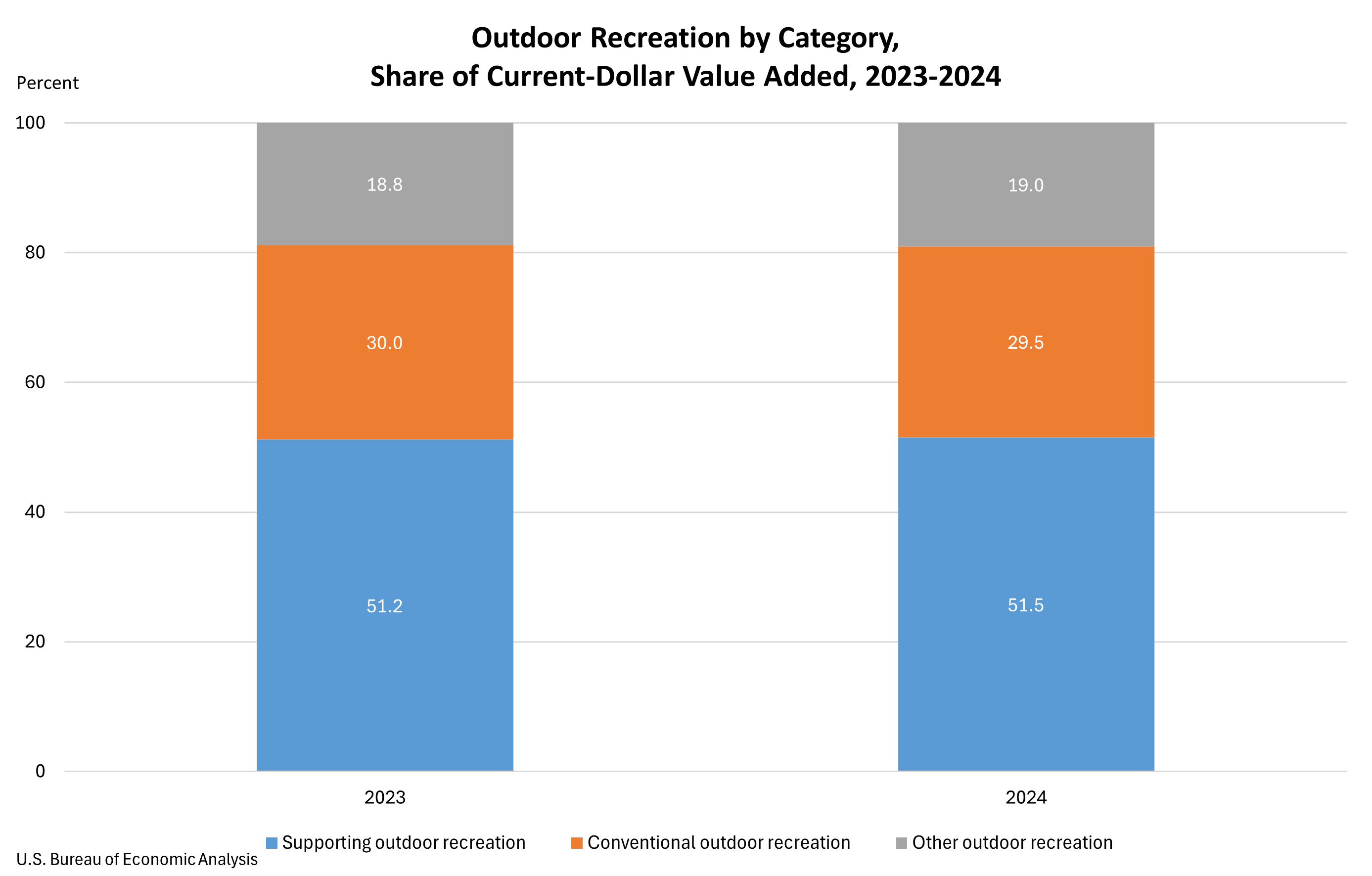
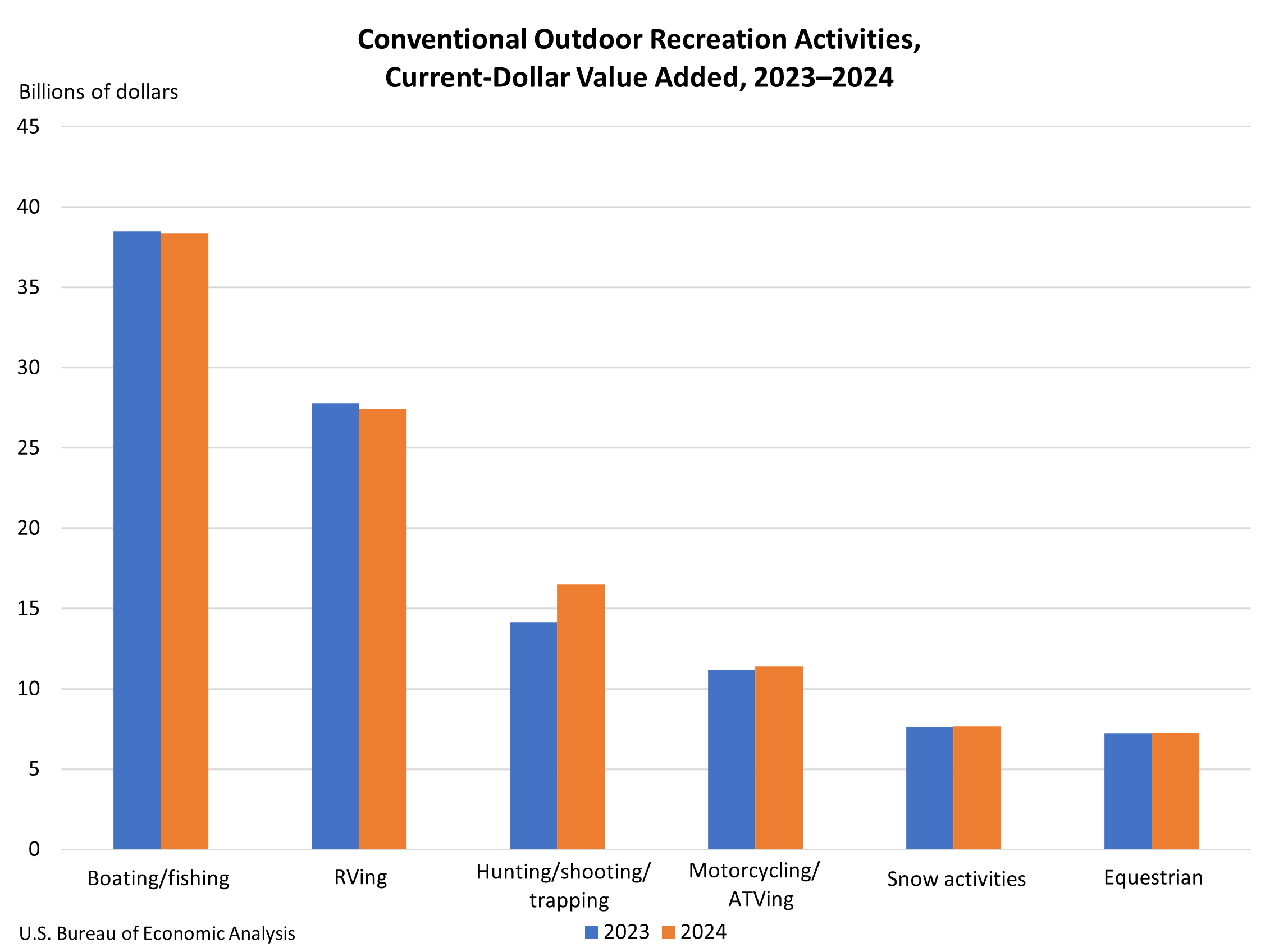
- Conventional activities encompass pursuits like bicycling, boating, hiking, and hunting. In 2024, these activities accounted for 29.5 percent of the U.S. outdoor recreation value added, a slight decrease from 30.0 percent in 2023.
- Other outdoor activities include pursuits such as gardening and outdoor concerts, making up 19.0 percent of value added in 2024, a marginal increase from 18.8 percent in 2023.
- Supporting activities, which include crucial elements like construction, travel and tourism, local trips, and government expenditures, represented the largest share at 51.5 percent of value added in 2024, up from 51.2 percent in 2023. The growth in supporting activities was particularly driven by travel and tourism, indicating a resurgence in spending on transportation, accommodation, and dining out associated with outdoor pursuits.
This breakdown highlights that while the direct engagement in traditional outdoor pastimes remains significant, the broader ecosystem of services and infrastructure that facilitates these activities is the largest economic driver. The strong performance of travel and tourism suggests a robust recovery and continued demand for experiences that combine outdoor exploration with leisure and hospitality.
Industry Breakdown: Where the Economic Power Lies
The BEA’s analysis also delves into the specific industries that contribute to the outdoor recreation economy. The arts, entertainment, recreation, accommodation, and food services industry group emerged as the leading contributor to the nation’s outdoor recreation value added in 2024, accounting for $174.4 billion, or 25.0 percent. This sector is integral to providing the experiences and amenities that outdoor enthusiasts seek. California, Florida, and New York led the nation in value added from this sector, reflecting their status as major tourist destinations with extensive offerings.
The retail trade industry followed closely, contributing $169.1 billion, or 24.3 percent, to the nation’s outdoor recreation value added. This sector is vital for outfitting individuals with the necessary gear and equipment for their adventures, from hiking boots and camping tents to fishing rods and bicycles. California, Texas, and Florida once again demonstrated significant contributions, underscoring their large consumer bases and strong retail presence.
Manufacturing secured the third-largest share, contributing $91.3 billion, or 13.1 percent, to the national outdoor recreation value added. This includes the production of recreational vehicles, boats, sporting goods, and other outdoor equipment. Indiana and Louisiana were notable for having manufacturing as their largest contributor to outdoor recreation value added, suggesting specialized production capabilities in these states. Texas and California also showed substantial contributions in this sector.
The detailed breakdown by industry provides valuable insights for policymakers and businesses. It allows for targeted investments and strategic planning to support specific segments of the outdoor recreation economy. For instance, understanding the strong reliance on travel and tourism can inform infrastructure development and marketing efforts, while the significant contribution of retail trade can guide support for outdoor gear manufacturers and retailers.
Implications and Future Outlook
The BEA’s findings underscore the outdoor recreation economy’s role as a vital engine of economic growth, job creation, and consumer spending. The sustained growth, even with a slight deceleration, points to an industry with inherent resilience and adaptability. The sector’s ability to absorb economic shocks and continue its upward trajectory speaks to the fundamental human desire for connection with nature and the pursuit of active lifestyles.
The varying contributions across states also highlight the importance of localized economic strategies. States with a strong natural resource base and a focus on developing recreational infrastructure and tourism can significantly leverage outdoor recreation for economic development. The data suggests that investments in trails, parks, water access, and related amenities can yield substantial economic returns.
Furthermore, the growth in compensation within the sector suggests an increasing recognition of the value of outdoor recreation-related jobs. This trend could attract new talent and encourage skill development within these industries. The BEA’s commitment to providing annual updates ensures that stakeholders have access to timely and accurate data, enabling informed decision-making and strategic planning.
The inclusion of "supporting activities" as the largest contributor also emphasizes the interconnectedness of outdoor recreation with other sectors of the economy, particularly hospitality and transportation. This suggests that policies aimed at bolstering outdoor recreation can have ripple effects, stimulating growth in a broader range of industries.
As the nation continues to prioritize health, wellness, and sustainable practices, the outdoor recreation economy is poised for continued expansion. The data released today provides a solid foundation for understanding its current impact and for forecasting its future trajectory. The BEA’s comprehensive reporting serves as an indispensable resource for businesses, policymakers, and researchers seeking to understand and capitalize on the immense economic potential of America’s great outdoors. The next release, scheduled for Fall 2026, will undoubtedly offer further insights into the evolving landscape of this dynamic and essential sector.