Lana Rhoades
The U.S. Bureau of Economic Analysis (BEA) has released its latest comprehensive report on the outdoor recreation economy, painting a robust picture of its significant and growing contribution to the nation’s economic output. The new data, covering all 50 states and the District of Columbia for the year 2025, indicates that the outdoor recreation sector accounted for a notable 2.3 percent of the current-dollar Gross Domestic Product (GDP), translating to a substantial $704.2 billion in value added. This figure underscores the sector’s increasing importance as a driver of economic activity and employment across the United States.
National Economic Impact and Trends
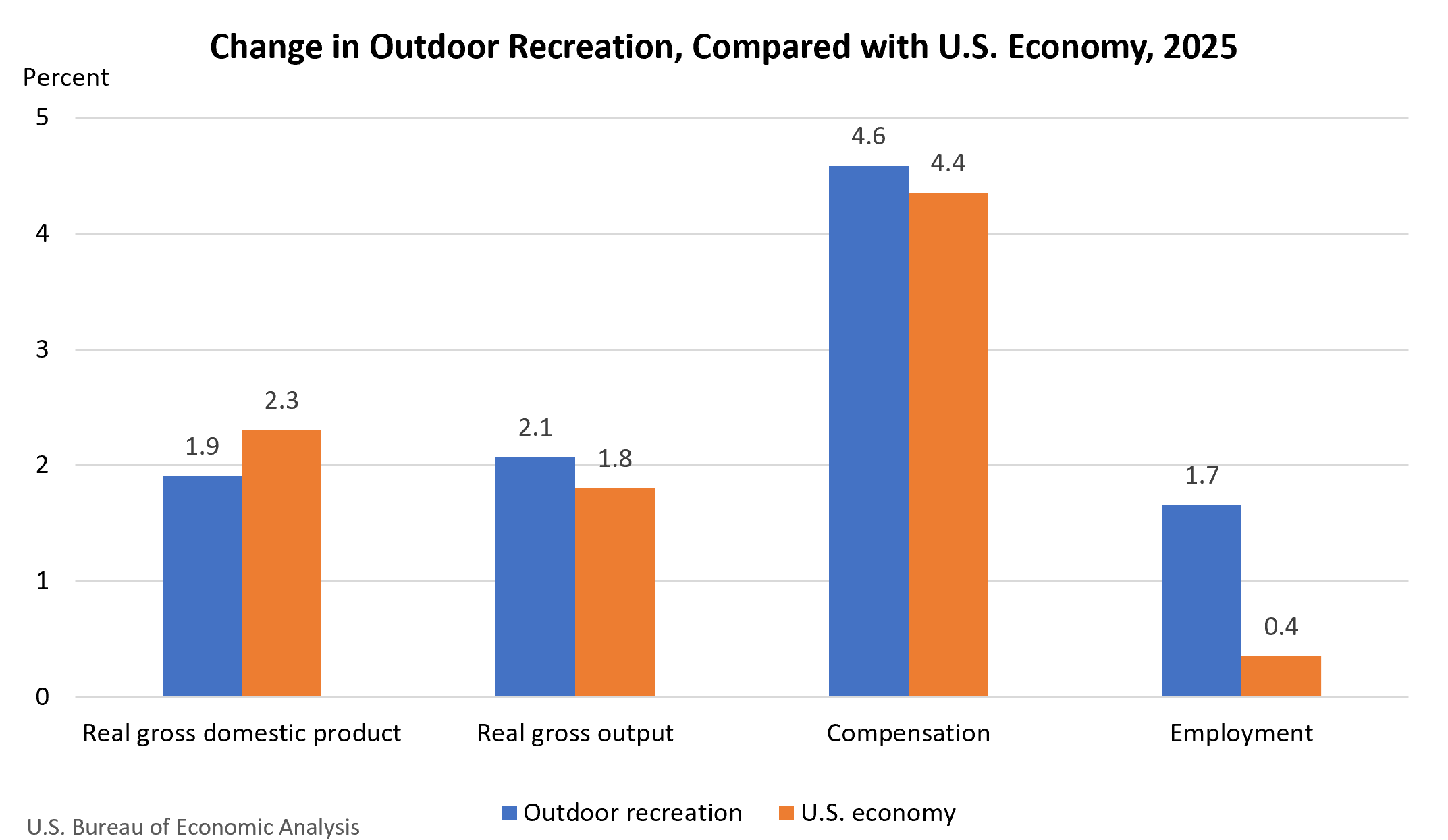
The BEA’s findings highlight that the value added of the outdoor recreation economy represents a significant portion of the overall U.S. economy. While the total national GDP experienced a growth of 2.3 percent in 2025, the outdoor recreation economy saw a slightly more modest increase of 1.9 percent in its inflation-adjusted (real) GDP. This represents a deceleration from the 2.5 percent growth recorded in 2024, suggesting a period of stabilization or a return to more moderate growth after a potentially more dynamic preceding year.
Despite this slight slowdown in real GDP growth compared to the overall economy, other key metrics within the outdoor recreation sector demonstrate continued strength. In 2025, real gross output for the sector rose by 2.1 percent. Crucially, compensation for workers in the outdoor recreation industry saw a significant increase of 4.6 percent, outpacing the growth in output and suggesting improved earnings for those employed in the sector. Furthermore, employment within outdoor recreation expanded by 1.7 percent, indicating a consistent demand for labor.
State-Level Variations and Leading Contributors
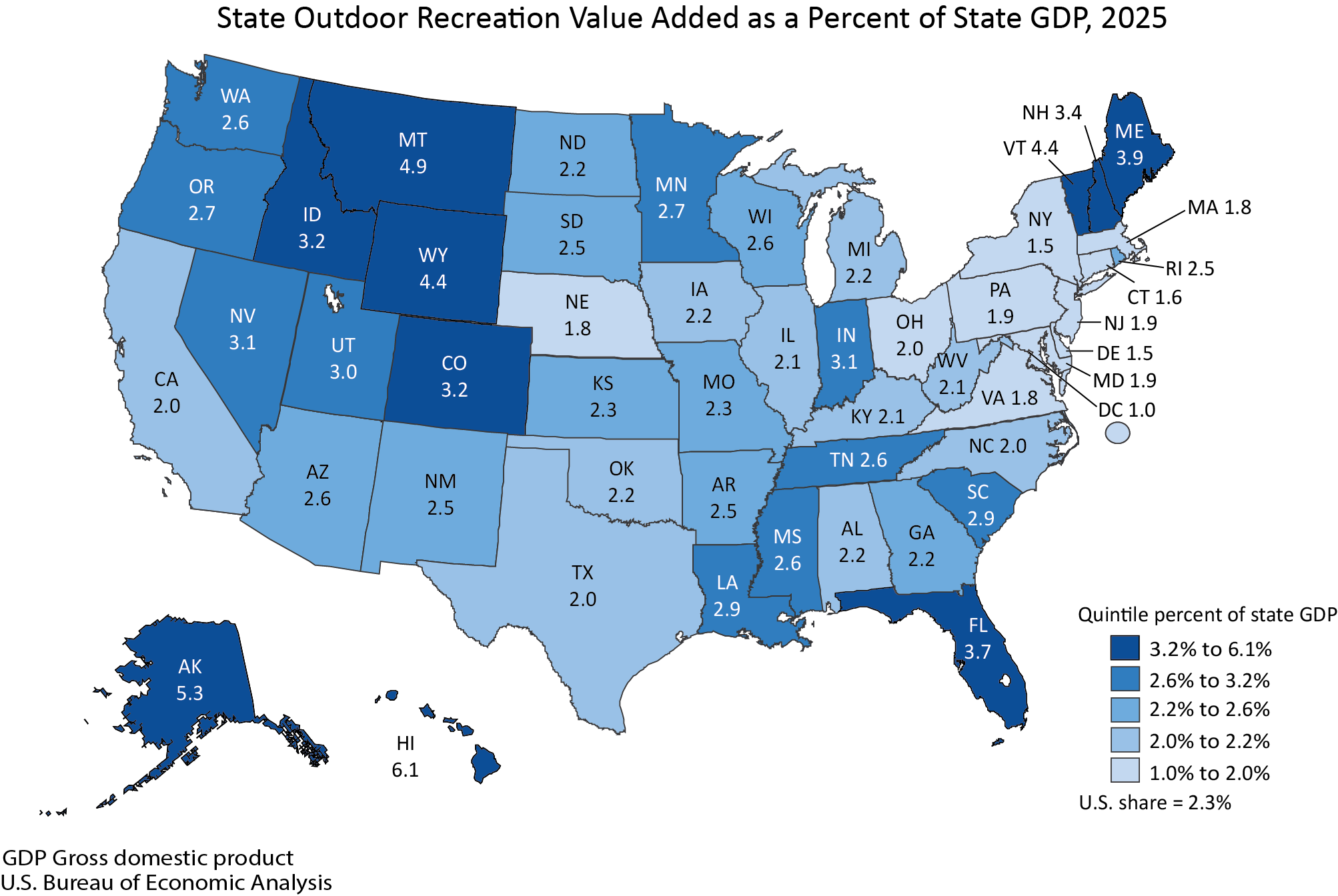
The economic impact of outdoor recreation is not uniform across the nation, with considerable variation observed at the state level. Hawaii emerged as the leader, with its outdoor recreation economy accounting for an impressive 6.1 percent of its state GDP. This high percentage is likely attributable to the state’s unique natural landscapes, abundant outdoor activities, and its reliance on tourism, which heavily incorporates outdoor experiences.
In stark contrast, the District of Columbia registered the lowest share, with outdoor recreation contributing 1.0 percent to its state GDP. This difference highlights the diverse economic structures and primary drivers of economic activity across different regions of the United States.
Employment Growth Across States
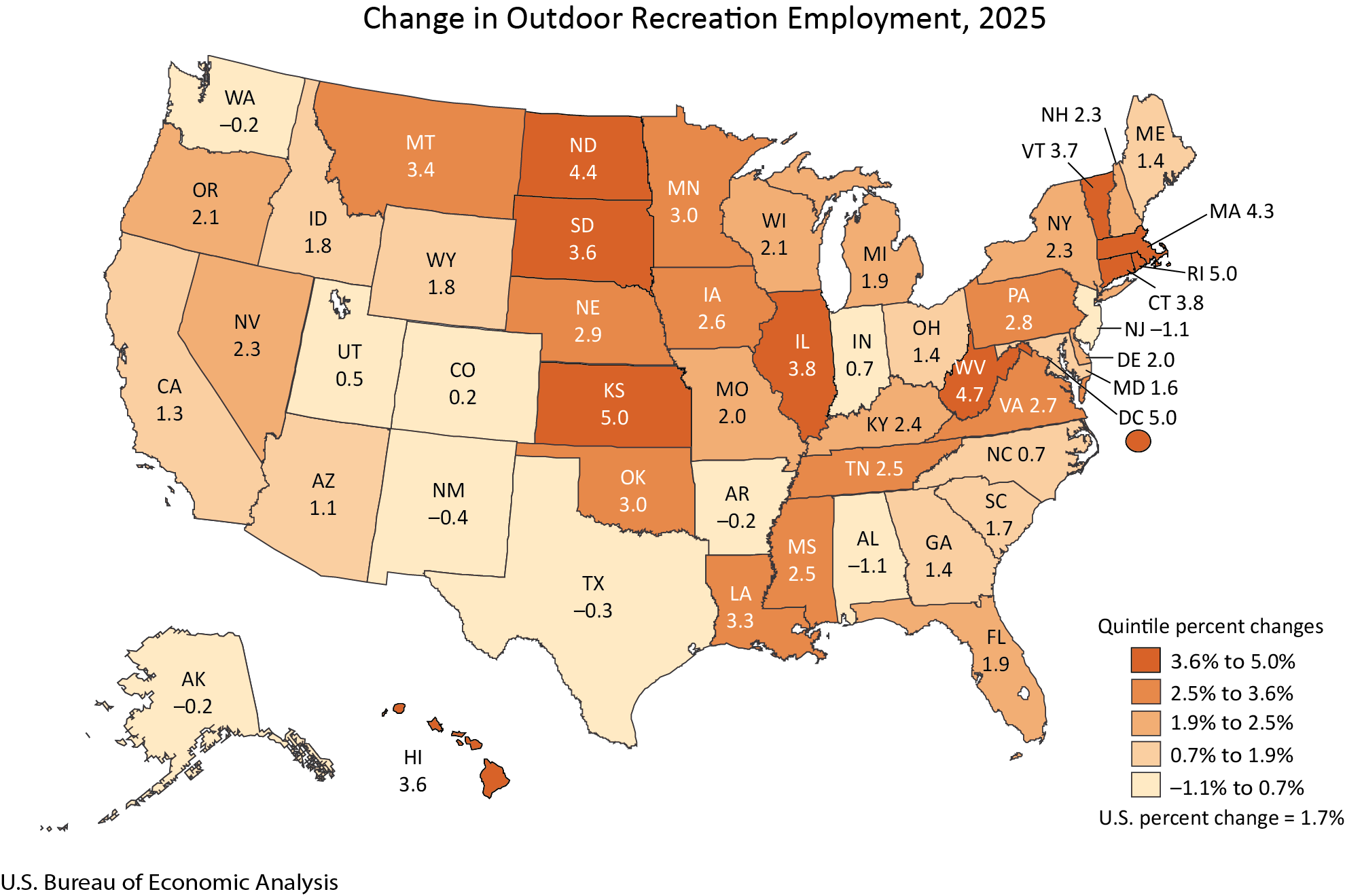
The BEA data also reveals a positive trend in outdoor recreation employment, with 43 states and the District of Columbia experiencing an increase in jobs within the sector in 2025. Rhode Island, Kansas, and the District of Columbia reported the highest percentage increase in outdoor recreation employment, each seeing a 5.0 percent rise. This broad-based employment growth suggests that the benefits of the outdoor recreation economy are being felt across a wide geographical spectrum, contributing to local economies and job markets.
Conversely, New Jersey and Alabama experienced a slight decline in outdoor recreation employment, with a decrease of 1.1 percent. These figures, while representing a small portion of the overall trend, warrant further investigation into the specific factors influencing these regional downturns.
Categorizing Outdoor Recreation Activities
The BEA categorizes outdoor recreation activities into three primary groups to better understand their economic contributions:
- Conventional Activities: This group encompasses traditional outdoor pursuits such as bicycling, boating, hiking, fishing, hunting, camping, and other nature-based activities. These activities often form the core of what many people perceive as outdoor recreation.
- Other Activities: This category includes a broader range of activities that take place outdoors but may not be as directly tied to natural environments, such as gardening, outdoor concerts, festivals, and recreational sports.
- Supporting Activities: This crucial segment comprises industries that facilitate and enable outdoor recreation. It includes construction of outdoor facilities, travel and tourism services, local transportation, retail of outdoor gear, and government expenditures related to parks, recreation, and conservation.
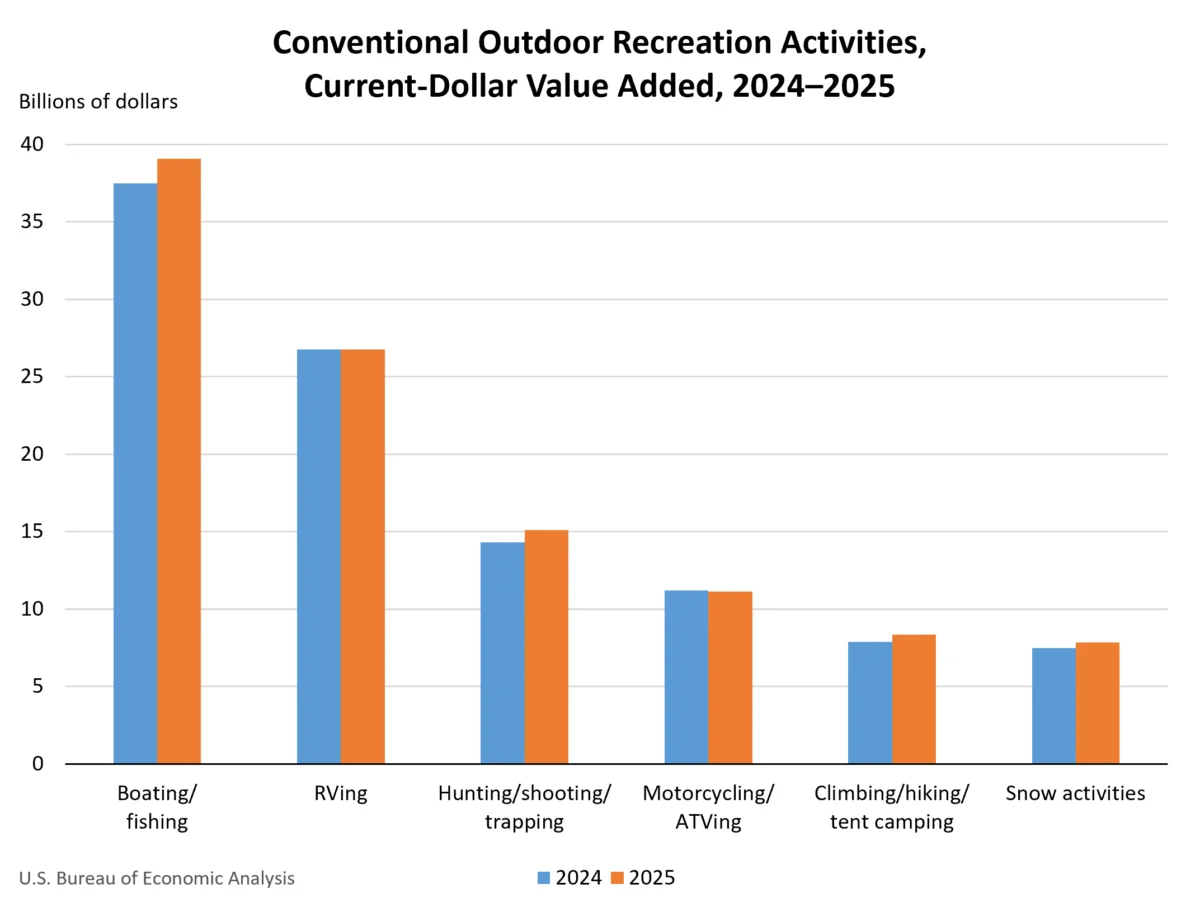
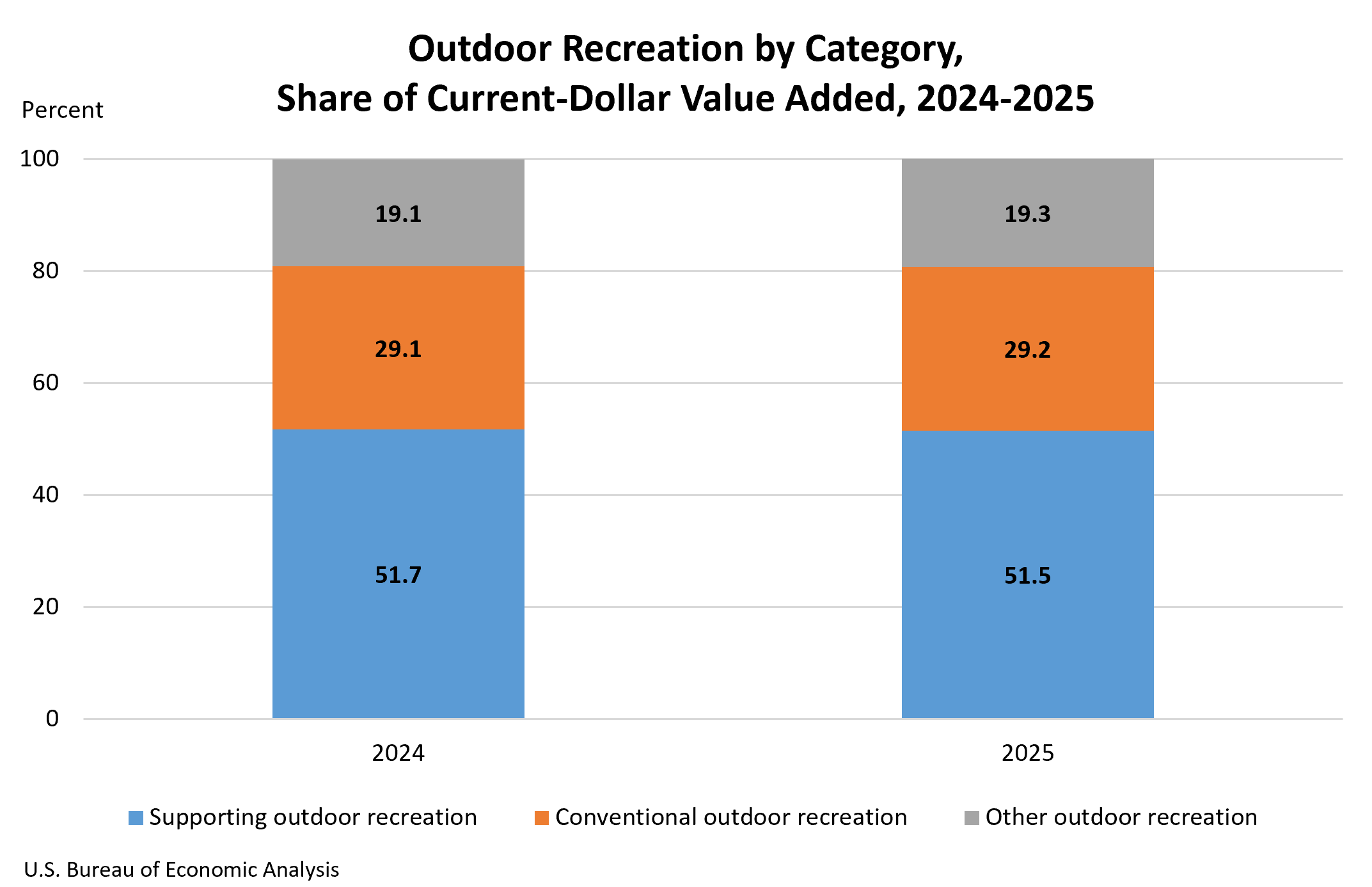
In 2025, supporting activities continued to be the largest contributor to the outdoor recreation economy, accounting for 51.5 percent of the current-dollar value added. This highlights the interconnectedness of the sector, where the infrastructure, services, and retail that enable outdoor experiences are as economically significant as the activities themselves. Conventional outdoor recreation activities represented 29.2 percent of the value added, a slight increase from 29.1 percent in 2024. "Other outdoor recreation" accounted for 19.3 percent, also showing a marginal increase from 19.1 percent in the previous year. This suggests a stable and relatively consistent distribution of economic value across these categories.
Industry Contributions to the Outdoor Recreation Economy
The BEA also provides a detailed breakdown of how different industries contribute to the overall outdoor recreation economy. This analysis reveals the diverse range of businesses and sectors that benefit from and support outdoor activities.
The arts, entertainment, recreation, accommodation, and food services industry group stood out as the largest contributor to the U.S. outdoor recreation economy in 2025. This sector accounted for $179.5 billion, or 25.5 percent, of the current-dollar value added. Its significant share underscores the integral role of hospitality, leisure, and cultural services in facilitating and capitalizing on outdoor pursuits. At the state level, this industry group was the dominant contributor in 25 states and the District of Columbia. California, Florida, and New York led the nation in value added from this sector, with contributions of $23.5 billion, $23.4 billion, and $11.6 billion, respectively. These states are renowned for their tourism industries, which heavily leverage outdoor attractions.
Following closely, the retail trade industry was the second-largest contributor nationally, generating $166.5 billion, or 23.6 percent, of the value added. This highlights the substantial market for outdoor gear, apparel, and equipment. Retail trade was the primary industry driver of outdoor recreation in 22 states. California again led in this category with $19.5 billion, followed by Texas ($14.6 billion) and Florida ($13.3 billion). This indicates a strong consumer demand for products associated with outdoor lifestyles in these populous states.
The transportation and warehousing industry ranked third nationally, contributing $86.4 billion, or 12.3 percent, of the value added. This segment is vital for enabling travel to and from outdoor destinations. Transportation and warehousing emerged as the largest industry contributor to outdoor recreation in Alaska, a state heavily reliant on its vast natural landscapes and remote destinations. Florida, California, and Texas again showed significant contributions in this sector, reflecting their roles as major travel hubs and destinations for outdoor enthusiasts.
Background and Methodology of the BEA Report
The U.S. Bureau of Economic Analysis has been tracking the economic impact of outdoor recreation since 2016, with annual updates to its statistics. This latest release for 2025 incorporates a wealth of newly available and revised source data, reflecting the BEA’s commitment to providing the most accurate and up-to-date economic intelligence. The national-level estimates for gross output, value added, employment, and compensation have been updated as part of the 2026 annual update of the National Economic Accounts. This comprehensive update includes revisions to the National Income and Product Accounts (NIPA) and the Industry Economic Accounts, ensuring that the outdoor recreation data is harmonized with the broader economic framework.
Similarly, the state-level statistics have been significantly enhanced. They now reflect the updated national data, as well as the 2026 annual update of the Regional Economic Accounts. The inclusion of newly available and revised regional source data further bolsters the accuracy and granularity of the state-specific findings. This meticulous process of data collection and revision is crucial for providing policymakers, businesses, and the public with reliable insights into the economic dynamics of the outdoor recreation sector.
Implications and Future Outlook
The consistent and substantial contribution of the outdoor recreation economy to the U.S. GDP and employment underscores its importance as a resilient and growing sector. The data suggests that investments in natural resource protection, park infrastructure, and outdoor recreation facilities can yield significant economic returns. As consumer preferences increasingly lean towards experiences and healthy lifestyles, the demand for outdoor activities is likely to remain robust.
The slight deceleration in real GDP growth for outdoor recreation in 2025, compared to the overall economy, might indicate a normalization of growth following periods of heightened activity, potentially influenced by post-pandemic trends. However, the strong growth in compensation suggests that the sector is still offering attractive employment opportunities.
The detailed industry and activity breakdowns provide valuable intelligence for businesses seeking to understand market trends and identify growth opportunities. For instance, the significant role of supporting activities points to the ongoing importance of infrastructure development, tourism services, and retail support for the sector’s continued expansion.
Looking ahead, the BEA’s commitment to annual updates ensures that this vital economic data will continue to be refined. The next release, scheduled for Fall 2027, will cover the 2026 Outdoor Recreation Economic Statistics for the U.S. and States, providing further insights into the sector’s evolving landscape. This ongoing analysis is indispensable for informing strategic decision-making, fostering economic development, and appreciating the profound economic impact of America’s cherished outdoor spaces and activities.