Lana Rhoades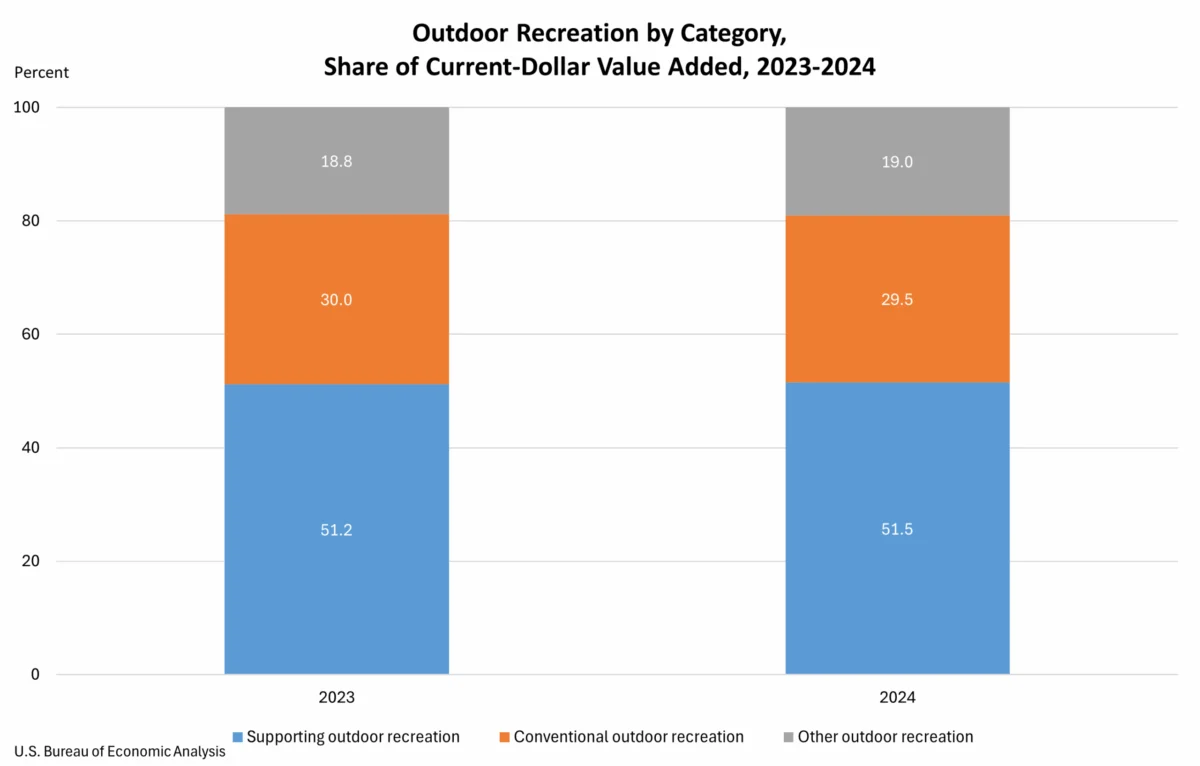
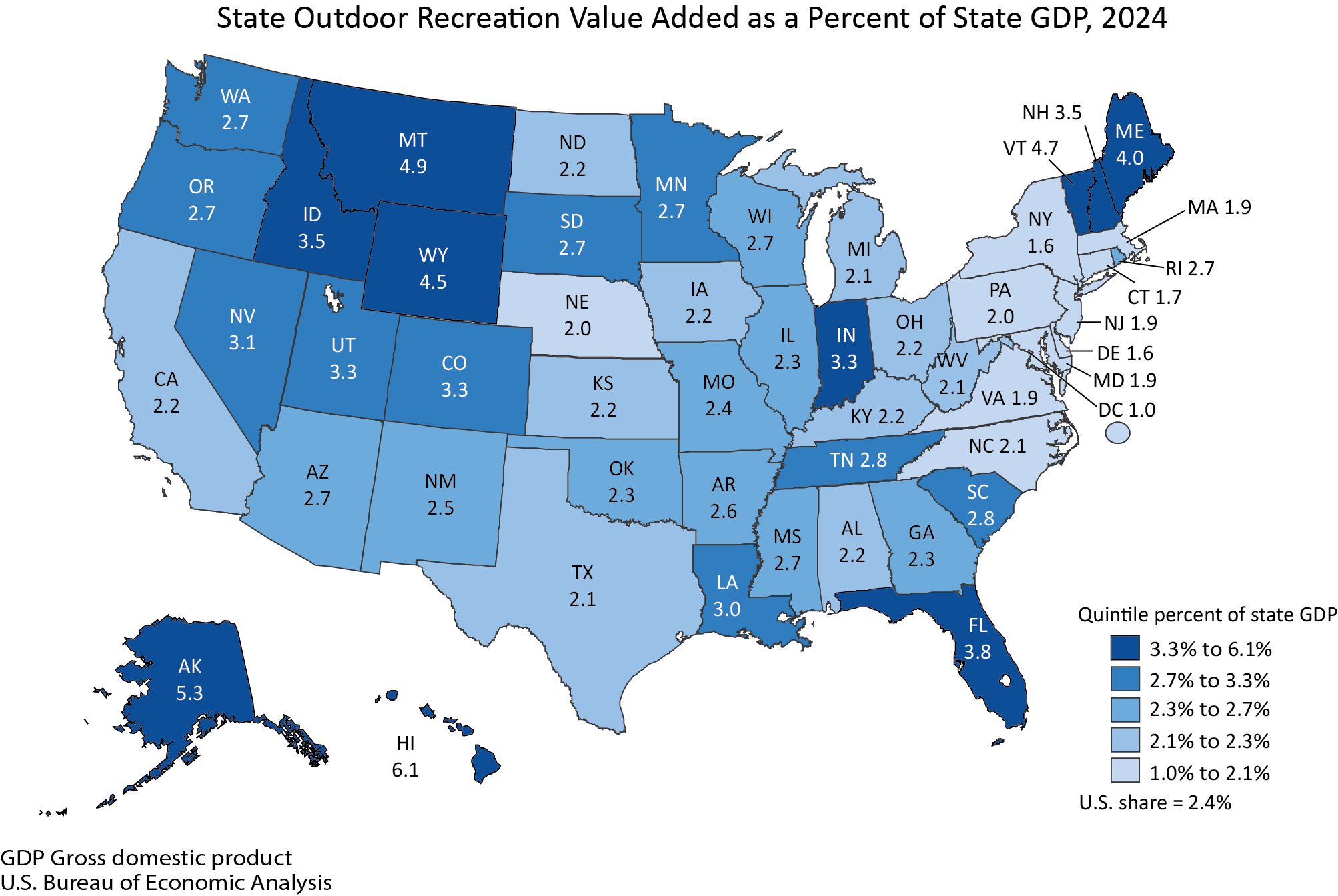
Washington D.C. – The U.S. Bureau of Economic Analysis (BEA) has released its latest comprehensive report on the nation’s outdoor recreation economy, revealing a robust contribution of $696.7 billion to the current-dollar Gross Domestic Product (GDP) in 2024. This figure represents a significant 2.4 percent of the total national GDP, underscoring the sector’s substantial economic footprint. The data, which covers all 50 states and the District of Columbia, also highlights varying degrees of outdoor recreation’s economic impact across different regions, with Hawaii leading at 6.1 percent of its state GDP and the District of Columbia at 1.0 percent.
This annual update provides critical insights into the dynamism of an industry that encompasses a wide array of activities, from conventional pursuits like hiking and boating to supporting services such as travel and tourism. The BEA’s findings offer a detailed look at the sector’s performance, including its growth trajectory, employment figures, and the specific contributions of various outdoor activities and industries.
A Look at the Growth Trajectory
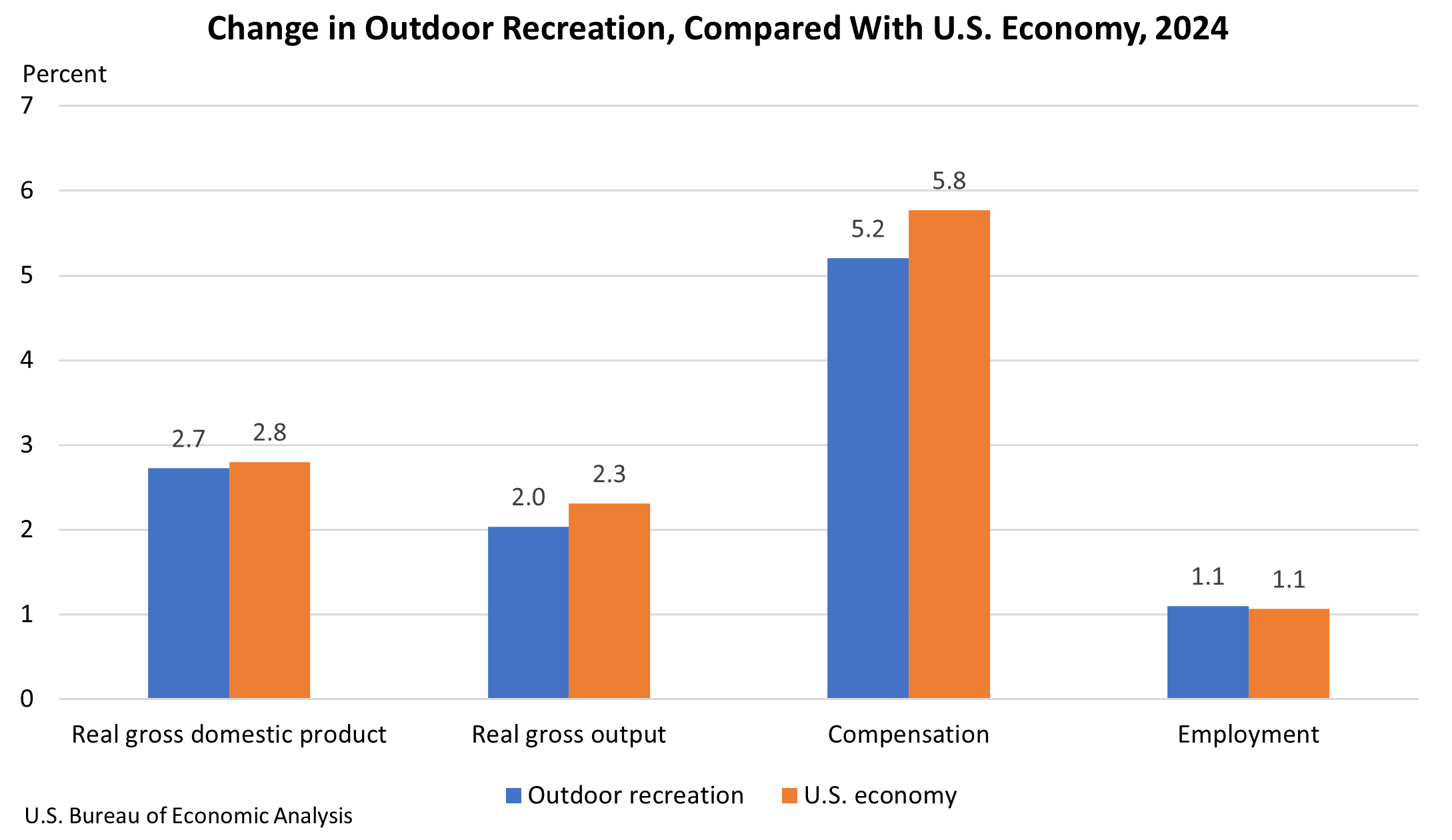
In 2024, the outdoor recreation economy demonstrated continued, albeit moderated, growth. Inflation-adjusted (real) GDP for the sector increased by 2.7 percent. This growth rate slightly trailed the overall U.S. economy’s 2.8 percent expansion, indicating a cooling from the more significant surge observed in 2023, when outdoor recreation saw a 5.3 percent increase. This moderation suggests a normalization of activity following a period of heightened engagement, potentially influenced by evolving consumer behaviors and economic conditions.
Despite this slight deceleration, the sector’s overall economic output, measured by real gross output, still expanded by 2.0 percent. Compensation within the outdoor recreation sector saw a more substantial increase of 5.2 percent, and employment grew by 1.1 percent. These figures suggest that while the pace of expansion may have adjusted, the sector continues to create jobs and generate income for its workforce.
The BEA’s methodology for these statistics involves a rigorous annual update of national and regional economic accounts. The 2024 data incorporates findings from the 2025 annual update of the National Economic Accounts, which includes the National Income and Product Accounts and the Industry Economic Accounts. This process ensures that the statistics reflect the latest available source data and revised figures, providing a more accurate and up-to-date picture of the outdoor recreation economy.
Regional Variations in Outdoor Recreation’s Economic Influence
The BEA’s state-level data reveals a diverse economic landscape shaped by outdoor recreation. Hawaii, with its iconic natural beauty and established tourism industry, stands out as the state where outdoor recreation constitutes the largest share of its GDP, at 6.1 percent. This highlights the critical role of activities like surfing, hiking, and water sports in the island state’s economic structure.
In contrast, the District of Columbia’s lower percentage (1.0 percent) reflects its distinct economic composition, which is more heavily weighted towards government, services, and professional sectors, with outdoor recreation playing a comparatively smaller direct role in its overall GDP.
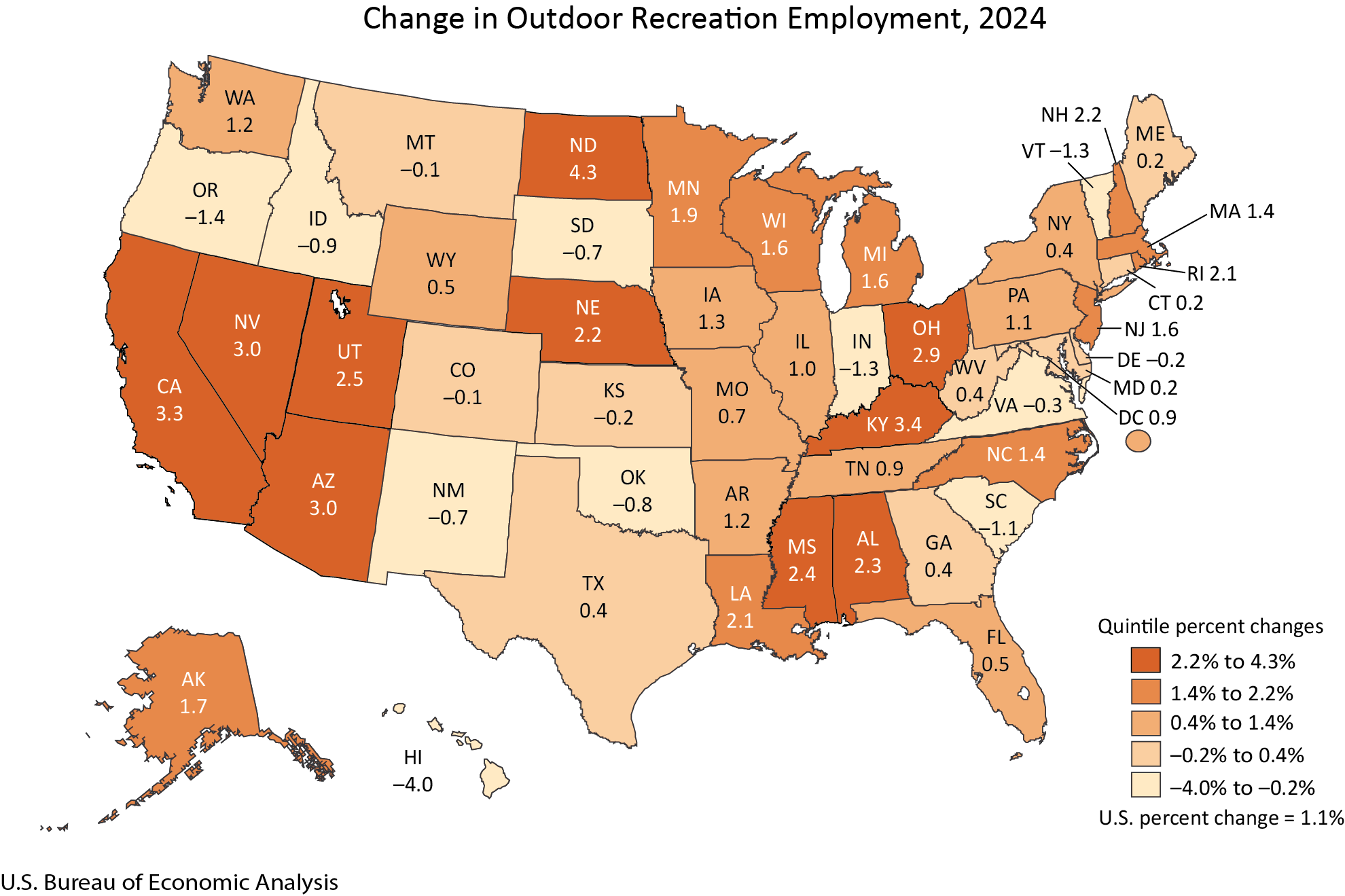
The report also details the fluctuations in outdoor recreation employment across states. In 2024, employment in this sector saw an increase in 36 states and the District of Columbia. North Dakota experienced the most significant percentage increase in outdoor recreation employment at 4.3 percent, suggesting a burgeoning sector in that region. Conversely, Hawaii saw a notable decrease of 4.0 percent in outdoor recreation employment, which could be attributed to various factors including shifts in tourism patterns, labor availability, or specific industry performance within the state.
These regional disparities underscore the importance of tailoring economic development strategies to leverage local natural assets and consumer preferences. States with a strong natural resource base and a culture that embraces outdoor activities are likely to see a more pronounced economic contribution from this sector.
Deconstructing the Outdoor Recreation Economy: Activities and Industries
The BEA categorizes outdoor recreation activities into three broad groups:
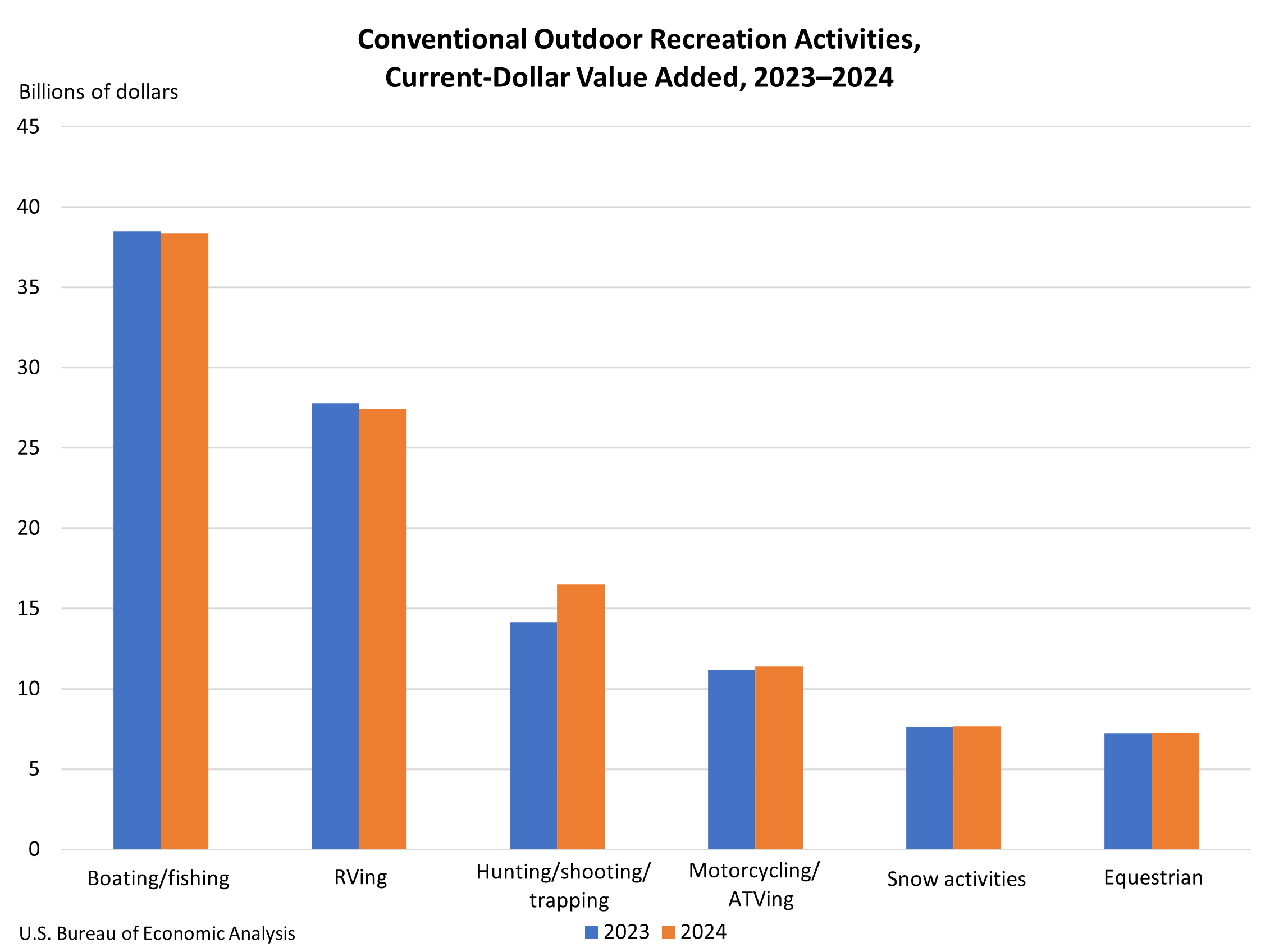
- Conventional Activities: These are the more traditional pursuits such as bicycling, boating, hiking, hunting, fishing, camping, and climbing.
- Other Outdoor Activities: This category includes activities like gardening, outdoor concerts, and other forms of outdoor leisure that may not be as physically demanding or resource-intensive as conventional activities.
- Supporting Activities: This crucial segment encompasses industries that enable and facilitate outdoor recreation. It includes construction related to outdoor facilities, travel and tourism services (transportation, accommodation, food services), local trips, and government expenditures on parks and public lands.
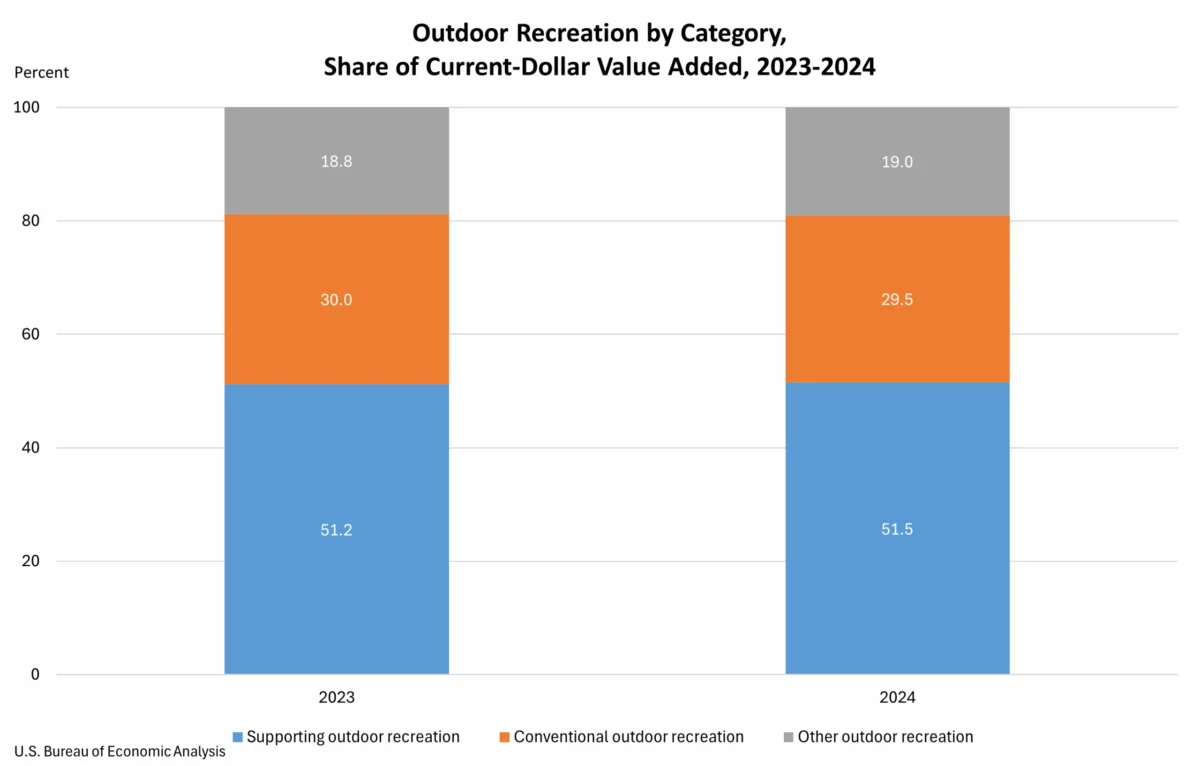
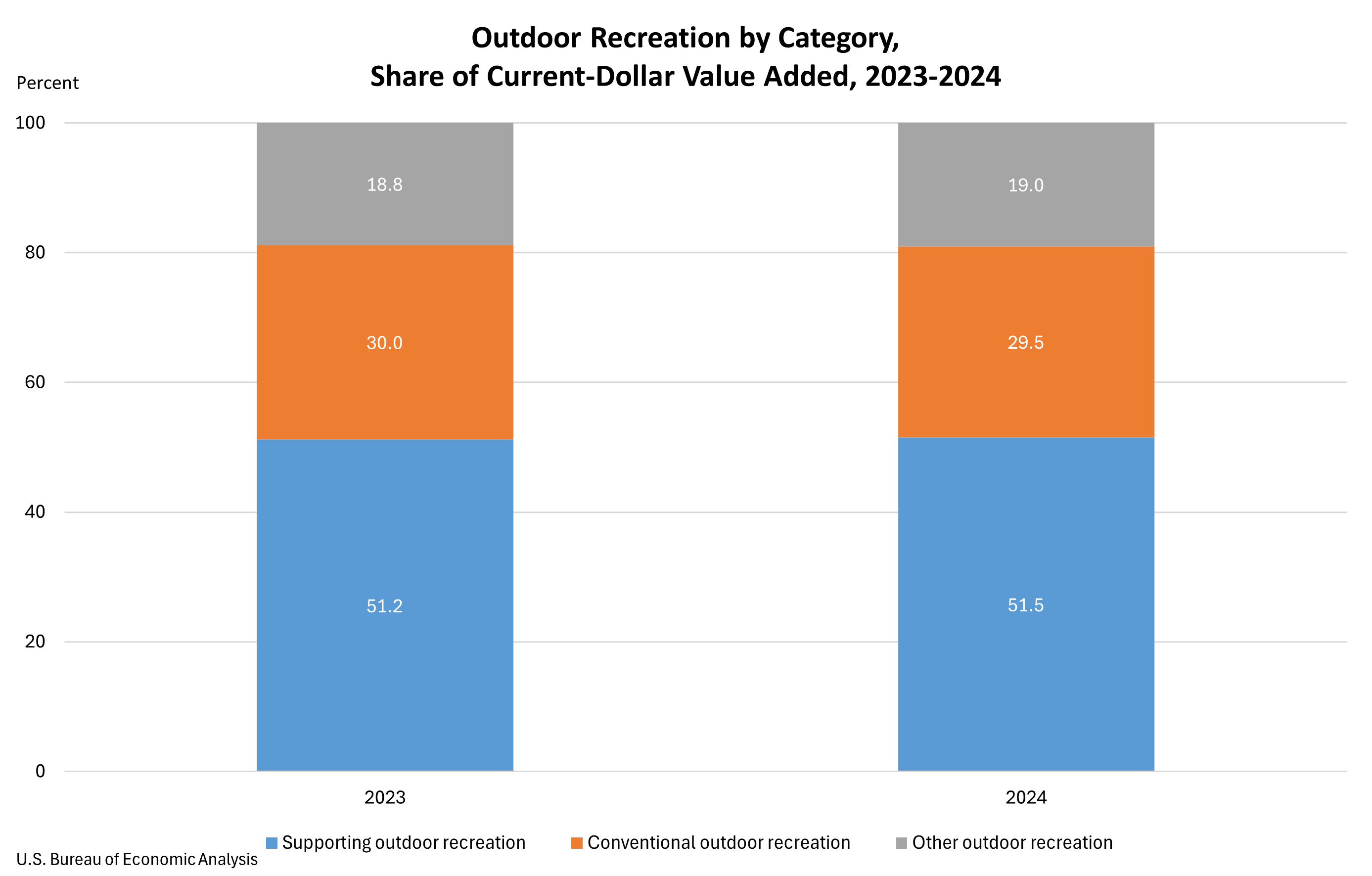
In 2024, supporting activities continued to be the largest component of the outdoor recreation economy, accounting for 51.5 percent of its total value added. This dominance highlights the interconnectedness of outdoor recreation with broader economic sectors, particularly travel and tourism. The growth within supporting activities was notably driven by increases in spending on transportation, hotels, and restaurants, indicating a strong demand for services that enable people to engage in outdoor pursuits.
Conventional outdoor recreation accounted for 29.5 percent of value added in 2024, a slight decrease from 30.0 percent in 2023. This marginal shift suggests that while still a significant driver, its relative share has slightly diminished as supporting activities have gained prominence.
Other outdoor recreation activities represented 19.0 percent of value added in 2024, a modest increase from 18.8 percent in 2023. This category’s stable and slightly growing share indicates the continued popularity of diverse outdoor leisure pursuits.
Industry-Specific Contributions to Outdoor Recreation
The BEA’s analysis also breaks down the economic impact by industry. The arts, entertainment, recreation, accommodation, and food services sector emerged as the largest contributor to the U.S. outdoor recreation economy in 2024, generating $174.4 billion in value added, or 25.0 percent of the total. This sector is intrinsically linked to the outdoor experience, providing essential services that enhance enjoyment and accessibility. In 23 states and the District of Columbia, this industry group was the primary driver of outdoor recreation value added. California ($24.1 billion), Florida ($22.7 billion), and New York ($11.8 billion) led the nation in this category, reflecting their status as major tourist destinations and hubs for entertainment and hospitality.
Following closely, retail trade secured the second-largest share, contributing $169.1 billion, or 24.3 percent of the value added. This sector is vital for outfitting outdoor enthusiasts with necessary gear, apparel, and equipment. Retail trade was the dominant industry for outdoor recreation in 24 states, with California ($19.3 billion), Texas ($14.4 billion), and Florida ($13.4 billion) again showing substantial contributions.
The manufacturing sector ranked third, contributing $91.3 billion, or 13.1 percent of the value added. This industry is responsible for producing the equipment and vehicles used in many outdoor activities, from bicycles and boats to recreational vehicles and camping gear. Manufacturing was the leading industry for outdoor recreation in two states, Indiana and Louisiana. Texas ($13.1 billion), California ($11.6 billion), and Indiana ($9.1 billion) were the top states in this sector’s contribution to outdoor recreation.
These industry breakdowns highlight how the outdoor recreation economy is not a monolithic entity but rather a complex web of interconnected businesses and services, each playing a role in its overall success.
Context and Future Outlook
The release of these statistics comes at a time when outdoor recreation has gained significant prominence in public consciousness. The COVID-19 pandemic saw a surge in outdoor activities as individuals sought safe ways to recreate and connect with nature. While some of that heightened engagement may have normalized, the underlying trend of appreciating and investing in outdoor experiences appears to be enduring.
The BEA’s commitment to providing annual updates ensures that policymakers, industry leaders, and the public have access to timely and accurate data. This information is crucial for understanding economic trends, identifying growth opportunities, and developing effective policies to support the sector. For example, investments in public lands, trails, and recreational infrastructure can be justified and guided by the economic impact data.
The BEA also provides additional information, including definitions, statistical conventions, and uses of these statistics, to facilitate a deeper understanding of the data. The next release of Outdoor Recreation Economic Statistics for the U.S. and States, covering 2025, is anticipated in the Fall of 2026. This ongoing series of reports will continue to chart the evolving landscape of this vital economic engine.
The implications of these findings are far-reaching. For businesses, the data can inform investment decisions, marketing strategies, and product development. For governments, it provides evidence to support policy initiatives aimed at conservation, tourism promotion, and economic diversification. As the nation continues to grapple with economic fluctuations and evolving consumer priorities, the outdoor recreation economy remains a significant source of jobs, revenue, and well-being, reflecting a growing appreciation for the value of engaging with the natural world. The resilience and adaptability of this sector, as evidenced by the latest BEA report, suggest it will continue to be a vital component of the U.S. economy for years to come.