Layla Zulfa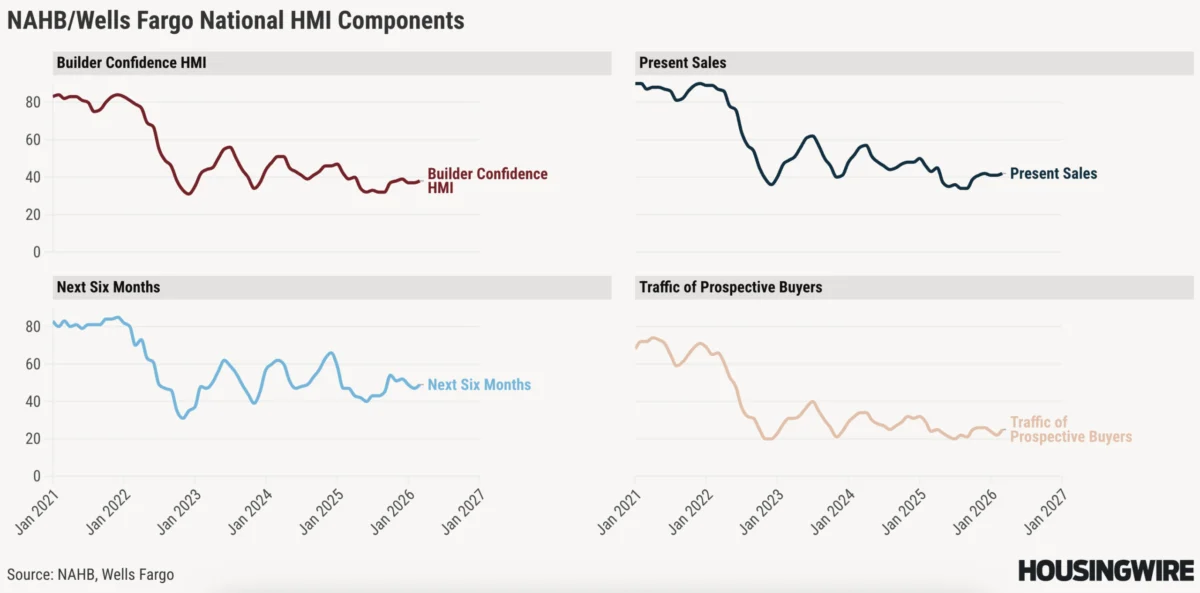
The U.S. homebuilding sector finds itself in a precarious position, with executives expressing a guarded outlook for the market in 2026. This cautious sentiment is fueled by a confluence of persistent challenges: tepid buyer demand, a relentless squeeze on profit margins, and a palpable weakness in consumer confidence. Adding a significant layer of complexity to an already intricate landscape is the escalating conflict with Iran, a geopolitical development with the potential to further destabilize an already fragile market and disrupt crucial supply chains.
The latest pulse of the industry, as measured by the National Association of Home Builders (NAHB)/Wells Fargo Housing Market Index (HMI), revealed builder confidence remaining in subpar territory in March, registering a score of 38. This figure has shown little significant movement since October, hovering in a range that indicates a prevailing sense of unease rather than burgeoning optimism. However, a glimmer of positive movement exists, as the index has shown a notable uptick in recent months compared to the average reading of 32 recorded between June and September of the previous year. This marginal improvement, while not yet indicative of a robust recovery, suggests that the market may have moved beyond its nadir.
Delving deeper into the HMI survey, the persistent struggles of builders to attract buyers become evident. In March, a substantial 37% of homebuilders reported implementing price reductions, a trend that has become a routine strategy. Concurrently, a commanding 64% of builders continued to offer sales incentives, a practice that remained largely unchanged from the preceding month. The average price reduction held steady at 6%, marking the twelfth consecutive month where over 60% of builders have resorted to incentives to stimulate sales and shore up market activity. This sustained reliance on discounts underscores the delicate balance builders are attempting to strike between maintaining some level of profitability and moving inventory in a market constrained by affordability issues.
"Affordability for buyers and builders remains a top concern," articulated NAHB Chairman Bill Owens in a recent statement. He elaborated on the hesitations of potential homebuyers, noting, "Many buyers remain on the fence waiting for lower interest rates and due to economic uncertainty. Builders are facing elevated land, labor, and construction costs and nearly two-thirds continue to offer sales incentives in a bid to firm up the market." This dual pressure – the affordability gap for consumers and the escalating cost of production for builders – creates a challenging environment for sustained growth.
Signs of Tentative Demand Improvement Amidst Broader Economic Concerns
Despite the overarching cautiousness, there have been anecdotal reports and some corporate disclosures suggesting a nascent improvement in buyer traffic and demand. During the International Builders’ Show held in February, many industry insiders conveyed a sense of cautious optimism. They reported, on a qualitative basis, a slight uptick in buyer visits and interest from mid-December through February. In some instances, this improvement exceeded what would typically be attributed to seasonal shifts.
While these localized observations may not immediately translate into a significant surge in overall demand for the entirety of 2026, they do align with the financial reports of several publicly traded homebuilders. These companies, during their earnings calls earlier this year, indicated a more positive trajectory. The growing hope within the industry is that even if a full-fledged rebound in the homebuilding market doesn’t materialize immediately, the sector may have indeed reached its cyclical low point.
Illustrative of this trend is Hovnanian Enterprises, which, during its first-quarter 2026 earnings call, disclosed an improvement in its sales pace during January and the initial weeks of February compared to the same period in the prior year. Similarly, Toll Brothers reported a "modest" increase in both buyer traffic and new home deposits during the corresponding period, a year-over-year comparison that offers a potential positive indicator.
The Shadow of Geopolitics: Iran Conflict’s Impact on Oil Prices and Consumer Confidence
The escalating conflict with Iran, however, introduces a significant and unpredictable variable into the homebuilding outlook. This geopolitical development carries the potential to exacerbate existing supply chain vulnerabilities and erode consumer confidence, precisely at a time when the industry typically anticipates a busier spring selling season.

The strategic importance of the Strait of Hormuz, a vital chokepoint for global oil shipments, has come into sharp focus. Reports indicate that the closure or severe disruption of this waterway has propelled oil prices to levels approaching $100 per barrel. This represents a dramatic increase from the approximate $65 per barrel valuation observed prior to the onset of the conflict. Such a surge in energy costs has ripple effects throughout the economy, impacting transportation, manufacturing, and ultimately, the discretionary spending power of consumers.
In response to the escalating tensions, the Trump administration has been actively developing strategies to ensure the safe passage of vessels through the Strait of Hormuz. Concurrently, British Prime Minister Keir Starmer indicated on Monday that the United Kingdom is collaborating with its international allies on a plan to reopen this critical shipping corridor. However, a clear and definitive timeline for a resolution to the conflict, or for the restoration of unimpeded maritime traffic, remains elusive. This uncertainty is a significant concern for industries reliant on stable global trade and predictable commodity prices.
The ripple effects of the geopolitical instability are also being felt in the mortgage market. The average 30-year fixed mortgage rate has seen an upward tick, now exceeding 6.0% since the conflict began. While mortgage rates have experienced a general decline since last summer, this recent ascent adds another layer of challenge for prospective homebuyers, potentially pushing homeownership further out of reach for some segments of the population.
NAHB Chief Economist Robert Dietz commented on this confluence of factors, stating, "While the Freddie Mac 30-year fixed rate mortgage averaged 6.05% in February, the lowest since August 2022, downpayment hurdles and uncertainty from the conflict with Iran and the price of oil will be headwinds going forward." This statement highlights the dual threat of rising borrowing costs and economic instability stemming from geopolitical events, both of which directly impact housing affordability and buyer willingness.
Single-Family Housing Starts Show Declining Trend, Multifamily Offers Solace
Against this backdrop of market uncertainty and geopolitical turmoil, data on housing starts paints a mixed picture, with a clear divergence between single-family and multifamily construction. According to recently released data from the U.S. Census Bureau, single-family housing starts experienced a decline in January. The seasonally adjusted annual rate fell by 2.8% to 935,000 units, representing a year-over-year decrease of 6.5%. This downturn follows a more significant 7.3% drop in single-family housing starts recorded throughout 2025, underscoring a persistent weakness in this segment of the market.
However, the multifamily housing sector has demonstrated a more robust performance, acting as a counterbalance to the decline in single-family starts. Overall housing starts saw a notable increase of 7.2% month-over-month in January, largely propelled by the strong multifamily segment. Starts for buildings with five or more units surged by 29.1% to an annual rate of 524,000 units, indicating a significant expansion in the development of larger residential complexes. This segment’s strength is often attributed to factors such as increased demand for rental housing, particularly in urban centers, and potentially more favorable economics for developers compared to single-family construction in the current market.
Permitting data further reinforces the trends observed in housing starts. Permits for single-family homes saw a year-over-year decrease of 11.6% and a month-over-month dip of 0.9% from December. Multifamily building permits also experienced a decline, falling 13.4% from the previous month. These figures suggest a cautious approach by builders in planning for future single-family construction, while the multifamily permit data, despite the monthly drop, reflects the strong recent performance in that sector.
Looking ahead, NAHB Chief Economist Robert Dietz forecasts that single-family housing starts are likely to remain relatively flat throughout 2026. However, he anticipates a more optimistic scenario for 2027, with a projected increase of 6% in single-family starts. This projection implies a gradual recovery rather than an immediate surge, contingent on improvements in economic conditions, interest rates, and overall buyer sentiment. The multifamily sector’s trajectory, while currently strong, will also be influenced by broader economic factors and rental market dynamics.
The ongoing interplay of economic pressures, evolving consumer behavior, and unpredictable geopolitical events will continue to shape the trajectory of the U.S. homebuilding market. While glimmers of hope are emerging from anecdotal evidence and specific company reports, the overarching sentiment among industry leaders remains one of cautious vigilance as they navigate the complexities of 2026. The coming months will be critical in determining whether the tentative signs of demand improvement can overcome the persistent headwinds of affordability and the growing specter of global instability.