Layla Zulfa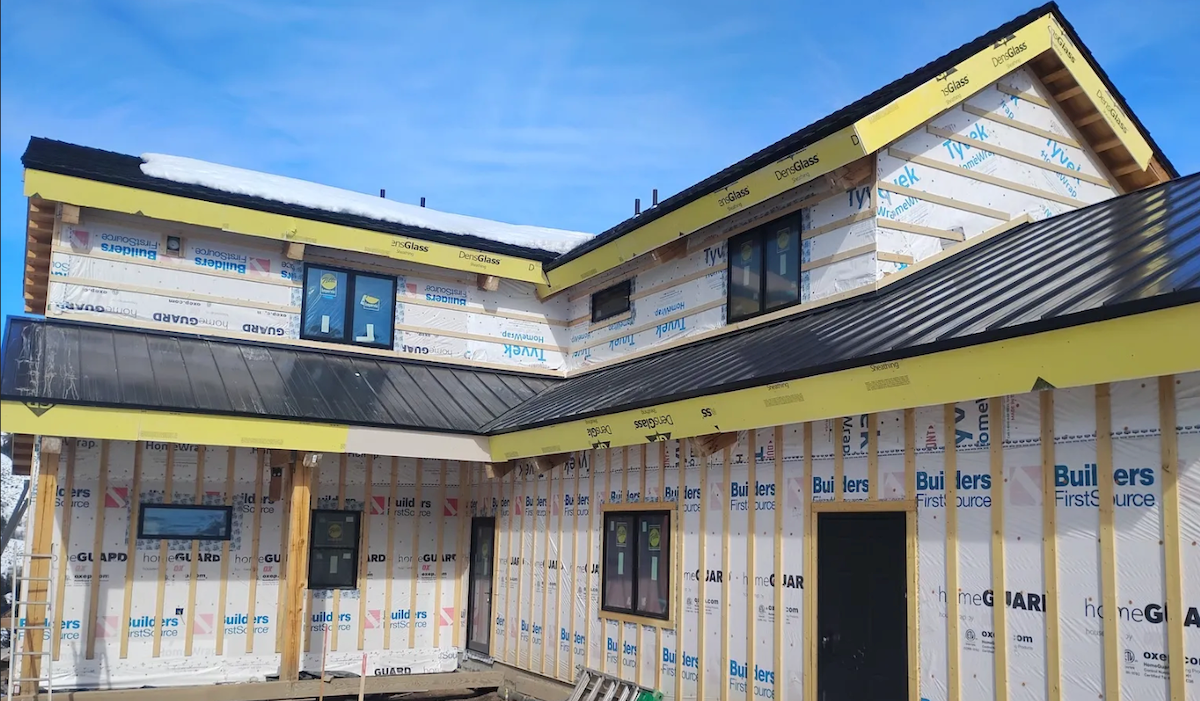
Teton County, Wyoming, a region synonymous with immense wealth and breathtaking natural beauty, recently made headlines for a $24,325 refund of an "affordable workforce housing" fee. This payment to a homeowner, levied as a condition for obtaining a permit to construct a single-family residence, represents a significant, albeit small, victory for those challenging the constitutionality of such local housing exactions. The case, championed by the public-interest law firm Pacific Legal Foundation (PLF), underscores a growing debate surrounding the legality and efficacy of fees designed to subsidize affordable housing in increasingly unaffordable markets.
The Teton County homeowner, whose identity has not been widely publicized, filed a lawsuit in Wyoming federal court last year. The core of their legal argument, advanced by PLF attorneys, centered on the contention that the fee violated the U.S. Constitution. Specifically, the challenge likely invoked the Fifth Amendment’s Takings Clause, which prohibits the government from taking private property for public use without just compensation. The PLF’s strategy often involves arguing that such fees constitute an unconstitutional taking of private property when they are not directly proportional to the impact of the development or when they serve a purpose that the government should fund through general taxation.
This Teton County settlement, occurring in early 2024, marks a notable development in the ongoing legal battles against local affordable housing impact fees. These fees, often imposed on new development projects, aim to generate revenue for initiatives intended to increase the availability of housing for low- and moderate-income residents. However, critics, including PLF, argue that these fees are often applied indiscriminately, burdening individual homeowners and small developers disproportionately without a clear, legally defensible nexus to the specific impacts of their projects. The argument is that these fees do not differentiate between a homeowner building a modest dwelling and a large-scale developer constructing a multi-unit complex, thus potentially overcharging for a project’s actual contribution to housing demand.
While state governments have increasingly focused on broader zoning and regulatory reforms to address housing shortages, the specific mechanisms of local affordable housing fees have, until recently, received less scrutiny. This has allowed them to proliferate in high-cost areas. The potential economic repercussions are significant. For developers, these fees can dramatically impact the feasibility of projects, reducing profit margins to a point where investors may deem them unsatisfactory. This can lead to a chilling effect on new construction, potentially exacerbating the very housing shortages these fees are intended to alleviate.
The Teton County case is not an isolated incident. The Pacific Legal Foundation has been actively pursuing similar legal challenges across the country. In a related case, the Foundation recently filed a lawsuit in California concerning $100,000 in fees imposed by the city of San Luis Obispo on a small developer. In that instance, the developer was presented with a choice: either place a deed restriction on one of four parcels, limiting its sale price to $450,000, or build at market rate. The deed-restricted option presented a stark economic reality; the estimated cost to build the house and an accessory dwelling unit (ADU) was $1.325 million. The PLF argued that this effectively forced the developer to subsidize affordable housing at a loss, a scenario they deem unconstitutional. Like the Wyoming case, the fees collected in San Luis Obispo are earmarked for an affordable housing fund. The PLF has achieved success in other California cases, bolstering their efforts to challenge these types of exactions.
A Shifting Legal Landscape: Not Always a Clear Victory
Despite these recent successes, the legal landscape surrounding affordable housing fees is complex, and court rulings do not always favor the challenger. A significant case in San Diego illustrates this point. In September 2023, a developer filed a lawsuit against the city in federal court, challenging fees associated with a substantial 1,642-unit apartment project. The developer’s legal team echoed the constitutional takings claims raised by the PLF. However, in January of this year, a federal judge ruled in favor of the city, reversing a previous stance that had initially sided with the developer.
The strategic differences between the San Diego and San Luis Obispo cases are instructive. The San Diego developer employed a multi-pronged legal strategy, challenging the city’s ordinance through arguments rooted in both federal and state law, alongside other legal claims. In contrast, the PLF’s approach in San Luis Obispo, and often in similar cases, has been to present a more focused argument, emphasizing a narrow takings claim under the U.S. Constitution. Furthermore, in the San Diego case, the legal challenge was initiated before the project was completed and the fees were paid, whereas the San Luis Obispo developers had already incurred the costs, potentially influencing the judicial calculus.
The Extreme Affordability Crisis in Teton County
The Teton County homeowner’s legal battle offers a revealing glimpse into the profound housing affordability challenges plaguing the region. Teton County, Wyoming, consistently ranks as the wealthiest county in the United States on a per capita income basis. According to analyses of federal data by Jackson Councilman Jonathan Schechter, the county’s per capita income of $532,903 in 2024 significantly outstrips the national average by more than sixfold and nearly doubles that of the second wealthiest county. Schechter further highlighted that a striking 77% of Teton County residents’ income originates from investments, a figure he described as a "nation-leading" statistic.
This economic stratification is vividly captured in a recent New York Times article titled "Welcome to Wyoming, the Frontier of America’s New Gilded Age." The piece details how Jackson, the county’s principal town and a long-standing magnet for affluent individuals, has evolved into an even more exclusive enclave for the ultra-wealthy. Data from HousingWire Intelligence paints a stark picture of the real estate market: the median list price for homes in Jackson hovers around $6.39 million, with new listings averaging $3.57 million.
The severity of the housing crisis is further underscored by a Wyoming housing needs study for the tourism-dependent Teton region. The study concluded that median-priced homes are unaffordable for average wage earners in virtually every major industry within the county, even in its highest-paying sectors. Rental costs also present a formidable barrier, particularly for working-class residents. A one-bedroom apartment in Teton County commands an average rent of nearly $2,900, a staggering 77% above the national average, according to Apartments.com. An accessible local dashboard identifies the "lack of affordable and workforce housing" as one of the county’s most pressing issues, emphasizing that a substantial number of households require some form of below-market-rate or deed-restricted housing to maintain residency in the community.
Wyoming lawmakers have grappled with legislative solutions to address this affordability crisis, but substantive progress has been elusive. In stark contrast, neighboring states have pursued more aggressive reforms. Montana, for instance, enacted sweeping legislation in 2023 that legalized duplexes, mandated that cities permit accessory dwelling units, opened commercial zones to mixed-use and multifamily housing developments, and streamlined local planning processes to facilitate increased housing construction. Colorado, situated to the south, has also implemented significant housing reforms aimed at increasing supply and affordability.
The Complexities of Adding Rental Units and the Fee’s Rationale
The Teton County case involved a homeowner, Trey Scharp, and his wife, Shelby, who sought to expand their housing options. The couple, who operate a dude ranch and lead hunting and fishing expeditions, purchased five acres in the countryside in 2021. The property included a small cabin, which they intended to rent out after constructing a new family home.
According to the Pacific Legal Foundation, Teton County officials initially determined that the 1,000-square-foot cabin was too large to qualify as an accessory dwelling unit (ADU). This assessment was reportedly based on the presence of an unfinished, windowless basement of the same size. The Scharps circumvented this obstacle by registering the structure as historically significant, thereby exempting it from ADU size limitations.
The next hurdle arose with the construction of their new family home. Building codes necessitated a 10-foot-deep foundation due to the sloped terrain. The Scharps then envisioned incorporating windows and a kitchenette into this foundation to create a second rental unit. However, county officials deemed this plan a violation of single-family zoning regulations. Faced with these restrictions, the couple abandoned their plan to create a second rental unit. It was at this juncture that they were confronted with the affordable workforce housing fee.
The rationale behind such fees, as articulated by Teton County, is rooted in the understanding that new home construction generates employment opportunities. A county commission study indicated that some of the workers employed in building new homes might not earn sufficient wages to afford housing within Teton County. Therefore, the fee is intended to help mitigate the impact of this influx of workers by contributing to affordable housing initiatives.
However, the Pacific Legal Foundation’s lawyers strongly contested this rationale in their lawsuit. They argued, "Basic principles of economics show that building a new home increases the supply of available housing and therefore mitigates—not aggravates—housing affordability in Teton County." This assertion highlights a fundamental disagreement about the economic impact of new construction and the appropriateness of imposing fees on individual homeowners to address systemic affordability issues. The Foundation’s stance is that increasing housing supply inherently contributes to affordability, and therefore, charging fees for this action is counterintuitive and potentially unconstitutional. The Teton County settlement, while a financial relief for the homeowner, signifies a broader ongoing struggle to balance the need for affordable housing with the property rights of individuals and the economic realities of development.