
 Layla Zulfa
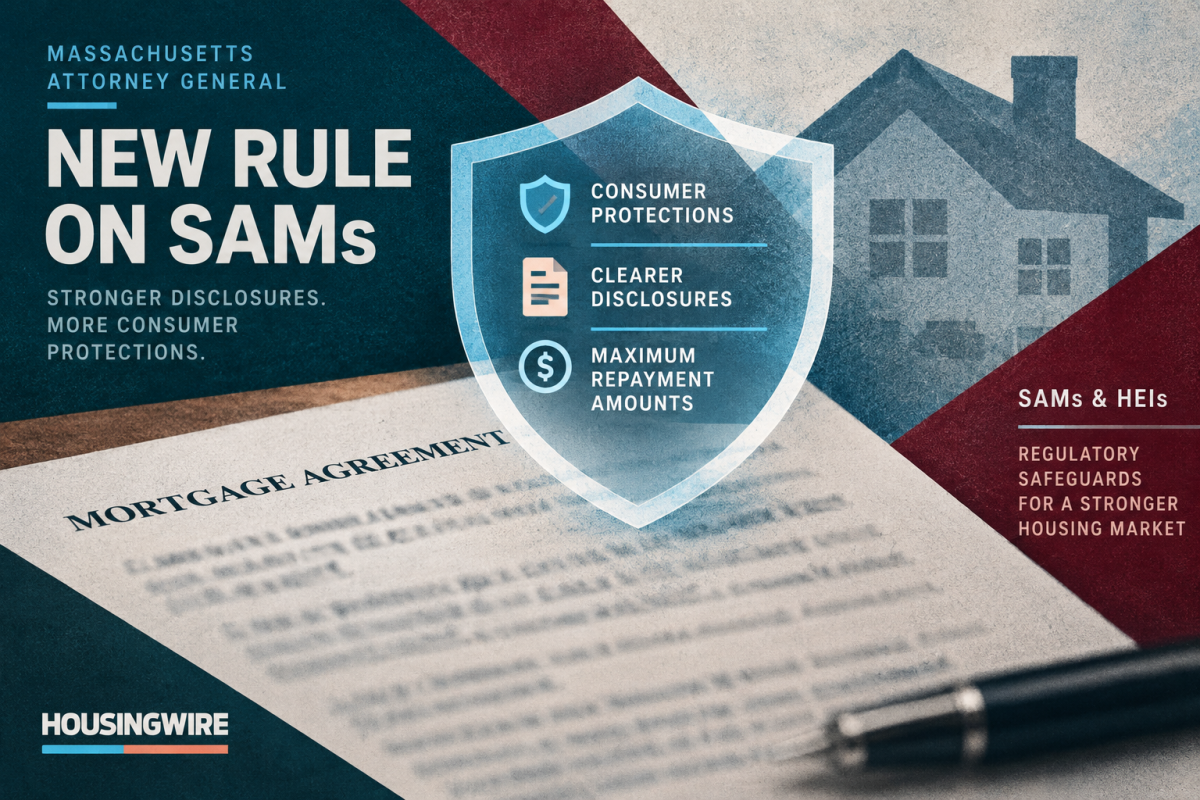
The Massachusetts Attorney General’s Office has enacted a significant new regulation aimed at bolstering consumer protections for individuals utilizing shared appreciation mortgages (SAMs), a complex home equity product that has recently come under intense examination. This rule, effective November 6, 2024, provides crucial clarity regarding the circumstances under which nonprofit SAM lenders are shielded from state consumer protection claims and mandates enhanced disclosure standards for borrowers. Among the key provisions is the requirement for prominent notification of the maximum potential repayment amount a borrower could face, according to an announcement from the National Consumer Law Center (NCLC), a prominent advocate for consumer rights.
This regulatory development stems from a provision embedded within the state’s comprehensive economic development bill, signed into law in November 2024. This legislation introduced a broad waiver of liability under Massachusetts consumer protection laws for certain nonprofit SAMs, a measure that critics argue created a "dangerous loophole." Advocates contend that this legislative change exposed vulnerable homeowners to intricate and potentially costly loan structures with significantly limited recourse in the event of disputes or financial hardship. The NCLC has been a leading voice in highlighting the potential pitfalls of these financial instruments, urging for greater transparency and stronger safeguards for consumers.
Shared Appreciation Mortgages: A Closer Examination of the BlueHub Model
At its core, the BlueHub-style SAM model, which has been a focal point of recent legal challenges, typically involves a borrower receiving a fixed-rate first mortgage alongside a second lien. This second lien is intrinsically tied to the future appreciation of the home’s value. The SAM borrower is obligated to share a predetermined portion of any increase in their property’s market value with the lender when the property is sold, transferred, or refinanced. The inherent complexity and risk lie in the fact that the ultimate payoff amount is variable and not fixed in dollar terms at the loan’s origination. This can lead to unexpectedly large balloon payments for homeowners when they seek to exit the loan, potentially depleting their equity and creating significant financial strain.
The risks associated with these loan structures have been brought to the forefront through the class-action lawsuit Humes v. BlueHub Capital Inc. in Massachusetts. This litigation alleges that SAMs, as structured by some lenders, embed hidden costs that are akin to subprime lending practices. These costs, the lawsuit claims, can rapidly erode a homeowner’s equity and accelerate the process of home loss. The court in this case found BlueHub Capital liable for multiple violations of state lending laws and has since certified the class, allowing the case to proceed towards a broader resolution, as confirmed by the NCLC.
"While presented as a lifeline, shared appreciation mortgages often become a trap," stated Andrea Bopp Stark, senior attorney at the National Consumer Law Center. "The AG’s final rule protects people from BlueHub’s loan model and similar products, but Massachusetts must go further to prevent harm from more common home equity theft loan products, including Home Equity Investment Loans." This statement underscores the NCLC’s view that while the new regulation is a positive step, further legislative and regulatory action is necessary to address a wider spectrum of high-risk home equity products.
The Massachusetts Attorney General’s New Rule: Expanding Consumer Protections
The newly implemented regulation by the Massachusetts Attorney General’s Office does not outright ban SAMs. Instead, it aims to ensure that both nonprofit and other lenders utilizing these instruments do so with a heightened degree of transparency and within clearly defined consumer protection boundaries. The regulation meticulously outlines the specific, limited circumstances under which a SAM lender can claim insulation from legal claims brought under Massachusetts’ robust consumer protection laws. Furthermore, it establishes a comprehensive framework for disclosures, demanding a clear and easily understandable presentation of the maximum potential repayment obligation for borrowers. This is a critical component, as it aims to mitigate the surprise element that has often led to financial distress for SAM borrowers.
The NCLC, while commending the AG’s office for this regulatory advancement, has expressed that the rule, as it stands, does not extend its reach far enough to adequately address a rapidly growing category of financial products: home equity investments (HEIs). HEIs operate on a similar principle, providing homeowners with immediate cash in exchange for a share of the future appreciation of their home’s value. The NCLC characterizes these arrangements as inherently high-risk for borrowers, largely because the ultimate amount owed is contingent upon future home price growth, and the repayment often triggers substantial lump-sum obligations.
A representative from the Massachusetts Attorney General’s office did not immediately respond to requests for comment from HousingWire regarding the specifics and potential broader implications of these new rules. However, it is notable that Massachusetts Attorney General Andrea Joy Campbell has already taken action against Hometap, a prominent HEI provider. The state has lodged allegations of consumer protection violations against Hometap, specifically tied to the structure and marketing of its HEI products. Despite this action, the NCLC has pointed out that the latest rulemaking in Massachusetts does not explicitly regulate HEI products, leaving a potential gap in oversight.
"The new rules provide important safeguards and requirements for SAMs, and stronger and broader rules are needed to address the high-risk HEI loans that are now targeting Massachusetts homeowners," Bopp Stark reiterated, emphasizing the ongoing need for comprehensive regulation in this evolving financial landscape.
Broader Landscape of Legal and Regulatory Efforts Across the United States
The challenges faced by consumers in Massachusetts are not isolated. Across the nation, individuals have initiated legal challenges against HEI providers. In a significant development last year, the Ninth Circuit Court of Appeals overturned a 2023 district court judgment in Washington state. The appellate court ruled that Unison’s HEI product, in its operational framework, constituted a reverse mortgage under state law, thereby subjecting it to different regulatory requirements.
More recently, in August 2024, the HEI provider Unlock reached a settlement with the Office of the Minnesota Attorney General. This settlement resolved allegations that the company’s home equity agreements (HEAs) were, in fact, mortgage loans that contravened state usury caps, disclosure rules, and licensing requirements. These cases highlight a growing trend of legal scrutiny and regulatory intervention targeting the complex structures of home equity investment products.
Industry stakeholders, including HEI providers, have expressed a willingness to engage with regulatory efforts. They often point to the legal framework recently enacted in Illinois as a potential model for national regulation. This Illinois legislation, passed earlier this year, provides a comprehensive set of rules for shared equity products. Executives from Point, a prominent HEI company, shared their perspective at the Mortgage Bankers Association’s Annual Convention & Expo, suggesting that a universal regulatory framework for these products is inevitable.
"We believe that these companies are going to be regulated," commented Dan McPheeters, Point’s head of business development and partnerships. "The practical effect is, it’s difficult to comply with [mortgage regulations] for a product that doesn’t have a monthly payment, that isn’t self-amortizing. That said, as long as you address those tactical issues, this should be regulated." McPheeters’ statement reflects an industry sentiment that while regulatory compliance for non-traditional home equity products presents unique challenges, a clear and consistent regulatory environment is ultimately beneficial for both consumers and the industry.
The National Consumer Law Center’s Recommendations for Enhanced Oversight
In light of the evolving market for home equity-based financial products, the NCLC continues to advocate for a more robust and comprehensive regulatory approach. The organization urges additional state-level actions to close perceived gaps in oversight for shared appreciation equity-based mortgage products. While the specific recommendations are detailed and extensive, their core message centers on ensuring that the benefits of home equity are accessible to homeowners without exposing them to predatory practices or overly complex financial instruments that can lead to unintended financial hardship. The NCLC’s ongoing efforts aim to foster a financial environment where homeowners can leverage their home equity safely and transparently.
The implications of these regulatory actions extend beyond Massachusetts, signaling a national trend towards increased scrutiny of home equity-linked financial products. As more consumers look to tap into their home equity, particularly in a fluctuating housing market, regulators are compelled to ensure that these financial tools are not only accessible but also fair and transparent, safeguarding homeowners from potential exploitation and ensuring long-term financial stability. The ongoing dialogue between consumer advocates, industry participants, and regulatory bodies will undoubtedly shape the future of home equity finance for years to come.