Lana Rhoades
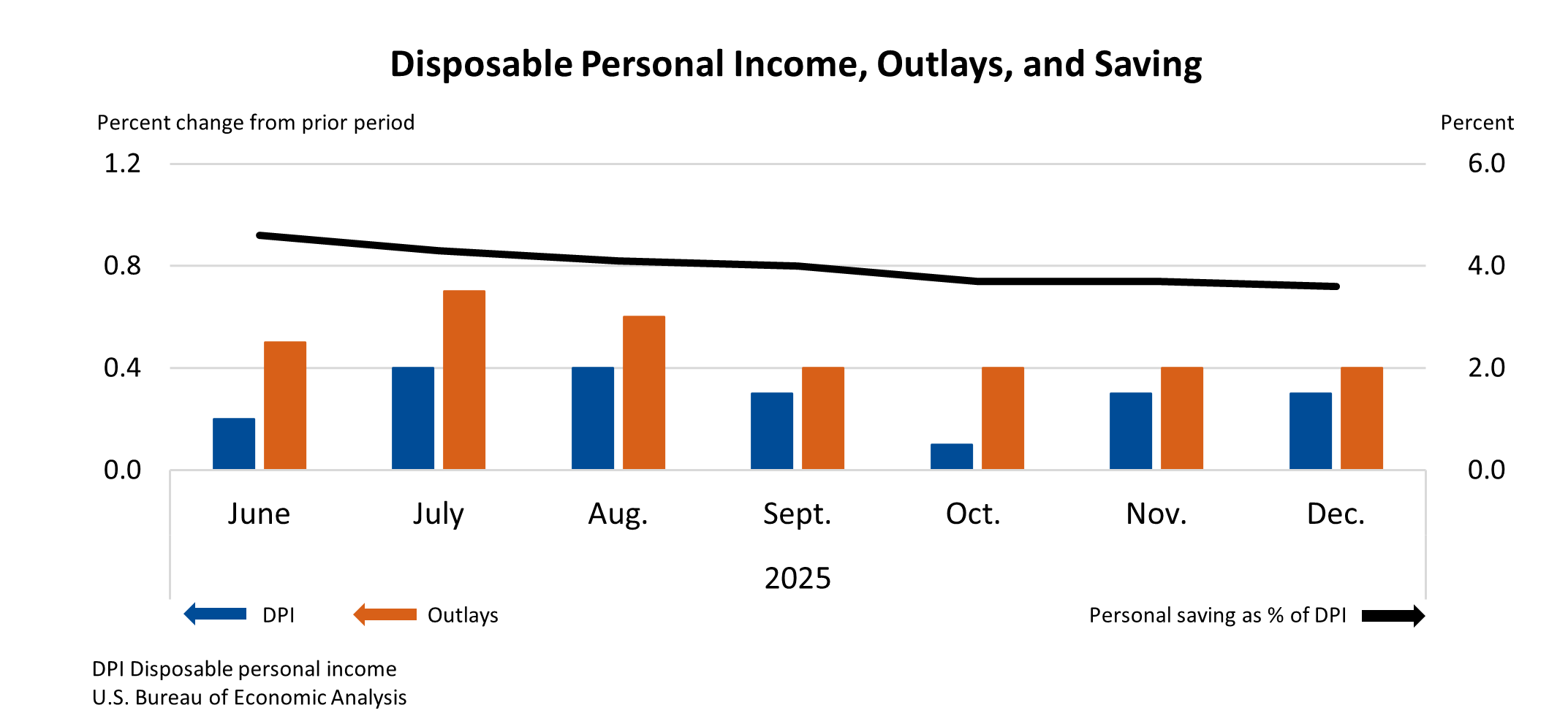
Personal income in the United States experienced a modest increase of $86.2 billion, or 0.3 percent, in December 2025, according to the latest estimates released by the U.S. Bureau of Economic Analysis (BEA). This growth, while positive, reflects a period of ongoing economic recalibration following significant events that impacted government operations and data reporting timelines. Disposable personal income (DPI), which represents income after taxes, also saw a comparable rise of $75.7 billion, or 0.3 percent. Concurrently, personal consumption expenditures (PCE), a key indicator of consumer spending, climbed by $91.0 billion, a 0.4 percent increase.
The release of these crucial economic figures for December 2025 was notably delayed, originally scheduled for January 29, 2026. The postponement was directly attributed to the extensive government shutdown that spanned October and November of 2025. This shutdown, one of the most protracted in recent history, disrupted federal agency operations, including the critical data collection and analysis processes undertaken by the BEA. The extended lapse in government funding had a ripple effect, necessitating a revision of the release schedule to ensure the accuracy and completeness of the reported economic data.
December Economic Snapshot: Income, Spending, and Savings
The reported increase in current-dollar personal income during December was primarily driven by two key components: personal current transfer receipts and compensation. Personal current transfer receipts encompass payments like social security benefits, unemployment insurance, and other government assistance programs. An uptick in these transfers can indicate a variety of economic conditions, from continued government support measures to increased reliance on social safety nets. Compensation, which includes wages and salaries, also saw a rise, suggesting a stable or improving labor market in certain sectors.
Disposable personal income (DPI) also grew by 0.3 percent. This metric is particularly important as it represents the funds available to households for spending or saving after accounting for personal current taxes. The parallel growth in DPI and personal income suggests that tax burdens did not outpace income gains in December.
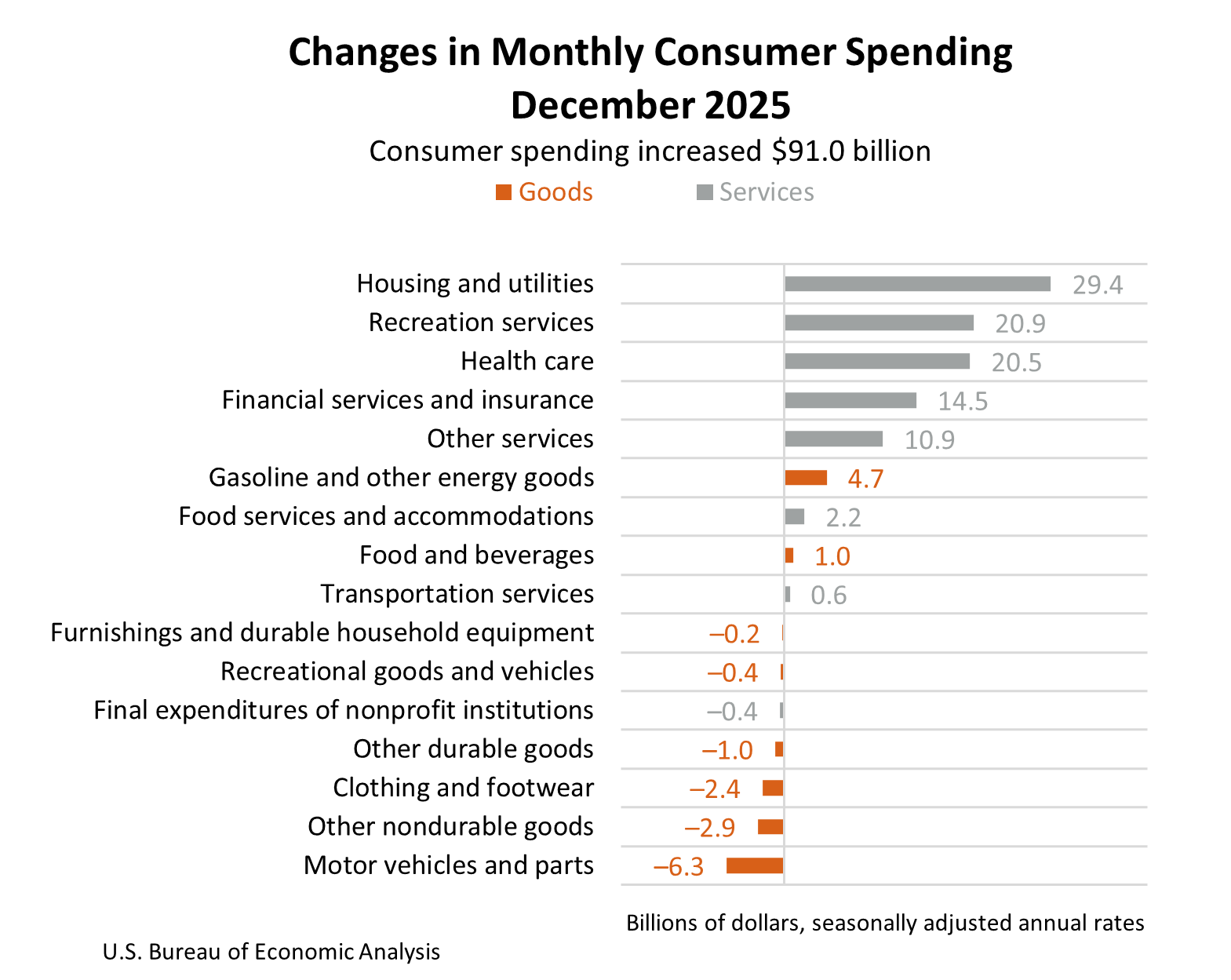
Personal consumption expenditures (PCE), the broadest measure of consumer spending, increased by $91.0 billion, or 0.4 percent. This growth was fueled by a substantial increase in spending on services, which rose by $98.5 billion, offsetting a slight decrease of $7.5 billion in spending on goods. The shift towards services spending, a trend observed in recent economic cycles, often reflects consumer confidence in service-based industries and a willingness to allocate more resources to experiences, travel, and other non-tangible purchases. The dip in goods spending, while marginal, could be influenced by a variety of factors, including inventory adjustments, seasonal demand fluctuations, or a continued rebalancing of consumer priorities.
Total personal outlays, which include PCE, personal interest payments, and personal current transfer payments, saw an increase of $90.2 billion in December. This figure provides a broader picture of how households are allocating their financial resources beyond just consumption.
The personal saving rate, calculated as personal saving as a percentage of disposable personal income, stood at 3.6 percent in December. Personal saving itself amounted to $830.8 billion. While a positive saving rate indicates that households are still setting aside a portion of their income, the 3.6 percent figure suggests a relatively cautious approach to saving, potentially influenced by ongoing economic uncertainties or a preference for current consumption.
Impact of Government Shutdown on Data Dissemination
The government shutdown of October-November 2025 presented a significant challenge to the timely and seamless dissemination of vital economic data. Federal agencies, including the BEA, operate on congressionally allocated budgets. During a shutdown, non-essential government functions are suspended, leading to furloughs for many federal employees and a halt in data collection, processing, and reporting.
This particular shutdown, which originated from disagreements over fiscal year appropriations and policy riders, had far-reaching consequences. Beyond the immediate impact on government employees, it created uncertainty for businesses and policymakers who rely on timely economic indicators to make informed decisions. The delay in the Personal Income and Outlays (PIO) report meant that analysts, investors, and the public had to wait longer for a clear picture of consumer behavior and income trends at the close of 2025. The BEA’s proactive communication regarding the rescheduled release demonstrated an effort to maintain transparency and manage expectations amidst the operational disruption.
Analysis of Real Consumption and Inflationary Pressures
Beyond the nominal dollar figures, the BEA also releases data adjusted for inflation, providing a clearer view of the actual volume of goods and services consumed. Real PCE, which measures consumer spending in inflation-adjusted terms, increased by $11.5 billion, or 0.1 percent, in December. This modest rise in real consumption indicates that while nominal spending increased, the actual quantity of goods and services purchased grew at a slower pace, consistent with inflationary pressures.
The Personal Consumption Expenditures (PCE) price index, a key measure of inflation closely watched by the Federal Reserve, showed an increase of 0.4 percent from November to December. This figure suggests a persistent upward trend in prices during the month. Notably, the core PCE price index, which excludes volatile food and energy prices, also rose by 0.4 percent, indicating that inflationary pressures were broad-based and not solely attributable to fluctuations in these commodity markets.
On a year-over-year basis, the PCE price index increased by 2.9 percent in December 2025 compared to December 2024. The core PCE price index saw a slightly higher increase of 3.0 percent over the same period. These year-over-year figures suggest that while monthly inflation moderated in some periods, the cumulative effect of price increases over the past year remained a significant factor for consumers and the economy. The persistent inflation, even with moderate real spending growth, implies that consumers may be purchasing fewer items or opting for less expensive alternatives to maintain their purchasing power.
Broader Economic Context and Implications
The economic data released for December 2025 provides a snapshot of consumer behavior and income dynamics in a complex environment. The moderate growth in personal income and spending, coupled with persistent inflation, suggests an economy that is navigating a delicate balance.
The increase in personal current transfer receipts could be interpreted in several ways. It might reflect ongoing government stimulus measures aimed at supporting households, or it could signal that a segment of the population is increasingly reliant on these programs due to economic challenges. The strength in compensation, however, points to a resilient labor market, which is a positive indicator.
The divergence between nominal and real PCE growth highlights the impact of inflation. Consumers are spending more dollars, but the actual volume of goods and services they are acquiring is increasing at a much slower rate. This can lead to a feeling of reduced purchasing power and potentially dampen consumer sentiment if wage growth does not keep pace with price increases.
The personal saving rate of 3.6 percent suggests that households are not accumulating significant savings at the end of 2025. This could be a consequence of higher living costs due to inflation, increased debt burdens, or a deliberate choice to prioritize current consumption. A sustained low saving rate can have implications for future economic growth, as it reduces the pool of funds available for investment.
The impact of the government shutdown on data reporting underscores the importance of stable government operations for economic transparency and confidence. The delay in releasing critical data can create a vacuum of information, leading to increased market volatility and uncertainty. The BEA’s efforts to streamline its news release packages, including linking directly to interactive data tables and phasing out PDF/Excel tables, are aimed at improving efficiency and accessibility for users.
Looking Ahead: Future Economic Indicators and Policy Considerations
The released data serves as a critical input for economic forecasting and policy decisions. For the Federal Reserve, the inflation figures, particularly the core PCE price index, will continue to be closely monitored as they inform monetary policy adjustments. Persistent inflation could lead to further interest rate hikes or a prolonged period of higher rates, impacting borrowing costs for consumers and businesses.
For policymakers, understanding the drivers of income growth and consumer spending is crucial for developing fiscal policies that support economic stability and growth. The interplay between wages, inflation, and government support programs will likely remain a key focus.
The next Personal Income and Outlays report, covering January 2026, is scheduled for release on March 13, 2026. This report will provide further insights into the continuation of these trends and the initial economic picture of the new year, offering a clearer view of the economy’s trajectory as it moves beyond the challenges of the past year. The BEA’s commitment to timely and accurate data dissemination remains paramount in providing the necessary information for informed economic analysis and decision-making.
The structural changes within the BEA’s reporting, moving towards more digital and interactive data access, represent an adaptation to the evolving information landscape. This modernization aims to provide users with more dynamic and up-to-date data, ultimately enhancing the utility of these vital economic statistics. As the U.S. economy continues to evolve, the analysis of personal income and outlays will remain a cornerstone for understanding the financial well-being of households and the overall health of the nation’s economic engine.